A dead battery on a Saturday morning is a familiar kind of frustration, especially when the lawn is already knee-high. Cordless mowers, riding tractors, and electric push models each rely on a specific kind of battery, and getting the wrong one means poor runtime, weak starting, or a charger that takes forever. This roundup sorts through eight solid options for the most common mower setups so you spend more time cutting grass and less time troubleshooting.
A Side-By-Side Look

Ibanti 1-Pack 10000mAh EGO 56V Replacement Battery with CH2100 Charger

Boetpcr 2-Pack 10000mAh EGO 56V Lithium Battery
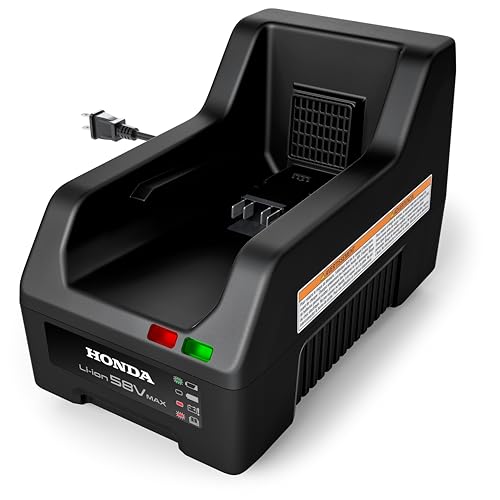
Honda CV5080N1U Fast Electric Lawn Mower Battery Charger

WEIZE Lawn Garden AGM Battery 12V 300CCA BCI Group U1

WEIZE Lawn Garden AGM Battery 12V 200CCA BCI Group U1

EGO Power+ 56V 12.0Ah Lithium Battery 2-Pack BA6720T-2

WEIZE Lawn Garden AGM Battery 12V 350CCA BCI Group U1

Honda DP5080 8Ah Lawn Mower Battery
The Strengths Of Each Pick
Owners of EGO 56V cordless mowers who need a single backup pack will find this Ibanti option practical and approachable. The 56V lithium-ion chemistry matches the platform, and the included CH2100 charger covers AC110 through AC240V input, so it travels well between garage and workshop outlets.
Compared to the Boetpcr twin pack covered later, this one stays focused on a single-battery use case. Run time depends on the mower model, but the 10Ah (amp-hour) rating sits in a comfortable middle ground for most residential lawns.
Notable Upsides
- Wide input range (AC110 through AC240V) makes the charger usable in different garage setups
- 10Ah capacity suits typical suburban mowing without weighing down the mower
- Single-pack format keeps cost lower for first-time backup shoppers
- Matches EGO’s 56V platform so battery management behaves consistently
Points To Keep In Mind
- One pack means swapping to a second battery mid-session is on your shoulders
- Storage in off-season benefits from a partial charge in a climate-controlled area
Who It Suits Best
EGO owners with smaller yards who only need one extra battery on standby.
Look Elsewhere When
The Boetpcr 2-Pack upgrade fits EGO households wanting a ready spare without reordering soon.
For anyone tired of mid-cut downtime, this Boetpcr dual pack turns one battery into a rotation system. Each cell is built around 56V lithium chemistry, and the design fits EGO BA1400, BA2800, and BA4200 series tools along with CH2100, CH2800D, and CH5500 chargers.
The built-in LED power indicator on each pack makes it easy to glance at charge levels before pulling the trigger. It is a thoughtful touch for shared-yard households where multiple people grab a battery and head outside.
Well-Handled Touches
- LED indicator on each pack means no guessing about remaining runtime
- Two-pack bundle eliminates the gap between mowing and recharging
- Broad EGO charger compatibility covers most home setups
- Lithium cells hold charge well during storage between mowings
Trade-Offs
- Larger upfront purchase compared to a single replacement pack
- Storing two batteries means a cool, dry spot is more important than ever
Feature Snapshot
Made For
EGO owners cutting larger lots who want a swap-ready rotation rather than recharge pauses.
Consider Something Else When
The Ibanti single pack fits shoppers who only want a backup and prefer a lower entry cost.
Honda electric mower owners who already own the brand’s DP5080 or DP50120 batteries should look here. This 58.8V 8A charger delivers a much faster turnaround than the slow trickle chargers that ship with many electric mower kits.
A wall-mount-ready housing is a quiet upgrade for tidy garages. The patented connection is engineered to lock onto Honda batteries cleanly, reducing the wobble you sometimes get with universal chargers.
What Helps Most
- 8A output trims charge time versus lower-amperage alternatives
- Patented connector keeps the battery seated firmly during charging
- Wall-mount form keeps the garage floor clear
- Compatible with both Honda 8Ah and 12Ah packs
Trade Offs
- Brand-specific design limits use to Honda battery platforms
- Worth verifying voltage and connector style before ordering for older Honda units
Quick Facts
Best Suited To
Honda electric mower owners wanting faster turnarounds between cuts.
Reach For A Different Pick When
The Honda DP5080 battery itself is a better fit if your old battery has lost capacity entirely.
Riding mower owners with mid-size lawns will appreciate the balance this WEIZE AGM battery strikes between starting strength and weight. The 300CCA rating pulls tractors and lawn mowers through normal spring and summer starts without straining the electrical system.
AGM (Absorbent Glass Mat) construction is sealed and spill-resistant, which makes the battery easier to position in a tight battery tray. Compatibility spans John Deere, Toro, Cub Cadet, and Craftsman riding mower lines, which covers a large slice of the residential market.
Where It Helps
- Sealed AGM design resists vibration on bumpy lawns
- 300CCA rating handles warm-season starts with confidence
- Fits a wide range of common riding mower brands
- Square-hole nut and bolt terminals accept standard mower cables
Things To Consider
- Heavier than lithium replacements at around 18 to 19 pounds
- Worth checking terminal polarity against your mower’s existing wiring
Spec Overview
Right Fit For
Riding mower owners in temperate climates who need steady starting power.
Swap It Out When
The WEIZE 350CCA model suits colder regions or larger engines with tougher cranking demands.
Smaller lawn tractors and lighter mowers often do not need a heavy-duty battery, and that is where the WEIZE 200CCA AGM earns its place. The Group U1 footprint stays compact, and 12V output is the standard most small-engine riding mowers expect.
Like the 300CCA sibling covered earlier, this unit uses sealed AGM construction. Terminal orientation stays consistent with the rest of the WEIZE line, which simplifies swapping between models.
Strong Points
- Lower price point for shoppers on a tight replacement budget
- Compatible with John Deere, Toro, Cub Cadet, and Craftsman equipment
- Sealed AGM design is friendly to angled battery trays
- Standard Group U1 size keeps installation straightforward
Honest Caveats
- 200CCA may struggle in cold starts below freezing
- Adds around 21 pounds, so check battery tray capacity
Whose Shelf It Belongs On
Small riding mower owners in mild climates who cut during the warm half of the year.
Not Your Match When
The WEIZE 300CCA or 350CCA battery handles colder weather and larger engines with more authority.
This is the heavy hitter of the cordless group. The EGO Power+ BA6720T-2 ships two 12.0Ah ARC Lithium batteries in one box, giving EGO mower owners serious runtime headroom for larger properties or thicker grass.
The ARC Lithium design is built around thermal management, which keeps the cells cooler under load and supports longer cycle life. The shock-resistant outer shell is the kind of detail you appreciate after a few seasons of dropping a battery off the mower deck.
A Favorable Mix
- 12.0Ah per pack handles extended mowing sessions comfortably
- Two-pack format means one battery can charge while the other works
- Cooling-focused ARC design supports sustained high output
- Drop-resistant shell holds up to real-world handling
- Intelligent power management extends each pack’s working life
Softer Spots
- Premium pricing places it above the third-party alternatives
- Heavier than the 2.5Ah packs EGO also sells
Key Product Details
Who Will Love This
EGO households running large lawns, mulching jobs, or weekly tall-grass sessions.
A Better Fit Elsewhere
The Ibanti single pack is a friendlier starting point if your yard is small and you only need one backup.
Cold mornings and large-displacement engines both ask for stronger cranking, and the WEIZE 350CCA AGM delivers the highest output in the brand’s U1 line. For shoppers comparing against the 200CCA and 300CCA siblings reviewed above, this is the strongest puller of the group.
The Group U1 form factor and standard square-hole terminals keep installation familiar across John Deere, Toro, Cub Cadet, and Craftsman riding mowers. You get extra cranking without giving up the form factor you already have.
Key Advantages
- 350CCA delivers confident cold-weather starting
- Same BCI Group U1 footprint as lighter WEIZE models
- Sealed AGM construction resists vibration damage
- Compatible across the most common riding mower brands
Points To Note
- Heavier than lower-CCA siblings in the WEIZE line
- May be overkill for smaller mower engines in mild climates
Built With In Mind
Riding mower owners in colder regions or anyone running a larger engine that demands strong cranking.
Another Choice May Suit
The WEIZE 200CCA model fits small-engine mowers in mild climates where premium cranking is unnecessary.
Honda’s own DP5080 battery is the natural match for owners of Honda electric mowers who want OEM confidence. The 8Ah lithium-ion cell delivers up to about 30 minutes of mowing time per charge, which covers roughly a quarter-acre depending on grass thickness and terrain.
The patented connection design locks into Honda mowers with a ribbed notch and spring-loaded contact, which prevents wobble during use. It is the kind of fit detail you only appreciate after dealing with loose third-party batteries.
What Stands Out
- OEM fit eliminates compatibility guesswork for Honda mowers
- Spring-loaded connector prevents side-to-side shifting during mowing
- About 30 minutes of runtime suits small to medium lawns
- Lithium-ion construction keeps the battery light on the mower deck
Less Ideal Details
- Brand-specific design is not reusable across other platforms
- Run time can drop in tall or wet grass, depending on conditions
Perfect Match For
Honda electric mower owners wanting factory-grade fit and dependable runtime.
Where A Sibling Pick Shines
The Honda CV5080N1U charger is the right add-on if your existing charger charges too slowly.
What To Weigh Before Choosing Batteries For Lawn Mowers
Battery choice is less about brand loyalty and more about matching your mower’s chemistry, voltage, and form factor. Cordless platforms like EGO and Honda use proprietary lithium packs designed to fit specific mowers, so always confirm the voltage and model series before ordering. For cordless systems, voltage (commonly 40V, 56V, or 58V) and amp-hour rating together determine how long you can mow before recharging.
Riding mowers and lawn tractors lean on 12V lead-acid or AGM batteries, which use a different metric: CCA (Cold Cranking Amps). A 200CCA battery handles modest engines in warm climates, while 300 to 350CCA gives you more headroom for cold starts and larger displacement engines. The BCI Group U1 footprint is standard across most residential riding mowers, but terminal orientation can vary, so double-check the positive terminal position before installing.
Practical ownership matters too. AGM (Absorbent Glass Mat) batteries stay sealed and resist vibration, which is friendly to bumpy yards. Lithium batteries last longer in storage but need partial-charge storage in cool, dry conditions during the off-season. Chargers also deserve attention: an 8A output charger trims hours off the wait versus a 2A trickle unit.
Key Considerations Across These Picks
Mistakes Worth Dodging
The first common slip is buying a battery based on voltage alone without checking model-series compatibility. A 56V EGO pack in the wrong series may physically fit but refuse to communicate with the mower’s battery management system. The second pitfall is overlooking terminal polarity on riding mower replacements; the positive terminal position varies between brands, and a reversed connection can blow a fuse the moment you turn the key.
What The Higher Tier Buys
Premium tiers in this category typically buy larger amp-hour capacity, better thermal management, and longer cycle life. The EGO Power+ 12.0Ah pack, for instance, runs cooler under load than smaller packs, which extends the number of full charge cycles you get before noticing wear. For a homeowner mowing weekly across a half-acre, that extra durability is often worth the step up.
Frequently Asked Questions
How long do lawn mower batteries typically last?
Most cordless lithium mower batteries last three to five years with regular use and proper storage. Lead-acid and AGM riding mower batteries generally last two to four years, depending on climate and maintenance.
Can you use a higher amp-hour battery than the original?
Most cordless platforms accept any amp-hour battery from the same voltage and series, and a larger pack only extends runtime. For riding mowers, higher CCA is usually safe as long as the Group U1 footprint matches.
How should you store mower batteries in the off-season?
Lith-ion packs hold up best stored at a partial charge in a cool, dry space. Lead-acid batteries should sit on a maintainer or be recharged every few months to avoid sulfation damage.
Are third-party mower batteries reliable?
Many third-party packs from reputable sellers perform well for homeowners, though OEM options sometimes offer tighter fit and firmware integration. Comparing warranty terms and connector design helps narrow the choice.
What does CCA actually measure?
CCA, or Cold Cranking Amps, measures the current a 12V battery can deliver for 30 seconds at 0 degrees Fahrenheit without dropping below a minimum voltage. Higher CCA means stronger cold-weather starting performance.
The Takeaway
A lawn mower battery is one of those parts you do not think about until the day it fails, and then it is the only thing on your mind. Matching the voltage, footprint, and connector to your specific mower is the fastest way to narrow the field, and the eight options above cover the most common residential setups. Pick the chemistry and capacity that match your yard size, and the rest usually takes care of itself.