A trolling motor can drain a battery faster than most anglers expect, especially when you’re fighting current or working a deep weed line at dawn. Picking the wrong chemistry or group size turns a calm morning into a frantic paddle back to the ramp. Lithium options have quietly reshaped the category, but the right choice still depends on how you fish, how cold your mornings run, and how much space you’ve got under the console. The list below sorts ten strong options by use case, so you can match the battery to your boat instead of guessing.
The Essentials At A Glance

Litime 12V 100Ah Trolling Motor LiFePO4 Battery (Bluetooth, Group 31)
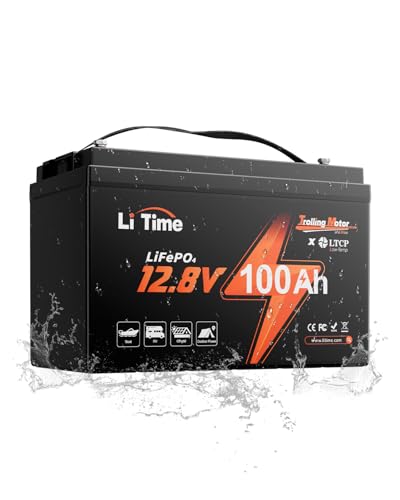
Litime 12V 100Ah Trolling Motor LiFePO4 Battery (Group 31, 100A BMS)

Power Queen 12V 100Ah Trolling Motor LiFePO4 Battery 2-Pack

Litime 12V 100Ah Xtra Mini LiFePO4 Lithium Battery

Mighty Max ML18-12 12V 18Ah SLA AGM Deep Cycle Battery
Dyness 24V 100Ah LiFePO4 Battery (100A BMS)

Renogy 12V 100Ah Trolling Motor LiFePO4 (IP67, Group 24)
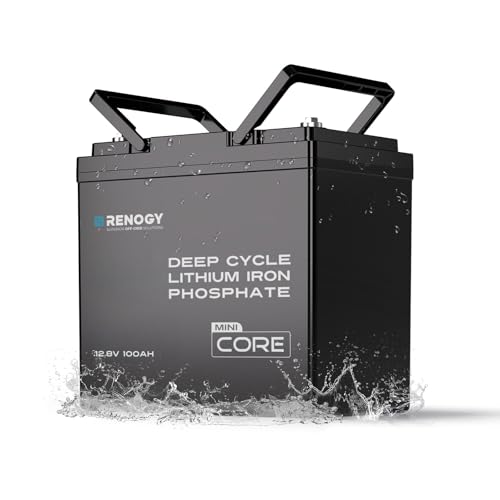
Renogy 12V 100Ah Core Mini LiFePO4 (Group 22NF)

Renogy 12V 100Ah Self-Heating LiFePO4 (DuoHeat, Mini)
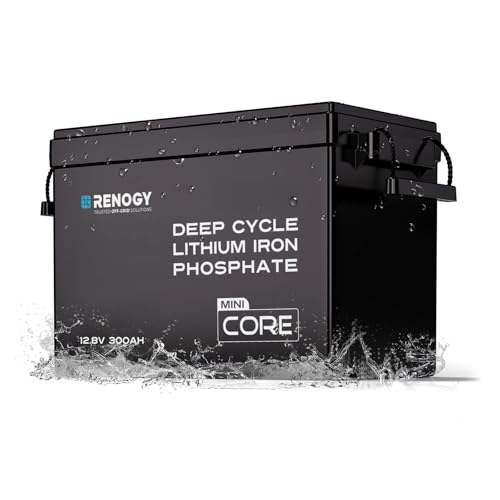
Renogy 12V 300Ah LiFePO4 Mini Deep Cycle Battery
The Details Behind The Selections
The Litime 100Ah trolling motor pack drops into a standard Group 31 tray, so most bass rigs accept it without modifications. Bluetooth ties straight into a phone, letting you check voltage before launching and read state-of-charge while drifting over a school. For anglers already running a fish-finder, livescope, and pumps, the 1280Wh (watt-hours, a measure of total stored energy) of usable capacity keeps the trolling motor from being the first thing to quit on a long tournament day.
The 100A BMS (battery management system, the internal circuit that prevents overcharge, over-discharge, and short circuits) handles the kind of surge current a Minn Kota or MotorGuide throws during a hard turn at full throttle. Cold-climate anglers get an automatic charge cutoff below 32°F and a discharge cutoff below -4°F, which means you can leave the boat on the trailer during a frosty pre-dawn without worrying about plating damage.
What Helps Most
- Phone-based monitoring replaces the guesswork of reading a single voltage LED at the console.
- Low-temperature cutoffs protect cells in early-spring and late-fall fishing.
- IP65 rating (protected against low-pressure water jets and dust) handles rain, spray, and the occasional dunk at the ramp.
- Group 31 footprint fits common bass boat battery trays without rewiring.
- 15,000-cycle rating, which is roughly four times a quality AGM (absorbed glass mat, a sealed lead-acid design), translates to years of weekend use before noticeable capacity loss.
Things To Weigh Up
- Bluetooth app requires a phone mount or a quick glance at the rod box to read while running.
- Group 31 sizing is tight in older Ranger and Stratus layouts that were built for a smaller Group 24 footprint.
- Charging requires a lithium-profile charger to hit the rated cycle life.
Who It Suits Best
Tech-friendly tournament anglers who want battery telemetry on their phone and a Group 31 form factor that fits most stock bass boat layouts.
Look Elsewhere When
The Litime 12V 100Ah Xtra Mini LiFePO4 makes more sense for owners with shallow console trays who can’t accommodate a Group 31 box.
If you’ve ever wondered whether your trolling motor battery meets actual marine safety standards, the ABYC E-13 (American Boat and Yacht Council’s lithium battery installation standard) mark on this Litime answers the question. Triple BMS protection covers dust, water, and salt spray, which is the trio that kills cheaper lithium packs on brackish and saltwater rigs. EV-grade cells (cells originally spec’d for electric vehicles, meaning higher purity and tighter tolerances) push the cycle count up toward 15,000 while keeping internal resistance low.
Compared with the Bluetooth-equipped Litime in spot 1, this model trades the phone app for a more robust certification profile. For anglers stepping up from lead-acid who plan to run 24V or 36V motors by stacking packs, the 4P4S configuration (four in parallel, four in series, the maximum bank the BMS supports) gives you headroom to grow without re-engineering the whole system.
What Makes Sense
- ABYC E-13 compliance matters for insurance surveys and saltwater use.
- 4P4S expansion supports 24V and 36V motor setups down the road.
- EV-grade cell chemistry holds voltage steadier under heavy load.
- Low-temperature charging and discharging cutoffs preserve winter capacity.
Trade-Offs
- Heavier than the Bluetooth sibling at roughly 22 lb.
- No built-in app monitoring means an external shunt or voltmeter tells you state of charge.
- Slightly higher upfront cost than uncertified lithium options.
Made For
Serious bass and bay anglers wiring multi-bank systems who need documented marine compliance and a long service horizon.
Consider Something Else When
The Litime 12V 100Ah Trolling Motor LiFePO4 Battery (Bluetooth, Group 31) is a better match for someone who’d rather skip a shunt and read battery data straight from a phone.
The Power Queen two-pack makes the most sense for anglers who already know they need a house-and-trolling split, or who want a backup in the truck for emergency charges between sessions. ABYC E-13 marine compliance on both packs means your insurance surveyor won’t flag the install. The two-pack format also lets you wire them in series for a 24V motor without hunting down a matching second battery later.
For anglers used to replacing a single AGM every couple of seasons, two lithium packs in one shipment can feel like overkill. The honest read is that two matched batteries bought together tend to age at the same rate, which matters because mismatched cells drag down bank performance. Triple BMS protection handles the surge loads from a 24V bow-mount during heavy current fishing.
A Favorable Mix
- Two matched packs eliminate cell-mismatch headaches.
- Series or parallel wiring covered for 12V or 24V motor setups.
- Marine-grade BMS tolerates spray, dust, and bracket-water exposure.
- Ships as a single order, simplifying delivery to one address.
Some Limits To Know
- Carriers may split the shipment into multiple boxes arriving on different days.
- Two-pack weight and dimensions make handling awkward without a second person.
- Larger upfront spend than a single-pack entry, even at a per-unit discount.
Right Fit For
Multi-battery bass boats and anglers upgrading from two AGMs at the same time who want matched lithium chemistry.
Skip It When
The Mighty Max ML18-12 12V 18Ah SLA AGM Deep Cycle Battery fits accessory duty for someone running a single 12V trolling system and only needs a small electronics backup.
At roughly 19 lb with built-in carry handles, the Xtra Mini solves the weight problem on smaller aluminum rigs and ultralight bass boats where every pound matters. Group 24 dimensions let it slot into factory trays originally sized for a single lead-acid starting battery, freeing up space for a second lithium pack elsewhere. Bluetooth 5.0 ties into the Litime app for the same phone-based state-of-charge visibility as the larger Group 31 sibling.
You trade Group 31 capacity for a slimmer box, so anglers running heavy thrust motors in chop should size their bank carefully. For most panfish and light tackle setups, however, 100Ah at this footprint is generous. The handle design matters more than you’d think when swapping batteries between the console and a garage shelf.
Where It Excels
- 19 lb carry weight with side handles for one-handed transport.
- Group 24 footprint fits shallow factory trays.
- Bluetooth app support for voltage and current tracking.
- Multi-layer protections against overcharge and short circuits.
Points To Note
- Smaller form factor means fewer thermal mass reserves during sustained high-current draw.
- App features require a phone; no onboard display on the battery itself.
Best Suited To
Anglers with shallow battery trays or small aluminum boats who want lithium weight savings without rewiring the cradle.
Swap It Out When
The Renogy 12V 100Ah Self-Heating LiFePO4 (DuoHeat, Mini) is the smarter pick for cold-weather anglers who fish ice-edge water and need the integrated heating pads.
The Mighty Max ML18-12 isn’t built to drive a trolling motor, and that’s by design. Its 18Ah (amp-hours, the unit of battery capacity) capacity handles electronics duty: graph units, live-scope transducers, live-well pumps, and stereo head units. The sealed lead-acid AGM construction mounts in any orientation, which helps in cramped splashwells or under-seat compartments where lithium won’t physically fit.
Compared to every other pick on this list, this battery is chemistry-different and use-different, but it earns its slot because almost every bass boat needs an accessory battery separate from the trolling bank. For tournament anglers running a 12V starting battery for the outboard, the ML18-12 covers electronics without tapping the cranking reserve.
A Few Highlights
- AGM spill-proof design tolerates tilted or angled mounting.
- Compact 7-inch by 3-inch footprint fits small accessory compartments.
- Nut-and-bolt terminals accept standard marine ring connectors.
- Low cost relative to lithium for dedicated electronics duty.
Room For Improvement
- 18Ah capacity is too small for any trolling motor application.
- Lead-acid weight (around 11 lb) is heavy for the capacity delivered.
- Shorter cycle life than lithium replacements, often 200 to 300 cycles.
Who Will Love This
Anglers adding a dedicated electronics battery to a small console setup without the budget for a second lithium pack.
Where Another Pick Suits Better
The Litime 12V 100Ah Xtra Mini LiFePO4 Lithium Battery is the right call for anyone trying to power a trolling motor from a single compact box.
If your trolling motor already runs on 24V, the Dyness single-pack design replaces two series-wired 12V batteries with one cleaner box. The 100A BMS supports up to 300A of starting current for short bursts, which matters when a 24V brushless motor demands a hard kick at the start of a fast trolling pass. Roughly 19 kg of weight drops the boat noticeably compared to two lead-acid batteries.
For anglers building a bass boat around 24V thrust, this pack simplifies wiring, terminal count, and overall balance. The trade-off shows up when you want redundancy: a single 24V battery has no backup if it fails mid-day, while two 12V packs can sometimes limp home on the survivor.
The Case For It
- One 24V pack replaces two 12V batteries in series.
- 300A surge current support for brushless motor kickoff.
- Low-temperature charging cutoff for cold storage.
- Compact dimensions free up tray space for additional accessories.
Worth Bearing In Mind
- Single-pack failure leaves no backup during a tournament day.
- 24V charging profile requires a compatible marine charger.
- Heavier than some 12V lithium options at 19 kg.
Whose Shelf It Belongs On
Anglers running factory 24V trolling systems who want cleaner wiring and one-box maintenance instead of a paired set.
Reach For A Different Pick When
The Power Queen 12V 100Ah Trolling Motor LiFePO4 Battery 2-Pack gives you matched 12V redundancy if your motor accepts a 24V series configuration.
IP67 (dust-tight and submersible up to 1 meter for 30 minutes) sealing is the standout feature on this Renogy, and it’s the right spec for boats that take spray over the bow in rough water. At about 21.8 lb in a Group 24 case, the battery is meaningfully lighter than lead-acid without going to the smallest possible footprint. The 150A continuous discharge handles 12V to 36V motors stacked in series, so the same chemistry grows with your rig.
Bluetooth ties into the Renogy app for cell-level diagnostics, which is something budget lithium packs usually skip. The Group 24 dimensions matter for older bass boats whose factory trays were built before Group 31 lithium hit the market. Anglers fishing muddy rivers and brackish estuaries benefit most from the sealed housing.
Useful Highlights
- IP67 sealing resists temporary submersion and heavy spray.
- Bluetooth app tracks voltage, current, and cell health.
- 150A continuous / 300A surge discharge handles peak motor draws.
- Group 24 sizing fits standard factory trays in older bass boats.
Honest Caveats
- Bluetooth app requires a phone, not a battery-mounted readout.
- Slightly heavier than the smallest Group 22NF competitors.
Perfect Match For
Brackish and rough-water anglers who want sealed lithium and Bluetooth diagnostics in a Group 24 tray footprint.
Not Your Match When
The Renogy 12V 100Ah Core Mini LiFePO4 (Group 22NF) suits kayak anglers who need the smallest possible 100Ah footprint and don’t need IP67 immersion rating.
The Core Mini squeezes 100Ah into a Group 22NF case, which is roughly half the volume of a Group 31 box. Renogy claims it’s about 13% smaller than other 12.8V 100Ah lithium batteries on the market, so if your tray is already tight, this one is worth measuring against. The 100A BMS covers low-temperature charging cutoff, high-temp cutoff, overvoltage, undervoltage, overcurrent, and short-circuit protection, which is the full modern safety stack.
Remote monitoring compatibility lets you pair it with an external shunt or Renogy’s own monitoring hub for cabin-side readouts. For teardrop trailers, kayak-mounted trolling setups, and other cramped builds, the small footprint is the entire reason to choose this battery over a larger Group 31 option.
Benefits That Matter
- Smallest 100Ah footprint in the roundup at Group 22NF dimensions.
- Full BMS protection set including low-temperature charge cutoff.
- Remote monitoring compatibility for cabin or console displays.
- Lighter carry weight than larger Group 24 or 31 lithium packs.
Points To Keep In Mind
- Smaller thermal mass means more voltage sag under sustained high current.
- Remote monitor sold separately from the battery itself.
Built With In Mind
Kayak anglers, teardrop trailer owners, and anyone building a custom console where Group 31 simply won’t fit.
A Better Fit Elsewhere
The Litime 12V 100Ah Xtra Mini LiFePO4 Lithium Battery is a similar compact option with Bluetooth built into the app if you’d prefer not to buy a separate monitor.
DuoHeat dual heating pads warm the cells before charging, which is the trick that makes lithium viable for ice fishing and sub-zero launches. The 110W heater runs noticeably faster than single-pad designs, so you spend less generator time warming the pack before the morning bite. Group 22NF sizing stays compact even with the heating hardware inside, and 25-plus safety features plus a 100A BMS cover the usual fault list.
Grade-A LiFePO4 cells (the top tier of lithium iron phosphate cells, factory-graded for matched capacity and internal resistance) deliver 5,000-plus cycles at 80% depth of discharge (DoD, the percentage of total capacity you actually use before recharging), which is enough for many winters of weekly ice trips. The wide operating-temperature range handles storage and discharge down to about -20°F, depending on configuration.
Advantages To Know
- Integrated heating pads warm cells before charging in sub-zero conditions.
- Group 22NF compact dimensions fit small ice-fishing shelters.
- 5,000-plus cycle rating at 80% DoD for multi-season durability.
- Wide operating-temperature range for cold storage and discharge.
Where It Is Less Suited
- Heating function draws power from the pack, so net capacity is slightly less when warm-up cycles run.
- Premium price compared to non-heated lithium of similar capacity.
Who Should Grab It
Ice fishing anglers and northern-climate boaters who routinely launch in freezing temps and want lithium chemistry without cold-charge damage.
Where A Sibling Pick Shines
The Litime 12V 100Ah Trolling Motor LiFePO4 Battery (Bluetooth, Group 31) is a smarter buy for warm-season anglers who won’t pay for heating hardware they rarely use.
When one battery needs to run the trolling motor, the live-well pumps, the graphs, and the stereo through a multi-day tournament, 300Ah is the right starting point. The 200A BMS handles the combined load without throttling, and the low-temperature cutoff protects the cells during overnight storage. At roughly 55 lb and 31% more space-efficient than competing 12V 300Ah lithium options, the package fits where older 200Ah lead-acid banks used to live.
Anglers running live-wells all day and live-scope transducers on high brightness know how fast a 100Ah battery disappears. This Renogy triples that runway. The trade-off is weight and footprint, so it suits larger bass boats with dedicated battery compartments, not ultralight kayaks.
Real-World Strengths
- 300Ah capacity covers trolling plus accessory loads for multi-day trips.
- 200A BMS handles combined motor and electronics draw.
- Compact footprint for the capacity class.
- Low-temperature cutoff for cold-weather storage.
Factors To Consider
- 55 lb weight requires a strong lifting position or two-handed carry.
- Larger physical size than 100Ah options; verify tray dimensions.
- Premium investment compared to single 100Ah packs.
The Right Fit
Tournament and live-well-heavy anglers with larger bass boats who want maximum runtime from a single lithium bank.
Not Your Match When
The Renogy 12V 100Ah Core Mini LiFePO4 (Group 22NF) suits kayak and ultralight owners who can’t accommodate 55 lb of battery in their hull.
What To Match Before You Pick A Bass Boat Battery
Group size sets the physical ceiling first. Group 31 fits most modern bass boats stock, while Group 24 and Group 22NF cover compact consoles and kayaks. Once you know the tray dimensions, the chemistry decision follows: lithium iron phosphate (LiFePO4) outlasts AGM and flooded lead-acid for deep-cycle trolling use, but a small AGM still earns a spot as an accessory or electronics backup.
Capacity (Ah) and usable energy (Wh) tell you how long the pack will last on the water. A 100Ah lithium bank roughly equals a 200Ah AGM in usable runtime, because lithium can be discharged deeper without damage. For a full tournament day of trolling at variable speeds, 100Ah is the common starting point; bump to 200Ah or 300Ah if you also run live-wells, stereos, and graphs simultaneously.
Cold-weather performance matters more than most anglers realize. Lithium cells can charge below 32°F only with built-in heaters or a warm storage routine, otherwise plating damage shortens life. If you fish ice-edge water or launch before sunrise in winter, look for low-temperature charging cutoff plus internal heating pads. Warm-season anglers can skip that hardware and save weight and money.
IP ratings (Ingress Protection: the two-digit code that rates dust and water resistance) matter on boats that take spray over the bow. IP65 handles rain and rinse-downs, IP67 handles brief submersion. For most protected console setups, IP65 is plenty; for open bow layouts and rough-water anglers, IP67 buys peace of mind.
BMS quality and certifications are where the safety story lives. ABYC E-13 compliance matters for insurance surveys and confirms the BMS covers salt-spray marine conditions. EV-grade cells tend to hold voltage under heavy load better than budget cells, which translates to consistent trolling thrust even at 50% state of charge.
Charger compatibility is the often-forgotten piece. Lithium wants a charger with a dedicated LiFePO4 profile, otherwise you don’t get the rated cycle life. Plan for the charger upgrade alongside the battery purchase, especially if you’re moving from AGM to lithium for the first time.
Key Considerations Across These Picks
Where Shoppers Go Wrong
Most mismatched batteries trace back to tray size assumptions. Measure your existing battery tray before you order, including lid clearance and hold-down bracket positions. Group 31 lithium doesn’t always seat the same way as a Group 31 lead-acid because of terminal placement and case height.
Another common slip is treating “marine battery” as a single category. A starting battery (designed for short, high-current bursts to crank an outboard) and a deep-cycle battery (designed for steady, lower-current draw over hours) are different products. The picks above are deep-cycle or dual-purpose chemistries built for trolling motors, electronics, and house loads, not engine starting.
Where The Extra Money Goes
Premium lithium earns its price through cycle life, BMS protection, and cell quality. A budget lithium may run a season or two before noticeable capacity loss, while EV-grade cells with a documented BMS often run 10+ years of weekend use. ABYC E-13 certification, IP67 sealing, and integrated heating pads each add real engineering cost. When the upgrade is worth it, anglers are usually paying for fewer mid-day surprises and longer service intervals.
Frequently Asked Questions
How long does a 100Ah lithium bass boat battery actually last on the water?
Runtime depends on your trolling motor’s thrust setting, water conditions, and how many accessories share the bank. A 100Ah LiFePO4 battery running a 55 lb thrust motor at medium speed typically delivers a full day of fishing. Heavier thrust at high speed in current cuts that significantly.
Can I replace my lead-acid starting battery with lithium?
Not without checking the outboard’s charging system and the battery’s CCA (cold cranking amps) rating, which is the measure of starting power. Most lithium deep-cycle batteries aren’t designed for engine starting. Use a dedicated lithium starting battery or keep the lead-acid for cranking duties.
Do lithium bass boat batteries need a special charger?
Yes. Lithium cells require a charger with a LiFePO4-specific voltage profile. Using a lead-acid charger can undercharge the pack and prevent you from reaching the rated cycle life. Many marine onboard chargers now include a lithium mode that handles this automatically.
What does IP65 vs IP67 actually mean on a marine battery?
IP65 means the case keeps out dust and low-pressure water jets, which covers rain and a rinse-down. IP67 adds protection against temporary submersion in up to 1 meter of water. For most bass boat setups, IP65 is plenty; rougher water or open-bow layouts benefit from IP67.
How do I store a lithium battery for winter?
Most LiFePO4 batteries store best at around 50% state of charge in a cool, dry place above freezing. Many of the picks above include low-temperature cutoffs that protect cells during cold storage. Check the manufacturer’s recommended storage temperature range for the specific model you choose.
The Takeaway
The right bass boat battery comes down to tray size, trolling load, and climate. A Group 31 Bluetooth lithium works for most weekend anglers on factory-equipped rigs; a Group 22NF mini fits the kayak crowd; a heated pack solves cold-weather launches. Match the spec to your actual boat and fishing style, and the rest of the day on the water takes care of itself.