A sluggish engine on a freezing morning is its own kind of punishment. Lead-acid batteries lose a big chunk of their cranking power once temperatures sink well below freezing, and a battery warmer is the simplest way to keep cold-cranking amps from tanking before you even turn the key. Across this lineup you’ll find pad-style warmers that sit beneath the battery, blanket-style wraps that hug the case, and OEM-spec heaters built for specific vehicles. The right choice depends on your battery size, your climate, and how often you park somewhere with an outlet nearby.
The Main Contenders

CW-B85 Silicone Battery Heater Pad 60W 120V

Subaru 80W Battery Warmer J6010FS000

Maichis Silicone Battery Heater Pad 60W 120V

Kat’s 22200 80W 36″ Battery Thermal Wrap

Zerostart 2800071 Battery Heater Wrap 72″
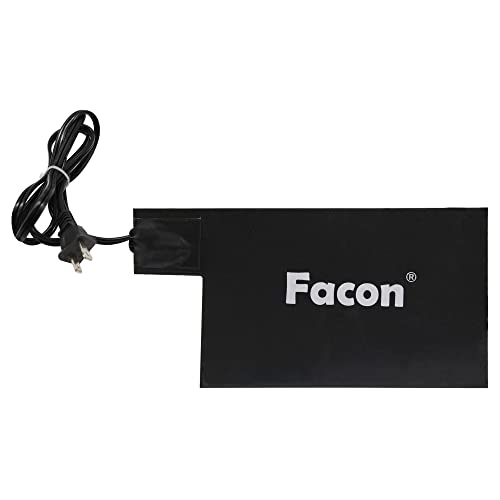
Facon 8.5″ x 5.5″ Silicone Battery Heater Pad

Zerostart TEMRO Silicone Battery Pad Warmer 60W

Lettry Car Battery Insulation Blanket 40″x7″
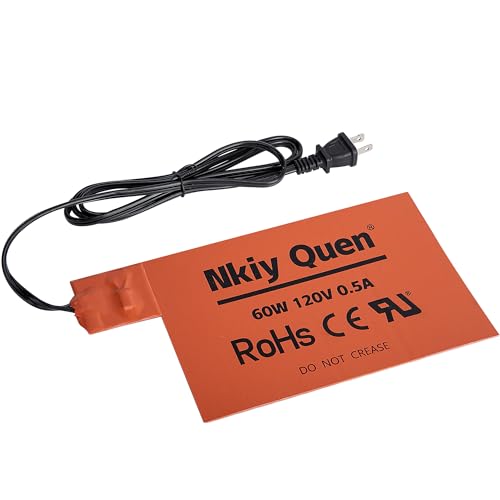
Nkiy Quen Silicone Battery Pad 8.2″ x 5.5″

Zerostart 3400104 Silicone Battery Heater 6.5″x10.5″
A Deeper Look At The Lineup
The CW-B85 pad slides under your battery in the tray, plugs into a standard 120V wall outlet, and warms the case from below so cold-cranking amps stay healthy on bitter mornings. It’s a near-universal fit for most automotive batteries, which makes it a sensible first pick if you don’t want to fuss about exact tray dimensions.
Where this pad separates itself from a generic hot plate is the built-in thermostat, set to switch off near 68°F once the battery has soaked up enough warmth. For most commuters who plug in for half an hour before leaving, that cut-off removes any worry about leaving the heater on through the workday.
Strengths Worth Knowing
- Thermostatic shut-off around 68°F keeps things safe during long plug-in sessions.
- 60W draw is gentle on a standard 15-amp garage circuit.
- Silicone construction holds up well to under-hood temperatures and battery acid residue.
- 2-prong plug means no special adapter needed in most North American garages.
- Universal fit suits a wide range of group-size batteries found in sedans and small SUVs.
Honest Caveats
- You’ll need a reachable outdoor outlet or an extension cord routed safely to the bay.
- Not recommended for use with lithium-ion or nickel-cadmium battery chemistries.
Key Attributes
Best Suited To
Daily drivers in regions where overnight temperatures regularly drop below 20°F.
Skip It When
You drive a Subaru and want a clean OEM-style install, the Subaru 80W Battery Warmer J6010FS000 is purpose-built for that crowd.
Subaru owners in the snow belt know the brand actually engineers for cold-weather reliability, and the J6010FS000 is the factory answer for keeping cranking power consistent. It bolts into place like a genuine part, plugs into a standard household outlet, and works across decades of Subaru models from the Forester to the WRX STI.
The 80W output sits a touch above the typical 60W pad on this list, which means faster warm-up if your morning routine is tight. Compared with the CW-B85 pad in spot one, this one trades universal compatibility for an exact-fit feel that matches Subaru’s battery tray geometry.
Points In Its Favor
- Genuine OEM part made specifically for Subaru battery trays.
- 80W output warms the battery noticeably faster than most pads.
- Plugs into any standard 120V household outlet with no adapter fuss.
- Wide model coverage spanning Forester, Legacy, Outback, Impreza, WRX, STI, Tribeca, and Crosstrek.
Trade-Offs
- Useful almost exclusively on Subaru vehicles; other makes would need an aftermarket pad.
- OEM-tier parts commonly cost a bit more than third-party universal options.
Whose Shelf It Belongs On
Subaru owners who park outdoors through northern winters and want a clean, factory-style install.
Look Elsewhere When
You drive something other than a Subaru, the Maichis Silicone Battery Heater Pad in spot three is the wider-fit alternative.
Maichis keeps things deliberately simple with a thermostat that’s actually adjustable in feel rather than fixed: it kicks in once the battery case hits about 32°F and cycles off around 122°F. The 8.5″ x 7.875″ footprint matches many mid-size automotive batteries, so it tucks beneath without forcing a tray modification.
The thermostat’s wide range gives this pad a useful job in shoulder seasons too, not just deep winter. Where the CW-B85 leans conservative at a 68°F cut-off, this one is happy to stay warm through a longer session in a colder garage.
What It Does Well
- Wide thermostat range (on at 32°F, off at 122°F) suits both frigid mornings and shoulder seasons.
- 8.5″ x 7.875″ footprint fits the majority of mid-size automotive batteries.
- Silicone surface resists battery acid and under-hood grime for long service life.
- 120V/60W draw is friendly to standard garage outlets.
Where It May Fall Short
- The 122°F upper cut-off is higher than some competitors, so monitoring placement matters in tight engine bays.
- Cord length isn’t called out in the source data, so you may need an extension for trucks or rear-mounted batteries.
Quick Facts
Made For
Shoppers who want a no-fuss drop-in pad that handles both mid-winter mornings and chilly shoulder-season nights.
Not Your Match When
You drive a Subaru and want a clean factory fit, the Subaru 80W Battery Warmer J6010FS000 is purpose-built for that scenario.
Where the silicone pads sit beneath the battery, the Kat’s 22200 wraps around it like a blanket, hugging the case from the sides as well as the bottom. The vinyl outer layer shrugs off oil splash and battery acid residue, and the 36″ length covers most group 24 through 31 automotive batteries found in trucks and larger cars.
For engines where removing the battery to install a pad isn’t appealing, a wrap like this slides on without tools. Compared to the Maichis pad in spot three, this trades a flat footprint for full-case coverage, which can matter in bays where the underside of the battery gets only limited airflow.
Notable Gains
- Vinyl-coated exterior resists oil and acid for longer service life.
- 36″ length wraps around most group 24-31 batteries without modification.
- No need to unbolt the battery for installation on most vehicles.
- 80W rating is comfortable for short pre-drive warm-ups in cold garages.
Points To Note
- Wrap-style heaters can trap more heat than pads, so confirm clearance around the battery terminals and vent caps.
- Strap-style fastening is less rigid than a bolt-in OEM heater like the Subaru unit.
Feature Rundown
Who Should Grab It
Truck and SUV owners who’d rather wrap than drop the battery for installation.
Another Choice May Suit
Anyone chasing the heaviest-duty wrap for diesel trucks should compare with the Zerostart 2800071 in spot five.
This is the heavyweight of the lineup: 72″ of Thinsulate-insulated wrap delivering 160W to a large battery, with CSA approval on the cord set. Designed for truck batteries and series-parallel banks, it warms the core 60°F to 70°F above ambient temperature, which is meaningful for diesel pickups and work rigs that sit outdoors through real winters.
Compared to the Kat’s 22200 wrap in spot four, the Zerostart doubles down on length and wattage. It’s overkill for a commuter sedan but quietly reassuring for a heavy-duty application where a no-start costs a workday.
Well-Handled Touches
- 160W output warms the battery core 60-70°F above ambient for quick starts.
- Thinsulate insulation holds warmth even when the truck sits unplugged for short windows.
- CSA-approved cord set eases concerns about long-term outlet safety.
- 72″ length fits commercial trucks and large battery banks.
Possible Compromises
- 160W draw is higher than a 15-amp circuit expects if combined with block heaters or other warmers on the same outlet.
- Bulkier than a thin pad; tight engine bays may need careful routing of the wrap.
The Right Fit
Truck owners, diesel commuters, and anyone with a large-format battery who wants fast, robust warm-up.
Swap It Out When
You only need light warmth for a sedan, the Zerostart TEMRO Silicone Battery Pad Warmer in spot seven is a quieter pad-style option.
Facon’s pad is built for the most common scenario: a garage-parked daily driver that needs a quick warm-up before a winter commute. The 72-inch cord reaches from a wall outlet to most engine bays without an extension, and the 8.5″ x 5.5″ footprint is tuned for typical compact and mid-size automotive batteries.
The thermostatically controlled design cycles the heat on and off automatically, so you can plug in the night before and not think about it. Compared to the Maichis pad in spot three, this one aims a touch smaller, which can matter in vehicles with shallow battery trays.
What Earns Its Place
- 72-inch cord reaches most wall outlets without an extension.
- Compact 8.5″ x 5.5″ footprint fits shallow trays in compact cars.
- Thermostatic control prevents overheating during long plug-in windows.
- 60W draw is easy on standard household circuits.
Details To Watch
- Smaller footprint may not cover full base of larger group 35 or group 65 batteries.
- 2-prong plug suits North American outlets only.
Spec Overview
Built With In Mind
Garage-parked commuters with shallow battery trays who want a long-enough cord to skip the extension.
Reach For A Different Pick When
You have a larger battery that needs more blanket coverage, the Zerostart 3400104 in spot ten is a wider pad for that.
The TEMRO pad is engineered to disappear into the battery box without lifting the case noticeably off its tray. At 5.5″ x 8.5″ with a slim design, it tucks beneath the battery where taller pads sometimes cause fitment headaches. The silicone material resists battery acid, which matters over years of under-hood exposure.
One thing the manufacturer is upfront about: this pad isn’t recommended for lithium-ion, nickel-cadmium, or batteries with ABS cases. For traditional flooded lead-acid setups, though, it’s a sensible warm-up option. Compared to the Facon pad in spot six, this one is built for a slightly different dimensional sweet spot.
The Helpful Details
- Slim profile fits snugly without lifting the battery off the tray.
- Silicone surface holds up against battery acid exposure.
- 120V/60W spec is standard-outlet friendly.
- 5.5″ x 8.5″ dimensions suit many mid-size automotive batteries.
Considerations
- Not recommended for lithium-ion, nickel-cadmium, or ABS-case batteries.
- Not suited for use inside insulated battery boxes per the manufacturer.
Who Will Love This
Owners with traditional lead-acid batteries and tight battery boxes who need a low-profile pad.
A Better Fit Elsewhere
If you want heavier-duty warming for a large diesel battery, the Zerostart 2800071 in spot five brings the wrap-style heat.
The Lettry blanket takes a different angle from the rest of this list. Rather than actively heating the battery, it’s a 5mm-thick thermal wrap that shields the case from radiant engine heat in summer and holds natural warmth in winter. For drivers who park outdoors without outlet access, insulation alone is a real upgrade over no protection.
It’s also useful in hot climates where under-hood temperatures cook batteries and shorten their service life. Compared with the Kat’s wrap in spot four, this one is passive insulation rather than an active heater, so it’s complementary rather than competing.
Noteworthy Benefits
- 5mm-thick thermal blanket defends against both radiant heat and cold soak.
- 40″ x 7″ size wraps most group 24-31 automotive batteries.
- No outlet required, so it works for street-parked vehicles.
- Useful in summer too, where under-hood heat accelerates battery wear.
A Few Limitations
- Passive insulation can’t actively warm a deeply cold battery like an electric pad can.
- Installation requires routing and securing the blanket around the battery hold-down.
Perfect Match For
Street-parked drivers without outlet access, or anyone who also wants summer heat protection.
Consider Something Else When
You have reliable outlet access and want active warmth, the CW-B85 pad in spot one is a stronger active-heating choice.
The Nkiy Quen pad is a compact 8.2″ x 5.5″ mat aimed at smaller under-hood trays where larger pads simply don’t fit. Built-in heating wires distribute warmth evenly across the battery base, and the thermostat takes over once the case reaches its target temperature.
Where this one differs from the Facon pad in spot six is a focus on tight dimensional precision for compact cars. If you’ve measured your tray and found the larger 8.5″ pads are too generous, this is the narrower-profile alternative.
The Good Stuff
- Compact 8.2″ x 5.5″ dimensions suit small-form-factor battery trays.
- Built-in heating wires spread warmth evenly across the battery base.
- Thermostatic control cycles heat on and off automatically.
- Helpful for maintaining cold-cranking amps on the coldest mornings.
What To Weigh
- Smaller surface area means less contact with larger battery bases.
- Cord length and connector type aren’t called out, so verify fit before ordering.
The Right Fit
Drivers with compact cars and shallow battery trays where larger pads won’t sit flat.
Where A Sibling Pick Shines
For trucks and larger batteries, the Zerostart 3400104 in spot ten offers a wider, more generous pad footprint.
The 3400104 rounds out the list as the wider-format pad option, covering 6.5″ x 10.5″ for larger battery groups including group 65 and similar full-size footprints. The 80W draw splits the difference between typical 60W pads and the high-output 160W Zerostart wrap in spot five, giving you faster warm-up without demanding too much from a garage circuit.
Its slim design tucks into the battery tray without lifting the case, which is the same low-profile trick the smaller TEMRO pad pulls off. If you’ve been eyeing the TEMRO but your battery is just a bit too large for it, this is the upsiered sibling.
What Works In Its Favor
- 6.5″ x 10.5″ pad covers larger batteries like group 65.
- 80W output warms up faster than typical 60W pads.
- Slim design keeps the battery seated properly in the tray.
- Silicone material resists acid for long service life.
Small Caveats
- Not recommended for lithium-ion or nickel-cadmium batteries per the brand’s compatibility notes.
- Larger footprint can crowd tight battery boxes designed for compact cars.
Who It Suits Best
Drivers with larger group-size batteries who want more pad coverage and faster warm-up.
A Better Fit Elsewhere
If your battery sits in a particularly tight tray, the Facon pad in spot six keeps things more compact.
What Matters Most Before Choosing An Automotive Battery Warmer
Form Factor: Pad vs. Wrap vs. Blanket
Pad-style warmers slide beneath the battery and warm from below, which works well in shallow trays with enough clearance. Wrap and blanket heaters surround the case, which can deliver faster warm-up but needs room around the battery. If your tray is shallow, lean toward a slim pad like the Zerostart TEMRO or the Facon 8.5″ x 5.5″ mat.
Wattage and Thermostat Behavior
Most pads sit between 60W and 80W, while heavy-duty wraps reach 160W. Higher wattage warms the battery faster but pulls more current from the same outlet. A thermostat is genuinely useful: it cycles heat on and off around a target temperature, so you can plug in overnight without worry. Look for an upper cut-off that’s reasonable for the battery chemistry you’re using.
Compatibility and Fit
OEM-specific heaters like the Subaru 80W Battery Warmer J6010FS000 are designed for exact-fit trays on certain vehicles, which removes guesswork. Universal pads work across many group sizes but require you to verify dimensions. For lithium-ion or nickel-cadmium batteries, several pad makers explicitly recommend against use, so confirm compatibility before buying.
Key Considerations Across These Picks
Wrong Turns To Avoid
The most common mistake is picking a wrap or blanket that’s too bulky for the battery box, where it can press against terminals or vent caps. Measure the height under your hood before ordering a wrap-style unit. Another pitfall is assuming a pad works for every chemistry: lithium-ion and nickel-cadmium setups need a unit explicitly rated for them, and several picks in this list exclude those chemistries by design.
Where The Extra Money Goes
Higher-tier models typically bring more wattage for faster warm-up, thicker insulation materials like Thinsulate, and CSA or OEM approval on cord sets. For a daily commuter in moderate cold, a 60W pad with a thermostat is plenty. For diesel trucks and northern winters, the jump to a 160W wrap or an OEM-spec heater is the upgrade that actually pays back in fewer no-start mornings.
Frequently Asked Questions
Do Automotive Battery Warmers Really Make A Difference In Cold Weather?
Yes, a warmed battery holds more usable cold cranking amps (CCA), the measure of starting power at 0°F, which means the engine turns over faster on cold mornings.
Is A Battery Pad Or A Battery Wrap Better?
Pads fit shallow trays and warm from below, while wraps surround the case and warm faster. Pick based on your tray clearance and how quickly you need the battery warm.
How Long Should A Battery Warmer Stay Plugged In?
Most thermostatically controlled warmers cycle on and off automatically. A 30-minute session is a typical sweet spot before driving in deep cold.
Will A Battery Warmer Drain The Battery Itself?
No, active warmers plug into household AC power and don’t pull from the battery itself. Passive insulation blankets don’t draw any current at all.
Can You Use A Battery Warmer On Any Vehicle?
Most universal pads work across many vehicles, but always check the dimensions and chemistry compatibility. OEM-specific heaters like the Subaru unit only fit certain models.
The Takeaway
A battery warmer is one of the cheapest insurances against a winter no-start, and the right pick depends on your battery size, tray clearance, and whether you have a reachable outlet. Pad-style heaters suit most daily drivers, wrap-style blankets help trucks and outdoor-parked vehicles, and OEM heaters give Subaru owners a clean factory fit. Match the warmer to your climate and battery, plug it in on the coldest nights, and the next morning your engine will turn over like it’s midsummer.