A battery that sits for weeks doesn’t slowly lose charge so much as it leaks it through every parasitic draw your car or bike hides. Cold mornings in January, a truck that only sees weekend duty, a motorcycle in winter storage: each one asks the same quiet question, will there be enough juice left to turn over. An automobile battery tender solves that problem by topping off what your vehicle loses naturally, then holding the voltage at a safe float so the plates stay healthy through months of inactivity. The picks below cover powersports machines, daily-driver cars, multi-battery garages, and the accessories that make any of them easier to live with.
An Overview Of The Picks

Battery Tender Junior 12V, 750mA Charger and Maintainer

Battery Tender Plus 12V 1.25 AMP Car & Motorcycle Charger
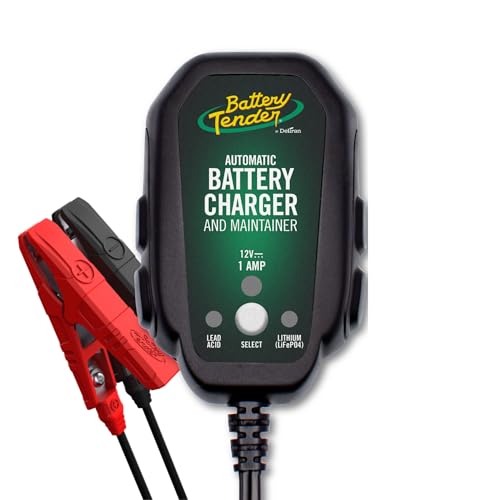
Battery Tender Junior 12V, 800mA Lead Acid and Lithium Charger
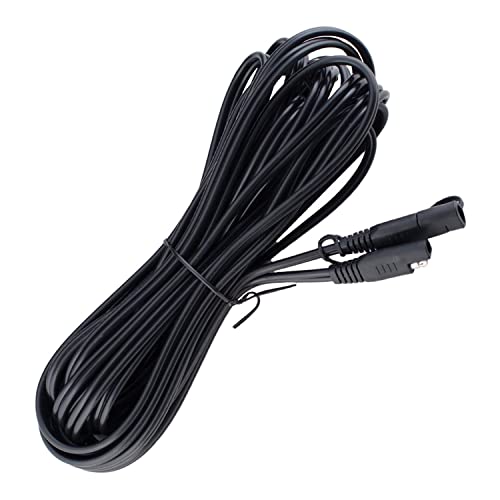
Battery Tender 25 Foot Extension SAE Cable

Battery Tender Plus 4 Bank Multibank Charger 5 AMP

Battery Tender 5 AMP 12V Automotive Charger and Maintainer
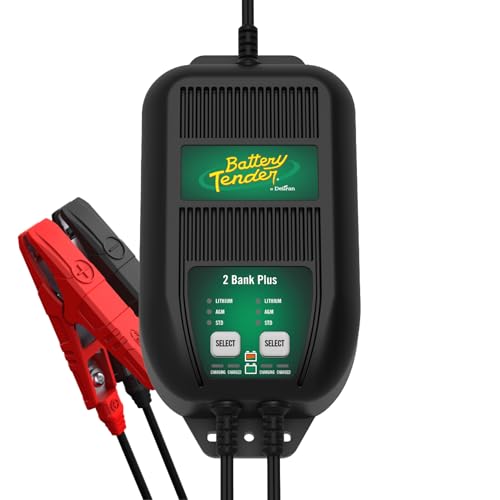
Battery Tender Plus 2 Bank Multibank Charger 2.5 AMP

Battery Tender 12 Foot Extension SAE Cable 4 Pack

Battery Tender Plus 12V 1.25 AMP Charger and Maintainer

OptiMate3 0.8A Smart Battery Saving Charger
Inside Each Recommended Option
The Junior has earned the kind of following that comes from a decade of quiet reliability, not flashy marketing. Its 750mA output is sized for the small batteries inside motorcycles, ATVs, and lawn tractors, the vehicles that tend to sit longest and die slowest until the day they just won’t turn over. For someone with a single bike parked for winter, that modest current is honestly the right call. Higher amperage on a tiny battery just cooks plates faster; the Junior threads that needle.
The four-step charging cycle (initialization, bulk charge, absorption, and a long-term float mode that holds the battery at a safe resting voltage) is the reason this unit remains a default recommendation for powersports riders. Once the battery is topped off, the charger drops to a maintenance state without overcharging. Most owners will leave it connected for months at a time without much thought.
Useful Touches
- Spark-resistant connection when you clip onto a battery, which is reassuring if the leads accidentally touch before you attach the ring terminals.
- Reverse-polarity protection means a swapped red-and-black hookup won’t fry anything; the unit simply refuses to push current.
- The included ring-terminal harness and alligator clips let you pick a permanent mount or a temporary setup, useful when switching between a snowmobile and a dirt bike.
- Float-mode behavior is the real feature here: a battery left connected through a full winter arrives in spring at the same voltage it had in November.
- Compact enough to leave tucked behind a seat or in a saddlebag without taking up valuable garage shelf space.
Honest Caveats
- At 750mA, charging a deeply discharged full-size car battery from near zero takes days, which is why this is genuinely a powersports pick.
- The plastic housing and small clamp surfaces wear fine in a garage but won’t tolerate being tossed in a tool bag with heavier gear.
Made For
Owners of motorcycles, scooters, ATVs, and lawn tractors who want a low-current tender they can leave connected indefinitely without checking on it.
Skip It When
You’re maintaining a full-size car or SUV, in which case the Battery Tender Plus 12V 1.25 AMP Car & Motorcycle Charger delivers the higher current you’ll actually need.
Step up to the Plus and the extra half an amp matters more than the number suggests. A 1.25-amp output can genuinely nudge a depleted car battery back from the edge overnight, while still being gentle enough to leave connected through a long layoff. Compared to the Junior above, this is the version that crosses comfortably into automotive territory without losing the patient, float-mode temperament that defines the brand.
It’s the go-to for someone who owns both a daily driver and a weekend toy and only wants one charger on the bench. Lawn tractors, older carbureted bikes, and small displacement motorcycles all benefit from the slightly faster recovery. Plug it in, walk away, and trust that the four-stage program will hand off to maintenance mode at the right time.
Noteworthy Benefits
- The 1.25-amp rating cuts the time to bring a small automotive battery back from a partial discharge roughly in half compared to the Junior’s 750mA output.
- Adaptive smart charging adjusts the absorption phase to the battery’s actual state, rather than running a fixed timer that can leave cells undercharged or overcooked.
- Works across flooded, AGM, and gel cell lead-acid chemistries, which covers essentially every powersports and automotive battery on the road before lithium conversions became common.
- The fused ring-terminal harness gives a permanent, weather-resistant connection point for vehicles that stay parked for months at a time.
Trade Offs
- Not designed to recover a battery that’s been sitting dead for weeks; it maintains, it doesn’t perform miracles on deeply sulfated cells.
- Like the Junior, the lead wires are functional rather than heavy-gauge; storing the unit with sharp bends in the cable shortens the lifespan at the strain relief.
- Still not the right tool for a full-size truck battery, where the 5-amp charger later in this list makes a real difference.
Best Suited To
Garages with a mix of one car and one or two powersports machines, where a single moderate-output tender covers everything from a Miata to a Harley.
Look Elsewhere When
You need four batteries on one station; the Battery Tender Plus 4 Bank Multibank Charger 5 AMP handles that workload in a single footprint.
Most tenders quietly assume you’re still running a lead-acid battery, which is fine until your bike or ATV gets a lithium swap. Lithium iron phosphate (LiFePO4) cells use a different voltage curve and need a charging profile that doesn’t push them into the float mode that lead-acid batteries prefer. This version of the Junior adds a button that switches between the two chemistries, so the same charger can handle the old ATV in the corner and the lithium-equipped motorcycle you just upgraded.
At 800mA it sits between the basic Junior and the Plus, which makes it the practical middle ground for someone modernizing a fleet. You get the smaller, more forgiving footprint of the Junior line without giving up the option to maintain a lithium battery safely. That’s a real-world convenience more owners will appreciate as lithium conversions trickle down from racing machines to weekend trail bikes.
Useful Highlights
- Switchable chemistry profile means one charger covers both AGM flooded and gel lead-acid batteries as well as LiFePO4 lithium packs.
- 800mA output is enough headroom to maintain a small powersports lithium battery through storage without sitting in absorption mode for days.
- Internal microcontroller adjusts the charging sequence based on the selected chemistry, so there’s no manual voltage matching.
- Compact form factor fits in a drawer or under a workbench, and the quick-disconnect harness makes it easy to move between vehicles.
Points To Keep In Mind
- Owners of strictly lead-acid vehicles can save a few dollars by going with the basic Junior, since the lithium profile is a feature they won’t use.
- Output is still geared toward smaller batteries; full-size automotive lithium conversions benefit from the higher-amperage 5-amp charger later in this list.
Right Fit For
Shops and enthusiasts running a mix of older lead-acid machines and newer lithium-equipped vehicles on the same tender.
A Better Fit Elsewhere
For a single lithium-equipped adventure bike in long-term storage, the OptiMate3 0.8A Smart Battery Saving Charger brings a recovery mode the Junior doesn’t offer.
An accessory rather than a charger, but the kind of accessory that decides whether a tender actually gets used. The 25-foot SAE extension solves the most common frustration with battery maintenance: the battery lives in a tucked-away corner of the garage, and the nearest outlet is across the room. Pulling the car out every weekend just to plug in defeats the purpose. With this lead, the charger stays parked next to the wall outlet and the ring terminal stays on the battery.
Compatibility is the bigger story here than raw length. The quick-disconnect SAE plugs are designed to mate with the Junior, Plus, and the multi-bank chargers in this roundup, so adding the lead doesn’t require any rewiring or new ring terminals. For owners with a charger up high on a shelf and a vehicle parked low and far away, that’s the difference between a maintenance routine that actually happens and one that gets skipped.
Useful Strengths
- 25 feet of additional reach eliminates the need to park vehicles near an outlet just to keep them on a tender.
- Standard SAE quick-disconnect plugs on both ends mean installation is plug-and-play, no splicing or soldering.
- Compatible with the Junior, Plus, and the multi-bank chargers in this list, so it pairs cleanly with whichever main unit you choose.
- The fused lead protects the wiring harness from a short downstream without taking out the charger itself.
Points To Note
- Voltage drop over 25 feet is real on smaller batteries, so this pairs best with higher-output chargers rather than the most marginal tender in your garage.
- Single-cable packaging means you only get one extension; multi-vehicle owners may want the four-pack version for separate runs.
Perfect Match For
Homeowners with vehicles parked away from outlets, or anyone running a tender from a wall outlet mounted high on a garage wall.
Consider Something Else When
You’re outfitting multiple bays at once; the Battery Tender 12 Foot Extension SAE Cable 4 Pack delivers shorter runs in a single bundle.
When your garage holds a truck, a daily driver, a motorcycle, and a riding mower, four individual tenders turn into a power-strip nightmare. The four-bank charger solves that by packaging four independent 1.25-amp outputs into one wall-plug unit. Each output runs its own four-step charging cycle independently, so the deeply discharged bike on bank one doesn’t slow down the half-full truck battery on bank four.
For a household or small shop, this is the charger that scales. The compact enclosure replaces four wall warts, and each lead gets its own fused harness so a fault on one vehicle doesn’t affect the others. Compared to the single-bank Plus earlier in this list, you’re paying a premium for the convenience of one outlet instead of four.
Where It Helps
- Four independent 1.25-amp channels let you maintain four vehicles at once from a single wall outlet.
- Each bank runs its own absorption-to-float handoff, so a deeply discharged battery on one channel doesn’t hold up the others.
- Works with standard, AGM, and lithium LiFePO4 batteries, which matters when some vehicles have been upgraded and others haven’t.
- One enclosure replaces four separate chargers, which clears up a lot of outlet and shelf space in a busy garage.
Some Limits To Know
- The 1.25 amps per bank is fine for maintenance but slow for recovery; a fully discharged full-size battery will take a long weekend to come back.
- Four leads mean four harnesses to route, label, and keep tidy; without labels, swapping vehicles between banks becomes a guessing game.
- Not the right tool if you only own one or two vehicles, since the 2-bank version later in this list covers that case more economically.
Who Should Grab It
Households or small shops keeping three or four vehicles in long-term or seasonal storage and wanting one wall-plug solution.
Swap It Out When
You only have a pair of stored vehicles; the Battery Tender Plus 2 Bank Multibank Charger 2.5 AMP covers that footprint for less.
Five amps is the jump from maintenance into recovery territory, and it’s the right output for full-size automotive batteries in cars, SUVs, and light trucks. The high-frequency switch-mode design runs cooler and lighter than older transformer-based chargers of the same output, which matters because this unit is heavy enough to live on a workbench rather than get tucked away. For owners of large vehicles with big battery banks, this is the tender that actually pushes enough current to bring a battery back from a meaningful discharge.
Four-stage charging (qualification, bulk, absorption, float) handles AGM, flooded, gel, and lithium batteries, so a mixed household with a modern truck and an older motorcycle can both find a profile here. Once the battery reaches full charge, the unit settles into long-term maintenance at a safe float voltage. That handover is the part that separates a smart charger from a basic trickle charger, and it’s where the extra cost earns its keep.
Practical Pluses
- Five amps of output is sized for large automotive battery banks, where smaller tenders would take days to recover a meaningful discharge.
- Chemistry coverage spans lead-acid, AGM, gel, and lithium batteries, removing the need to keep multiple chargers around for a mixed fleet.
- Qualification stage tests the battery before pushing current, which protects the charger from a battery too far gone to recover safely.
- Float-mode maintenance holds full-size batteries through winter storage without overcharging, which is the actual goal for most owners.
Practical Considerations
- Output is overkill for motorcycles and ATVs, where a smaller tender is gentler on small cells; this is a tool for full-size batteries first.
- The enclosure runs warmer than the Junior line, so leave clearance around the vents rather than wedging it into a tight shelf.
- Heavier than the smaller Battery Tender units, so plan for a fixed location on a bench or shelf rather than moving it around the garage.
Built With In Mind
Owners of full-size cars, SUVs, and trucks who want one charger that handles both maintenance and real recovery.
Reach For A Different Pick When
You’re maintaining a motorcycle or ATV; the Battery Tender Junior 12V, 750mA Charger and Maintainer is the smaller, gentler option for those batteries.
The 2-bank is the same idea as the 4-bank in a smaller package: two independent charging channels sharing a single wall plug, each capable of running its own full charging cycle without affecting the other. For a household with two stored vehicles, a daily driver and a motorcycle, or a pair of seasonal toys, this covers everything without the extra capacity and cost of the larger unit. Each bank delivers 1.25 amps, identical to the standalone Plus charger earlier in the list.
It’s also the practical answer for a small repair shop that wants to keep customer batteries healthy during off-hours. The enclosure is compact enough to sit on a shelf, and the separate leads can be routed to different bays or vehicles with minimal clutter. Compared to running two single-bank chargers, the 2-bank trades a slightly higher cost for one outlet instead of two.
Benefits That Matter
- Two independent 1.25-amp banks handle two vehicles from one outlet, ideal for a daily driver and a stored motorcycle.
- Each bank runs its own absorption-to-float handoff, so timing differences between batteries are handled automatically.
- Compatible with standard, AGM, and lithium LiFePO4 batteries, useful when one vehicle is older and the other has been modernized.
- Smaller footprint than the four-bank version, with the same plug-and-play SAE quick-disconnect leads.
Possible Compromises
- Only two banks, so households with three or four stored vehicles will outgrow this quickly.
- Per-bank amperage is the same as the single Plus charger, so it’s not a faster recovery, just a second channel.
- Two leads still need routing and labeling to keep the harnesses from tangling behind the workbench.
Who Will Love This
A two-vehicle household or a small shop with a couple of stored batteries that wants one tidy multi-bank solution.
Where A Sibling Pick Shines
Three or four vehicles warrant the Battery Tender Plus 4 Bank Multibank Charger 5 AMP, which doubles the channel count in a similar footprint.
Four-pack extensions are the unsung heroes of a tidy multi-vehicle setup. Each cable adds 12 feet of reach and ends in a fused SAE quick-disconnect that pairs with any of the chargers in this list. For a multi-bank charger like the 4-bank above, having four pre-made leads with the right connectors means each bank has its own dedicated path to a battery, no improvisation needed.
These extensions are specifically intended for use with the multi-bank Battery Tender units, which is why they’re sold in matching packs. The 10-amp fused lead handles the full output of any charger in the family, so voltage drop stays in check over the 12-foot run. For someone installing a new battery maintenance station, this bundle covers the cabling in a single purchase.
Everyday Advantages
- Four 12-foot leads in one pack cover a multi-bank charger setup without ordering separate cables.
- Fused leads protect each run from a short downstream, which matters more when cables are routed along walls and around corners.
- SAE quick-disconnect ends match the multi-bank chargers’ outputs, so installation is plug-and-play per bank.
- 10-amp rating handles the full output of higher-amperage chargers without significant voltage drop.
Things To Consider
- 12 feet is shorter than the single 25-foot extension earlier in the list, so longer garage layouts may still need to supplement.
- Designed for the multi-bank units; not compatible with older 6-volt Battery Tender Plus units or models with white quick-disconnect plugs.
Right Fit For
Anyone wiring up a multi-bank charger in a new location and wanting the cabling done in a single matched set.
Not Your Match When
You only need one or two extensions for a single-bank charger, in which case the Battery Tender 25 Foot Extension SAE Cable is a cleaner fit.
This is the updated spin on the classic Plus, the same 1.25-amp output wrapped in current-generation internals that meet modern efficiency standards, including the California energy compliance rules that govern charger standby draw. For shops and homeowners in regulated states, that compliance matters, since older chargers can pull meaningful phantom power even when the battery is full.
Functionally, it does the same job as the other Plus units: full charge, then float mode for storage. The charging algorithms have been refined to better handle AGM batteries in particular, which is the chemistry most modern cars ship with from the factory. Compared to the original Plus earlier in this list, it’s a quieter, cooler-running unit that’s friendlier to leave plugged in 24/7.
Standout Benefits
- California-compliant standby draw makes it appropriate for shops and homeowners in regulated states.
- Refined charging algorithms are tuned for AGM batteries, which is the default chemistry in most modern cars and trucks.
- Same 1.25-amp output as the classic Plus, so charging behavior is familiar if you’ve used previous-generation units.
- Float-mode handoff is the same trustworthy behavior: a full battery stays full without overcharging through long storage.
Soft Spots
- Doesn’t add lithium chemistry support, so a garage with lithium conversions should still pick the switchable Junior.
- Single-bank output, so multi-vehicle owners will need a separate unit or a multi-bank alternative.
Whose Shelf It Belongs On
Daily drivers and weekend cars that need a current-generation 1.25-amp tender and, in many cases, a unit that meets local efficiency rules.
Another Choice May Suit
Shops maintaining mixed fleets will get more flexibility from the Battery Tender Junior 12V, 800mA Lead Acid and Lithium Charger and its chemistry switch.
The OptiMate3 earns its place at the end of the list by doing something the others don’t really try: rescuing batteries that have been left too long. Where most tenders assume the battery is reasonably healthy and just needs topping off, the OptiMate3 includes a recovery mode that brings deeply discharged cells back from voltages where other chargers refuse to start. For a motorcycle that’s been sitting in a shed since the previous owner’s divorce, that’s the difference between replacing a battery and saving it.
At 0.8 amps it’s clearly a powersports unit, sized for motorcycle, ATV, side-by-side, and personal watercraft batteries. It handles AGM, gel, standard flooded, and deep-cycle lead-acid batteries, which covers the typical powersports range. Once the battery is recovered, the unit drops into a long-term maintenance mode that’s safe to leave connected.
The Value In It
- Recovery mode can revive deeply discharged batteries that most smart chargers refuse to touch, a real-world convenience when buying a used bike or pulling a machine out of long storage.
- Compatible with AGM, gel, standard, and deep-cycle lead-acid batteries, which covers the typical powersports range without extra setup.
- 0.8-amp output is gentle on small cells, so it’s safe to leave connected for weeks or months at a time.
- Once recovery is complete, the unit shifts to a maintenance mode that holds the battery at a safe voltage indefinitely.
Trade-Offs To Consider
- Not a lithium charger, so LiFePO4 conversions need a different unit entirely.
- 0.8 amps is fine for motorcycles and small powersports batteries but too low for any meaningful automotive recovery work.
- The recovery function works on lead-acid cells that have dropped voltage but not on physically damaged batteries; no charger can fix a cracked plate.
Who Should Grab It
Riders who frequently rescue neglected batteries, whether that’s reviving a bike after long storage or restoring an older machine to daily use.
Skip It When
You’re simply maintaining a healthy battery that gets used regularly; the Battery Tender Junior 12V, 750mA Charger and Maintainer covers that scenario more economically.
What To Weigh Before Choosing An Automobile Battery Tender
The right tender isn’t always the most expensive or the most powerful; it’s the one whose output and chemistry coverage match the battery you’re trying to keep alive. Output current is the first filter: small powersports batteries are happiest at 750mA to 1.25 amps, while full-size automotive batteries benefit from 5 amps when real recovery is part of the job. Running 5 amps through a tiny motorcycle battery is wasted energy and added stress; running 750mA into a dead truck battery is wasted days.
Chemistry support matters more as lithium conversions spread. A lead-acid-only charger will push incorrect voltage into a LiFePO4 pack and slowly damage the cells over months of maintenance. If any vehicle in your fleet is lithium-equipped, a switchable charger or a dedicated lithium tender is worth the small premium. Coverage for AGM, gel, and standard flooded cells is standard across the picks above, so lead-acid compatibility is rarely a worry.
Connector style and lead length shape daily use more than people expect. SAE quick-disconnects have become the de facto standard for this category, which is why the extension cables in this list pair cleanly with the chargers. For a vehicle parked far from an outlet, an extension cable is the difference between actually maintaining a battery and skipping the job because the reach is too short.
Finally, multi-bank chargers are the right call when more than one vehicle is in regular rotation. A single-bank charger per vehicle multiplies the wall-outlet count and the cable clutter. A 2-bank or 4-bank unit consolidates that into one enclosure with independent channels, so a deeply discharged battery on one bank doesn’t slow down the others. For one or two vehicles, a single-bank tender is plenty.
Key Considerations Across These Picks
Pitfalls Shoppers Hit
The most common mistake is buying a tender that’s too powerful for the battery, assuming more amps is always better. A motorcycle battery doesn’t want 5 amps pushed into it; it wants a patient 750mA that holds voltage without heating the cells. The second common error is ignoring chemistry: a lead-acid tender left connected to a lithium battery over a winter will quietly degrade the lithium cells.
A third trap is treating the tender as a recovery tool when the battery is already dead. A smart charger will refuse to push current into a battery that’s dropped below its safety threshold, which looks like a broken unit but is actually the protection doing its job. For a battery that’s been sitting dead for months, a charger with an explicit recovery mode, like the OptiMate3, is the safer starting point.
When Paying More Pays Off
The premium tier in this category buys three things that matter over years of use: higher build quality in the housing and connectors, more refined charging algorithms that better match real battery behavior, and multi-bank convenience for households with more than one vehicle. None of that matters for a single motorcycle that gets plugged in once a month, but for a garage with multiple vehicles and batteries that see real seasonal storage, those upgrades turn into years of trouble-free maintenance. The honest read is that the premium exists for a reason, and it’s worth paying when the use case actually demands it.
Frequently Asked Questions
How long can an automobile battery tender stay connected?
Modern smart tenders with float-mode maintenance are designed to stay connected indefinitely. Once the battery reaches full charge, the unit drops to a low-voltage hold that keeps the battery topped off without overcharging. Leaving a tender connected through a full winter is standard practice for stored vehicles.
Will a tender bring a completely dead battery back to life?
Most tenders will refuse to push current into a battery that’s dropped below its safe voltage threshold, which protects both the charger and the battery from damage. Chargers with an explicit recovery mode, like the OptiMate3, are designed to handle deeply discharged cells and can often bring them back. Physically damaged batteries with cracked plates or sulfation beyond recovery are beyond what any charger can fix.
Do I need a different tender for lithium batteries?
Yes. Lithium iron phosphate (LiFePO4) batteries charge at a different voltage profile than lead-acid batteries, and a lead-acid-only tender can slowly degrade lithium cells over months of maintenance. Switchable chargers like the Junior 800mA model in this roundup handle both chemistries correctly with a button press.
Can one charger handle both a car and a motorcycle?
A single-bank charger with a 1.25-amp output is a reasonable compromise for one car and one motorcycle, though the motorcycle will charge faster than the car and the car will charge slower than a dedicated automotive unit. For two vehicles on one charger full-time, a multi-bank unit like the 2-bank Plus is the cleaner answer.
Is a higher amperage tender always better?
No. Higher amperage is only better when the battery can accept that current without overheating or stressing the plates. A 5-amp charger on a small motorcycle battery is overkill; a 750mA charger on a dead truck battery is just slow. Match the output to the battery size and chemistry, and the rest takes care of itself.
Bottom Line
The right automobile battery tender depends on what you drive and where you park it. A single motorcycle or lawn tractor pairs naturally with the Junior; a daily driver and a bike share the Plus; a full garage with multiple stored vehicles wants the multi-bank chargers. For most households, the decision comes down to how many vehicles and what chemistry, not which brand makes the longest cable. Pick to match the battery, leave it connected, and the rest is patience.