A dead battery on a cold morning can ruin an entire day. Whether you park a motorcycle through winter, store a classic car for months, or just want your daily driver ready in the morning, an automatic battery charger maintainer takes the worry off your plate. These compact units plug into a wall outlet, connect to your battery, and quietly top off the charge so it never dips below a healthy level.
Choosing the right one matters more than most people realize. Different battery chemistries (lead-acid, AGM, gel, or lithium) need different charging profiles, and a mismatched unit can shorten battery life instead of extending it. This list focuses on chargers built for long-term connection: smart multi-stage programs, automatic float modes, and enough chemistry coverage to handle whatever sits in your garage. The picks below span motorcycle-sized trickle units, mid-power garage workhorses, and fully sealed marine onboard chargers.
The Picks In Brief

Battery Tender Junior 12V, 750mA Charger and Maintainer (021-0123)
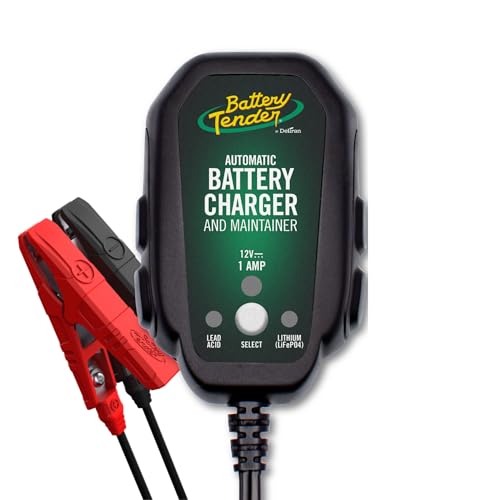
Battery Tender Junior 12V, 800mA Lead Acid and Lithium Maintainer (022-0199-DL-WH)

Battery Tender Plus 12V 1.25 AMP Car & Motorcycle Maintainer

Battery Tender Plus 12V – 1.25 AMP Battery Charger (022-0185G-DL-WH)

Battery Tender 5 AMP 12V Automotive Smart Battery Charger (022-0186G-DL-WH)

NOCO GENIUS1 1A 6/12V Smart Battery Charger and Maintainer

OptiMate3 0.8A Smart Battery Saving Charger for 12V Lead-acid

NOCO GENIUS5 5A 6/12V Smart Battery Charger and Maintainer

NOCO GENPRO10X1 12V 10A 1-Bank OnBoard Marine Battery Charger

NOCO GENIUS2 2A 6/12V Smart Battery Charger and Maintainer
Taking A Closer Look At The Options
The Battery Tender Junior has earned its reputation as the gateway maintainer for anyone new to long-term battery care. Its 750mA output is well matched to the small batteries found in motorcycles, ATVs, and lawn tractors, where a more powerful unit would be overkill.
What separates it from a basic trickle charger is the four-step charging program. The unit first checks the battery, then delivers a bulk charge, moves into absorption, and finally settles into a float mode that holds voltage without overcharging. For weekend riders parking their bike through a long New England winter, that float stage is the whole point. Connect it, walk away, and come back to a battery that still cranks in March.
A Favorable Mix
- Four-step program with automatic float prevents overcharging during months of storage
- Compatible with flooded, AGM, and gel cell lead-acid batteries
- Compact footprint fits in tight garage corners and on crowded workbenches
- Lights and an at-a-glance status indicator let you confirm charging state without opening the manual
- Solid entry point for riders maintaining their first stored vehicle
Points To Keep In Mind
- Output is too light for full-size automotive batteries in cold climates
- Lead-acid only; no lithium chemistry support, unlike the 800mA sibling reviewed next
- Owners commonly report the included alligator clips feeling lightweight for repeated seasonal use
Who Should Grab It
Casual powersports owners storing a motorcycle, scooter, or ATV over an off-season want a true set-and-forget maintainer rather than a heavy-duty shop charger.
Skip It When
You need lithium (LiFePO4) compatibility or a single unit to maintain both lead-acid and lithium batteries; the Battery Tender Junior 800mA version covers that scenario better.
Where the original Junior handles only lead-acid batteries, this updated 800mA version adds a simple toggle between lead-acid and lithium (LiFePO4) profiles. That single switch removes a real headache for owners running mixed fleets.
The push-button chemistry selection makes sense the first time you plug it in. LiFePO4 batteries require a different voltage ceiling than flooded or AGM cells, and using the wrong profile shortens cycle life. For someone storing a lithium-equipped dirt bike next to an older AGM motorcycle, this Junior solves that pairing cleanly.
What It Does Well
- Selectable profiles for AGM, flooded, gel, and lithium iron phosphate batteries
- Slightly higher 800mA output shortens the time to a full charge on small batteries
- Smart charging logic keeps the unit from cooking a battery left connected for months
- Lightweight enough to throw in a saddlebag for track-day or trail use
Honest Caveats
- Still sized for powersports batteries rather than full-size car or truck packs
- The mode button sits flush with the case, so double-check the LED pattern after a power blip
Feature Snapshot
Made For
Multi-battery households with one older lead-acid bike and one newer lithium machine want a single charger that handles both correctly.
Look Elsewhere When
Your garage centers on full-size automotive batteries where a 5A model like the Battery Tender 5 AMP unit moves current more efficiently.
The Plus steps up to 1.25 amps, which sounds modest until you compare it to the Junior’s 750mA. That extra current matters once you start maintaining actual car batteries instead of motorcycle packs.
The four-step adaptive program recharges, absorbs, and then floats the same way the Junior does, but it reaches a full charge noticeably faster on a depleted mid-size automotive battery. Owners with a small fleet (a daily driver, a weekend classic, and a lawn tractor on a tender) often find this single Plus covers the whole rotation.
Where It Delivers
- 1.25A output bridges the gap between powersports trickle and full automotive charging
- Adaptive charging responds to battery condition rather than running a fixed timer
- Float mode holds voltage safely for indefinite connection
- Spark-proof connectors add a layer of safety during hookup
Trade Offs
- Heavier and bulkier than the Junior; less convenient for tossing in a saddlebag
- Still not the right tool for heavy trucks or deeply discharged large batteries
- Older revisions may lack a lithium profile, which the 800mA Junior now offers
Best Suited To
Garage owners maintaining a mix of powersports and automotive batteries want one maintainer with enough current to handle the cars too.
Consider Something Else When
You mainly need to maintain large-displacement vehicles or trucks where the 5A Battery Tender unit shown later delivers faster turnaround.
This is the refreshed take on the Plus platform, carrying the same 1.25A output but with updated internals tuned for stricter regulatory standards. For shop owners in California or anyone who wants a unit that meets current efficiency rules, that compliance angle alone can be the deciding factor.
The unit ships with the familiar four-stage program and is particularly well suited to flooded and AGM batteries. Compared to the original Plus reviewed above, behavior in everyday use is nearly identical, but the updated firmware tends to manage absorption voltage more tightly across temperature swings.
Strong Points
- California-compliant charging profile for shops operating under current energy rules
- Reliable four-stage program with proven float-mode behavior
- Comfortable fit for everyday automotive and powersports batteries
- Wide compatibility with AGM and flooded lead-acid batteries
Where It Is Less Suited
- No lithium mode, so LiFePO4 owners should look at the 800mA Junior instead
- 1.25A still feels slow on a deeply discharged large battery
Quick Facts
Right Fit For
Home mechanics and small shops that want a familiar Plus-class maintainer with current compliance paperwork appreciate this updated SKU.
Reach For A Different Pick When
You run lithium batteries on powersports vehicles, where the Battery Tender Junior 800mA Lithium version is a more flexible chemistry match.
Once you step up to a full-size SUV or truck battery, the Junior and Plus units start feeling underpowered. This 5A smart charger is sized for that reality, with a high-frequency switch-mode design that delivers real automotive-grade current in a package still light enough to live on a garage shelf.
The four-stage program (qualification, bulk, absorption, and float) walks a deeply discharged battery up to full charge in hours rather than days, then transitions automatically to maintenance mode. Owners working on vehicles with start-stop systems and large AGM batteries report that 5A is the sweet spot for routine recovery without stressing the battery.
Everyday Wins
- 5A output suits full-size car, SUV, and light-truck batteries
- High-frequency switch-mode design keeps the unit compact for its power class
- Automatic float mode holds the battery indefinitely once topped off
- Compatible with lead-acid, AGM, gel, and lithium chemistries
Less Ideal Details
- Overkill for small motorcycle batteries, which prefer the Junior class
- Requires more bench space than the smaller Battery Tender units
Whose Shelf It Belongs On
Drivers of daily-driver cars, SUVs, and trucks who want one charger that recovers a real automotive battery in a reasonable window will find this 5A unit fits their routine.
Swap It Out When
You mostly maintain powersports vehicles and small batteries, where the Battery Tender Junior 750mA is a more appropriately sized daily tool.
The GENIUS1 is NOCO’s smallest smart charger, but the real story is its dual-voltage flexibility. It happily charges both 6V and 12V batteries, which opens the door to vintage tractors, classic motorcycles, and antique cars that still run on original 6V electrical systems.
For owners with a 6V classic and a modern 12V daily driver, the GENIUS1 replaces two separate chargers. The compact housing also mounts easily in a tight garage bay or shop drawer, and the broad chemistry support covers lead-acid and lithium-ion batteries up to 30 amp-hours.
Everyday Advantages
- Handles both 6V and 12V batteries from a single unit
- Supports flooded, AGM, gel, deep-cycle, and lithium-ion chemistries
- Smaller and lighter than most comparably equipped chargers
- Useful for vintage vehicles with original 6V electrical systems
Things To Consider
- 1A output is gentle, so deeply discharged large batteries take time
- 30Ah ceiling means it is not built for high-capacity deep-cycle banks
Perfect Match For
Restorers and classic-vehicle owners running a mix of 6V and 12V batteries want one compact maintainer that covers both without swapping equipment.
Another Choice May Suit
You maintain larger deep-cycle or marine banks where the NOCO GENPRO10X1 onboard unit is purpose-built for bigger amp-hour loads.
The OptiMate3 leans into battery saving rather than just topping off a charge. Its desulfation stage (a brief high-voltage pulse that helps break down sulfate crystals on neglected plates) is what draws owners back to the brand when an old battery refuses to hold a charge.
For motorcycle and powersport batteries that have sat all winter without a tender, that pulse can mean the difference between a working battery and a replacement. Once recovered, the unit shifts into maintenance mode and holds the battery there indefinitely without overcharging.
The Value In It
- Desulfation stage helps recover neglected 12V lead-acid batteries
- Fully automatic multi-stage program, no manual timer required
- Designed specifically for motorcycle, ATV, and personal watercraft use
- Long-term float mode is safe through full off-season storage
Practical Considerations
- 0.8A output is on the gentle side for anything larger than powersports batteries
- Lead-acid focus only; no native lithium profile
Feature Card
Who Will Love This
Riders whose motorcycles or ATVs sit for months at a stretch and occasionally return to a flat battery value the recovery stage as much as the maintenance mode.
Where A Sibling Pick Shines
You need broader chemistry coverage, including lithium, where the Battery Tender Junior 800mA Lithium unit is more versatile.
The GENIUS5 is the higher-output sibling of the GENIUS1, and the upgrade shows in two places: 5A of charging current and a 120 amp-hour ceiling. That capacity makes it a credible tool for full-size automotive and marine batteries, not just powersports.
It still covers both 6V and 12V systems, supports the full spread of lead-acid types plus lithium-ion, and runs the same force-mode recovery program that lets you charge a deeply discharged battery from near zero volts. For someone stepping up from the GENIUS1 to handle a wider fleet, the GENIUS5 is the natural next move.
Useful Touches
- 5A output handles full-size automotive and larger marine batteries
- Works with both 6V and 12V battery configurations
- Force mode charges from as low as 1V for deeply discharged batteries
- Compatible with lead-acid and lithium-ion chemistries up to 120Ah
A Few Limitations
- Bulkier than the GENIUS1; less convenient as a grab-and-go unit
- Higher current than small powersports batteries actually need
Built With In Mind
Multi-vehicle households and small shops that need one charger spanning powersports through full-size automotive batteries get strong returns from the GENIUS5.
Not Your Match When
You only maintain one or two small motorcycle batteries, in which case the Battery Tender Junior 750mA is a more proportionate choice.
The GENPRO10X1 leaves the garage entirely. It is a fully sealed, waterproof onboard charger rated for marine environments, which means it can live permanently in a boat’s bilge or battery compartment without flinching at spray, humidity, or temperature swings.
The 10A output for a single 12V bank is overkill for a lawn tractor but exactly right for a deep-cycle trolling motor battery. It supports flooded, AGM, gel, and lithium LiFePO4 chemistries, and the redesigned housing is roughly a quarter smaller than the previous generation, freeing up real estate in cramped bilge spaces.
Features That Help
- Fully sealed waterproof housing rated for marine environments
- 10A output supports larger deep-cycle trolling motor banks
- Onboard mounting keeps the charger permanently installed and out of the way
- Wide chemistry coverage including flooded, AGM, gel, and LiFePO4
Things To Weigh
- Permanent installation adds wiring effort compared to a portable maintainer
- Overkill for garage-only maintenance of car or motorcycle batteries
- Single-bank design means multi-battery setups need a different NOCO model
Key Product Details
Whose Shelf It Belongs On
Boat owners with a single 12V deep-cycle house or trolling battery want an installed charger they can leave wired in year-round.
A Better Fit Elsewhere
You mainly maintain a garage full of cars and bikes, where the Battery Tender 5A or NOCO GENIUS5 portable units fit a more typical land-based routine.
The GENIUS2 sits right in the middle of NOCO’s GENIUS line, offering 2A of charging current with the same dual-voltage flexibility as the larger units. For a daily-driver owner who wants something stronger than a Junior but smaller than the GENIUS5, this is the comfortable middle ground.
It supports 6V and 12V systems, plus flooded, AGM, gel, deep-cycle, and lithium-ion batteries up to 40 amp-hours. The force mode can recover a battery that has dropped close to zero volts, and the compact shell still slides into a glovebox or small drawer when not in use.
What Works In Its Favor
- 2A output strikes a balance between trickle and full automotive charging
- 6V and 12V support from one unit
- Works with flooded, AGM, gel, deep-cycle, and lithium-ion chemistries
- Compact shell with simple status indicators
- Useful for cars, motorcycles, and small marine applications
Small Caveats
- 40Ah ceiling rules out larger marine or RV house banks
- Lead-acid batteries in larger SUVs benefit from the GENIUS5’s higher current
At A Glance
The Right Fit
Everyday car and motorcycle owners who want one charger that handles most vehicles they actually own will find the GENIUS2 a practical middle-of-the-line choice.
Not Your Match When
You maintain large-displacement trucks, RVs, or marine house banks where the NOCO GENIUS5 or GENPRO10X1 deliver the necessary current and capacity.
What To Match Between Charger And Battery
A charger is only as useful as its compatibility with the battery in front of it. The first filter is chemistry. Lead-acid batteries in their flooded, AGM, and gel forms dominate automotive and powersports use, but lithium-iron-phosphate (LiFePO4) batteries are showing up in newer motorcycles, ATVs, and marine applications. Lithium cells require a different voltage ceiling during absorption, so a charger designed only for lead-acid can shorten their cycle life if used long-term.
The second filter is current output. Smaller batteries, like those in motorcycles and lawn tractors, only need a 750mA to 1.25A maintainer to stay topped off. Mid-size automotive batteries respond well to 2A to 5A. Large deep-cycle marine or RV banks typically want 10A or more for any meaningful recovery work.
Match The Charger To The Vehicle Class
A motorcycle or scooter can live happily on a 750mA trickle for months. A daily-driver sedan in cold storage benefits from 2A to 5A so it actually reaches a full charge in a reasonable window. Larger vehicles with start-stop systems or high-capacity AGM batteries usually want at least 5A.
Think About Where The Charger Will Live
Garage-based units only need to survive moderate temperature swings and dust. Marine installations need a sealed, waterproof housing that tolerates bilge moisture and salt spray. Portable units that travel between vehicles benefit from compact shells and easy stowage in a trunk or saddlebag.
Confirm The Battery Capacity Ceiling
Every charger lists a maximum amp-hour rating. Connecting a 1A charger to a 100Ah deep-cycle bank works for maintenance but not for actual recovery. Match the charger’s capacity ceiling to the largest battery you realistically plan to maintain.
Smart Habits For Long Battery Life
Common Shopping Slip Ups
The biggest mistake is grabbing a basic trickle charger and assuming it can stay connected indefinitely. Old-style trickle chargers keep pushing current even after the battery is full, which slowly boils off electrolyte and damages plates over months. Smart chargers with multi-stage programs and true float mode are designed for long-term connection, and the price difference between the two is small compared to the cost of a replacement battery.
Another common misstep is ignoring chemistry compatibility. Using a lead-acid-only profile on a lithium battery, or assuming any 12V charger handles 6V systems, leads to undercharged or overcharged batteries. Confirming the voltage and chemistry match before connecting takes about ten seconds and saves a lot of headaches later.
Why Top Tier Costs More
Higher-output chargers carry heavier internal components, better thermal management, and more sophisticated firmware that manages absorption voltage across a wider range of battery conditions. Marine-grade units add sealed waterproof housings and corrosion-resistant hardware that drive up material and assembly costs but allow permanent installation in harsh environments.
The honest read is that paying more is worthwhile when you maintain larger batteries, mixed chemistry fleets, or vehicles in extreme environments. For one motorcycle in a climate-controlled garage, a Junior-class unit handles the job without the extra investment.
Frequently Asked Questions
How long can a battery stay connected to a maintainer?
Smart maintainers with automatic float mode can stay connected indefinitely, often for entire off-seasons. The unit reduces current to a trickle once the battery reaches full charge, holding voltage without pushing additional energy into the cells.
Do I need a different charger for lithium batteries?
Yes, ideally. Lithium batteries require a different absorption voltage than lead-acid, and using a lead-acid-only profile over time can shorten cycle life. Chargers with selectable lithium modes, like the Battery Tender Junior 800mA version, handle both chemistries safely from one unit.
Can one charger handle both my car and motorcycle?
Often, yes. A 2A to 5A smart charger with chemistry selection covers both mid-size automotive and powersports batteries. The only real limit is the charger’s amp-hour ceiling, which matters most when maintaining large deep-cycle banks.
Is a higher amp rating always better?
Not necessarily. Higher current shortens charging time but can stress small batteries if used carelessly. Match the output to the battery size; motorcycle and lawn tractor batteries do better with 750mA to 1.25A, while full-size automotive batteries benefit from 2A to 5A.
Will a marine onboard charger work in a garage?
Yes, marine chargers are simply sealed waterproof units with the same smart charging stages as garage models. The main trade-off is cost, since the waterproof housing adds expense that does nothing for an indoor install.
Bottom Line
A reliable battery charger maintainer is one of those tools that quietly pays for itself the first time it prevents a no-start morning. Match the output and chemistry support to the vehicles you actually own, choose a unit with a real float mode for long-term connection, and the rest takes care of itself.