A dead battery is the kind of failure that happens at the worst possible moment: a Sunday morning road trip, a tow boat prepped the night before, or a work truck parked at the airport for two weeks. Automatic battery disconnect switches solve that problem by cutting parasitic drain the moment voltage drops, and they double as a theft deterrent when you hand the key to a valet or leave a rig unattended. The category runs from simple manual rotary isolators to smart voltage-monitored units with remote fobs, and the right choice depends on your vehicle, your patience for wiring, and how often you actually drive. This list lines up ten solid options across budgets and skill levels so you spend less time jump-starting and more time rolling.
The Main Contenders
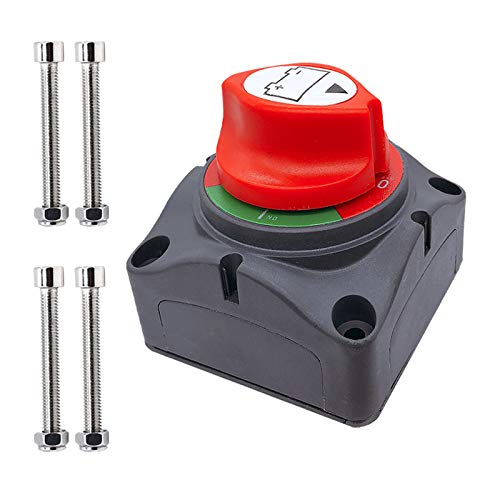
Ampper Battery Disconnect Switch 12V – 48V

FEITON 200A Battery Disconnect Switch with Faceplate

Malictele 300A Waterproof Battery Disconnect Switch

Nilight 90015A Battery Switch 12-48V

FEITON 500A Battery Cut Off Switch with Lock-Out Plate

FEITON 300A Battery Disconnect Switch with Faceplate

COZYEHOO 275A Battery Disconnect Switch 12V-48V
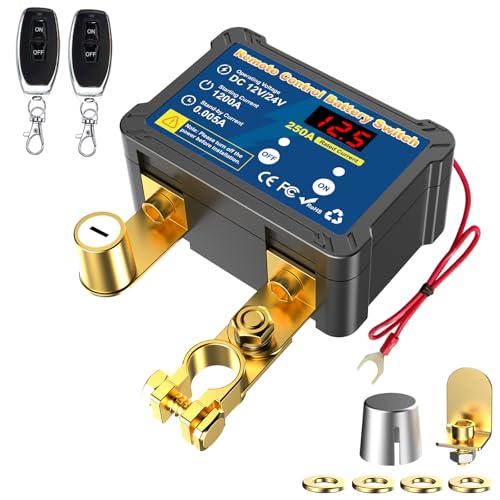
Trosfina 250A Smart Voltage Remote Battery Disconnect Switch

Trosfina 200A Top Post Remote Battery Disconnect Switch

Trosfina 250A Top Post Remote Battery Disconnect Switch
A Deeper Look At The Lineup
The Ampper switch has earned a long track record among weekend mechanics, and that history counts for something in a category full of look-alikes. Its ABS plastic shell houses a simple two-position rotary mechanism, and the rear cover slides over the copper studs to keep stray tools from arcing against the chassis. For most home garages and shop projects, that level of protection is plenty.
Rated for DC 12V to 48V systems, it tolerates everything from a compact sedan battery to a 48V golf-cart setup. Continuous, intermittent, and momentary amperage ratings (275A, 455A, and 1250A respectively) cover normal cranking loads without complaint. You mount it with four included bolts, then route your main battery cable to one side and the load circuit to the other.
Points In Its Favor
- 275A continuous rating handles nearly any passenger vehicle’s starter draw without strain.
- ABS housing with rear terminal cover reduces accidental short-circuit risk during wrench work.
- Wide 12V to 48V compatibility covers cars, trucks, boats, and light industrial equipment.
- Two-position rotary design is intuitive enough that first-time installers pick it up quickly.
Things To Consider
- The plastic housing, while safe, may not survive a hard impact in an exposed engine bay.
- No remote or automatic voltage sensing, so you must remember to flip it manually.
Feature Snapshot
Made For
DIYers and classic-car owners who want a dependable manual cutoff that installs with basic hand tools.
Consider Something Else When
The Trosfina 250A Smart Voltage Remote Battery Disconnect Switch suits you better if you forget to flip switches and prefer automatic voltage-based cutoff.
FEITON packages this 200A switch with a mounting faceplate, which is a small detail that saves a real headache when you’re drilling into a firewall or bulkhead. Without a plate, you often end up improvising a backing surface, and that’s where installs go sideways. The included plate gives the switch a clean home.
The 12V to 48V operating range matches the broader category standard, and 200A continuous handles most car and light-truck applications without complaint. Where it differs from the Ampper above is the included faceplate hardware and a slightly lower continuous rating. You trade some amperage headroom for an easier install.
What Earns Its Place
- Included faceplate speeds up installation in tight engine bays.
- 200A continuous rating suits most sedans, SUVs, and small boats comfortably.
- Wide voltage range keeps the switch flexible across vehicles.
Points To Note
- Lower continuous rating than the Ampper, so heavy-duty trucks with large alternators may push its limits.
- No waterproof rating confirmed in source data, so marine mounting needs extra sealing.
Best Suited To
First-time installers and budget-focused DIYers working on a commuter car or weekend trailer.
Look Elsewhere When
The FEITON 500A Battery Cut Off Switch with Lock-Out Plate serves you better if your rig pulls heavier loads or sits on a job site where a padlock deters tampering.
Boats punish electrical gear with salt spray, condensation, and engine heat, and the Malictele 300A switch is built for that environment. Ignition-protected means the contacts won’t ignite stray fuel vapors, an important detail around inboard and outboard motors. You also get a sealed housing that shrugs off rain and splash.
The make-before-break contact design lets you switch between battery banks without dropping power to connected electronics. On a liveaboard sailboat with navigation gear running, that’s the difference between a smooth swap and a reboot cycle on every screen. Rated at 300A continuous, it sits well above the FEITON 200A in headroom.
What Makes Sense
- Ignition-protected rating satisfies marine safety expectations around fuel vapors.
- 300A continuous rating comfortably handles larger bilge pumps and inverter loads.
- Make-before-break design preserves power to running electronics during battery swaps.
- Waterproof housing holds up to salt spray and engine-bay moisture.
Honest Caveats
- Single-circuit design means no dual-battery switching, so larger house-bank setups need additional hardware.
- Knob-style actuator can collect grime in harsh environments and may need occasional cleaning.
Who It Suits Best
Boat owners, marina dwellers, and anyone mounting a switch in a wet engine compartment or bilge area.
Swap It Out When
The FEITON 500A Battery Cut Off Switch with Lock-Out Plate fits better when you need padlock security on a dockside trailer or dry-storage vessel.
Nilight’s 90015A has become a familiar sight on shop walls and project-car forums, largely because the brand backs it with a two-year warranty. For a switch that lives near heat, vibration, and the occasional dropped wrench, that warranty gives shop owners some breathing room. You get the same 275A continuous and 1250A momentary ratings as the Ampper, so performance parity is the baseline.
The copper terminal studs with included nuts and washers keep contact resistance low, and the rear cover protects against shorts just like its rivals. Where Nilight pulls ahead is documentation and support, which matters when a shop tech needs to troubleshoot on the fly.
Reasons It Performs
- Two-year warranty covers manufacturing defects in busy shop environments.
- 275A continuous and 1250A momentary ratings match top-tier rivals.
- Copper studs with nuts and washers included, reducing install trips to the hardware store.
- Waterproof rating broadens placement options in engine bays and exposed areas.
Small Caveats
- On/Off only, with no dual-battery switching for vehicles running a house bank.
- Plastic housing can yellow under prolonged UV exposure in open engine compartments.
Right Fit For
Garage workshops, small fleets, and project-car owners who want a warranty behind the switch.
Reach For A Different Pick When
The Malictele 300A Waterproof Battery Disconnect Switch makes more sense for saltwater boats where ignition protection and sealing matter most.
This is the switch you reach for when a job site, fleet yard, or storage lot is part of the equation. The lock-out plate accepts a padlock through the rotary handle, so a quick lock turns the switch into a theft-deterrent and a lockout-tagout device for maintenance crews. That combination is rare in this price bracket.
Under the hood, you get 500A continuous and a striking 5000A instantaneous rating, with 10mm threaded studs ready for heavy-gauge cable lugs. It replaces common part number 20247, which makes it a drop-in option for trucks and equipment that already use that footprint. The metal body and watertight sealing hold up to harsher conditions than the plastic-housed competitors above.
Practical Advantages
- Padlock-ready lock-out plate adds theft and unauthorized-start protection.
- 500A continuous and 5000A instantaneous ratings cover heavy alternators and inverter loads.
- Metal construction with watertight sealing tolerates harsh work environments.
- Replaces part 20247, simplifying upgrades on existing trucks and equipment.
Some Limits To Know
- Voltage ceiling sits at 36V, so 48V golf-cart and forklift setups look elsewhere.
- Larger physical footprint demands more panel space than compact switches.
Who Will Love This
Contractors, fleet managers, and owners of unattended work trucks or tow rigs who need padlock security.
Skip It When
The Trosfina 250A Smart Voltage Remote Battery Disconnect Switch fits you better if you want automatic voltage-based cutoff and remote control from the cab.
FEITON’s 300A faceplate model sits in a useful middle ground between the budget 200A switch and the heavy-duty 500A unit. The included faceplate simplifies mounting on a flat panel, and the higher continuous rating gives you more headroom for trucks with larger alternators or accessory loads. For a daily driver with a stereo system, light bars, and a winch, that extra amperage matters.
The 12V to 48V operating range keeps the switch flexible across vehicle types. Owners commonly report straightforward installs when paired with proper gauge cable, and the rotary knob’s positive detent prevents accidental switching while driving over rough roads.
What Works In Its Favor
- 300A continuous rating covers heavier accessory loads than 200A alternatives.
- Included faceplate makes panel mounting cleaner and faster.
- Positive detent on the rotary knob prevents accidental position changes over bumps.
A Few Limitations
- No ignition-protected rating for marine fuel-vapor environments.
- No voltage-sensing automation, so parasitic drain protection requires manual switching.
Perfect Match For
Daily drivers and overlanders running multiple accessories who want a higher-rated manual cutoff.
A Better Fit Elsewhere
The Trosfina 250A Smart Voltage Remote Battery Disconnect Switch suits you better when automatic cutoff and remote operation outweigh raw amperage.
COZYEHOO differentiates itself with tinned copper studs, which resist corrosion better than bare copper in humid and salty environments. For coastal drivers and boat owners who watch terminals turn green within a season, that detail matters more than it sounds. The ABS housing matches the category standard for impact resistance and electrical insulation.
Rated at 275A continuous, 455A intermittent, and 1250A momentary, the switch covers typical automotive and marine loads without strain. The 3/8 inch (10mm) studs accept standard battery cable lugs, so sourcing terminals stays simple.
Notable Gains
- Tinned copper studs resist corrosion in humid and marine environments.
- 275A continuous and 1250A momentary ratings handle normal cranking loads comfortably.
- ABS housing with included hardware shortens the install checklist.
Practical Considerations
- No automatic voltage sensing, so parasitic drain still happens with the switch left on.
- Hard to find at local parts stores, so replacements may require ordering online.
Who Should Grab It
Coastal drivers, island commuters, and humid-garage owners who want corrosion-resistant hardware.
Not Your Match When
The Malictele 300A Waterproof Battery Disconnect Switch makes more sense when ignition protection and sealing are mandatory for marine fuel-vapor zones.
Trosfina’s smart switch takes the manual rotary design and adds the brain that most of us forget to use. The unit monitors voltage continuously, and when battery voltage drops below 11.8V, it cuts power after a short delay to prevent over-discharge. You come back to a battery that still has enough juice to start, not one stuck at 8 volts.
The remote fob disables engine starts from a distance, which doubles as an anti-theft feature for vehicles parked in lots or on the street. When voltage climbs above 13.6V during driving, the remote temporarily locks out to prevent accidental operation. Rated at 250A continuous, it handles typical passenger-vehicle loads.
Noteworthy Benefits
- Automatic low-voltage cutoff at 11.8V protects batteries from deep discharge.
- Remote fob operation adds theft deterrence from the driver’s seat or keychain.
- Voltage lockout during charging prevents accidental mid-drive disconnection.
Where It May Fall Short
- Smart electronics add a small parasitic draw of their own, though it’s typically minor.
- Remote fob batteries eventually need replacement, adding a minor ownership step.
Built With In Mind
Long-term parkers, classic-car owners, and storage-lot users who forget to flip manual switches.
Where Another Pick Suits Better
The Ampper Battery Disconnect Switch 12V – 48V fits you better if you prefer a simple mechanical switch with zero electronics to troubleshoot.
Top-post clamps change the install equation entirely. Instead of cutting your battery cable and crimping new ring terminals, this Trosfina unit clamps directly onto the existing battery posts. For a first-timer who doesn’t own a hydraulic crimper, that difference turns a Saturday project into a 20-minute job.
The 200A continuous rating covers most passenger cars and light trucks, and the remote fob adds the same anti-theft and convenience value as the smart switch above. You give up some amperage headroom and the automatic voltage sensing, but you gain a much friendlier install. Note that 24V battery systems aren’t supported here, so commercial truck owners look at the higher-rated sibling instead.
The Upside
- Top-post clamp design avoids cutting and recrimming battery cables.
- Remote fob operation simplifies arming and disarming from the cab.
- Beginner-friendly install with no special tools beyond a wrench.
Things To Weigh
- 24V battery systems are not supported, limiting use to standard 12V vehicles.
- 200A continuous rating gives less headroom than 250A and 300A alternatives for accessory-heavy builds.
Whose Shelf It Belongs On
First-time installers, renters, and anyone without specialty crimping tools who wants a clean install.
Another Choice May Suit
The Trosfina 250A Top Post Remote Battery Disconnect Switch fits better if you want the same clamp design with more amperage headroom for daily-driver use.
The 250A version of Trosfina’s top-post remote switch takes everything that works about the 200A sibling and adds more current headroom. Daily drivers with aftermarket sound systems, light bars, and auxiliary lighting benefit from the extra amperage without giving up the easy clamp-on install.
Pure copper internals and a heavy-duty design handle frequent switching cycles, which matters if you arm and disarm the system several times a day. Like its smaller sibling, it doesn’t support 24V battery systems, so standard 12V passenger and light-truck applications remain the sweet spot.
Strengths Worth Knowing
- 250A continuous rating supports more accessories than the 200A sibling.
- Top-post clamp design preserves factory battery cables for clean, reversible installs.
- Pure copper internal components handle frequent daily switching cycles.
Details To Watch
- No automatic voltage sensing, so the system relies on your habit of using the remote.
- Limited to 12V systems, ruling out 24V commercial vehicles.
The Right Fit
Daily drivers and accessory-heavy builds who want remote cutoff without rewiring the battery cables.
A Better Fit Elsewhere
The Trosfina 250A Smart Voltage Remote Battery Disconnect Switch makes more sense if you want automatic low-voltage protection on top of remote control.
Matching A Switch To Your Setup
Read The Current Ratings Before Anything Else
Continuous amperage ratings tell you how much current the switch carries during normal operation, while momentary ratings cover the brief surge of starter motor cranking. Most passenger cars draw 150 to 250A during cranking, so a 200A or 275A continuous switch covers them comfortably. Trucks with large diesels or winches push higher, which is where 300A to 500A continuous switches earn their keep. Matching the rating to your load prevents contact pitting and premature failure over years of use.
Decide Between Manual, Remote, And Automatic
Manual rotary switches are the simplest and most reliable option, and they have the longest track record in the category. Remote-controlled switches add convenience and theft deterrence from the cab. Automatic voltage-monitored switches protect batteries from deep discharge when the vehicle sits for weeks. Your driving habits drive the choice: commuters and daily drivers often prefer remote, long-term storers often prefer automatic, and traditionalists trust a manual twist.
Match The Switch To The Environment
Engine bays run hot and vibrate, marine bilges add moisture and salt, and job sites introduce dust and impact risk. Plastic-housed switches handle typical automotive conditions, while marine-rated or ignition-protected switches suit boats. For trucks and equipment exposed to weather, look for waterproof sealing and metal construction. Environment drives material choice more than price does.
Think Through The Install Path
Top-post clamps install in minutes without cutting cables, while inline switches require you to cut the main battery cable and crimp new terminals. First-time installers and renters often prefer the reversible clamp approach. Permanent installations on classic cars and project builds benefit from a clean inline setup. Either works well, but the tool and skill requirements differ substantially.
Key Considerations Across These Picks
Common Shopping Slip Ups
The most frequent mistake is underestimating continuous amperage needs. A 200A switch handles most cars, but trucks with winches or inverters regularly exceed that under load, leading to contact wear. Another slip is ignoring voltage range, since 12V to 48V switches don’t all cover the full span. Buyers also sometimes skip marine ratings for boats, then find standard plastic switches degrading in salt air. Matching ratings to actual load and environment avoids most of these traps.
Where The Extra Money Goes
Higher-tier models bring features that earn their premium in specific scenarios. Automatic voltage sensing protects batteries left for weeks, remote fobs add theft deterrence and convenience, and 500A continuous ratings support heavy alternators and inverter loads. Padlock-ready lock-out plates add shop-floor safety. The upgrade pays off when you actually use those features, but a budget manual switch still covers straightforward daily-driver duty without compromise.