A dead battery rarely gives you a warning shot. One morning the engine cranks slow, the headlights look tired, and you’re already late for work. That’s the everyday frustration a decent load tester solves, giving you a quick verdict on whether the battery, the charging system, or the starter deserves the blame.
Skip the parts-store trip and read the number yourself. The ten models below cover everything from a $20 handheld analyzer to a 100-amp carbon-pile workhorse that any backyard mechanic can run. I’ve grouped them by what they actually do well, not by spec sheets alone, so the right tool stands out for your situation.
A Side-By-Side Look

TOPDON AB101 Car Battery Tester 12V Load Tester

Autel MaxiBAS BT506 Auto Battery & Electrical System Analysis Tool

ANCEL BT310 12V 24V Car Battery Tester

ANCEL BA101 Plus Car Battery Tester, 6V/12V

ANCEL BA101PRO Battery Tester for Heavy Duty Vehicles

Schumacher Electric Battery Load Tester, 6V/12V, BT-100
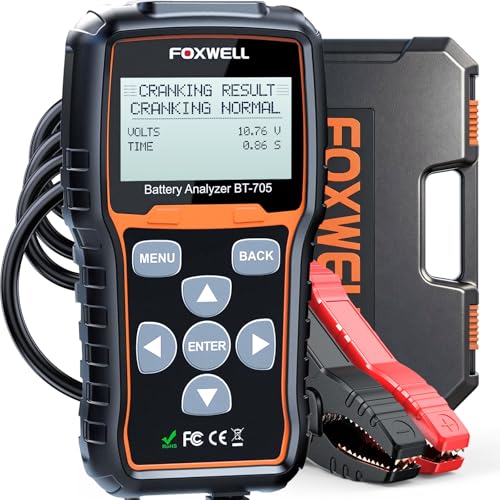
FOXWELL BT705 Car Battery Tester 24V 12V

ANCEL BA101 Car Battery Tester, 12V Digital

2026 Autel MaxiBAS BT506, 6V 12V Car Battery Tester

BR502 Car Battery Tester 6V 12V 24V
Taking A Closer Look At The Options
The TOPDON AB101 has earned its reputation as the go-to handheld analyzer for everyday drivers, and the reason is straightforward: it speaks plain English instead of cryptic codes. Plug it into a 12V battery and the screen delivers a clear health verdict along with cranking and charging system readouts, which matters because weak alternators mimic bad batteries more often than people expect.
Where the unit really earns its keep is on cars that haven’t been started in a while. Snow-bird owners, weekend classics, and work vans parked through winter all benefit from a one-minute check before the first drive of the season. CCA, or cold cranking amps, is the rating the AB101 leans on, so the result lines up with what the battery sticker already claims.
Notable Gains
- Prints a yes-or-no replacement verdict that saves a parts-store run.
- Covers cranking and charging checks, so a lazy alternator shows up early.
- Compact body fits a glove box or center console for emergency use.
- Reads common chemistries including flooded and AGM variants without menu hunting.
Points To Keep In Mind
- Limited to 12V systems, so owners of vintage 6V tractors need a different tool.
- Clamp leads feel light, and owners commonly report needing gentle handling to keep contact steady.
Who It Suits Best
First-time DIY owners who want a single device that handles the most common 12V checks without a learning curve.
Consider Something Else When
The Schumacher BT-100 suits old-school mechanics who want a true load test on a stubborn battery rather than a digital estimate.
Autel’s BT506 earns its premium label by treating the battery as part of an electrical ecosystem instead of a standalone box. The 100 to 2000 CCA range covers everything from a lawn tractor to a heavy pickup, and adaptive conductance, a method that reads internal resistance under varying loads, gives a more honest snapshot than older conductance-only testers.
Chemistry support is broad: regular flooded, AGM flat plate, AGM spiral, gel, and EFB batteries all read correctly, and the tool handles 6V and 12V systems either installed or on the bench. For enthusiasts chasing a slow parasitic draw or prepping a car for a track day, having that flexibility in one handheld matters.
Useful Strengths
- Adaptive conductance catches aging batteries that simpler testers may rate as fine.
- Reads six battery chemistries, including modern AGM spiral cells.
- Works both in and out of the vehicle, useful for a battery sitting on a shelf.
- Standards coverage spans JIS, EN, DIN, SAE, and more for import and domestic builds.
Worth Noting
- Priced noticeably above entry-level analyzers, so casual users may not feel the difference.
- Some advanced features rely on a paired app, which adds a setup step most basic owners skip.
Made For
Detail-oriented enthusiasts who treat battery health as part of a broader electrical diagnostic routine.
Look Elsewhere When
The FOXWELL BT705 suits drivers who specifically want 24V coverage for diesel trucks without stepping into pro-tier pricing.
Few testers in this price bracket handle both lead-acid and lithium chemistries, and the ANCEL BT310 is one of them. For a household running a sedan, a motorcycle, and an RV on lithium house batteries, that single capability trims the toolbox by one device.
The 12V and 24V switch is just as valuable, since it sidesteps the need for a separate heavy-truck tester. Cranking and charging diagnostics ride along, so the same handheld that confirms a healthy battery also confirms the alternator is putting out the right voltage under load.
What Helps Most
- Reads lithium and lead-acid chemistries without swapping tools.
- Covers cars, motorcycles, ATVs, and marine applications in one unit.
- Cranking and charging system analysis runs alongside battery health.
- 100 to 2000 CCA range handles small engines and big-displacement V8s alike.
Honest Caveats
- Lithium support is useful but not universal; always cross-check your battery’s BMS requirements.
- Newer model, so long-term durability data is still limited compared to legacy units.
The Right Fit
Mixed-fleet households where one tester has to cover a daily driver, a toy, and a tow vehicle.
Skip It When
The ANCEL BA101PRO is a smarter pick for owners running 24V heavy-duty trucks who also want a color display.
The Plus version of ANCEL’s popular BA101 keeps the friendly interface while quietly opening the door to 6V batteries. That’s a meaningful change for anyone restoring a vintage British roadster or running a classic motorcycle, both of which still ship with 6V electrical systems from the factory.
The 20 to 2000 CCA range is unusually wide at this tier, meaning a small motorcycle battery and a heavy diesel starter both read accurately. Internal resistance, SOH (state of health), and SOC (state of charge) numbers show up together, giving a fuller picture than a basic voltage check.
The Good Stuff
- 20 CCA minimum handles tiny powersport batteries other testers ignore.
- 6V support unlocks vintage and classic vehicle diagnostics.
- Reads SOH, SOC, voltage, and internal resistance in a single sweep.
- Menu structure stays approachable for first-time users.
Room For Improvement
- Stops at 12V, so diesel truck owners will need a different tool.
- Display is functional rather than colorful, which can feel dated next to newer units.
Best Suited To
Classic-car and motorcycle owners who want accurate readouts on small or vintage electrical systems.
Reach For A Different Pick When
The ANCEL BT310 makes more sense for households that also need lithium battery coverage.
Step up to the BA101PRO and the screen is the first thing you’ll notice. The 2.8-inch color display makes a real difference when you’re leaning over a truck fender trying to read a result in low garage light. Cranking and charging system tests ride along, so alternator output under load gets the same scrutiny as battery health.
12V and 24V support covers everything from a family SUV to a commercial box truck. For RVers, the dual-voltage capability means the house and chassis batteries can share one diagnostic session, saving a walk back to the breaker panel.
Real Benefits
- Color display reads clearly in dim garages and at odd angles.
- 24V support covers heavy trucks, RVs, and commercial equipment.
- Cranking and charging tests run in the same session as the battery health check.
- Handles five lead-acid chemistries plus heavy-duty CCA ratings up to 2000.
Trade Offs
- Bulkier than the handheld BA101 Plus, so it lives in a drawer rather than a glove box.
- Premium features raise the price over basic 12V-only testers.
Who Should Grab It
Truck and RV operators who want one tester that handles dual-voltage systems without swapping devices.
A Better Fit Elsewhere
The FOXWELL BT705 is worth considering for cold-climate drivers who specifically value 0°C battery testing.
The Schumacher BT-100 is a different kind of tool, and that’s the point. Instead of a digital estimate, it puts a real 100-amp load across the battery and watches the voltage sag in real time. That analog approach has been the standard in professional garages for decades, and it still catches weak cells that some conductance testers miss.
Schumacher has been around for more than 75 years, and the BT-100 reflects that legacy: a steel case, a big analog meter, and heavy-duty clamps that grip corroded terminals. It works on 6V and 12V batteries up to 1000 cranking amps, which covers most cars and light trucks without modification.
Features That Help
- True 100-amp load reveals weak cells that digital estimates sometimes miss.
- Heavy-gauge clamps bite through corrosion for solid contact.
- No batteries or app pairing required, so it works right out of the box.
- Handles 6V and 12V systems up to 1000 cranking amps.
Some Limits To Know
- Heavier and bulkier than any handheld analyzer on this list.
- No SOH percentage or chemistry-specific readings; interpretation takes practice.
Whose Shelf It Belongs On
Old-school home mechanics who trust a real load test over a digital estimate and don’t mind the extra weight.
Swap It Out When
The TOPDON AB101 is a smarter pick for owners who want a quick digital verdict without reading an analog meter.
The FOXWELL BT705 handles something most testers skip: cold-weather battery evaluation at 32°F (0°C). For drivers in northern climates where a battery that cranks fine in July dies in January, that single feature justifies the unit. CCA, voltage, internal resistance, and SOH all show up in one readout.
Both 12V and 24V coverage means a single device moves from the family car to a diesel pickup without a second purchase. Alternator testing rides along, so the BT705 doubles as a charging system analyzer when an engine won’t stay running.
What Works In Its Favor
- Cold-weather test mode catches weak batteries before the first deep-freeze morning.
- Covers 12V and 24V systems for household and heavy-duty use.
- Alternator analysis rides alongside battery health diagnostics.
- Consistent readings help verify a newly purchased battery before installation.
Small Caveats
- Menu depth can feel busy at first; new owners may need an hour with the manual.
- Lithium battery support isn’t a focus here, unlike the ANCEL BT310.
Perfect Match For
Cold-climate drivers who routinely test batteries before winter and want trustworthy low-temperature numbers.
Not Your Match When
The ANCEL BT310 fits better for owners who specifically need lithium chemistry support alongside lead-acid coverage.
The original ANCEL BA101 has been around long enough that it has built a quiet following among casual garage users, and the price reflects that maturity. For under what some specialty tools cost, you get SOH, SOC, voltage, current, CCA, plus cranking and charging diagnostics on a 12V system.
It reads 100 to 2000 CCA, which covers most cars, trucks, boats, and RVs with 12V electrical systems. The clamp-and-test workflow takes under a minute, and the screen gives plain-language results rather than raw numbers to interpret.
Benefits That Matter
- Long track record means spare parts and troubleshooting guides are easy to find.
- Covers SOH, SOC, voltage, current, and CCA in a single test cycle.
- Reads cranking and charging systems, not just battery state.
- Lightweight enough for glove-box storage in an emergency.
Factors To Consider
- 12V only, so 6V classics and 24V diesel trucks need a different tool.
- Display is monochrome, which can feel basic next to newer color screens.
Built With In Mind
Casual garage users who want a known quantity at a known price without chasing the latest firmware.
Another Choice May Suit
The ANCEL BA101PRO is a smart step up for shoppers who want the same BA101 DNA plus a color display and 24V coverage.
The 2026 refresh of Autel’s BT506 keeps the adaptive conductance engine that made the original popular while nudging firmware and stock dates forward. For shop owners who rotate inventory and prefer newer-sealed units, that freshness matters more than the spec sheet suggests.
Coverage still spans 6V and 12V systems, with cranking and charging tests in the same pass. Adaptive conductance reads internal resistance under varying loads, so batteries that look fine on a basic voltage meter still get an honest second opinion.
Standout Benefits
- Refreshed firmware and stock appeal to shop owners who value newer inventory.
- Adaptive conductance delivers nuanced readings beyond basic voltage checks.
- Cranking and charging system analysis shares one workflow with battery health.
- Reads 100 to 2000 CCA across cars, trucks, and SUVs.
Things To Weigh
- Core functionality overlaps with the original BT506, so existing owners gain little.
- Premium pricing applies; budget shoppers can find similar core features cheaper elsewhere.
Who Will Love This
Shop owners wanting current-year stock and buyers who prefer the newest available version of a proven tool.
Where Another Pick Suits Better
The original Autel MaxiBAS BT506 is the better value for enthusiasts who don’t need the refresh.
The OBDResource BR502 covers an unusually broad voltage range for a budget handheld: 6V, 12V, and 24V in one unit. For households juggling a motorcycle, a daily driver, and a marine battery, that flexibility keeps a single tool in the drawer instead of three.
Internal resistance testing adds a layer beyond voltage alone, helping spot batteries that hold charge on the surface but fail under load. The 100 to 2000 CCA window handles small engines and large displacement starters without a menu hunt.
What Makes Sense
- 6V, 12V, and 24V support in a single device.
- Internal resistance testing adds depth beyond voltage checks.
- Compact form factor fits easily in a small toolbox.
- Reads common flooded, AGM flat plate, AGM spiral, and gel chemistries.
Possible Compromises
- Budget brand with less aftermarket support than the major names.
- Documentation can run thin, so first-time owners may need patience with the menu.
Right Fit For
Budget shoppers with mixed vehicles who need one tester to cover cars, motorcycles, and marine batteries.
A Better Fit Elsewhere
The ANCEL BA101PRO suits buyers who want brand-name reliability and a color display alongside 24V coverage.
What To Weigh Before Choosing A Battery Load Tester
Match The Tester To Your Voltage And Chemistry
Start with what you actually own. A 12V-only analyzer handles most passenger cars, but the moment you add a classic 6V vehicle, a diesel truck, or a lithium house battery, the requirements shift. CCA range matters just as much; tiny motorcycle batteries and large diesel starters pull from opposite ends of the scale, and a tester that ignores the low end misreads small engines.
Decide Between Digital Estimates And True Load Tests
Handheld conductance testers give you a fast, mostly accurate verdict for everyday use. Carbon-pile testers like the Schumacher BT-100 put a real load across the battery and show voltage sag directly, which still catches weak cells that some digital models glide past. Pick the digital route for speed and storage; pick the analog route when you want a definitive answer on a stubborn battery.
Think About Where The Tester Will Live
A glove-box-friendly handheld pays off when you’re chasing a problem at a trailhead or a parking lot. A bench-top unit with a bigger screen earns its keep in a home garage where you’ll lean in to read results. Cold-climate drivers should look specifically for low-temperature test modes, since a battery that passes at room temperature can still fail at 0°C.
Smart Choices Across The Lineup
Common Shopping Slip Ups
The biggest trap is buying a 12V-only tester and discovering too late that the classic truck in the garage runs 6V. Chemistry support matters too; an older tester that reads only flooded batteries may give misleading results on modern AGM or gel cells. Finally, don’t ignore the CCA range; a tester that bottoms out at 100 CCA will misread small motorcycle and lawn-tractor batteries.
Where The Extra Money Goes
Higher-tier testers earn their price with adaptive conductance, broader chemistry coverage, and color displays that read clearly in dim garages. You also pay for build quality, sturdier clamps, and firmware that the manufacturer keeps current. For a single daily driver, the extra spend rarely matters, but for households running multiple vehicles or working in a shop, the upgrade translates to fewer repeat tests and clearer results.
Frequently Asked Questions
How Often Should I Load Test My Car Battery?
Twice a year is a sensible rhythm for most drivers, with extra checks before winter and after any deep discharge event. Batteries older than four years benefit from monthly spot checks.
Can A Load Tester Damage My Battery?
Modern handheld testers draw very little current and won’t harm a healthy battery. True load testers like the BT-100 pull a heavy 100 amps briefly, which is stressful but standard practice in the industry.
Do I Need A 24V Tester For A Regular Car?
No, regular cars run 12V systems, so a 12V-only tester covers them fine. A 24V tester only matters if you also maintain diesel trucks, RVs, or commercial vehicles with dual-battery setups.
Will A Battery Tester Work On Lithium Batteries?
Some do, but not all. The ANCEL BT310 explicitly supports lithium chemistries, while most entry-level testers focus on lead-acid variants only. Always confirm chemistry support before testing.
Is A More Expensive Tester Worth It For A Casual Driver?
For a single daily driver, a budget-friendly model like the ANCEL BA101 or the BR502 handles the job well. Spending more makes sense when you juggle multiple vehicles or want faster, clearer diagnostics.
Closing Remarks
The right tester turns a guess into a number, and a number into a confident decision about whether to replace a battery or chase the problem elsewhere. Match the tool to the vehicles you actually own, weigh handheld convenience against bench-top readability, and you’ll stop worrying about morning no-starts long before they happen.