An ATV that sits through a cold winter or a long off-season often refuses to fire up when spring trails open. A proper battery charger, paired with a smart maintainer, turns dead mornings into instant starts. This list covers ten solid options across budgets, battery types, and garage setups, from entry-level tenders to multi-stage smart units.
The Picks In Brief

Battery Tender Junior 12V, 750mA Charger and Maintainer

NOCO GC002 X-Connect M6 Eyelet Terminal Accessory
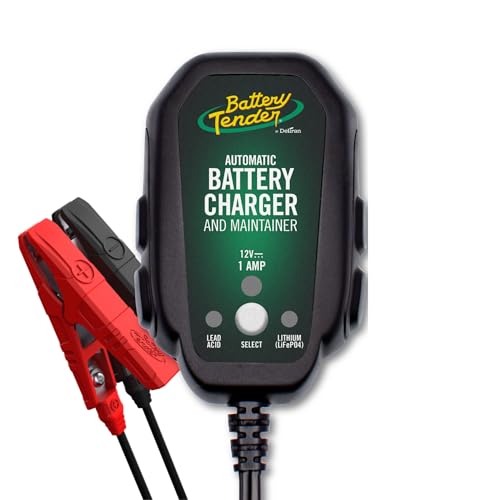
Battery Tender Junior 12V, 800mA Battery Charger and Maintainer
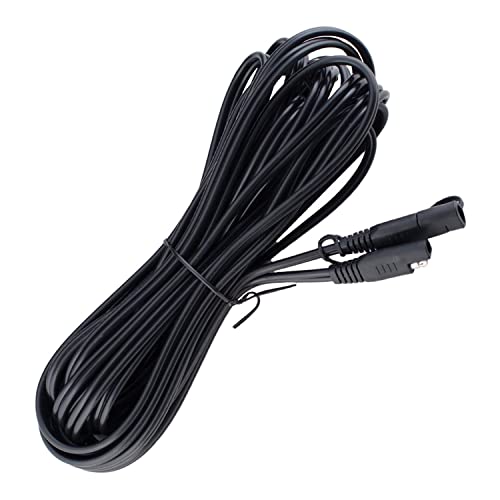
Battery Tender 25 Foot Extension SAE Cable

NOCO GENIUS1 1A 6/12V Smart Battery Charger

NOCO GENIUS5 5A 6/12V Smart Battery Charger

5A Smart Battery Charger & Maintainer

Smart 2A 6/12V Battery Charger Maintainer

Motorcycle Trickle Charger 800mA Smart Charger

NOCO GENIUS2 2A 6/12V Smart Battery Charger
A Deeper Look At The Lineup
The Battery Tender Junior has earned its place in garages for one simple reason: it does exactly what a powersports owner needs without overcomplicating anything. A 750mA output is gentle enough for the small AGM batteries (absorbent glass mat, a sealed lead-acid design common in ATVs) most ATVs ship with, and the four-step charging program walks the battery from initial bulk charge all the way to a safe float stage. The whole unit weighs barely more than a phone charger, so it tucks into a saddlebag or shop drawer between rides.
For anyone storing an ATV for the winter or pulling it out only on weekends, this tender keeps the battery topped without overcooking it. Spark-free lead clips and a quick-disconnect harness make hooking up painless. It’s not the fastest charger on this list, but slow and steady fits storage duty well.
Features That Help
- Automatic 4-stage charging handles initialization through float without manual switching
- Compatible with flooded, AGM, and gel cell 12V lead-acid batteries
- Float mode maintains proper voltage indefinitely, ideal for off-season storage
- Quick-disconnect harness lets you leave leads on the bike for fast hookups
- Compact, lightweight body fits in a saddlebag or trailer toolbox
Things To Consider
- No lithium mode, so LiFePO4 (lithium iron phosphate) owners should look at the switchable sibling on this list
- Lead-acid only at 750mA, which is slower to recover a deeply discharged battery than higher-amp options
- The included lead length is short for some outdoor setups; a separate extension cable solves it
Feature Snapshot
Made For
Riders who tuck an ATV away for two or three months and want a set-and-forget maintainer that won’t overcharge a healthy AGM battery.
Consider Something Else When
You run lithium batteries across multiple vehicles, where the NOCO GENIUS1 handles the chemistry switch with less hassle.
The GC002 isn’t a charger in the traditional sense; it’s the piece that makes a NOCO charger genuinely permanent. Two M6 ring terminals (the small bolted loop style found on most powersports batteries) sit on a lead that bolts straight to the battery posts, then the X-Connect plug clicks into the matching Genius charger. Once installed, hooking up becomes a one-hand snap instead of fumbling with alligator clips in a cramped battery compartment.
Compared to the Battery Tender Junior above, this accessory skips the charging function entirely and focuses on making daily connections faster. Lie-flat design keeps the lead tucked along the battery box without bulging the seat pan or fender well.
Useful Highlights
- X-Connect plug pairs with the entire current NOCO Genius lineup
- Permanent install means no more fishing for battery terminals in tight ATV frames
- Lie-flat lead reduces snag points under bodywork
- Weather-resistant build handles outdoor mounting on trailers
Worth Noting
- Requires a compatible NOCO charger to function; not a standalone unit
- Not compatible with NOCO Boost or Boost X UltraSafe jump starters
- M6 ring size may not fit batteries with smaller terminal bolts
Right Fit For
Owners already running a NOCO Genius charger who want a cleaner, permanent hookup on a single ATV or a fleet of powersports machines.
Skip It When
You’re using a Battery Tender system, where the 25-foot extension cable in this list covers your reach needs without permanent mounting.
The 800mA Battery Tender Junior answers a real-world problem: many riders now own a mix of AGM and LiFePO4 batteries across different machines. A push-button selector on the front lets you toggle between lead-acid (AGM, flooded, or gel) and lithium profiles, so the same unit charges your classic ATV and a lithium-equipped side-by-side without swapping chargers. An ISM microcontroller (an integrated circuit that continuously monitors voltage and adjusts current) adapts the algorithm to whatever chemistry you’ve selected.
It builds on the proven four-stage charging pedigree of its 750mA sibling but adds the lithium profile for owners making that chemistry switch. At 800mA it’s marginally faster on small batteries, and the housing is essentially the same compact form factor.
Where It Excels
- Switchable chemistry handles both traditional and modern battery types
- Push-button selection prevents accidental lithium charging of a lead-acid battery
- Four-stage program with adaptive microcontroller for safe topping off
- Lightweight and small enough for trailer or toolbox storage
Trade Offs
- 800mA remains gentle; large deep-cycle batteries charge slowly on this unit
- Indicator lights require learning the blink codes for full diagnostics
- Lead-acid still means flooded, AGM, and gel only, no calcium or specialty types
Best Suited To
Households with a mix of older AGM ATVs and newer lithium machines who want one charger that handles both without buying duplicates.
A Better Fit Elsewhere
Your garage is fully lead-acid and the original 750mA Junior delivers the same core charging without paying for the lithium profile.
This accessory solves the awkward geometry problem many ATV owners hit on day one: the garage outlet sits 20 feet from the parking spot, and the stock charger lead barely reaches the battery. The 25-foot SAE cable (SAE is a two-pin flat connector standard used across most powersports chargers) bridges that gap with quick-disconnect plugs on both ends, so the charger itself stays indoors while the cable runs out to the ATV. Plug in once, walk away, and the tender does its thing.
It plays nicely with the entire Battery Tender charger family: Junior, Plus, and the multi-bank units designed for shops with several machines. Unlike the permanent eyelet terminals on the NOCO GC002, this lead keeps the install removable for shared seasonal vehicles.
Points In Its Favor
- 25-foot reach handles detached garage, carport, and outdoor outlet setups
- Quick-connect ends match Battery Tender Junior, Plus, and multi-bank chargers
- Removable install suits riders who swap vehicles on a single charger
- Weather-tolerant jacket for runs along concrete or under a porch
Small Caveats
- Not a charger on its own; pairs only with Battery Tender brand units
- Long lead length can introduce minor voltage drop on very large battery banks
- No integrated fuse on the cable body, so a fused charger upstream is recommended
Whose Shelf It Belongs On
Anyone whose wall outlet sits far from the parking spot and who already runs a compatible Battery Tender charger indoors.
Another Choice May Suit
Owners using NOCO Genius chargers should look at the GC002 eyelet accessory for permanent mounting instead of extending the run.
The GENIUS1 packs genuine versatility into the smallest body on this list. It handles both 6V and 12V systems across lead-acid (AGM, gel, flooded, deep-cycle) and lithium-ion (LiFePO4) batteries up to 30 amp-hours, which covers most youth-sized ATVs and lightweight powersports machines. The redesign claims 35% more power in a 35% smaller package than its predecessor, the G750, and the footprint genuinely fits in a palm.
For riders with a smaller ATV battery or who maintain a fleet of compact machines, the GENIUS1 delivers the same smart multi-stage charging logic as larger NOCO units. Force mode helps recover deeply discharged batteries that have dropped below standard thresholds.
Real-World Strengths
- Multi-chemistry support spans lead-acid and lithium-ion batteries
- 6V and 12V compatibility opens use for vintage machines and modern ATVs
- Compact housing fits tool drawers, saddlebags, and trailer compartments
- Integrated thermal sensor adjusts charge rate based on ambient temperature
Points To Note
- 30Ah ceiling means it underperforms on large deep-cycle or utility batteries
- 1A output is slow for recovering a fully drained battery in a hurry
- Force mode requires manual activation for deeply discharged cells
Feature Snapshot
Perfect Match For
Owners of small ATVs, dirt bikes, and youth quads who want a single charger that handles multiple battery types in a tight storage footprint.
Reach For A Different Pick When
Your ATV uses a larger battery or you want faster recovery, where the GENIUS5 offers more headroom at a similar feature set.
The GENIUS5 sits at the top of the NOCO powersports lineup for owners who want real charging muscle. At 5 amps it cuts recovery time dramatically compared to the 750mA Junior at the start of this list, and it handles batteries up to 120 amp-hours, opening the door to larger ATV batteries, side-by-side starting packs, and small automotive applications. The redesigned housing claims 65% smaller volume than its G3500 predecessor while delivering 34% more power.
Where the GENIUS1 feels optimized for small batteries, the GENIUS5 pushes into territory where a deeply discharged battery needs real current to come back. It still runs the same multi-stage algorithm and supports both lead-acid and lithium-ion chemistries across 6V and 12V systems.
Practical Advantages
- 5A output recovers deeply discharged batteries much faster than trickle units
- 120Ah capacity ceiling covers large ATV and UTV batteries
- Force mode revives batteries that have dropped below standard voltage thresholds
- Thermal compensation adjusts charge profile for hot and cold garages
- Repair mode targets desulfation on neglected lead-acid batteries
Some Limits To Know
- Higher output means more heat under heavy load; placement needs ventilation
- Overkill for a single small ATV battery where the GENIUS1 already suffices
- Larger housing footprint takes up more shelf space than compact units
Feature Snapshot
Who Will Love This
Owners with large-displacement ATVs, side-by-sides, or multiple batteries in rotation who want one charger that covers fast recovery and long-term maintenance.
Where A Sibling Pick Shines
Single small-battery owners save space and money with the GENIUS1, which covers the same chemistry support at a slower pace.
VEBU’s 5A charger leans into a feature northern riders actually need: a dedicated winter mode that adjusts voltage targets for cold-weather operation. Most generic smart chargers apply a one-size algorithm regardless of ambient temperature, which can leave batteries undercharged in a freezing garage. The memory function recalls the last selected setting after a power interruption, so a brief outage won’t reset your charging profile mid-winter.
It combines charger, maintainer, and trickle functions into a single compact plug-and-play unit. Compared to the GENIUS5 above, it offers a similar 5A output at a smaller body, though NOCO’s brand pedigree and accessory ecosystem remain stronger for shop expansions.
Why It Works Well
- Winter mode adjusts the charging profile for sub-freezing garage temperatures
- Memory function preserves the last setting through brief power interruptions
- 5A output handles most powersports and small automotive batteries
- Compact plug-and-play design suits renters and shared shops
Honest Caveats
- Brand ecosystem is smaller; accessory compatibility is more limited than NOCO
- Documentation on supported battery capacity ranges is thinner than established brands
- Plug-and-play simplicity can hide the more advanced settings from curious owners
Feature Snapshot
Best Suited To
Riders in cold climates who store ATVs in unheated garages and need a charger that adapts to winter conditions rather than guessing.
Not Your Match When
You want a wider accessory ecosystem or you run NOCO chargers already, where the GENIUS5 ties into existing mounts and eyelet kits.
Batteries left sitting through a long storage season often drop below standard voltage, and many “smart” chargers refuse to even start when they sense a low reading. This VEBU unit uses a 9-stage charging system that can recover batteries down to 2 volts, reviving deeply discharged packs that other chargers write off. Auto-desulfation (a pulse-based process that breaks down sulfate crystal buildup on lead-acid plates) targets the most common failure mode in neglected AGM batteries.
The IP65 water-resistant housing (an ingress protection rating meaning dust-tight and protected against low-pressure water jets) and flame-retardant body give it genuine shop-floor durability. Winter mode handles the cold-climate charging side that matters in northern shops.
Everyday Wins
- Recovers batteries down to 2V that other smart chargers reject
- 9-stage charging with integrated desulfation for neglected packs
- IP65 water-resistant housing handles shop splashes and outdoor mounting
- Spark-free technology with reverse polarity, short circuit, and overheat protection
- Winter mode adjusts output for cold storage environments
Room For Improvement
- 2A output is moderate; recovery on large batteries takes patience
- Brand support and accessory options trail established names
- 9-stage complexity means more potential error states than simpler chargers
Who Should Grab It
Owners reviving ATVs that have sat untouched through multiple off-seasons and who need a charger willing to work on batteries other units won’t touch.
Look Elsewhere When
Your battery is healthy and just needs seasonal maintenance; the Battery Tender Junior handles that task with simpler operation.
Where most 800mA units stick to a basic algorithm, this VEBU charger runs the same 9-stage process as its larger sibling, scaled to gentler output. That means the same desulfation and recovery features apply to motorcycles, small ATV batteries, and lawn tractor packs that don’t need heavy current. It covers both 6V and 12V lead-acid and lithium batteries, so the same unit moves between the ATV, a vintage bike, and a modern motorcycle without fuss.
Compared to the 5A VEBU unit a couple of picks back, this trades raw charging speed for broader chemistry compatibility at a gentler pace. Built-in memory preserves the last setting through brief outages, and winter mode handles cold-garage storage.
The Value In It
- 9-stage charging algorithm in a compact 800mA package
- Recovers batteries down to 2V for reviving deeply discharged packs
- Combined charger, maintainer, trickle, and desulfator in one body
- Memory function preserves settings through power interruptions
- Multi-vehicle use across motorcycle, ATV, boat, and RV batteries
Things That May Matter
- 800mA output requires patience on larger batteries compared to 5A options
- Brand accessory ecosystem is still developing
- Indicator lights benefit from the manual, since mode feedback isn’t always obvious
Feature Snapshot
Built With In Mind
Garages with several smaller vehicles, like an ATV, a motorcycle, and a lawn tractor, where one charger needs to cover them all.
Swap It Out When
You want faster recovery on larger batteries, where the GENIUS5’s 5A output and broader NOCO ecosystem serve better.
The GENIUS2 slots between the GENIUS1 and GENIUS5 as the middle child of the NOCO lineup, and for many ATV owners it lands in the sweet spot. At 2 amps it recovers small batteries faster than the 1A unit, but the housing stays smaller than the 5A model. Battery capacity support runs up to 40 amp-hours, which covers most mid-size ATV packs without pushing into automotive territory.
It inherits the same multi-stage algorithm, force mode, and thermal compensation as the broader Genius family, so you give up only output headroom compared to the GENIUS5. For weekend riders who want faster maintenance cycles than the GENIUS1 without the bulk of the 5A unit, this hits a practical middle ground.
Real Benefits
- 2A output balances recovery speed with compact housing
- 40Ah capacity covers most mid-size ATV batteries
- Force mode handles deeply discharged packs that smarter units reject
- Thermal compensation adjusts output for garage temperature swings
- Compatible with the broader NOCO X-Connect accessory ecosystem
Where It May Fall Short
- 40Ah ceiling means large deep-cycle or automotive batteries exceed its range
- Not as fast as the GENIUS5 for full recovery on empty batteries
- Some owners find the indicator light pattern takes getting used to
The Right Fit
Riders with a single mid-size ATV who want faster maintenance cycles than the GENIUS1 without stepping up to the GENIUS5’s larger body.
Consider Something Else When
You run large UTV or side-by-side batteries, where the GENIUS5’s higher capacity and faster output match the workload better.
What Matters Most Before Choosing Atv Battery Chargers
Match Output to Battery Size
Amperage ratings translate directly into charging speed. A 750mA tender is fine for a 12Ah ATV battery in maintenance mode, but recovering a deeply discharged battery takes many hours. For larger packs or faster recovery, 2A to 5A units cut wait times noticeably.
Confirm Chemistry Compatibility
ATVs ship with flooded, AGM, or gel batteries by default, but newer lithium upgrades change the picture. Chargers without an explicit lithium profile can damage LiFePO4 cells. A switchable charger or one that automatically detects chemistry removes the guesswork.
Look for a True Float Stage
A maintenance charger should drop to a lower float voltage once the battery reaches full charge. Constant bulk charging slowly cooks a battery dry over weeks of storage. A proper float stage keeps voltage at a safe resting level indefinitely.
Consider Reach and Mounting
Garage outlet placement often decides whether the charger’s stock lead reaches. Short leads pair well with quick-disconnect extensions, while permanent installations benefit from eyelet terminals bolted directly to the battery posts. Plan the layout before choosing the charger.
Key Considerations Across These Picks
Mistakes Worth Dodging
Buying a lead-acid-only charger for a lithium battery is a fast way to ruin an expensive upgrade. Check the chemistry support list before adding to cart. Another common slip is grabbing the highest amperage unit available, which can overheat smaller batteries in tight compartments; matching output to battery size matters more than raw power. Owners sometimes forget that “smart” chargers may refuse to start on deeply discharged batteries, so a unit with a recovery or force mode handles neglected packs better.
When Paying More Pays Off
Higher-tier models in this category add features that matter in real use: thermal compensation for unheated garages, repair modes that target sulfation on older batteries, and broader chemistry support for mixed fleets. If you maintain multiple vehicles or live in a climate with extreme temperature swings, the upgrade typically pays back in longer battery life and fewer dead mornings. For a single small ATV stored in a moderate climate, the entry-level Battery Tender Junior handles the job without extras.
Frequently Asked Questions
How long does it take to charge a dead ATV battery?
A 750mA tender typically needs 12 to 24 hours to bring a fully discharged 12Ah battery back to full charge, while a 5A unit can cut that time to 2 to 4 hours. Real-world time depends on battery age, temperature, and how deeply the battery was discharged.
Can I leave an ATV battery charger on all winter?
Modern smart chargers with a proper float stage can stay connected for months without overcharging. The charger drops to a maintenance voltage once the battery is full, then tops it off as needed. Avoid leaving older non-smart chargers connected for extended periods.
Do lithium ATV batteries need a special charger?
Yes. Lithium batteries require a charger with a LiFePO4 profile that delivers the correct voltage cutoff and charging curve. Using a lead-acid charger on a lithium battery can damage the cells or create a safety hazard over time.
What’s the difference between a maintainer and a trickle charger?
A trickle charger delivers a constant low current regardless of battery state, which can overcharge over time. A maintainer monitors battery voltage and switches to float mode once full, then resumes charging only when voltage drops. Maintainers are safer for long-term storage.
Is a higher amp charger always better?
Not necessarily. Higher amperage speeds recovery on large batteries but generates more heat and can overwhelm small packs. Match the output to your battery’s capacity for safe, efficient charging.
The Takeaway
A reliable ATV battery charger earns its space in the garage long before winter storage ends. Match the chemistry support, output rating, and mounting style to your specific machine, and the rest takes care of itself. Whether you go with a trusted entry-level tender or a multi-stage smart unit, the goal is the same: a battery that’s ready when the trails call.