Households running on AA and AAA cells burn through them quietly, and tossing spent alkalines into the bin feels wasteful when a decent charger turns the same batteries into a revolving supply. Gamers with wireless controllers, parents wrangling a mountain of remote-control toys, and anyone trying to keep flashlights, smoke detectors, and gamepads ready for action all hit the same wall eventually. The catch is that not every charger handles standard alkaline cells; some only refresh NiMH, while a few specialized units promise to revive previously non-rechargeable alkalines. The picks below cover the full spread, from desktop charging stations with smart sorting to compact travel-friendly slabs that run off USB.
An Overview Of The Picks

Ostation 2 Pro AA AAA Battery Charging Station w/ 24 Batteries
Popular Mechanics Battery Recharger for Alkaline and NiMH

MaximalPower FC999 Universal Battery Charger Station

Shitanchao Universal Charger with 5 Independent Slots

Universal Rapid Battery Charger for Alkaline and NiMH

1.5V Alkaline USB-Powered 4-Slot Charger
Ostation 2 Pro AA AAA Charging Station for NiMH Lithium

Ostation 2 Smart AA AAA Charging Station with Polarity-Free
1.5V Alkaline 4-Slot Sliding Charging Box with LED

Tinyfish PPU9600 Universal Fast Charger (No Cells)
The Strengths Of Each Pick
The Ostation 2 Pro sits in a different category from the rest of this list, more of a desktop power hub than a basic charger. It holds up to 24 AA or AAA cells at once and sorts them automatically into charged, charging, and depleted groups, which removes the daily shuffle of matching batteries to devices.
Built for households that chew through cells, the unit pairs smart sorting with thermal-adaptive charging, so you can drop in a mixed handful and walk away. Gamers juggling multiple wireless controllers and parents keeping a toy drawer alive will appreciate the always-ready inventory. For most people running a busy home, that hands-off workflow is the main draw.
Bright Spots
- 24-slot capacity handles a household’s worth of cells in one place.
- Smart sorting means charged cells stay ready for grab-and-go use.
- Thermal-adaptive charging adjusts to cell condition during the cycle.
- Includes 24 batteries, so it doubles as a starter stockpile.
- Dual magnetic ports add charging for compatible flashlights.
Trade Offs
- Large desktop footprint; not ideal for tight shelves or shared spaces.
- AA and AAA only, no support for C, D, or 9V cells.
Who It Suits Best
Gamers, parents, and pros running dozens of AA and AAA devices week to week benefit most from this station.
Look Elsewhere When
The MaximalPower FC999 makes more sense for anyone needing C, D, or 9V coverage alongside smaller cells.
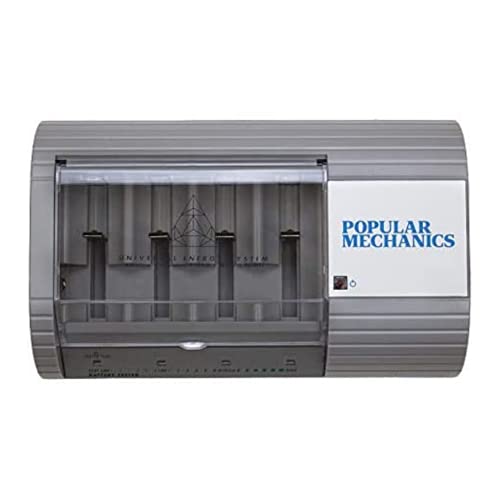
The Popular Mechanics Recharger is one of the few mainstream units that explicitly tackles disposable alkaline cells, the kind you usually toss after one use. Its patented five-chemistry approach covers alkaline, NiMH (nickel-metal hydride, the common rechargeable chemistry), NiCd (nickel-cadmium, older rechargeable type), RAM (rechargeable alkaline manganese), and titanium rechargeables, which is unusually broad.
It also doubles as a battery tester, useful for sorting the half-dead cells lurking in a junk drawer. For households with a stash of mixed-brand alkalines, the ability to coax a few more cycles out of previously non-rechargeable cells is genuinely useful. You may find it works best as a second-stage tool rather than a daily workhorse.
The Value In It
- Recharges disposable alkaline cells that other units refuse to touch.
- Five-chemistry compatibility covers nearly every household cell type.
- Built-in tester helps sort good cells from duds before charging.
- Wide size support spans AAA through 9V in one unit.
Points To Note
- Alkaline recharging results vary widely depending on cell brand and condition.
- Expect slower cycle times compared with NiMH-only chargers.
Made For
Eco-minded households with stockpiles of half-used alkalines and remote controls benefit most from this recharger.
Consider Something Else When
The Ostation 2 Pro serves better for daily high-volume NiMH rotation across gaming and smart-home gear.
The MaximalPower FC999 aims to be the universal drawer replacement. It handles AA, AAA, C, D, and 9V cells in a mix of chemistries (alkaline, RAM, NiMH, and NiCd), so a single unit replaces several specialty chargers.
Its 8-bit microprocessor monitors each bay in real time, adjusting the current through the cycle. Compared to the Popular Mechanics Recharger above, this unit skips disposable alkaline recovery but trades that for a wider size range. Homeowners with a medley of gadgets from smoke detectors to vintage radios benefit most.
What Earns Its Place
- Full size range from AAA up through D and 9V.
- Independent channel monitoring protects each cell individually.
- Multi-chemistry support spans NiMH, NiCd, RAM, and alkaline.
Honest Caveats
- Does not recharge standard disposable alkalines like the Popular Mechanics unit does.
- Larger footprint than single-chemistry chargers; needs shelf space.
Best Suited To
Anyone with a drawer full of mismatched cells across multiple sizes and chemistries benefits most from this single-unit approach.
A Better Fit Elsewhere
The Tinyfish PPU9600 suits hobbyists needing NiCd discharge cycling more than a general household would.
The Shitanchao universal charger packs an unusual number of tools into a small frame. Five independent bays each handle D, C, AA, AAA, or 9V cells, with the LCD reporting charging status per slot. It also covers NiMH, NiCd, and 1.5V alkaline rechargeables in one go.
The display reads clearly from across a desk, which matters when a charger lives on a workbench. Unlike the Ostation 2 Pro’s bulk-sorting approach, this unit focuses on fine-grained per-cell control, with bad-cell detection thrown in for safety. Hobbyists juggling multiple chemistries at once get the most mileage.
Positive Takeaways
- Five bays let you mix cell types in a single charging session.
- Per-slot LCD reporting removes guesswork during cycles.
- Bad-battery detection flags damaged cells before they waste time.
- Broad size range covers everything from AAA up to D and 9V.
- Compatible with NiMH, NiCd, and 1.5V alkaline rechargeables.
Practical Considerations
- Adjusting contact sliders for each new cell size takes a moment.
Whose Shelf It Belongs On
Hobbyists and home offices rotating mixed cell types across the week benefit most from this charger’s flexibility.
Skip It When
The Ostation 2 Smart suits anyone wanting hands-off drop-in organization more than bay-by-bay management.
This rapid universal charger targets households with C and D cells, sizes many compact units leave behind. It runs AA, AAA, C, D, and 9V batteries through NiMH and NiCd cycles, with the LCD flagging defective cells before they overheat.
The display shows charge status per bay, which helps you tell at a glance which cells are still cooking. Compared to the MaximalPower FC999 reviewed earlier, this unit is more focused on rapid turnover than wide chemistry support. Workshops and homes with high-drain D-cell flashlights benefit most.
The Upside
- C and D cell support covers high-drain gear most chargers ignore.
- Smart LCD identifies defective or non-rechargeable cells automatically.
- Rapid charging cycles get heavy cells back in service quickly.
Where It May Fall Short
- Four independent slots limit how many cells you can cycle at once.
- 9V charging tends to be slower than AA/AAA cycles.
Right Fit For
Campers, contractors, and homeowners using D-cell flashlights or portable radios benefit most from this unit.
Another Choice May Suit
The Shitanchao charger offers five bays instead of four for anyone needing extra simultaneous capacity.
The 1.5V Alkaline USB-Powered Charger is the smallest, most portable entry on this list. It runs off any USB-A source, a laptop, power bank, car adapter, or wall brick, which frees you from hunting for an outlet on the road.
The ABS shell and clear dust cover protect cells during travel, and four independent bays handle AA or AAA alkaline rechargeables without pairing requirements. For most travelers, that’s enough to keep a camera or game controller alive in a hotel room. Compared with the Ostation 2 Pro above, this unit is portable where that one is stationary.
Practical Advantages
- USB power input works with banks, laptops, and car chargers.
- Compact shell fits a carry-on or glove compartment easily.
- Dust-proof cover protects cells during transport.
- Mixes AA and AAA cells in the same charging session.
Some Limits To Know
- Only handles 1.5V alkaline rechargeables, not NiMH or NiCd.
- Four-slot capacity trails multi-bay desktop units.
- Charging speed depends on the USB power source used.
Who Should Grab It
Travelers, rideshare drivers, and remote workers needing a grab-and-go charging option benefit most from this compact unit.
Reach For A Different Pick When
The MaximalPower FC999 covers C and D cells that this travel-focused charger simply cannot handle.
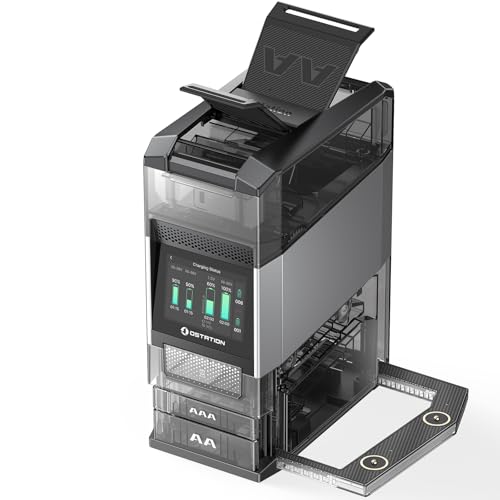
This Pro variant of the Ostation 2 drops the bundled battery pack and targets owners who already keep a stockpile of NiMH or lithium rechargeables on hand. The core experience stays the same: 24 slots, smart sorting, and thermal-adaptive charging cycles.
It also doubles as a battery tester and storage organizer, so your existing cells stop drifting loose in junk drawers. For most households that already invested in rechargeables, skipping the starter pack lowers the cost of admission without losing any function. Compared to the version above, you trade 24 included batteries for a leaner entry point.
The Helpful Details
- Same flagship sorting and thermal-adaptive charging as the full bundle.
- Storage organizer keeps charged and depleted cells separated.
- Built-in tester evaluates cell health without a separate device.
- Compatible with NiMH and 1.5V lithium rechargeables.
Where It Is Less Suited
- No batteries included, so first-time owners need a separate cell purchase.
- Large footprint demands dedicated desk or shelf real estate.
Perfect Match For
Owners who already own a stockpile of NiMH or lithium rechargeables and want a permanent home base for them benefit most.
Not Your Match When
The 1.5V Alkaline USB-Powered Charger serves anyone needing portable, on-the-go charging more than desktop organization.
The Ostation 2 Smart trims the design down to a smaller slot count while keeping the standout feature: polarity-free insertion. You can drop an AA into the bay without checking the positive and negative ends, and the station figures it out automatically.
Auto-detection of battery type rounds out the smart behavior, taking the fiddling out of charging entirely. For most gamers cycling cells through wireless controllers and headsets, that convenience adds up fast. Compared with the Pro version reviewed earlier, this model targets smaller daily rotations rather than high-volume stocking.
Benefits That Matter
- Polarity-free insertion removes the most common user error.
- Auto-detection identifies cell chemistry without menu diving.
- Compact footprint fits tighter desks than the full 24-slot station.
- Works with NiMH and 1.5V lithium rechargeables across brands.
What To Weigh
- Smaller slot count means more frequent cycling for heavy users.
- No bundled batteries, so initial setup requires existing cells.
Built With In Mind
Gamers and smart-home owners running small daily rotations through controllers and remotes benefit most from the hands-off workflow.
Where A Sibling Pick Shines
The Ostation 2 Pro bundle handles higher-volume households needing 24 slots and a starter battery pack.
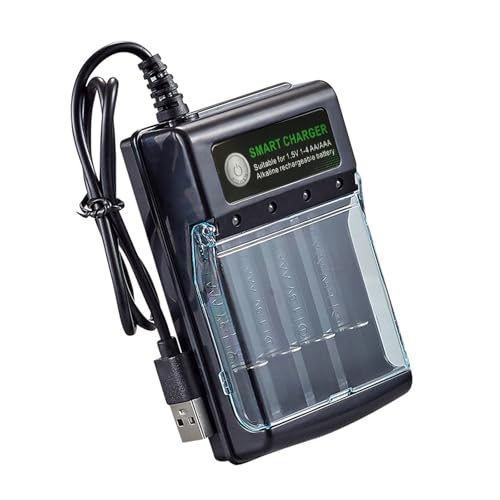
The SUQIKMX 4-Slot Sliding Charging Box keeps things deliberately simple. Its sliding cover protects cells during storage, and per-bay LED indicators show charging status at a glance.
The built-in intelligent charging circuit targets alkaline rechargeables specifically, helping revive cells that might otherwise hit the trash. For most light users keeping a few remotes and small toys powered, this no-frills design is the honest read on daily utility. Compared to the USB-powered unit above, this one stays put on a shelf or counter.
Why It Works Well
- Sliding cover keeps dust off cells between uses.
- LED indicators show charge status without an LCD screen.
- Revives standard alkaline rechargeables for repeated use.
Trade-Offs To Consider
- Only handles 1.5V alkaline rechargeables, not NiMH.
- Four slots limit bulk recovery sessions.
The Right Fit
Casual households keeping a handful of remotes, small toys, and clocks powered benefit most from this compact box.
Swap It Out When
The Ostation 2 Smart suits anyone needing polarity-free convenience and NiMH support more than alkaline-only recovery.
The Tinyfish PPU9600 closes the list with a useful but specialized feature: NiCd discharge before charging. That step helps recover cells suffering from memory effect (a phenomenon where NiCd batteries lose capacity if repeatedly recharged without being fully drained), extending their usable life in older gear.
Five independent slots cover AA, AAA, C, D, and 9V across NiMH and NiCd chemistries, and a large screen plus LED indicators report progress. Hobbyists with RC controllers, vintage flashlights, or older power tools benefit most from this combination. For most casual households, simpler units like the SUQIKMX box above will be enough.
Notable Upsides
- NiCd discharge mode recovers cells affected by memory effect.
- Five independent bays mix sizes freely per charging session.
- Big screen plus LEDs give clear status feedback at a glance.
- Full size range from AAA through 9V.
Factors To Consider
- No batteries included, so first-time users need a separate cell purchase.
- Discharge cycles add time compared with charge-only operation.
Who Will Love This
RC hobbyists, vintage flashlight collectors, and owners of older NiCd-powered tools benefit most from the discharge capability.
Where Another Pick Suits Better
The MaximalPower FC999 makes more sense for general household use without the discharge step’s extra wait.
Picking The Right Match For Your Battery Drawer
Battery chargers break down along three axes that matter for everyday use: chemistry support, cell-size range, and how the unit handles alkalines specifically. Most modern chargers focus on NiMH, the rechargeable chemistry that replaced NiCd in nearly all consumer gear, but a smaller category of units tackles alkaline rechargeables, which behave differently and require specialized circuitry to avoid damage.
Cell-size range is the next filter. Chargers limited to AA and AAA fit small drawers and serve most controllers and remotes, while households running D-cell flashlights, 9V smoke detectors, or C-cell radios need a multi-size unit. Independent bays add flexibility when you cycle a mix of sizes in one session.
The third axis is workflow. Bulk stations with sorting and storage excel in high-volume homes, while compact travel units run off USB and fit carry-ons. Smart features like polarity-free insertion, bad-cell detection, and discharge cycling for NiCd each address specific pain points, so matching the unit to your real use case matters more than chasing the longest feature list.
Key Things To Weigh Before You Choose
The single most common mistake is grabbing a NiMH-only charger and assuming it handles alkaline cells. NiMH charges at a different voltage profile, and forcing alkalines through a NiMH cycle can damage cells or the charger. Confirm the unit lists alkaline support explicitly if that is your goal.
A second trap is underestimating how many bays you actually need. Four-slot units feel roomy until a household cycle demands eight cells at once, and single-row layouts force constant shuffling. Larger bays also tend to charge cells faster since each gets dedicated current.
Higher-tier alkaline chargers justify the extra cost through smarter chemistry detection, per-cell monitoring, and safety circuitry that prevents overcharging. The upgrade pays off most in households that run alkaline cells weekly, where the time savings and cell longevity compound quickly.
Frequently Asked Questions
Can a regular charger handle alkaline batteries? Most NiMH-only chargers cannot safely recharge standard alkaline cells, since the voltage profiles differ. Units that explicitly list alkaline support use specialized circuitry designed for those cells.
Do alkaline battery chargers actually restore dead cells? They can recover partially drained alkalines, but cells left fully dead for long periods usually cannot be revived. Brand, storage condition, and depth of discharge all affect the outcome.
How long do recharged alkaline batteries last? Recharged alkalines typically hold less charge than new cells and lose capacity faster across cycles. Most owners report a handful of useful recharges before performance drops off noticeably.
Is it worth getting a charger for disposable batteries? For households burning through dozens of cells monthly, the savings add up. Lower-volume users may find the cost-benefit calculation less compelling.
What is the difference between NiMH and alkaline charging? NiMH charges at a steady current to a controlled peak voltage. Alkaline cells use a gentler pulse-based approach that prevents overheating and gas buildup inside the cell.
Closing Remarks
The right alkaline battery charger depends less on chasing features and more on matching the unit to how you actually use cells day to day. High-volume households benefit most from sorting stations like the Ostation 2 Pro, while casual users can stay happy with a compact 4-slot box. Pick the chemistry and size range first, then let workflow features earn their place in your decision.