Finding the right 12V lithium battery means matching chemistry, capacity, and form factor to how you actually use it. Off-grid cabins, RV weekenders, trolling motors, kids’ power wheels, and backup power all pull from the same family of LiFePO4 cells, but the spec sheet that matters changes with the job. The ten options below cover deep-cycle house banks, fast-recharge marine setups, compact drop-in replacements for power wheels and fish finders, plus two power-tool platforms worth knowing for the workshop. Each pick is sized to a clear use case so you spend on capacity you will use, not on amp-hours that sit idle.
A Closer Look At The Lineup

Redodo 12V 100Ah LiFePO4 Battery with 14.6V 20A Lithium Charger

GOLDENMATE 12V 10Ah LiFePO4 Lithium Battery, IP67 Waterproof
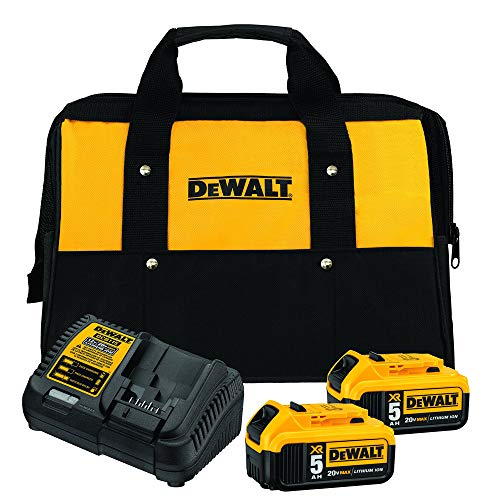
DEWALT 20V MAX Battery Charging Kit, 5Ah, 2-Pack

Milwaukee M12 12 Volt Battery Charger (48-59-2401)

GOLDENMATE 12V 7Ah LiFePO4 Battery, IP67 Waterproof

GOLDENMATE 12V 12Ah LiFePO4 Battery (2 Packs), IP67

Redodo 12.8V 100Ah LiFePO4 Battery with 14.6V 10A Charger

Redodo 12V 165Ah LiFePO4 Battery with 14.6V 20A Charger

Redodo 36V 50Ah Trolling Motor Lithium Battery with 43.8V 25A Charger

Redodo 16V 30Ah LiFePO4 Battery with 18.25V 10A Charger
The Picks, Examined More Closely
The Redodo 12V 100Ah LiFePO4 is a classic deep-cycle house battery with one upgrade the others skip: Bluetooth 5.0 monitoring that lets you watch voltage, current, and remaining state of charge from your phone. That visibility matters when the battery lives in a tight battery box or under a van seat, where reading a built-in gauge means pulling covers off. Pair it with the bundled 14.6V 20A charger and a full top-up from empty lands around the five-hour mark.
It suits van-lifers, off-grid cabin owners, and anyone running moderate inverters for lights, fans, and small fridges. The integrated BMS, the abbreviation for battery management system, the small circuit board that prevents overcharge, over-discharge, and short circuits, runs all the protection automatically. You will not need to babysit the charge cycle.
Features That Help
- Bluetooth 5.0 readout of voltage, current, power, and remaining capacity, so you spot trouble before it strands you.
- Bundled 14.6V 20A charger reaches a full charge in roughly five hours from empty, faster than most 10A units in this size class.
- Low-temperature cutoff stops charging below 32°F and discharging below -4°F, which protects the cells in winter sheds and unheated garages.
- Remote discharge and power-off through the phone app, useful when the bank sits in a hard-to-reach compartment.
Things To Consider
- Shipping sometimes arrives in two boxes on different days, so plan around a short wait for the charger.
- App features depend on your phone’s Bluetooth range; metal enclosures can shorten the working distance noticeably.
Key Specs
Who It Suits Best
Full-time van dwellers, weekend cabin owners, and off-grid solar users who want app-level visibility into their house bank.
Where Another Pick Suits Better
The Redodo 12V 165Ah LiFePO4 is a stronger fit for larger RV house systems that need more reserve than 100Ah.
Small enough to toss in a tackle bag, sealed tight enough to survive a swim, the GOLDENMATE 10Ah is the workhorse for power wheels, fish finders, and camping lanterns that pull a few amps at a time. IP67 means the case keeps out dust and survives temporary immersion, so rain on a kayak deck or a tipped-over cooler is not a death sentence. The internal BMS handles the usual suspects: overcharge, over-discharge, over-current, and short circuits.
The shape and weight favor portable use over permanent mounting. Anglers running a 12V sonar setup for long days on the water will appreciate how light it carries, and parents replacing a dying SLA (sealed lead-acid) in a kid’s Jeep get a chemistry that does not slowly sulphate on the shelf between weekends.
Practical Pluses
- IP67-rated sealed case handles splashes, rain, and brief dunks without a separate enclosure.
- 5000-plus cycle rating, meaning the number of full charge-and-discharge cycles before the pack reaches roughly 80% of original capacity, far outlasts a lead-acid replacement.
- Compact, lightweight build slides into kayak hatches and battery boxes that reject bigger banks.
Worth Noting
- 10Ah runs small electronics fine but will not sustain a trolling motor for a full day on the water.
- Charger is not bundled, so budget for a matching LiFePO4-compatible 14.6V unit if you do not already own one.
Made For
Kayak anglers, casual campers, and parents powering small ride-on toys who need sealed, lightweight 12V energy.
Skip It When
The Redodo 16V 30Ah LiFePO4 Battery suits fish-finder users who need the higher voltage rail that some 360 sonar units demand.
Technically a 20V MAX platform battery, not a 12V LiFePO4 deep-cycle pack, but the DEWALT DCB205-2CK kit earns its slot for anyone building out a cordless tool collection. Two 5Ah XR batteries give you 10Ah of total capacity to rotate through drills, impacts, saws, and grinders. The included DCB115 charger also handles the brand’s 12V MAX, 20V MAX, and 60V MAX batteries, which keeps one charger on the bench instead of three.
It is the right choice if your tools already wear the yellow-black livery, or you are starting fresh and want a charger that scales with future tool purchases. The soft storage bag is a small touch that protects batteries in transit between job sites, a feature most kits skip.
Key Advantages
- Two 5Ah batteries in one kit give 10Ah of working capacity to rotate between tools.
- Multi-voltage charger handles 12V MAX, 20V MAX, and 60V MAX packs, cutting bench clutter.
- Soft storage bag included, so batteries stay protected in a work truck or job box.
Trade Offs
- Not a deep-cycle 12V battery, so it will not run a fridge, lights, or trolling motor.
- Locked to the DEWALT 20V MAX tool platform, with no cross-brand compatibility.
Right Fit For
Cordless tool users committed to or starting with the DEWALT platform who want a charger and battery combo in a single purchase.
Look Elsewhere When
The Milwaukee 48-59-2401 charger is the better pick if you already run Milwaukee M12 cordless tools.
Like the DEWALT kit above, this is a power-tool companion rather than a deep-cycle 12V LiFePO4, but the Milwaukee 48-59-2401 fills a gap worth naming: charging M12 batteries quickly and reliably. Compact M12 packs reach full charge in roughly 30 minutes, while the high-capacity XC variants land around the one-hour mark, so a coffee break is enough to top off a dying battery mid-project.
The onboard LEDs are the practical win here, since they tell you at a glance whether a pack is charging, fully charged, or in a fault state. It is a charger, not a battery, so it suits shops that already own M12 packs and just need a replacement or second unit.
Where It Delivers
- Compact M12 packs reach full charge in roughly 30 minutes, fast enough for a single coffee break.
- Onboard LED status indicators show charging, charged, and fault states without opening the battery.
- Genuine OEM build ensures full compatibility with all Milwaukee M12 battery generations.
Honest Caveats
- Only charges M12 batteries, so it adds no value to anyone outside the Milwaukee M12 ecosystem.
Feature Snapshot
Best Suited To
Milwaukee M12 owners who need a replacement charger or a second unit for a separate workstation.
Reach For A Different Pick When
The DEWALT DCB205-2CK kit is the smarter buy if you need batteries and a charger together for a new tool platform.
Two pounds of LiFePO4 that swaps straight into the small 12V slot in a kid’s ride-on toy, a fish finder, or a solar LED light string, that is the GOLDENMATE 7Ah in a sentence. The sealed IP67 housing shrugs off sprinklers, spilled juice boxes, and damp basements. It weighs a fraction of the SLA it replaces, so smaller riders notice snappier acceleration and parents notice easier lifting.
Realistically this is a chemistry upgrade for tiny loads rather than a workhorse. Owners commonly pick one up to retire an old battery that has lost its punch after a few seasons of storage.
Reasons It Performs
- Weighs around 2 lb, far lighter than the SLA it typically replaces.
- IP67 sealed housing handles splashes, spills, and dusty sheds.
- 5000-plus deep-cycle rating for years of repeated top-ups without capacity fade.
Room For Improvement
- 7Ah is light on capacity for any gear drawing more than a few amps continuously.
- Requires a LiFePO4-compatible 14.6V charger; old SLA chargers can undercharge the pack.
Perfect Match For
Parents replacing dead ride-on batteries and anglers running smaller fish finders who value light weight over long runtime.
Swap It Out When
The GOLDENMATE 12V 10Ah is a better match when a few extra amp-hours will noticeably extend a day’s runtime.
Same compact LiFePO4 chemistry as the 7Ah and 10Ah siblings, but sold as a 2-pack: two 12Ah batteries that you can run in parallel for double the runtime, or keep on hand as a hot spare. The IP67 rating carries over, so the same kayak-spray and basement-moisture story applies. The integrated BMS in each pack guards against overcharge, over-discharge, over-current, and short circuits.
The two-pack format is the practical pitch. One pack runs a fish finder all weekend, the second sits on the charger ready to swap, or both wire in parallel for 24Ah of reserve that small inverters can drink from.
Advantages To Know
- Two-pack format lets you double capacity in parallel or keep a charged spare on standby.
- Sealed IP67 housing handles wet environments without a separate enclosure.
- Internal BMS per pack keeps both batteries protected during charge and discharge.
Possible Compromises
- 12Ah per pack still trails the deep-cycle 100Ah options for whole-day inverter loads.
- Parallel wiring needs matched cables and fuses for safe current sharing, which is not bundled.
Who Should Grab It
DIYers running dual fish-finder setups or small solar sheds who want redundancy without buying a single larger battery.
Another Choice May Suit
The Redodo 12V 100Ah is the smarter pick for full-house RV or cabin builds that need far more reserve than 12Ah per pack.
The earlier sibling of the Bluetooth-enabled 100Ah at Pick 1, this Redodo 12.8V 100Ah drops the app and swaps in a slower 14.6V 10A charger. The trade is straightforward: you give up wireless monitoring and shave hours off the recharge speed, but you keep the same deep-cycle LiFePO4 cell stack rated for thousands of cycles. For solar banks that sit on a charge controller most of their life, the missing app is a minor loss.
It is the calmer, lower-cost choice for backup power and off-grid storage where the battery stays put and recharges overnight.
Everyday Perks
- 100Ah of LiFePO4 capacity delivers long runtime for solar and backup loads.
- Cycle life in the thousands for years of daily top-ups without significant capacity loss.
- Stable lithium iron phosphate chemistry is widely regarded as a safer alternative to other lithium-ion formats.
Small Caveats
- 10A charger tops up the pack roughly twice as slowly as the 20A unit in Pick 1.
- No Bluetooth readout, so capacity checks require a multimeter or shunt monitor.
Quick Facts
Whose Shelf It Belongs On
Solar storage owners and backup-power builders who want long cycle life without paying for Bluetooth monitoring.
Look Elsewhere When
The Redodo 12V 100Ah at Pick 1 is the better fit for anyone who values the Bluetooth readout and faster 20A charging.
The Redodo 165Ah is the bigger sibling to the 100Ah units, packing about 2112Wh into a battery that still fits a Group 31 footprint, a common marine and RV battery size. The same Bluetooth monitoring from Pick 1 carries over, so you can watch a much larger reserve drain and refill from your phone. The 20A charger fills the pack in roughly eight hours, reasonable for the size but still slower than overnight on shore power.
It is the heavy lifter of the lineup: large RV houses, weekend cabin banks, off-grid sheds running small inverters, and anyone who has tried to stretch a 100Ah bank and wished for more headroom.
What Makes Sense
- 165Ah capacity in a Group 31 footprint fits common marine and RV battery trays.
- Bluetooth readout helps track the larger reserve without climbing into a compartment.
- 20A charger handles a full top-up in roughly eight hours.
Details To Watch
- Heavier than 100Ah options; confirm your tray or mount handles the weight before ordering.
- Eight-hour recharge is slow on a partial day of solar without a generous panel array.
Built With In Mind
Large RV and off-grid homeowners who want maximum Group-31-compatible reserve and Bluetooth visibility.
A Better Fit Elsewhere
The Redodo 12.8V 100Ah at Pick 7 is the more sensible buy for smaller solar banks where 165Ah is overkill.
A 36V platform rather than a true 12V unit, but the Redodo 36V 50Ah earns its slot because anglers shopping the 12V lithium category often end up here. The pack targets trolling motors in the 100-120 lb thrust range, which usually demand a 36V bank rather than 12V. The 43.8V 25A charger fills the battery in roughly two hours, a notable convenience when the fishing day ends and the boat needs to be ready again by morning.
It suits kayak and small-boat owners running modern Minn Kota or MotorGuide setups where the integrated lithium battery cuts weight at the bow and frees up storage.
Well-Handled Touches
- Built specifically for 100-120 lb thrust trolling motors, so voltage and current ratings match common setups.
- Fast 25A charger tops up the pack in about two hours, fast for a 50Ah bank.
- Drop-in lithium replacement trims weight compared to a triple-12V lead-acid stack.
Points To Note
- 36V is not interchangeable with 12V trolling motors; verify your motor’s voltage requirement before ordering.
Who Will Love This
Kayak and small-boat anglers running 36V trolling motors who want lighter weight and faster recharge than three 12V batteries in series.
Not Your Match When
The Redodo 16V 30Ah fits anglers running modern fish finders and 360 sonar units that prefer a higher single-pack voltage.
The last pick is a 16V pack rather than a strict 12V unit, included because many fish finders and 360 sonar systems actually run better on a slightly higher voltage rail than a standard 12V battery delivers at the end of its discharge curve. The Redodo 16V 30Ah pairs a LiFePO4 cell stack with an 18.25V 10A charger and reaches a full top-up in around three hours.
Tournament anglers and weekend fishermen running modern sonar electronics for long hours on the water get steadier voltage all day without the sag that comes from a partly depleted 12V SLA.
Strong Points
- 16V output holds steady voltage through a full discharge, keeping sonar screens bright longer.
- 30Ah capacity covers long tournament-day runtimes for fish finders and 360 units.
- Bundled charger reaches full in roughly three hours from empty.
Where It Is Less Suited
- 16V will not work with 12V-only electronics, so confirm your sonar’s input range before ordering.
Quick Technical Notes
The Right Fit
Kayak and bass-boat anglers running fish finders and 360 sonar units that benefit from a steady voltage rail.
A Better Fit Elsewhere
The GOLDENMATE 12V 10Ah suits anglers running strictly 12V sonar units and looking for a sealed, lightweight pack.
What Matters Most Before Choosing a 12 Volt Lithium Ion Battery
Start with chemistry. LiFePO4, short for lithium iron phosphate, is the safe, long-cycle standard for most 12V applications: deep-cycle house banks, solar storage, kids’ ride-ons, and fish finders. Other lithium-ion formats exist for power-tool platforms like DEWALT and Milwaukee, but those live in a separate ecosystem with their own chargers and tool compatibility rules.
Capacity comes next, sized to the load and the runtime you want. A 7Ah pack handles a few hours of small electronics; a 100Ah pack covers overnight fridge and lighting in an RV or van. Amp-hour ratings look the same on paper, but usable energy varies with how deeply you can discharge the pack. LiFePO4 typically allows discharge down to about 90 to 100 percent of rated capacity without damage, while lead-acid prefers shallower cycles. That means a 100Ah LiFePO4 effectively replaces a 200Ah lead-acid for most practical purposes.
Form factor matters for fit. Group 31 footprints slide into common marine and RV trays. Smaller 7-12Ah packs fit kayaks, ride-on toys, and fish finders. Check the battery dimensions against the space you have before ordering, especially if you are replacing an existing SLA, the abbreviation for sealed lead-acid, the older, heavier battery type you may be upgrading from.
Charging is the piece beginners miss. Lithium packs want a charger matched to their chemistry. A 14.6V output for a 12V LiFePO4 pack is standard; using an old lead-acid charger can undercharge the cells and leave you wondering why runtime looks shorter than expected. Bundled chargers like those on the Redodo kits remove the guessing game for first-time owners.
Environment rounds out the list. IP67 ratings, where the first digit rates dust protection and the second rates water immersion, keep out splashes and dust for boats and outdoor setups. Low-temperature cutoffs protect cells in unheated garages and winter cabins. Bluetooth monitoring is a nice-to-have for packs hidden under seats or inside battery boxes.
Key Considerations Across These Picks
Common Shopping Slip Ups
The most common mistake is sizing the battery to the device label, not the actual draw. A fish finder pulling 1A continuous will run much longer on a 30Ah pack than its label suggests, while a 100W inverter pulling 8A will drain a 100Ah pack in roughly twelve hours of real use. Match capacity to amp-hours drawn, not to the spec on the original battery you are replacing.
The second slip is mixing chargers between chemistries. Old lead-acid chargers and new LiFePO4 packs do not play nicely. Use a charger rated for the chemistry you own.
Why Top Tier Costs More
Premium packs in this category earn their higher cost in three places: larger capacity in standard footprints, faster bundled chargers, and Bluetooth monitoring that removes guesswork from hidden installations. The upgrade pays off most for users who run larger house banks and want visibility into state of charge without opening compartments. For small loads like kids’ toys and basic fish finders, the budget-friendly picks handle the job without the extras.
Frequently Asked Questions
How long does a 12V lithium battery last?
A LiFePO4 pack rated for thousands of cycles typically delivers 8 to 10 years of regular use before capacity drops noticeably. Charge and discharge depth, storage temperature, and charger quality all affect lifespan.
Can a 12V lithium battery replace a lead-acid battery directly?
Yes, in most cases, since LiFePO4 packs are built as drop-in replacements with the same 12V nominal output. Confirm dimensions and terminal layout before swapping, and pair the pack with a LiFePO4-compatible charger for best results.
Are 12V lithium batteries safe to use indoors?
LiFePO4 chemistry is widely regarded as one of the safer lithium formats, with low thermal runaway risk. Still, mount the pack in a spot with airflow and avoid puncturing the case.
Do lithium batteries work in freezing temperatures?
Most LiFePO4 packs charge only above freezing, often around 32°F, and discharge down to lower limits. Some models add low-temperature cutoffs to protect the cells; check the spec sheet if you camp or store the pack in unheated spaces.
What size 12V lithium battery do I need for a trolling motor?
Match the battery voltage to the motor: 12V for smaller setups, 24V for mid-thrust, and 36V for 100-plus pound thrust. Capacity in amp-hours depends on how long you want to run between charges.
Bottom Line
The right 12V lithium battery comes down to matching capacity, voltage, and form factor to the job. The Redodo 100Ah kits anchor the deep-cycle end of the lineup, the GOLDENMATE small packs cover portable 12V needs, and the 36V and 16V specialty packs handle trolling motors and sonar electronics that want a higher voltage rail. Pick the chemistry and footprint that match your gear, and the rest falls into place.