A dead battery rarely announces itself. One cold morning the engine turns over once, twice, then nothing, and you’re scrambling for a jump or calling roadside service. An absorbed glass mat (AGM) H6 battery swaps that stress for predictable cold-cranking performance, and the sealed, maintenance-free design means no topping off water or cleaning corrosion every few months.
This guide focuses on Group Size 48 / H6 / L3 units that fit a wide range of start-stop vehicles, crossovers, and mid-size cars from the last decade. A handful of compatible Group 49 and Group 35 picks are also included for drivers whose factory trays accept those dimensions. Each entry below pairs a specific capacity and CCA (cold cranking amps) rating with the practical ownership trade-offs that matter, like terminal layout, reserve minutes, and the kind of warranty support you can actually use.
The Shortlist At A Glance

Mighty Max MM-H6 AGM Battery Group 48 12V 70Ah
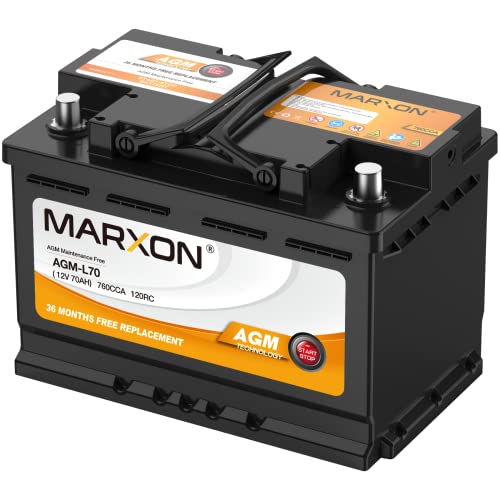
MARXON Group 48 H6 L3 AGM Battery 12V 70Ah

MARXON Group 48 H6 L3 AGM Battery BCI48

G48 Car Battery 12V 70Ah AGM 800 CCA H6

Mighty Max MM-H8 AGM Battery Group 49 12V 95Ah

Mighty Max MM-G35 AGM Battery Group 35 12V 55Ah

Autocessking Group 48 AGM Battery H6 12V 70Ah
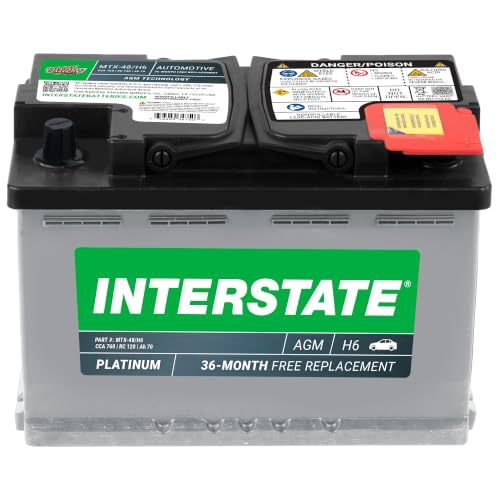
Interstate Batteries MTX AGM H6 12V 70Ah
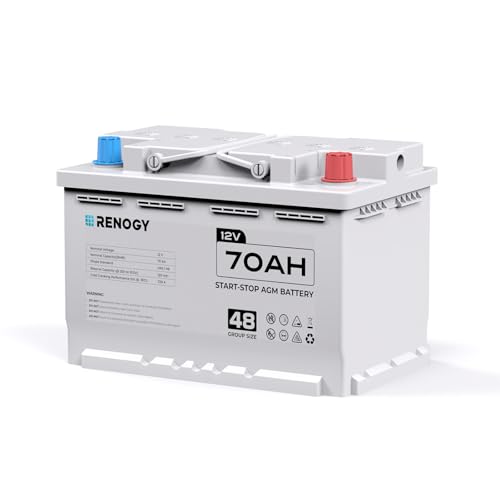
Renogy 12V 70Ah AGM Battery H6 Group 48

UPLUS AGM-L70-M Battery H6/L3 12V 70Ah
Taking A Closer Look At The Options
The Mighty Max MM-H6 lands squarely in the Group 48 / H6 / L3 footprint that most mid-size sedans and crossovers from the last decade use as factory fitment. With 760 cold cranking amps and a 70 amp-hour capacity, it’s calibrated for vehicles that cycle the starter repeatedly through city traffic. The sealed AGM construction means you can mount it at a slight angle in tight engine bays without worrying about acid leaks seeping onto the surrounding hardware.
For drivers whose commute includes stop-and-go stretches where a start-stop system engages at every light, the 120-minute reserve capacity gives meaningful headroom if the alternator ever lags. You’ll want to confirm terminal polarity against your existing battery before ordering; some Group 48 trays flip positive and negative from the OEM layout, and that mismatch is the kind of detail that’s awkward to discover during installation.
What Stands Out
- Group 48 sizing fits most start-stop vehicles without bracket modifications.
- 760 CCA handles sub-freezing morning starts without voltage drop.
- AGM sealed design eliminates the need to top off distilled water.
- 120 reserve minutes support accessory loads during long idle periods.
- Spill-proof construction tolerates off-axis positioning in tight bays.
Points To Keep In Mind
- Terminal polarity differs between Group 48 SKUs, so verify the layout against your tray.
- At roughly 46 lb, it’s a single-person lift for overhead installs.
Quick Facts
Who It Suits Best
Daily commuters with start-stop-equipped sedans who want a drop-in Group 48 replacement that balances cold-weather performance with maintenance-free ownership.
Look Elsewhere When
The Mighty Max MM-H8 is the better match for SUV or light-truck owners who need extra amp-hour capacity for winches, plows, or larger accessory banks.
MARXON’s H6 sits in the same Group 48 envelope as the Mighty Max unit, with matching 70Ah and 760 CCA ratings. The 46.5 lb weight and 10.95 by 6.89 by 7.48-inch dimensions mirror what you’ll find in factory Group 48 trays, which keeps installation predictable. The headline draw, though, is the three-year warranty, which gives some recourse if the battery fails early.
MARXON also markets this battery as a 40% faster charging option compared to a standard SLA (sealed lead-acid) unit, which can matter for drivers with short commutes where the alternator never fully tops off the battery. In a real-world setting, that translates to fewer deep-discharge cycles over the life of the unit. Owners of vehicles with regenerative braking systems may find this useful, since the battery recovers energy in shorter windows.
Well-Handled Touches
- Three-year warranty offers some peace of mind over the long haul.
- Charges noticeably faster than conventional sealed lead-acid batteries.
- Group 48 dimensions match OEM trays for direct swap-in.
- Compatible with start-stop fuel-saving systems.
Things To Consider
- Warranty claims typically require returning the failed unit at your own shipping cost.
- Specific terminal layout should be verified against your factory cable reach before ordering.
Made For
Budget-focused drivers who want a warranty-backed Group 48 replacement without paying premium-tier prices.
Consider Something Else When
The Interstate Batteries MTX AGM H6 is a stronger fit for drivers who prioritize pure-lead plate construction and long service intervals over warranty length.
This second MARXON entry shares its core specs with the previous unit, including the 70Ah capacity, 760 CCA, and identical 10.95 by 6.89 by 7.48-inch form factor. The distinction here is mostly about availability and packaging; if your preferred MARXON listing is out of stock, this version offers the same physical compatibility. It’s a useful fallback rather than a meaningfully different battery.
For drivers performing a DIY battery swap, the dimensions matching standard BCI48 trays means no spacer shimming or terminal adapter work. The sealed AGM design is a practical fit for vehicles where the battery sits close to the firewall or fender, since off-angle mounting won’t compromise the seal. If you’ve already confirmed Group 48 compatibility, this is a plug-and-play option that gets you back on the road quickly.
A Few Strong Suits
- Identical BCI48 dimensions as the standard Group 48 trays.
- 760 CCA handles cold morning starts in northern climates.
- Maintenance-free sealed design, no water top-offs required.
Honest Caveats
- Functionally similar to the sibling MARXON listing, so check stock on both before committing.
- Terminal polarity is fixed, so confirm against your factory configuration.
- Heavier than some compact Group 35 alternatives at 46.5 lb.
Key Product Details
Best Suited To
DIY installers who want a dimensionally identical Group 48 swap when the primary MARXON listing is unavailable.
Reach For A Different Pick When
The G48 Car Battery with 800 CCA is a stronger cold-climate choice for drivers who crank up the CCA headroom over warranty coverage.
Where most Group 48 options cluster around 760 CCA, the G48 from Wuldnmar bumps that figure to 800 CCA while keeping the standard 70Ah and 120-minute reserve capacity. That extra 40 cold cranking amps is the kind of margin that shows up on the coldest mornings of the year, when engine oil is thickest and starter motors draw hardest. For drivers in the upper Midwest, mountain states, or anywhere winter temperatures dip well below freezing, that headroom can prevent the stranded-at-the-store scenario.
The 38-month warranty is longer than what many competitors in this list offer, which gives a longer window to catch a premature failure. The H6 form factor also makes this battery a drop-in for many European and Japanese vehicles that spec the same Group 48 envelope. If your previous battery’s life span was cut short by parasitic accessory loads or frequent short trips, the higher CCA can help mask the marginal starts that wear out weaker batteries.
Practical Advantages
- 800 CCA outperforms most Group 48 peers in sub-zero conditions.
- 38-month warranty extends protection past the typical 24-month window.
- 120-minute reserve capacity supports accessory loads at idle.
- AGM chemistry tolerates repeated deep-discharge cycles from short commutes.
Trade Offs
- Marginal cost premium over 760 CCA alternatives may not justify the upgrade for warm-climate drivers.
Whose Shelf It Belongs On
Cold-climate commuters whose vehicles sit outside overnight and demand extra cranking amps to turn over thickened oil.
A Better Fit Elsewhere
The Mighty Max MM-H8 is the smarter upgrade for drivers who tow or run heavy accessory loads and need the 95Ah reserve capacity more than the marginal CCA bump.
Stepping up to Group 49 territory, the Mighty Max MM-H8 delivers 95Ah of capacity, 900 CCA, and a 160-minute reserve capacity. That’s a meaningful jump over the Group 48 entries, and it’s the kind of battery that belongs in larger SUVs, light trucks, and any vehicle running winches, auxiliary lighting, or aftermarket audio amplifiers. The extra reserve minutes mean accessories keep running long after the engine is off, which is critical for camping setups and job-site work lights.
Group 49 batteries are physically larger than Group 48 units, so this only fits vehicles whose factory trays accept the H8 form factor. Before ordering, measure your existing battery and confirm the hold-down bracket reaches. Incompatible tray sizing is the most common reason a Group 49 battery ends up returned, and the swap from Group 48 to Group 49 isn’t always possible without adapter plates.
Notable Gains
- 95Ah capacity supports extended accessory use without engine running.
- 900 CCA delivers strong starting torque in cold conditions.
- 160-minute reserve capacity is well above Group 48 norms.
- Sealed AGM construction resists vibration in truck-mounted applications.
Possible Compromises
- Group 49 dimensions won’t fit vehicles spec’d for Group 48 trays.
- Heavier than standard Group 48 units, so handle with care during install.
Perfect Match For
SUV and light-truck owners running auxiliary electronics, winches, or trailer brake systems that draw heavily from the battery at idle.
Swap It Out When
The Mighty Max MM-H6 is the better match for sedan owners who don’t need the extra reserve capacity and prefer the lighter Group 48 form factor.
Group 35 is a smaller battery class commonly found in older Japanese sedans, compact hatchbacks, and some economy cars. The Mighty Max MM-G35 fits that tray with 55Ah of capacity, 650 CCA, and a 100-minute reserve capacity. Those numbers are lower than the Group 48 options above, but they’re appropriate for vehicles with smaller starters and lower accessory loads.
For drivers whose vehicle was factory-equipped with a Group 35 battery, this AGM upgrade delivers sealed, maintenance-free ownership without forcing a tray modification. The lighter weight also makes at-home swaps more manageable. Keep in mind that Group 35 batteries are not interchangeable with Group 48, so this only fits vehicles specifically spec’d for the smaller form factor.
What Pays Off
- Lighter than Group 48 units, easier to handle during solo installs.
- Group 35 sizing fits many older compact cars and hatchbacks.
- Maintenance-free AGM design eliminates electrolyte top-offs.
Less Ideal Details
- 650 CCA is below Group 48 levels, so it’s less ideal for very cold climates.
- Not compatible with start-stop systems requiring higher reserve capacity.
Right Fit For
Owners of older compact cars and Japanese sedans spec’d for Group 35 trays who want sealed AGM convenience without oversizing.
Not Your Match When
The Mighty Max MM-H6 makes more sense for drivers with start-stop-equipped vehicles that demand the higher reserve capacity and CCA of Group 48.
The Autocessking Group 48 mirrors the core Group 48 specifications with 70Ah, 760 CCA, and a 120-minute reserve capacity, putting it in direct comparison with the Mighty Max MM-H6 and the MARXON entries. The selling points here focus on the AGM construction details. Acid suspended in glass fiber mats reduces the leak and corrosion risk that wet-cell batteries carry, and that matters in vehicles where the battery sits near the firewall or under a rear seat.
For drivers who keep their vehicles for many years, the sealed design typically translates to longer service life than flooded batteries, with widely reported lifespans running longer than traditional lead-acid in similar use cases. The Group 48 footprint keeps it interchangeable with other 70Ah options on this list, so choosing between them often comes down to brand preference, stock availability, and shipping time rather than meaningful performance differences.
Benefits That Matter
- Sealed AGM design reduces corrosion on terminals and surrounding hardware.
- Standard Group 48 sizing for broad vehicle compatibility.
- 760 CCA handles typical cold-weather starting demands.
Worth Bearing In Mind
- Performance closely tracks other Group 48 AGM entries, so selection often comes down to availability.
- Verify terminal polarity against your existing battery before purchase.
Who Should Grab It
Drivers who want a sealed AGM Group 48 battery with standard specs and prefer shopping based on current availability.
Another Choice May Suit
The Interstate Batteries MTX AGM H6 is a stronger choice for shoppers willing to pay more for pure-lead plate construction and longer service potential.
Interstate’s MTX AGM stands out from the other Group 48 entries by using pure lead plates rather than the lead-alloy plates found in most AGM batteries. That construction detail typically allows deeper discharge recovery and longer cycle life, which is why this battery tends to appeal to drivers who keep their vehicles past the 100,000-mile mark. With 70Ah and 760 CCA, the published specs match other Group 48 competitors, but the underlying plate design is where the difference shows up over time.
The trade-off is cost. Interstate typically prices above the budget-tier Group 48 options, so the upgrade only makes sense if you plan to keep the vehicle long enough to amortize the difference. For start-stop systems that cycle the battery more aggressively than conventional starters, the deeper cycle tolerance can translate to noticeably longer service life. Owners commonly report that MTX batteries outlast standard AGM units in demanding start-stop applications.
Useful Touches
- Pure lead plate construction for deeper discharge recovery.
- MTX design is engineered specifically for start-stop cycling demands.
- Standard Group 48 sizing fits a wide range of vehicles.
- 760 CCA delivers consistent cold-weather performance.
Practical Considerations
- Priced above most AGM competitors in the same group size.
- Requires a compatible AGM-specific charger for optimal longevity.
Built With In Mind
Long-term vehicle owners with start-stop-equipped cars who want a premium AGM battery that tolerates deep cycling better than standard units.
Where A Sibling Pick Shines
The MARXON Group 48 H6 is the better value play for drivers who want similar specs with a three-year warranty at a lower price point.
Renogy’s H6 battery brings 70Ah of capacity and a 720 CCA rating, slightly below the 760 CCA that other Group 48 entries publish but still adequate for most climates. Where it differentiates is the wide operating temperature range, from roughly minus 22°F to 158°F, which makes it a candidate for vehicles that see extreme heat under-hood or extreme cold during winter storage.
Renogy is well-known in the solar and off-grid power space, so this battery carries over build quality designed for deep-cycle applications. That translates to robust plate construction that tolerates repeated discharge cycles. For drivers who also use their vehicle for occasional marine starting or trailer power, the deep-cycle pedigree is a useful bonus, though this is primarily a starting battery rather than a dual-purpose unit.
Features That Help
- Wide operating temperature range tolerates extreme climate conditions.
- Deep-cycle plate construction handles repeated accessory loads.
- Sealed AGM design is safe for cabin or trunk mounting.
Trade-Offs To Consider
- 720 CCA is slightly below the 760 CCA Group 48 norm.
- Warranty terms may differ from dedicated automotive battery brands.
The Right Fit
Drivers in regions with extreme temperature swings who want a battery engineered for both freezing winters and hot summer engine bays.
Skip It When
The G48 Car Battery with 800 CCA is a stronger choice for cold-climate drivers who want maximum cranking amps over wide temperature tolerance.
UPLUS closes out the list with another Group 48 / H6 / L3 entry at 70Ah, 760 CCA, and 120 minutes of reserve capacity. The dimensions come in at 10.98 by 6.81 by 7.51 inches, which sits within fractions of an inch of the standard BCI48 footprint. The sealed AGM design is fully maintenance-free, so there’s no checking electrolyte levels or cleaning corrosion off vent caps.
For drivers who want a straightforward, spec-compliant Group 48 replacement without paying premium-tier prices, this battery fills that role. The terminal layout places positive on the right and negative on the left in a standard configuration, but it’s worth verifying against your factory setup since polarity swaps are a common point of confusion. For set-and-forget daily driving, the maintenance-free ownership is the primary appeal.
Everyday Wins
- Maintenance-free sealed design, no electrolyte checks needed.
- Group 48 / H6 / L3 sizing matches standard factory trays.
- 760 CCA delivers reliable cold-weather starting performance.
Small Caveats
- Spec parity with several competitors means selection comes down to price and stock.
- Confirm terminal polarity against your factory cable routing before installation.
Feature Snapshot
Who Will Love This
Daily commuters who want a maintenance-free Group 48 battery with standard specs and no premium-tier markup.
Where Another Pick Suits Better
The Interstate Batteries MTX AGM H6 is worth considering if you want pure-lead plate construction for longer service life in start-stop cycling.
Matching Your Vehicle To The Right Group Size
Before settling on any AGM H6 battery, confirm three things: the BCI group size your vehicle’s tray accepts, the terminal polarity your cables reach, and the minimum CCA your climate demands. Group 48 / H6 / L3 is the most common fitment for mid-size cars and crossovers from the last decade, but some vehicles spec Group 49 for higher reserve capacity or Group 35 for compact applications. A Group 48 battery physically won’t seat in a Group 35 tray, and forcing the wrong size risks damaging hold-down brackets or shorting terminals against the hood.
CCA matters most in cold climates. Most modern vehicles start reliably with 650 to 760 CCA in moderate weather, but drivers in northern states or mountain regions benefit from 800 CCA or higher to compensate for thicker engine oil and harder starter draw. Going slightly above the OEM rating gives margin without overtaxing the charging system, since alternators are designed to handle the recharge load.
Reserve capacity is the spec most shoppers overlook. It measures how long the battery can run accessories if the alternator fails, expressed in minutes at a 25-amp draw. For vehicles with extensive electronics, infotainment systems, or aftermarket accessories, the difference between 100 and 160 minutes of reserve capacity can mean the difference between driving home safely and waiting for a tow.
Key Considerations Across These Picks
Wrong Turns To Avoid
The most common mistake is trusting the model year alone when picking a battery. Many vehicles received mid-cycle refreshes that changed battery specs without changing the model name, so always cross-check the existing battery’s group size and CCA against the candidate replacement. Polarity reversal is the second most common slip-up, and it usually surfaces only during installation when the positive cable won’t reach the positive terminal. Measure your old battery’s dimensions and confirm terminal positions before ordering, and you’ll sidestep both pitfalls.
Where The Extra Money Goes
Premium AGM batteries like the Interstate MTX command higher prices primarily because of plate composition. Pure lead plates resist corrosion longer than lead-alloy plates, and that translates to deeper discharge recovery and longer cycle life. For drivers who keep vehicles past 100,000 miles or who run demanding start-stop systems, the upgrade pays back through longer replacement intervals. For shorter ownership horizons, the budget-tier Group 48 options deliver the same basic starting performance at a fraction of the cost.
Frequently Asked Questions
What Does AGM Mean For A Car Battery?
AGM stands for Absorbent Glass Mat, a construction where electrolyte is held in fiberglass mats between the plates. This sealed design resists vibration, mounts in multiple positions, and typically lasts longer than traditional flooded batteries.
How Long Does An AGM H6 Battery Usually Last?
Most AGM H6 batteries deliver four to six years of service under normal driving conditions, with start-stop-equipped vehicles often on the shorter end due to frequent cycling.
Can I Replace A Flooded Battery With An AGM Battery?
Yes, in most vehicles a Group 48 AGM is a direct upgrade from a flooded battery of the same group size. The charging system works the same way, though some vehicles may benefit from a software reset to register the new battery type.
Do AGM Batteries Need A Special Charger?
AGM batteries charge at slightly different voltage curves than flooded batteries, so an AGM-compatible charger or maintainer helps maximize service life. Standard chargers work for occasional top-offs, but a smart charger is better for long-term maintenance.
What Happens If I Install The Wrong Group Size?
A battery that doesn’t match the factory group size may not seat properly in the tray, can shift during driving, and may short against the hood or chassis. Always verify dimensions and terminal layout before installation.
Final Verdict
The right AGM H6 battery comes down to matching group size and CCA to your vehicle’s specs, then choosing the warranty and reserve capacity that suit your climate and ownership horizon. For most start-stop-equipped commuters in moderate climates, any of the Group 48 / 70Ah / 760 CCA entries will deliver reliable cold-weather starting and maintenance-free ownership. Cold-climate drivers should lean toward higher CCA, while owners planning long-term vehicle retention benefit most from premium plate construction. The picks above cover each of those profiles, so the next step is confirming your tray size and ordering with confidence.