A flat battery rarely announces itself. One cold morning the engine barely turns, the headlights dim, and suddenly the whole day tilts. The right AGM car battery (AGM stands for Absorbent Glass Mat, a sealed design where the electrolyte is held in fiberglass mats, making the unit spill-proof and vibration-resistant) replaces that moment with a quiet, confident crank, no matter the weather. This list covers both replacement batteries and the chargers and testers that keep them healthy, so your investment pays off for years.
A Snapshot Of The Selections

Tecmate Optimate 7 Select 12V 10A 9-Step Battery Charger

Victron Energy Blue Smart IP65 12V 7A Smart Battery Charger
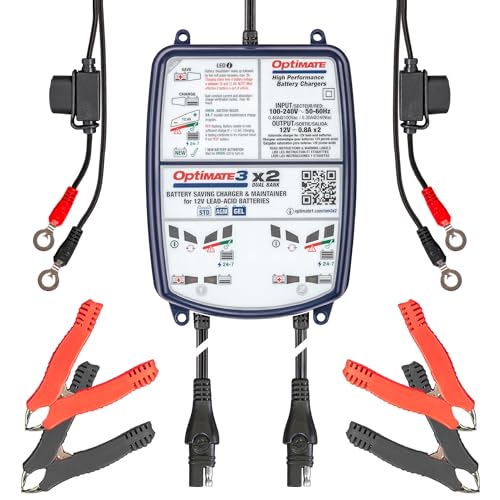
Optimate 3 Dual Bank TM-451 2x12V 0.8A Sealed Battery Charger

Battery Tender 4 AMP 12V/6V Smart Charger and Maintainer

Battery Tender 5 AMP 12V Smart Battery Charger
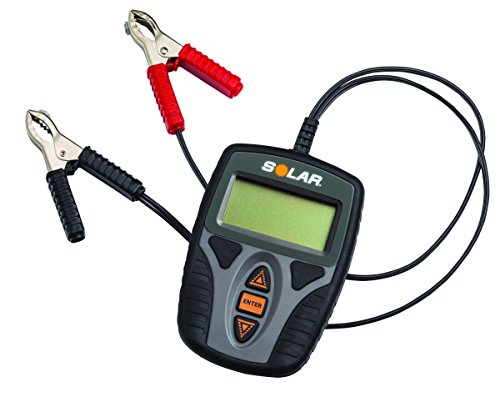
Clore Automotive SOLAR Digital 12V Battery and System Tester

Goodyear 48-H6-AGM 12V 70Ah 760 CCA Automotive Battery
Goodyear 47-H5-AGM 12V 60Ah 680 CCA Automotive Battery

Goodyear 49-H8-AGM 12V 95Ah 900 CCA Automotive Battery

TOPDON BC100 12V 100-2000 CCA Battery Load Tester
More On The Choices That Made The List
Owners running premium AGM batteries like Odyssey and Optima know that a generic float charger can leave performance on the table. The Tecmate Optimate 7 Select pushes 10 amps through a nine-step program, with a selectable 14.7V mode built specifically for those high-density AGM cells. That extra current matters most when reviving a deeply discharged unit, where weaker chargers tend to throw in the towel.
For a weekend mechanic with a stable full of AGM-powered cars, the built-in temperature compensation and power supply mode (for stable voltage during ECU work) shift this from a charger to a service tool. Compare that to the gentler Battery Tender 4 AMP covered later, and the Optimate 7 clearly targets the workshop end of the garage.
Positive Points
- 10A output revives deeply discharged AGM batteries that lower-amperage units leave behind.
- Selectable 14.7V mode is tuned for premium AGM brands, improving charge acceptance in cold shops.
- Power supply mode delivers clean, stable voltage while flashing or programming a vehicle ECU.
- Temperature compensation automatically adjusts voltage as conditions shift across seasons.
- Nine-step profile handles diagnosis, recovery, bulk charge, and long-term maintenance in one cycle.
Trade-Offs To Consider
- Higher output means more heat under heavy loads, so it needs breathing room on a bench.
- The 10A rate is overkill for a single motorcycle battery.
Feature Snapshot
Built With In Mind
Workshop owners, premium AGM owners, and anyone who flashes ECUs or programs modules at home.
Skip It When
A casual user maintaining a single commuter car will get more value from the gentler Battery Tender 4 AMP covered below.
Where most chargers leave you squinting at colored LEDs, the Victron Energy Blue Smart IP65 talks to your phone over Bluetooth. Through the Victron Connect app you can monitor voltage and current in real time, tweak the charging profile, and update the firmware when new features drop. That kind of visibility turns a routine hookup into a clear picture of your battery’s health.
The IP65 rating means dust and water spray are not a problem, so a spot in the garage, on a dock, or beside a workbench all work. Compared to the Tecmate Optimate 7 Select above, you trade raw recovery current for smarter control, a worthwhile swap if data matters more than brute force.
Well-Handled Touches
- Bluetooth monitoring lets you check state of charge from across the shop.
- IP65 sealed housing handles dusty workshops and damp outdoor conditions.
- Adjustable charging profiles adapt to AGM, lithium, and traditional flooded cells.
- 7A output covers most passenger AGM batteries without overworking the charger.
Things To Consider
- Phone-dependent setup may frustrate users who prefer physical buttons and indicator lights.
- 7A current is slower on deeply discharged large-capacity AGM packs than higher-rated units.
Who It Suits Best
Data-driven enthusiasts, marine and RV owners, and anyone managing multiple battery banks from a phone or tablet.
Not Your Match When
You need quick workshop-grade recovery, where the Tecmate Optimate 7 Select earlier in this list pulls ahead.
Powersports owners juggling two bikes, a scooter, and a seasonal side-by-side know the pain of swapping a single-bank tender every week. The Optimate 3 Dual Bank TM-451 solves that with two independent 12V outputs running on a seven-step program, each delivering up to 0.8A. Hook both batteries up, walk away, and come back to fully conditioned cells.
The compact housing fits neatly in a trailer tongue box or a touring luggage pannier. Where the Victron Energy Blue Smart above focuses on smart connectivity, this Optimate stays deliberately simple: plug in and let the program run.
The Helpful Details
- Two-bank design cuts charger clutter when storing multiple vehicles.
- Low 0.8A rate is gentle on small motorcycle and ATV AGM batteries.
- Sealed program recovers and maintains in one unattended cycle.
- Compact form factor travels easily between home and a track or campsite.
Honest Caveats
- 0.8A per bank is too slow for reviving deeply discharged large car batteries.
- Limited to sealed and AGM chemistry; flooded lead-acid needs a different program.
Best Suited To
Owners with multiple motorcycles, scooters, or seasonal vehicles that all need quiet winter maintenance.
Look Elsewhere When
Your priority is recovering a deeply discharged car battery, which calls for the Tecmate Optimate 7 Select from earlier in the list.
A garage with both a modern SUV and a classic 6-volt roadster used to mean two separate chargers. The Battery Tender 4 AMP solves that with a simple switch between 12V and 6V modes, pushing up to 4 amps while its smart controller adjusts the rest. For households juggling mixed vehicles, that flexibility is the whole point.
The float-maintenance function keeps stored batteries topped up without the slow damage caused by old-style trickle chargers. Compared to the Optimate 3 Dual Bank above, this unit gives up dual-bank convenience for higher amperage on a single channel.
What It Does Well
- 12V and 6V switchable design covers classic and modern vehicles from one unit.
- 4A output recharges mid-size AGM batteries faster than typical 1.5A tenders.
- Float mode holds proper storage voltage without overcharging during long winters.
- Compatible with lead-acid, AGM, gel, and lithium cells for maximum chemistry flexibility.
Points To Note
- Single output means you charge one battery at a time, unlike the dual-bank Optimate 3 above.
- Higher 4A rate demands closer attention on smaller motorcycle batteries.
Feature Snapshot
Whose Shelf It Belongs On
Multi-vehicle households, vintage car owners, and anyone needing a versatile do-it-all tender for the home garage.
Swap It Out When
Your stable includes multiple motorcycles stored at once, where the Optimate 3 Dual Bank earlier in the list saves time.
Shops rotating cars through bay-to-bay benefit from a charger that moves quickly and never babysits the float stage. The Battery Tender 5 AMP uses a four-stage high-frequency program (qualification, bulk, absorption, float) that tops a typical AGM battery far faster than a 1.5A hobby tender, then settles into a maintenance mode that does not cook the cells.
Designed with AGM batteries in mind, this unit still handles flooded and gel cells without complaint. Stacked against the Tecmate Optimate 7 Select earlier, it gives up the premium 14.7V selectable program for a more accessible price, while keeping enough current for daily shop duty.
The Upside
- 5A output recharges AGM batteries in noticeably less time than 2A hobby units.
- Four-stage program handles qualification through float automatically without manual resets.
- High-frequency switch-mode design runs cooler and lighter than old transformer chargers.
- Float mode holds full batteries at storage voltage safely between service visits.
A Few Limitations
- 12V only, so it cannot service older 6-volt vehicles like the Battery Tender 4 AMP above.
- Lacks a selectable 14.7V mode for premium AGM brands that benefit from higher absorption voltage.
The Right Fit
Small shop owners, fleet maintenance crews, and serious DIYers who cycle through batteries and want shorter turnaround times.
Reach For A Different Pick When
You run a home garage with mixed 6V and 12V vehicles, where the Battery Tender 4 AMP covered above handles both systems.
Before you swap a battery or blame a charger, a quick test tells you which side is actually failing. The Clore Automotive SOLAR BA9 covers 40 to 1200 CCA across flooded, AGM, spiral, and gel cells, with an operating range of 7 to 15 volts. The LCD stays readable in low light, which is exactly when most electrical gremlins show up.
System testing goes beyond battery health, checking charging output and starter draw in one session. Compared to the smartphone-driven TOPDON BC100 reviewed later, this Clore unit feels more like a traditional shop tool, no app required.
The Value In It
- 40-1200 CCA testing range spans motorcycles, cars, and light trucks.
- LCD screen stays readable in dim garages and outdoor bays.
- System test mode checks charging output and starter draw alongside battery health.
- Compatible with flooded, AGM, spiral, and gel cells for flexible diagnostic work.
Trade-Offs To Consider
- 12V only, so 6V and 24V systems need a different tool.
- Lacks the wireless logging and phone integration of newer testers.
Who Should Grab It
Home mechanics and small shop techs who want reliable bench-top diagnostics without pulling out a phone.
Consider Something Else When
You want phone logging and a wider CCA range, where the TOPDON BC100 covered later pulls ahead.
For a typical sedan or crossover that needs a no-surprises replacement, the Goodyear 48-H6-AGM delivers 760 cold cranking amps from a 70Ah Group 48 case. The 120-minute reserve capacity means the radio, lights, and accessories keep running after the alternator steps back, useful in slow traffic and stop-and-go commutes.
AGM construction tolerates vibration far better than flooded cells, so rough roads and potholed commutes do not shorten its life as quickly. Stacked against the Goodyear 47-H5-AGM covered next, this Group 48 trades some compact fitment for stronger overall output.
Strong Points
- 760 CCA handles cold-morning starts across most climate zones.
- 70Ah capacity supports modern accessory loads without straining the charging system.
- 120-minute reserve capacity keeps electronics alive during slow traffic or alternator hiccups.
- Sealed AGM design tolerates vibration and resists acid spills under the hood.
Worth Noting
- Group 48 dimensions require confirming fitment before ordering, since some European cars use different case sizes.
- Higher amp-hour capacity adds weight compared to smaller Group 47 alternatives.
Feature Snapshot
Made For
Daily-driven sedans, crossovers, and light SUVs that need a balanced replacement with strong cold-start headroom.
A Better Fit Elsewhere
Trucks and high-displacement engines that demand more output should reach for the Goodyear 49-H8-AGM reviewed later in this list.
Compact cars and many import hatchbacks call for a smaller Group 47 case, and that is exactly where the Goodyear 47-H5-AGM fits. With 680 CCA and a 60Ah capacity, it provides enough punch for subcompact daily driving without forcing you to wrestle a battery that is too large for the tray.
The 100-minute reserve capacity is a touch lower than the Group 48 covered above, so consider how much idle-time accessory draw you run. Owners commonly report straightforward swap-in fitment once the hold-down hardware matches the factory spec.
Notable Upsides
- Group 47 case fits many compact and import vehicles without modification.
- 680 CCA delivers reliable starts in moderate climates and most winter regions.
- Sealed AGM construction handles short-trip duty cycles better than flooded cells.
- Maintenance-free design skips periodic water top-ups for the life of the battery.
Worth Bearing In Mind
- Lower 100-minute reserve capacity falls behind the Group 48 above for heavy accessory loads.
- CCA is modest for very cold northern climates with high-compression engines.
Perfect Match For
Compact cars, hatchbacks, and import sedans whose factory tray specifies a Group 47 footprint.
Where A Sibling Pick Shines
Drivers who want higher reserve capacity and stronger cold cranking should move up to the Goodyear 48-H6-AGM reviewed earlier in the list.
Big engines, heavy accessories, and cold-climate starts all push a battery to its limits. The Goodyear 49-H8-AGM answers with 900 cold cranking amps and a generous 95Ah capacity, all in a Group 49 case designed for trucks and performance applications. The 160-minute reserve rating is a noticeable step up from the Group 48 unit covered earlier.
Vibration resistance matters more in trucks and SUVs that see rough terrain, and AGM chemistry holds up better under that abuse. Compared to the smaller Goodyear 47-H5-AGM, this Group 49 trades compact fitment for the headroom that big-displacement engines demand.
Real-World Strengths
- 900 CCA delivers confident cold starts for large V6 and V8 engines.
- 95Ah capacity supports winches, light bars, and upgraded audio without strain.
- 160-minute reserve capacity outpaces smaller BCI groups for extended accessory use.
- AGM construction tolerates the vibration of off-road and work-truck duty cycles.
Some Limits To Know
- Group 49 footprint will not fit vehicles designed for Group 47 or 48 cases.
- Higher capacity adds weight that smaller mounts may need to be checked for clearance.
Whose Garage It Belongs In
Full-size truck owners, performance builds, and anyone running winches, plows, or accessory-heavy electrical setups.
Swap It Out When
A compact car owner looking for a direct-fit replacement will be better served by the Goodyear 47-H5-AGM covered above.
When your stable includes a motorcycle, a daily sedan, a lawnmower, and a boat, a tester with a 100-2000 CCA range removes the guesswork. The TOPDON BC100 covers flooded, AGM flat plate, AGM spiral, gel, and EFB batteries (EFB stands for Enhanced Flooded Battery, a starter battery design with improved cycling for stop-start vehicles), so you stop needing a separate tool for each chemistry.
Beyond basic health checks, it runs charging system and starter tests in the same session, which keeps a small shop moving. Stacked against the Clore SOLAR BA9 earlier, the TOPDON trades a simple bench unit for a wider CCA range and broader chemistry coverage.
Positive Takeaways
- 100-2000 CCA range handles everything from small engines to heavy-duty trucks.
- Five-chemistry compatibility covers nearly every 12V battery you are likely to meet.
- 3-in-1 diagnostics combine battery, starter, and charging system tests in one device.
- Compact handheld form factor travels easily between vehicles and storage spots.
Things To Weigh
- 12V focus means 6V and 24V systems require a different tool.
- Interface and printed menus are simpler than the smartphone-driven competitors.
Feature Snapshot
Best Suited To
DIYers with mixed vehicles and hobbyists who want a single tester instead of a drawer full of single-purpose tools.
Look Elsewhere When
You run a busy shop and prefer a traditional bench tester with a larger screen, where the Clore Automotive SOLAR BA9 above fits the routine better.
What Matters Most Before Choosing an AGM Car Battery
Start with group size and CCA. The BCI group number (a Battery Council International standard that defines case dimensions and terminal placement) tells you whether the battery physically fits your tray, and cold cranking amps gauge how confidently the engine will turn over on a freezing morning. A sedan in a moderate climate usually lives comfortably around 600-800 CCA, while trucks and large engines benefit from 850 CCA and up. Picking a group size that does not match the factory tray is the fastest way to a return trip.
Capacity and reserve ratings matter more than most shoppers expect. Amp hours (Ah) describe how long the battery can sustain a draw before voltage drops, while reserve capacity (RC, measured in minutes) reflects how long accessories will run if the alternator quits. Drivers running infotainment upgrades, light bars, or winches should favor higher RC numbers, since that buffer keeps the cabin functional during long idles and unexpected alternator issues.
Chemistry and maintenance behavior are where AGM earns its keep. AGM batteries hold their electrolyte in fiberglass mats, so they resist vibration, mount in more positions, and tolerate short-trip duty cycles that slowly kill flooded cells. They also cost more upfront, which is why pairing the battery with a smart maintainer (like the Battery Tender or Optimate units covered above) extends service life and protects the investment over time.
Finally, test before you replace. A battery and system tester such as the Clore SOLAR or TOPDON BC100 helps you confirm whether a weak start is really the battery’s fault or a parasitic draw from somewhere else. Knowing the difference saves the cost of an unnecessary replacement and points you toward the actual fix.
Key Considerations Across These Picks
Wrong Turns To Avoid
The most common mistake is choosing a battery based on CCA alone, ignoring BCI group size. A 900 CCA monster that does not drop into the tray costs time, frustration, and a restocking trip. Always confirm the factory group number before anything else, and treat CCA and RC as tiebreakers.
Another trap is buying a heavy-duty charger for a single daily driver. The Tecmate Optimate 7 Select is a fantastic workshop tool, but its 10A output and selectable 14.7V AGM mode are wasted on a commuter that just needs steady float maintenance. Match the charger to your battery’s chemistry and your actual storage pattern, not just the highest amperage you can find.
Where The Extra Money Goes
Premium AGM batteries earn their price through thicker plates, tighter internal compression, and higher purity lead. Those choices translate into longer cycle life, stronger vibration resistance, and higher reserve capacity. A Goodyear 49-H8-AGM, for example, costs more because it can support a winch and a plow in winter without sagging.
Upgraded chargers pay for themselves through smarter charging algorithms and broader chemistry support. A Bluetooth-enabled unit like the Victron Energy Blue Smart gives visibility into battery health that budget chargers cannot match. For households running premium AGM batteries, that visibility and the ability to update firmware justify the extra cost over the years.
Frequently Asked Questions
How long does an AGM car battery usually last?
Most AGM car batteries last three to five years under normal conditions, with premium units reaching six or seven years when paired with a smart maintainer and not left to sit deeply discharged.
Can an AGM battery be charged with a regular charger?
A regular float charger is fine for topping off, but a standard flooded-cell charger running at high voltage can overheat an AGM battery over time. Chargers with an AGM-specific mode, like the Battery Tender 5 AMP or Tecmate Optimate 7 Select, are the safer long-term pick.
Do AGM batteries need a special battery tester?
A tester that lists AGM as a supported chemistry, such as the Clore SOLAR BA9 or TOPDON BC100, gives a more accurate reading. Some basic testers default to flooded profiles and misinterpret AGM voltage behavior.
What is the difference between AGM and EFB batteries?
EFB batteries are an upgraded flooded design built for stop-start vehicles, while AGM batteries use absorbent glass mats to lock the electrolyte in place. AGM generally offers higher cycle life, stronger vibration resistance, and better deep-discharge recovery.
Is it worth upgrading from a 4-amp to a 5-amp charger?
For a single car that sees occasional maintenance, a 4-amp charger is plenty. For shops or multi-battery households, the extra amp cuts charging time noticeably and is usually worth the small step up in cost.
The Takeaway
An AGM car battery is one of the few upgrades that pays you back the first time you turn the key on a cold morning. Match the group size and chemistry to your vehicle first, lean on a smart maintainer to extend service life, and keep a tester handy so you know what actually needs replacing. Browse the picks above and choose the one that fits your garage, your climate, and how you actually use your vehicles.