An absorbed glass mat battery sitting unused through a cold winter will surrender its cranking amps faster than most owners realize. A well-matched maintainer keeps the charge topped up without overcooking the cells, which matters whether you park a classic car, a daily-driver truck with a stop-start system, or a boat that only runs in summer. The list below focuses on units that handle AGM chemistry specifically and stay gentle enough for long-term storage.
A Snapshot Of The Selections

Battery Tender Junior 12V, 750mA Charger and Maintainer
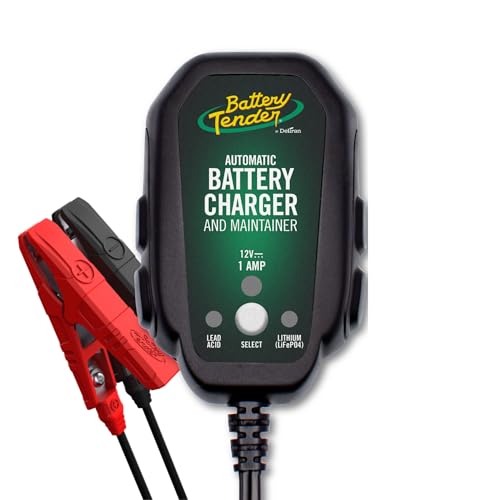
Battery Tender Junior 12V, 800mA Charger and Maintainer

Schumacher SL1674 12V Lithium Jump Starter & Power Pack

NOCO GENIUS1 1A 6/12V Smart Battery Charger and Maintainer

NOCO GENIUS5 5A 6/12V Smart Battery Charger and Maintainer

Schumacher SC1355 1.5A Car Battery Charger and Maintainer

Schumacher SC1280 12V/6V Battery Charger and Maintainer

NOCO GENIUS2 2A 6/12V Smart Battery Charger and Maintainer

Schumacher SC1361 6A Car Battery Charger and Engine Starter

Schumacher SC1445 Wheeled 6/12V 250A Starter and Charger
More On The Choices That Made The List
The original Battery Tender Junior has earned its reputation in garages and shed corners across the country. It runs a four-step charging program that walks the battery through initialization, bulk charge, absorption, and float mode, which keeps AGM cells topped without boiling off electrolyte.
At 750 milliamps it is a slow, deliberate charger that suits smaller batteries the best. For a motorcycle, ATV, or lawn tractor pulled out only a few weekends a year, that gentle pace is exactly the point.
What Works In Its Favor
- Four-step charging protects AGM cells from chronic overcharging during long winters.
- Float mode lets you leave it connected for months without babysitting.
- Compact housing fits in a saddlebag or shelf without taking over storage.
- Compatible with flooded, gel, and AGM lead-acid chemistries.
Things To Consider
- Output is too low for reviving a deeply discharged full-size car battery in any reasonable window.
- Leads run a bit short for some engine bays, depending on where you mount the unit.
Built With In Mind
Riders and ATV owners parking their machines through winter or off-season months.
Reach For A Different Pick When
The NOCO GENIUS5 is a smarter fit for larger battery banks or for owners who want faster recovery from a partial discharge.
The 800mA Junior steps the classic design forward by adding a chemistry switch on the housing. A button press selects lead-acid or lithium (LiFePO4) mode, which matters for shops and households juggling both battery types.
Lead-acid handling covers flooded, AGM, and gel cells. Lithium support targets LiFePO4, the chemistry showing up in more powersports and specialty vehicles every year.
What Earns Its Place
- Switchable chemistry means one maintainer covers a mixed fleet.
- 800mA output shaves time off recharges compared with smaller units.
- Automatic float keeps the battery at proper storage voltage indefinitely.
- Same compact Junior footprint that fits on crowded workbenches.
Worth Noting
- Mode switching requires reading the indicator lights to confirm the right setting.
- Still on the slow side for full-size automotive batteries drained by a parasitic draw.
Right Fit For
Owners running both AGM lead-acid gear and newer LiFePO4 batteries across the same garage.
Consider Something Else When
The NOCO GENIUS1 is a smaller, simpler option for someone with a single small battery and no plans to add lithium gear.
The SL1674 plays a different game than the wall-plug maintainers above it. It is a lithium jump starter rated at 1500 peak amps, which is plenty for reviving a dead car battery on a cold morning. As a maintainer in the strict sense, it is more of an emergency tool than a long-term storage companion.
The package pulls double duty: a 10W wireless charging pad, USB-A and USB-C fast charging ports, and a multi-mode LED flashlight. The whole unit fits in a glove box, which matters more than raw spec sheet numbers for people who want one device to handle several roadside jobs.
Strong Points
- 1500A peak output handles full-size engines from a compact lithium pack.
- Wireless and USB-C charging covers phones and tablets during the same trip.
- LED flashlight with multiple modes helps with nighttime breakdowns.
- Useful as a one-tool roadside kit for drivers who hate clutter.
Points To Keep In Mind
- Not a continuous-storage maintainer, so it does not replace the Battery Tender Junior or NOCO GENIUS units above for parked vehicles.
- Lithium jump packs lose capacity in extreme cold, which is when most jump starts are needed.
Feature Snapshot
Who It Suits Best
Long-distance commuters and road-trippers who want a single box for dead batteries, dead phones, and dim parking lots.
Look Elsewhere When
The Schumacher SC1280 suits a vehicle that sits in a garage more than it drives on the highway.
The GENIUS1 is the smallest entry in NOCO’s smart-charger family, and it punches above its size in chemistry coverage. It accepts both 6V and 12V systems, which is unusual for a 1-amp unit and welcome for owners of vintage vehicles running classic 6V setups.
The 1-amp output targets batteries up to about 30 amp-hours, which means small powersports packs, lawn tractor batteries, and similar low-capacity storage applications. For a full-size car, the GENIUS5 in this list is a better match.
Bright Spots
- Dual-voltage support covers 6V classics and modern 12V setups in one unit.
- Works with AGM, gel, flooded, deep-cycle, and LiFePO4 chemistries.
- Tiny footprint fits inside a toolbox drawer for permanent bench storage.
- Force mode can help recover deeply discharged batteries other chargers refuse.
A Few Limitations
- 1-amp output charges slowly, which becomes obvious on larger batteries.
- Clips and eyelet terminals are not always included, depending on packaging.
Key Product Details
Made For
Classic-car owners and hobbyists working with smaller batteries and slower maintenance cycles.
Skip It When
The NOCO GENIUS5 is the stronger pick for anyone maintaining a deep-cycle boat or RV battery bank.
The GENIUS5 sits in the middle of NOCO’s lineup and tends to be the sweet spot for general-purpose home use. At 5 amps it moves enough current to recharge a deeply discharged full-size automotive battery overnight, yet it stays gentle enough for permanent AGM storage duty.
Battery capacity support stretches up to around 120 amp-hours, which opens the door to larger deep-cycle applications. Boats, RVs, and off-grid setups all fit comfortably in that range.
Everyday Advantages
- 5A output balances fast recovery with safe long-term maintenance.
- Covers 6V and 12V lead-acid plus LiFePO4 chemistries on a single unit.
- Repair mode can help recover sulfated batteries other chargers leave alone.
- Supports up to 120 Ah, suitable for deep-cycle banks and dual-battery installs.
Honest Caveats
- Bulkier than the GENIUS1, so it does not vanish into a glove box the same way.
- Premium positioning costs more than entry-level maintainers, though the feature set justifies it for many owners.
Feature Card
Whose Shelf It Belongs On
Multi-vehicle households where one charger needs to cover the daily driver, a project car, and a boat or RV.
A Better Fit Elsewhere
The Schumacher SC1361 makes more sense for a workshop that also needs engine-start assist from the same unit.
The SC1355 is one of the most approachable Schumacher maintainers for owners who only need the basics. It charges at 1.5 amps across 6V and 12V systems, and it adds a reconditioning mode aimed at restoring batteries that have lost a little capacity from sitting.
It is built as a three-in-one device, which in this case means charging, maintaining, and reconditioning. Owners with a car or pickup that sits for a few weeks at a stretch will find it covers the common scenarios without extra buttons to think about.
The Upside
- Reconditioning mode helps recover mildly sulfated batteries owners might otherwise replace.
- 6V and 12V switching widens the application range beyond modern cars.
- Affordable entry point for owners on a tight budget.
- Compatible with standard, AGM, and deep-cycle batteries.
Things To Weigh
- 1.5-amp output is slow for reviving anything beyond a mildly discharged battery.
- No lithium support, so LiFePO4 owners will need a different charger.
Best Suited To
Home mechanics with a single daily driver or two stored vehicles who do not need lithium chemistry support.
Swap It Out When
The Battery Tender Junior 800mA offers lithium compatibility for similar money if your fleet is heading that direction.
The SC1280 walks a fine line between maintainer and full-on charger. Its 3-amp trickle charge output sits well above what the smaller Battery Tender Junior delivers, while its marine-grade chemistry coverage opens doors for boat owners who do not want to buy a separate charger.
Microprocessor-controlled operation handles the four-step charging cycle automatically. Owners commonly report that it transitions cleanly into maintenance mode once the battery reaches full charge, which protects cells during long winters in the slip.
What It Does Well
- Marine-friendly AGM and gel coverage suits boats and pontoons as well as cars.
- 3A trickle output recharges faster than 1-amp entry-level units.
- Automatic operation means no manual mode switching once installed.
- Restoration mode helps batteries that have lost capacity to mild sulfation.
Possible Compromises
- Lacks lithium support, which excludes newer LiFePO4 battery setups.
- Listed as a 15A unit in some marketing, but the trickle output is what matters for maintenance duty.
Who Will Love This
Drivers and boaters who need one charger for both garage and dock without buying two separate units.
Where Another Pick Suits Better
The NOCO GENIUS5 fits owners who want both marine coverage and LiFePO4 support in the same box.
The GENIUS2 fills the gap between NOCO’s tiny GENIUS1 and the higher-output GENIUS5. Two amps of output covers most automotive batteries without the cost or bulk of the larger unit, which is a useful middle ground for owners running a single daily-driven vehicle.
Battery capacity support extends to around 40 amp-hours, which is enough headroom for cars and light trucks. Chemistry coverage mirrors the rest of the GENIUS family, including the LiFePO4 support that the Schumacher SC1280 lacks.
Key Advantages
- 2A output handles typical car and truck batteries in a reasonable window.
- Works with AGM, gel, flooded, deep-cycle, and LiFePO4 chemistries.
- 6V and 12V dual-voltage operation covers classic and modern vehicles.
- Smaller and lighter than the GENIUS5 for easier wall-mount installation.
Where It May Fall Short
- Not designed for large deep-cycle banks above 40 Ah, where the GENIUS5 is the better match.
- Force mode for deeply discharged batteries is present but limited compared with higher-amperage NOCO units.
Quick Technical Notes
Perfect Match For
Owners with one or two cars and light trucks who want smart maintenance without paying for higher-amperage capability they do not need.
Not Your Match When
The Schumacher SC1361 is a smarter pick for a workshop that also needs engine-start assist in the same box.
The SC1361 is the heavy-hitter of the Schumacher maintainer family. Six amps of charging current is enough to push meaningful energy back into a deeply discharged battery, and the unit also pulls engine-start duty on top of its maintenance role.
It is built for environments where the battery does not always behave, like farms, workshops, and older vehicles with parasitic draws that drain cells between drives. The steel case and chunky clamps suggest a tool that lives on a concrete floor more than a shelf.
Benefits That Matter
- 6A output revives larger batteries much faster than 1-amp or 2-amp units.
- Engine-start function turns it into a multi-role tool for tough mornings.
- Robust construction handles shop and farm environments.
- Compatible with standard, AGM, and deep-cycle chemistries.
Potential Drawbacks
- Heavier and bulkier than typical maintainers, so it does not hide on a shelf.
- Engine-start cables add weight and storage requirements versus a slim wall-plug unit.
Who Should Grab It
Farm owners, workshop operators, and rural drivers who face dead batteries in equipment that lives outdoors.
Another Choice May Suit
The NOCO GENIUS5 is a cleaner choice for suburban garages where engine start is not part of the job.
The SC1445 is not really a maintainer in the polite sense. It is a wheeled shop charger with a 250-amp engine-start rating, designed for garages that need to spin over stubborn diesels and large-displacement engines on demand.
It supports both 6V and 12V systems and is manual in operation, which is intentional. Pros who want a specific charging curve for a battery they understand tend to prefer the control, even at the cost of automation.
A Strong Showing
- 250A engine start handles trucks, diesels, and large engines comfortably.
- Wheeled design moves around the shop without lugging a heavy box.
- 6V and 12V support covers classic and modern vehicles on the same unit.
- Manual operation gives technicians direct control over the charging profile.
Some Limits To Know
- Manual operation is less convenient than automatic maintainers for casual storage use.
- Far larger and more expensive than any other entry on this list.
- Not appropriate for permanent battery maintenance duty, where the smaller GENIUS units shine.
At A Glance
Built With In Mind
Professional mechanics and serious home shops that prioritize engine starting capability over automatic maintenance.
Skip It When
The Schumacher SC1361 is the right tool for owners who want engine start without committing to a full wheeled cart.
How To Match The Right Maintainer To Your Battery
Picking the right maintainer starts with battery chemistry, not amperage. AGM batteries need a charger with an AGM-specific profile that holds float voltage below the gassing threshold. Flooded cells tolerate a slightly higher float, while gel batteries want an even lower ceiling. Picking a unit that supports your chemistry is the first filter.
Next, match output to battery capacity. A small motorcycle battery sitting for the winter does not benefit from a 6-amp shop charger. A 100 amp-hour boat bank will not be happy with a 1-amp trickle. The maintainer output should align loosely with battery size, which is why the list splits between 1-amp, 2-amp, and 5-amp units.
Storage environment matters more than people think. A battery in a heated garage has different needs than one in an unheated barn. Cold cuts battery capacity, which means cold-stored batteries benefit from maintainers with temperature compensation. Check whether the unit adjusts its voltage based on ambient temperature before you commit.
Run-time and connection style are the practical details. Permanent ring-terminal leads make long-term maintenance painless, while alligator clips suit occasional hookups. For a vehicle that lives in storage for months at a stretch, permanent leads mounted to the battery save real headaches.
Smart Shopping Decisions For Long-Term Battery Care
Common Slip Ups To Watch For
One of the easiest mistakes is grabbing any 12V charger and assuming it handles AGM the same way it handles flooded cells. The float voltage difference is small on paper, but over months of constant connection it adds up to lost water or premature capacity loss in AGM batteries.
Another trap is matching charger output to battery size too aggressively. A 6-amp charger on a small motorcycle battery can overheat the cells if left in bulk mode. The match between output and battery capacity matters more than the temptation to buy the highest-amperage unit on the shelf.
Where The Higher Price Goes
Higher-tier maintainers earn their position through features you may not see on the spec sheet. Temperature compensation reads ambient heat or cold and adjusts the float voltage accordingly, which extends battery life in garages that swing with the seasons. Repair modes can recover mildly sulfated batteries, which delays replacement and pays back the price difference on a single use.
Build quality and connector design also explain the price gap. Heavy-gauge leads, gold-plated clamps, and weather-sealed housings add cost, but they also survive shop floors and outdoor mounting without failing in the second winter.
Frequently Asked Questions
Do AGM batteries really need a special maintainer?
Yes, AGM cells prefer a slightly lower float voltage than flooded batteries. A maintainer with an AGM mode holds that ceiling and prevents slow water loss over months of constant connection.
Can I leave a maintainer connected all winter?
Most modern smart maintainers are built for continuous connection. They drop to float mode once the battery reaches full charge and only top up when voltage drifts downward.
What size maintainer do I need for a car battery?
A 2-amp to 5-amp unit is the comfortable range for typical automotive batteries. Smaller batteries such as motorcycle or lawn tractor packs are happier with 1-amp to 1.5-amp chargers.
Are lithium-compatible maintainers worth it?
LiFePO4 batteries are showing up in more powersports and specialty applications every year. A lithium-capable maintainer costs a little more now, but it saves buying a second unit later when your fleet inevitably changes.
Is a jump starter the same as a maintainer?
No, jump starters are emergency tools for reviving dead batteries on the spot. Maintainers are slow, gentle chargers built to stay connected for months. Some products, like the Schumacher SL1674, blend both jobs, but most specialize in one role or the other.
The Takeaway
A matched maintainer quietly pays for itself by extending battery life through every storage season. Match the unit to your chemistry and battery size first, then choose between the slim wall-plug maintainers for casual use and the wheeled shop units for professional demands. The right pick depends less on which product tops the list and more on what lives in your garage.