Cold mornings, short trips, and accessory-heavy dashboards all push an old starter battery to its limit. AGM (Absorbent Glass Mat) units hold electrolyte in fiberglass mats, so they resist vibration, mount in tighter spots, and recover from deep discharges better than a flooded lead-acid box. This lineup covers daily commuters, stop-and-go city cars, trucks pulling heavy loads, and a couple of lithium and deep-cycle options for curious tinkerers. Each pick is sized to a real-world slot, from sub-50Ah compacts to a 100Ah workhorse, and notes which vehicles they actually fit.
A Closer Look At The Lineup

Power Queen 12V 100Ah LiFePO4 Lithium Battery with Self-Heating

Enjoybot 36V 100Ah LiFePO4 Lithium Battery with 100A BMS

Weize Platinum AGM Battery BCI Group 94R 12V 80Ah

Mighty Max MM-G24 Start and Stop AGM Battery Group 24 12V 70Ah

Mighty Max MM-G26 AGM Battery Group 26 12V 45Ah

ACDelco Gold 51RAGM AGM BCI Group 51R Battery

Weize Platinum AGM Battery BCI Group 48 12V 70Ah
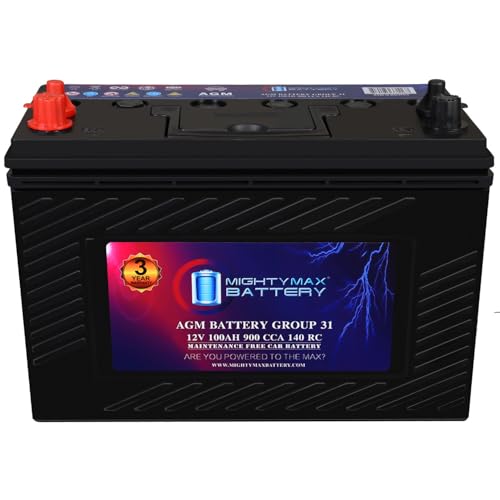
Mighty Max MM-G31 AGM Battery Group 31 12V 100Ah

Powersonic PS-640F1 6V 4.5Ah SLA Battery
Weize Platinum AGM Battery BCI Group 47 12V 60Ah
Meet The Standout Selections
LiFePO4 chemistry swaps out the heavy lead plates for lighter lithium iron phosphate cells, which trade the conventional 12V starter format for a deep-cycle-friendly power pack. The Power Queen model adds dual 100W heating pads that warm cells from roughly 14°F toward 41°F in about half an hour, a noticeable step up from a single 50W pad. It also pauses charging below freezing and resumes once temperatures rise, protecting the cells from plating damage that permanently lowers capacity.
For drivers in northern states and mountain towns, that built-in warmth means the car cranks even when the thermometer dips well below zero. Compared with the Mighty Max MM-G31 further down the list, this one weighs less and lasts far more cycles, though it costs more up front. Most owners run it in overland builds, van conversions, and dual-battery setups where weight matters more than sticker price.
What Makes Sense
- Heating pads warm cells faster than most self-heating lithium competitors, so dawn starts on cold mornings behave like mild-weather starts.
- Smart low-temp cutoff stops charging when cells risk damage and resumes automatically, protecting long-term capacity without manual babysitting.
- LiFePO4 chemistry delivers thousands of deep cycles, which suits overlanders running fridges, lights, and inverters off the pack.
- Weight savings over a comparable lead-AGM unit free up payload for gear-heavy builds.
Worth Noting
- A lithium drop-in usually needs a compatible charger or alternator regulator, so installation is more involved than a straight AGM swap.
- CCA-style cranking amps are not the spec most buyers compare, so you may need to confirm starter compatibility before committing.
Whose Shelf It Belongs On
Van lifers, overlanders, and cold-climate drivers who run accessory-heavy setups and want a battery that warms itself before the engine fires.
Swap It Out When
The Mighty Max MM-G31 is the better call for a stock daily driver whose original alternator and ECU expect a traditional flooded or AGM format.
The Enjoybot 36V pack steps outside the standard 12V starter format and lands squarely in deep-cycle territory, where golf carts, trolling motors, and solar banks live. Grade-A prismatic cells sit behind a 100A BMS (Battery Management System) that handles overcharge, over-discharge, short-circuit, and temperature cutoffs while keeping the cells balanced. Bluetooth adds a phone-based dashboard for voltage, current, and state of charge without climbing into the battery bay.
Where the Power Queen above focuses on cold cranking, this one targets sustained draw over hours. It suits RV owners and off-grid tinkerers more than commuters. For a typical sedan owner looking to replace a worn 12V starter, the 36V output makes it the wrong shape entirely, but for a 36V trolling motor or a mid-sized solar bank, it is a tidy, monitor-friendly choice.
Key Advantages
- 100A BMS layers six protection modes plus cell balancing, reducing the odds of an accidental over-discharge ruining the pack.
- Bluetooth monitoring lets you check state of charge and current from a phone, which beats climbing into a tight compartment with a multimeter.
- LiFePO4 chemistry promises thousands of cycles at 80% depth of discharge, well past what a lead-acid bank offers.
- Low-temp cut-off prevents charging damage in unheated sheds and garages during shoulder seasons.
Things To Consider
- 36V output means this is not a drop-in starter battery for a car; matching the voltage to the load is on the installer.
- Sizing the bank to your inverter and motor draw takes more planning than a 12V AGM swap.
The Right Fit
RVers, anglers with 36V trolling setups, and off-grid solar hobbyists who want a long-cycle pack they can monitor from their phone.
Look Elsewhere When
Most commuter drivers should reach for the Weize Platinum AGM Group 94R instead, since a 12V starter format is what stock alternators actually expect.
The Weize Platinum Group 94R is the heavyweight of the daily-driver slot, pairing 850 CCA with 140 minutes of reserve capacity in a Group 94R / H7 footprint. Tapered terminals sit with negative on the left and positive on the right, which matches the orientation of many domestic full-size sedans and crossovers. The advertised cycle life runs up to twice that of a conventional flooded battery, which matters for short-trip drivers who never let the alternator fully top off the pack.
Compared with the Mighty Max MM-G24 a few slots down, this one delivers more cold-cranking amps and more reserve, at the cost of extra weight and a slightly larger case. It suits vehicles with bigger engines, winches, or heated accessories that pull hard at idle. Garage storage is straightforward, though owners commonly report that the heavier case benefits from a hold-down bracket swap to keep it firmly planted.
Notable Gains
- 850 CCA delivers confident cold-weather starts for V6 and V8 engines that a Group 47 or 48 battery struggles with.
- 140-minute reserve capacity keeps accessories, lights, and infotainment alive during long idles or accessory mode.
- AGM construction handles deep-cycle recovery better than flooded batteries, so short-trip wear and tear is less punishing.
- AGM sealed format means no top-ups and a lower chance of acid spills around sensitive engine bay wiring.
Honest Caveats
- The 12.4″ length can crowd tighter engine bays, so verifying the tray and terminal orientation before ordering saves a return trip.
- Heavier than smaller AGM units, which sometimes requires a sturdier hold-down to prevent vibration wear over time.
Key Product Details
Made For
Owners of larger sedans, crossovers, and light trucks who want strong cold-start headroom and a maintenance-free AGM format.
A Better Fit Elsewhere
The Weize Platinum AGM Group 47 is the smarter pick for compact imports with smaller factory trays that cannot physically fit an H7 case.
The MM-G24 leans into the start-stop world, where engines cycle off at every traffic light and the battery takes the brunt of frequent restarts. AGM chemistry gives it higher discharge recovery than a flooded unit, so each stop-and-go event puts less permanent wear on the plates. At 710 CCA and 120 minutes of reserve capacity, it sits in a comfortable middle ground between compact imports and full-size trucks.
It pairs well with the ACDelco Gold 51RAGM below, which targets a similar use case in a smaller case for tight engine bays. For most modern sedans and crossovers running factory start-stop logic, this Group 24 fits the OE specification without modification. The trade-off shows up in vehicles with winches or high-amp audio, where the reserve capacity can feel stretched.
What Helps Most
- AGM format handles the constant cycling of start-stop systems without the rapid capacity loss flooded batteries suffer.
- Sealed, spill-proof case lets the unit mount in angled or hard-to-reach positions without venting concerns.
- Deep discharge recovery means brief accessory loads, like running the radio with the engine off, are easier on the plates.
Small Caveats
- Smaller reserve capacity than the Weize 94R means heavier accessory loads can drain it faster on long idles.
- Start-stop-specific design offers little benefit in older vehicles without that system, where a basic AGM works just as well.
Best Suited To
Daily commuters with factory start-stop systems who want a sealed AGM that can take the cycling punishment without early failure.
Reach For A Different Pick When
The Mighty Max MM-G31 fits better if you drive a truck or SUV that needs higher cranking amps and longer reserve for towing days.
The MM-G26 keeps things small and tidy, with a 45Ah capacity and 540 CCA in a Group 26 case that fits older Japanese compacts and many classic imports. Its 80-minute reserve capacity is modest by modern standards, but for a four-cylinder commuter with a stock audio system that is plenty. The sealed AGM format also resists the vibration that wears out batteries in older engine bays where mounts have softened.
It sits at the lower end of the daily-driver scale, well below the Mighty Max MM-G24 in both amp-hours and reserve. Owners of small Hondas, older Civics, and similar economy cars are the natural fit. If you tend to leave the car parked for long stretches in winter, a battery tender is a worthwhile companion since the smaller reserve drains faster under parasitic loads.
Well-Handled Touches
- Compact Group 26 case drops into smaller engine bays where larger AGM units physically do not fit.
- Sealed AGM design means no acid spills on rough roads or angled mounts, which suits older vehicles.
- Modest weight keeps the swap easy without needing a second pair of hands.
A Few Limitations
- Only 540 CCA and 80 minutes of reserve, so it can struggle in deep-cold regions or vehicles with high accessory draws.
- Lower amp-hour capacity means longer parasitic loads, like alarm systems, can flatten it faster than a 70Ah or 80Ah battery.
Who It Suits Best
Owners of older compact cars, classic imports, and small-displacement daily drivers who want a maintenance-free AGM in a small case.
Where Another Pick Suits Better
The Weize Platinum AGM Group 47 is the smarter choice for slightly larger imports that need a few more CCA and amp-hours without jumping case size.
ACDelco’s Gold 51RAGM lines up as an OE-style replacement for compact Hondas, Nissans, Subarus, and similar imports that use the tight Group 51R footprint. The brand’s Professional line is built to meet factory fit, form, and function, which makes it an easy swap when an OEM unit finally gives up. Backed by General Motors’ parts network, it carries an expectation of consistent quality control across production runs.
The trade-off is that the Group 51R case is genuinely small, so its capacity and CCA land below the Weize 94R and Mighty Max MM-G31. For most stock applications, that is plenty. Owners who have added amplified audio systems or aftermarket lighting may find the reserve capacity stretched thin on long idles. The honest read is that this is the right shape for the right car, and a poor shape for anything that needs more output.
What It Does Well
- Group 51R case matches the OE specification for many Honda, Nissan, and Subaru compact applications.
- ACDelco Gold manufacturing tends to deliver consistent fit and terminal placement across batches.
- AGM sealed format avoids the venting and corrosion issues older flooded replacements can introduce.
Where It Is Less Suited
- Lower capacity than larger-case AGMs, so heavily modified electrical systems can drain it quickly.
- Premium-tier pricing reflects the OE branding, and budget shoppers may find equivalent output elsewhere for less.
Perfect Match For
Drivers of stock Honda Civic, Nissan Sentra, Subaru Impreza, and similar compact imports who want a direct OE-style replacement.
Consider Something Else When
The Mighty Max MM-G26 is the more budget-friendly call for older economy cars that do not need the ACDelco brand premium.
The Weize Platinum Group 48 fills the H6 slot that many European and Japanese mid-size cars use as factory equipment. At 760 CCA, 120 minutes of reserve, and a 70Ah rating, it lands between the compact Group 47 and the heavier Group 94R. Tapered terminals in left-negative, right-positive layout match a wide swath of vehicles, so the swap often drops in without modifying the tray.
Compared with the Group 94R a few slots up, this one trades some reserve capacity for a smaller footprint, which is the right move in tighter engine bays. It suits drivers who want stronger cold-start performance than a Group 47 offers without the bulk of an H7 case. Owners commonly report that the terminal orientation matches factory wiring, making the swap a clean weekend job.
Advantages To Know
- Group 48 / H6 footprint is a common factory fitment, so installation is usually a direct drop-in.
- 760 CCA comfortably handles mid-size four-cylinder and light six-cylinder engines in cold climates.
- Sealed AGM design keeps the engine bay cleaner since there is no acid vapor to corrode nearby metal.
Practical Considerations
- Reserve capacity trails the larger Weize 94R, so heavy accessory loads feel the squeeze sooner.
- Verifying the factory tray dimensions before ordering is worth the extra five minutes, since case tolerances vary by vehicle.
Feature Snapshot
Right Fit For
Drivers of mid-size imports and European sedans who want a sealed AGM in the H6 footprint their car was built to accept.
Skip It When
The Weize Platinum AGM Group 47 is a smarter fit if your vehicle uses the smaller H5 tray and you do not need the extra amp-hours.
The MM-G31 sits at the top of the standard 12V AGM range with 900 CCA, 140 minutes of reserve capacity, and a full 100Ah rating in a Group 31 case. That combination suits diesel pickups, work vans, and SUVs that tow on weekends and idle through job sites on weekdays. The sealed AGM format also stands up to the constant vibration that wears out flooded batteries under heavy loads.
Compared with the Weize 94R, this one carries more amp-hours and a slightly higher CCA, which is the right move for bigger engines. The catch is the size, since Group 31 only fits in vehicles designed to accept it. Compared with the Power Queen lithium at the top of the list, this is the conventional choice for owners who want AGM behavior with stock charging systems.
The Case For It
- 900 CCA handles diesel and large gasoline engines in cold weather without hesitation.
- 140 minutes of reserve capacity keeps work lights, comms radios, and cabin accessories powered through long idles.
- AGM sealed construction resists vibration wear on rough roads and uneven job sites.
Points To Note
- Group 31 case is too large for many compact and mid-size cars, so it is essentially a truck-and-van battery.
- Heavier than smaller AGM units, so handle with care during installation.
Feature Rundown
Built With In Mind
Pickup, SUV, and van owners who tow, idle for work, or run winches and need a heavy-duty AGM that takes the punishment.
Another Choice May Suit
The Power Queen self-heating lithium is worth a look for overlanders who want to drop weight and add thousands of extra cycles.
The Powersonic PS-640F1 is not a starter battery in any conventional sense. At 6V and 4.5Ah with 0.187 fast-on connectors, it lives in the world of alarm panels, ride-on toys, emergency lighting, and small UPS backups. The sealed lead-acid (SLA) format resists shocks and vibration, which is why it shows up in so many low-draw mobility and security devices.
It earns its place on this list because automotive applications overlap with light-duty gear: backup siren boxes, garage door openers, and accessory circuits sometimes spec this exact footprint. Compare it to the larger AGM units above and the difference is night and day, since this battery is designed for slow, steady trickle loads rather than engine-cranking bursts. Owners commonly replace these every two to four years in standby service.
Benefits That Matter
- Tiny 1.6 lb footprint drops into security panels, mobility scooters, and similar standby gear.
- Sealed SLA design mounts in any orientation without leaking, which simplifies tight installations.
- Maintenance-free operation suits unattended equipment that runs for years between inspections.
Trade-Offs To Consider
- Far too small to crank any car engine; using it as a starter battery is a non-starter.
- Limited cycle life compared with deep-cycle AGM batteries when discharged hard.
Who Should Grab It
Tinkerers and garage hobbyists who need a compact sealed battery for alarm panels, ride-on toys, or small standby electronics.
Not Your Match When
The Mighty Max MM-G24 is the right call if you need actual engine-cranking power for a daily driver.
The Weize Platinum Group 47 closes the list with a tidy H5 case, 680 CCA, and 100 minutes of reserve capacity, sized for many European compacts and small imports. Tapered terminals in left-negative, right-positive layout match the factory wiring in a wide range of vehicles, which makes installation feel like an OEM swap. At 9.52″ long, it fits trays where the Group 48 would never sit.
It steps down from the Weize Group 48 in both amp-hours and CCA, which is the right move for owners who do not need the extra output. For most compact Euro cars with stock electrical loads, the smaller case is exactly enough. The trade-off shows up in vehicles with aftermarket audio or auxiliary lighting, where the reserve capacity can run short during long accessory sessions.
The Good Stuff
- H5 / Group 47 case fits compact imports and small Euro cars that larger AGMs physically do not.
- 680 CCA comfortably handles four-cylinder engines in cool to cold climates.
- Sealed AGM design prevents acid vapor corrosion around sensitive engine bay electronics.
Points To Keep In Mind
- Lower reserve capacity than the Group 48 means high-draw accessories feel the pinch sooner.
- Confirming terminal orientation against the factory wiring before ordering saves the headache of a returns process.
Quick Facts
Who Will Love This
Owners of compact Euro cars and small imports who want a maintenance-free AGM that fits the H5 tray without modification.
Consider Something Else When
The Weize Platinum AGM Group 48 is the better pick if your vehicle accepts the larger H6 footprint and you want more reserve capacity.
Factors To Weigh Before Choosing an AGM Battery
Match The BCI Group To The Factory Tray
The Battery Council International (BCI) group number defines a battery’s length, width, terminal placement, and hold-down style. Picking the right group is the single most important step, since a battery that is half an inch too long simply will not sit in the tray. Group 47 / H5 fits many compact imports, Group 48 / H6 fits mid-size Euro and Japanese cars, Group 94R / H7 fits many domestic full-size vehicles, and Group 31 covers trucks and heavy-duty applications.
Cold Cranking Amps And Reserve Capacity
CCA measures the amps a battery can deliver at 0°F for 30 seconds while maintaining voltage above a threshold, and it is the most useful number for cold-climate drivers. Reserve capacity (RC) measures how long the battery can run accessories if the alternator fails. For short-trip commuters, RC matters more than peak CCA. For cold-weather drivers with big engines, lead with CCA.
AGM Vs Lithium Trade-Offs
AGM batteries use fiberglass mats to hold electrolyte, are sealed, and charge on standard alternators. Lithium iron phosphate (LiFePO4) batteries weigh less and last more cycles, but they often need a compatible charger or battery management system to avoid damage in freezing temperatures. For stock daily drivers, AGM is the lower-friction choice. For accessory-heavy builds and weight-sensitive applications, lithium earns its higher cost.
What Separates One Pick From The Next
Wrong Turns To Avoid
The most common mistake is choosing the right CCA and the wrong group size, which leaves you with a battery that physically does not fit the factory tray. Another misstep is assuming any AGM works as a drop-in for a start-stop system, since some basic AGMs are not built for the constant cycling that start-stop logic demands. Verifying terminal orientation before checkout is a five-minute step that prevents an unnecessary returns trip.
Where The Extra Money Goes
Premium AGM picks add longer cycle life, higher reserve capacity, and more consistent cell quality, which translates into longer service intervals and fewer cold-morning surprises. Lithium options cost more because of the chemistry and built-in battery management, but pay back through weight savings and thousands of additional cycles. The upgrade is worth it for vehicles with heavy accessory loads, cold-weather daily use, or applications where battery weight affects performance.
Frequently Asked Questions
What does AGM mean for a car battery?
AGM stands for Absorbent Glass Mat, where fiberglass mats hold the electrolyte against the lead plates. This sealed design resists vibration, handles deep discharge better than flooded batteries, and mounts in positions a conventional battery cannot.
How long does an AGM car battery typically last?
Most AGM batteries deliver three to five years of service in daily-driven vehicles, with shorter lifespans in extreme heat or in cars that sit for long stretches without driving.
Can I replace a flooded battery with AGM without changing anything?
In most vehicles, yes. The alternator charging voltage is similar, and the sealed AGM drops into the factory tray if the group size matches. Some vehicles with battery management systems may need a brief reset to recognize the new chemistry.
Do AGM batteries need a special charger?
A standard automatic charger set to the AGM or sealed lead-acid profile works fine for topping off. For deeply discharged units or long-term storage, a charger with an AGM-specific mode helps maximize cycle life.
Is lithium a better choice than AGM for a daily driver?
For most stock daily drivers, AGM is the lower-friction choice. Lithium pays off when weight, cycle life, or accessory draw justifies the higher upfront cost and the need for a compatible charging setup.
The Takeaway
The right AGM battery comes down to matching the BCI group to your tray, choosing CCA and reserve capacity for your climate and driving habits, and picking chemistry that suits your charging setup. Compact imports do well with the Weize Group 47 or ACDelco 51RAGM, mid-size cars land on the Weize Group 48, and trucks and big SUVs step up to the Weize 94R or Mighty Max MM-G31. For cold-climate tinkerers, the Power Queen self-heating lithium opens doors the conventional picks cannot.