AGM batteries (sealed lead-acid batteries with absorbed glass mat technology) demand a charger that speaks their charging language, and plenty of options on the market now do that well. From weekend powersports toys stored through winter to full-blown marine rigs with multi-bank needs, the right charger keeps you from turning the key to a painful click. The picks below span compact maintainers, onboard marine units, full-size garage gear, and a roadside jump box, so you can match the tool to your actual setup.
A Closer Look At The Lineup
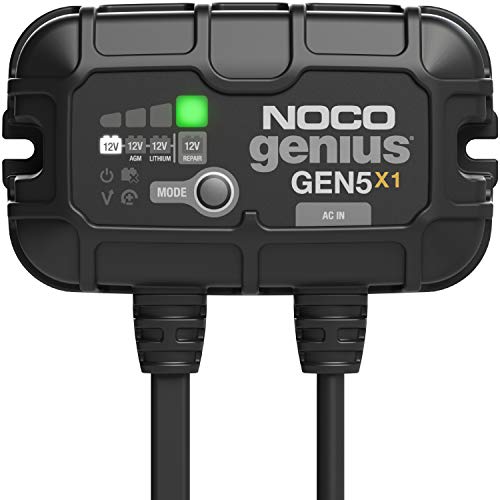
NOCO GEN5X1 12V 5A 1-Bank OnBoard Marine Charger

Battery Tender Junior 12V 750mA Charger and Maintainer

NOCO GC002 X-Connect M6 Eyelet Terminal Accessory
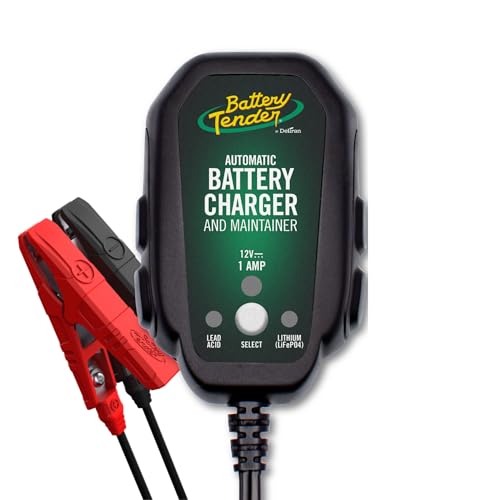
Battery Tender Junior 12V 800mA Lead Acid and Lithium Maintainer
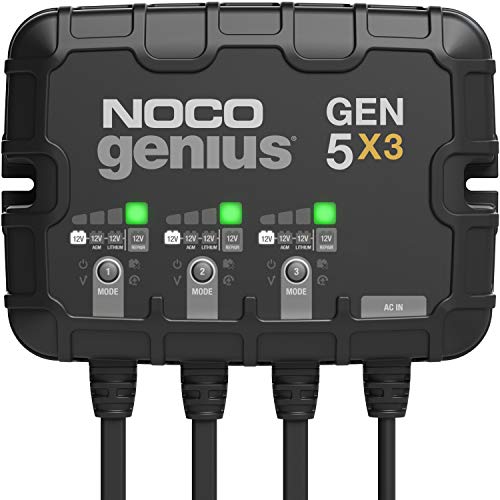
NOCO GEN5X3 12V 15A 3-Bank OnBoard Marine Charger

Schumacher SL1674 12V Lithium Jump Starter and Power Pack

NOCO GENPRO10X1 12V 10A 1-Bank OnBoard Marine Charger

Schumacher SC1355 6V/12V 1.5A Charger and Maintainer

Schumacher SC1280 12V/6V 3A Trickle Charger and Maintainer

Schumacher SC1445 Wheeled 6/12V 250A Starter/Charger
Meet The Standout Selections
A fully sealed, waterproof onboard charger built for a single 12V battery on a small boat or kayak rig, the NOCO GEN5X1 delivers 5 amps of clean charging power without taking up much space. Compared to the larger GENPRO10X1 covered later, this unit stays compact, making it easier to tuck into tight bilge areas where every inch counts.
It handles flooded, AGM, gel, and lithium chemistries with a multi-stage charging profile, so swapping batteries on a trailered boat is painless. Anglers who keep their trolling motor batteries topped off between trips will appreciate the always-on maintenance mode that runs quietly in the background.
The Value In It
- Waterproof sealed housing holds up to splashes and rain at the dock
- Compatible with AGM, flooded, gel, and lithium chemistries without adapter swaps
- 5A output refills a drained trolling battery overnight for most weekend uses
- Multi-stage charging prevents overcharging during long winter storage
Things To Consider
- Single bank means boats with two or three batteries will need the GEN5X3 instead
- 5A may feel slow on a deeply discharged large battery group
- Wiring must reach the battery, which can complicate retrofits in older hulls
Quick Facts
Made For
Small-boat owners running a single 12V battery who want a permanent install they can ignore once mounted.
Skip It When
The NOCO GEN5X3 is the better match for boaters running a starting battery plus a trolling or house bank on the same vessel.
The Battery Tender Junior has earned its reputation among motorcycle and ATV owners who let their rides sit through cold months. The 750mA output is small by design, which is the point: it tops off a battery gently rather than blasting it, which suits 12V lead-acid batteries across AGM, flooded, and gel types.
Where the GEN5X1 from the first pick is built for permanent marine mounting, this one lives on the workbench with alligator leads or an optional ring terminal. Riders who commute seasonally, store a classic in winter, or keep a quad ready for trail weekends will find the four-step charging program (initialization, bulk, absorption, float) handles everything without intervention.
Where It Delivers
- Gentle 750mA output keeps small powersport batteries healthy during storage
- Float mode maintains voltage safely for months on end
- Four-step program self-manages the entire charge cycle
Worth Noting
- Too small to revive a deeply discharged full-size car battery in any reasonable window
- No native lithium mode, unlike the upgraded Battery Tender covered next
Who It Suits Best
Garage-stored motorcycle and ATV owners who park the bike for winter and want a hands-off maintainer for AGM or flooded batteries.
A Better Fit Elsewhere
Riders running lithium batteries alongside lead-acid units will get more mileage from the Battery Tender Junior 800mA model with switchable chemistry.
Strictly speaking, the GC002 is not a charger but an accessory, and that is exactly why it earns a slot. The X-Connect M6 eyelet accessory bolts permanently to a battery post so you can plug in a compatible NOCO Genius or GENIUS-series charger with a quick-disconnect rather than fumbling with clamps each time.
Shop owners who maintain a fleet of bikes or a single classic that sees weekly charging will appreciate the lie-flat design, which keeps the lead low-profile against the battery. Pair it with the GEN5X1 from the first pick, or any of the NOCO Genius chargers listed below, and you get a tidy permanent setup without splicing wires every season.
Key Advantages
- Lie-flat profile suits tight battery boxes in motorcycles and small ATVs
- M6 eyelet fits a wide range of powersport and automotive battery posts
- Quick-disconnect saves time during routine seasonal charging
- Compatible with several NOCO charger families in one accessory
Trade Offs
- Not a stand-alone charger, so it only delivers value alongside a compatible NOCO unit
- Not compatible with NOCO Boost jump starters
Right Fit For
Owners already running a NOCO Genius-series charger who want a cleaner permanent hookup for a daily-garaged bike or small equipment battery.
Look Elsewhere When
If a charger is all you need and you do not already own a compatible NOCO unit, the Battery Tender Junior or Schumacher SC1280 bring the charging capability on their own.
The upgraded sibling of the 750mA Junior, this version adds a chemistry selector button that switches between lead-acid (AGM, flooded, gel) and lithium LiFePO4 batteries. Owners with a mixed fleet, say a classic lead-acid motorcycle in one bay and a newer lithium-powered ATV in another, get one charger for both without buying separate units.
The 800mA output is only marginally faster than the original Junior, so it still favors maintenance over rapid charging. The integrated ISM microcontroller adjusts the charging curve to match the selected chemistry, helping LiFePO4 packs avoid the overcharge damage that a lead-acid-only charger can cause.
Features That Help
- Push-button chemistry switch handles AGM, flooded, gel, and lithium safely
- 800mA output slightly outpaces the older 750mA Junior for shorter top-ups
- Smart controller adapts the charge curve to the selected battery type
Honest Caveats
- Still under 1A, so reviving a deeply drained battery takes patience
- Charger must be set to the correct mode before connecting, or charging profiles mismatch
Quick Facts
Best Suited To
Shops or households running both lead-acid and lithium powersport batteries who want a single maintainer on the bench.
Another Choice May Suit
Strictly lead-acid fleets without any lithium packs can save a few dollars with the original Battery Tender Junior 750mA covered earlier.
Where the GEN5X1 handles a single battery, the GEN5X3 steps up to three independent 5A banks for boats with starting, house, and trolling batteries. Each bank runs on its own charging profile, so a flooded starting battery and a LiFePO4 house bank can coexist without one dragging the other into the wrong voltage range.
The fully sealed waterproof housing matches the smaller GEN5X1, which means installation locations stay flexible on deck or in the engine room. Serious anglers and liveaboard cruisers running overnight loads from lights and fridges benefit from the always-on maintenance that keeps every bank topped off between outings.
The Case For It
- Three independent banks prevent cross-chemistry interference
- 15A total output refills three banks in a single overnight session
- Sealed waterproof design tolerates damp bilge environments
- Drop-in upgrade for older GENM3 installations with similar mounting points
Points To Keep In Mind
- Requires three separate runs of battery cable from the charger to each bank
- Higher output means heavier gauge AC supply wiring during install
Whose Shelf It Belongs On
Multi-battery boat owners managing a starting bank plus house and trolling batteries who want one unit rather than three separate chargers.
Reach For A Different Pick When
A single-battery kayak or jon boat setup is better served by the smaller NOCO GEN5X1 covered first, which costs less and uses less mounting space.
Shifting gears away from garage chargers, the Schumacher SL1674 is a portable lithium jump starter designed for roadside emergencies rather than long-term maintenance. The 1500-amp peak output is enough to crank a dead V8 in cold weather, which puts it in a different category from every other pick on this list.
It doubles as a USB power bank with 10W wireless charging, fast USB-A and USB-C ports, and a multi-mode LED flashlight, so it earns its space in a trunk or glovebox. Drivers with daily commuters who fear a dead AGM battery in a parking lot will appreciate the all-in-one format, though it should not replace a proper maintainer for stored vehicles.
What Makes Sense
- 1500A peak handles most passenger vehicles and light trucks in one jump
- Wireless charging pad refuels phones without cables during a roadside stop
- Multi-mode flashlight covers signals and area lighting in one tool
Some Limits To Know
- Not designed for long-term float maintenance like the Battery Tender units
- Lithium pack capacity drops in extreme cold, reducing jump readiness in deep winter
Perfect Match For
Daily drivers who want a jump starter, phone charger, and emergency light in a single glovebox-sized unit for unexpected dead-battery mornings.
Swap It Out When
For long-term battery care of a stored vehicle, the Battery Tender Junior or Schumacher SC1280 provide the slow maintenance this jump pack is not designed for.
The GENPRO10X1 sits between the GEN5X1 from the first review and the multi-bank GEN5X3 covered above, doubling the output to 10 amps on a single bank. Larger house batteries and bigger banks of group 27 or group 31 AGM cells benefit from the extra amperage, cutting refill times noticeably after a heavy discharge night.
The housing is the same sealed, waterproof form factor as the rest of the GEN5X series, so installation on a center console or in a sailboat lazarette follows familiar patterns. Compared to the GEN5X1, this is the better pick for owners with one large battery bank who do not need three-bank independence.
Bright Spots
- 10A output refills large AGM banks in roughly half the time of 5A units
- Compact footprint given the higher amperage, easing tight installs
- Full chemistry support covers AGM, flooded, gel, and lithium packs
Small Caveats
- Single bank means boats with separate house and starting batteries still need a multi-bank unit
- Higher amperage draws more from the dock shore power circuit during long charges
Who Will Love This
Boat owners with one large AGM or lithium house bank who want faster turnaround than a 5A charger offers.
Where A Sibling Pick Shines
The NOCO GEN5X3 is the smarter match for vessels running two or three separate battery banks that need independent profiles.
The SC1355 is the smallest Schumacher on this list, putting out a gentle 1.5 amps across both 6V and 12V batteries. That dual-voltage support is the headline feature, because it lets the same unit handle a vintage 6V cell alongside a modern 12V AGM without separate chargers.
The 3-in-1 charging, maintaining, and reconditioning routine helps revive lightly sulfated batteries that have sat through a few cold seasons. Compared to the more powerful SC1280 covered next, this one trades speed for affordability, making it a fit for occasional-use vehicles rather than daily drivers.
What It Does Well
- 6V and 12V compatibility covers classic cars and modern vehicles
- Reconditioning mode helps recover mildly sulfated batteries
- Simple interface suits beginners who do not want chemistry menus
Practical Considerations
- 1.5A output is slow on larger automotive battery groups
- No lithium mode for LiFePO4 owners
Feature Snapshot
Right Fit For
Owners of classic cars, lawn tractors, or motorcycle fleets who want an inexpensive dual-voltage maintainer with a recovery mode.
Not Your Match When
The Schumacher SC1280 fits better for daily-driver garage use where faster charging and broader chemistry support matter more.
The SC1280 doubles the amperage of the smaller SC1355 covered just above and adds a 4-in-1 routine of charging, maintaining, testing, and restoring 6V and 12V batteries across standard, AGM, gel, and deep-cycle types. Microprocessor control monitors the connection and adjusts voltage as the battery fills, so owners do not have to babysit the process.
The 3A trickle rate is still modest compared to heavy shop gear, but it suits the home garage where the goal is overnight recovery rather than rapid turnaround. Weekend tinkerers juggling a daily driver, a project truck, and a fishing boat will find this single unit covers most of the bench.
A Few Strong Suits
- 4-in-1 charging, maintenance, testing, and recovery covers routine battery care
- Compatible with AGM, gel, and deep-cycle chemistries plus standard flooded cells
- Microprocessor control adjusts the charge profile as the battery fills
Where It Is Less Suited
- 3A is light for heavy garage use where fast turnaround matters
- No lithium mode limits it for newer LiFePO4 vehicles
Built With In Mind
Home garage owners juggling multiple lead-acid battery types who want one charger that handles cars, trucks, boats, and lawn equipment.
Consider Something Else When
Shop owners needing engine-start assist should look at the wheeled Schumacher SC1445, which delivers far higher cranking amps.
The SC1445 is the heavyweight of the lineup, a wheeled shop unit that doubles as a 250A engine starter and a 10A manual charger. Mechanics and serious home wrenchers who need to crank a stubborn V8 in a cold bay reach for this kind of gear, and it handles 6V and 12V systems across standard, AGM, and deep-cycle batteries.
Unlike the lightweight maintainers earlier on this list, the SC1445 takes up garage floor space and weighs enough to need wheels. The trade-off is honest: you get a jump-start capability that none of the smaller Battery Tender or NOCO units can match, which matters most in working shops that see every kind of vehicle come through the door.
The Helpful Details
- 250A engine start helps crank stubborn large-displacement engines
- Wheeled chassis moves the unit between bays without lifting
- 6V and 12V compatibility spans vintage and modern equipment
Points To Note
- Manual operation requires more user attention than the smart maintainers above
- Bulky form factor is overkill for simple home driveway use
- No lithium mode for shops increasingly servicing LiFePO4 vehicles
Feature Card
The Right Fit
Working shop bays and serious home mechanics who need genuine engine-start assist alongside a capable charger.
A Better Fit Elsewhere
Casual driveway use is better handled by the Schumacher SC1280 covered earlier, which is lighter and fully automatic.
Choosing An Agm Battery Charger That Actually Fits Your Setup
The charger that earns a spot in your garage depends less on spec sheets and more on what you actually drive, ride, or sail. Begin by matching voltage: most cars, trucks, and powersport vehicles use 12V systems, but classic cars and some specialty equipment still run 6V, which is why units like the Schumacher SC1355 and SC1445 cover both. Next, confirm chemistry support, because AGM batteries (Absorbed Glass Mat, a sealed lead-acid design where the electrolyte is held in fiberglass mats) need a charger with a dedicated AGM voltage profile rather than a generic flooded-cell setting.
Amperage matters more than most people realize. A small Battery Tender Junior at 750mA is fine for a motorcycle battery sitting on a shelf, but it will take days to refill a depleted full-size car battery. For daily drivers and larger AGM banks, the Schumacher SC1280 or NOCO GENPRO10X1 deliver enough current to make overnight recovery realistic. Marine owners running multiple banks should think in terms of independent outputs, which is where the NOCO GEN5X3 earns its place over single-bank units.
Finally, decide between a maintainer, a charger, and a starter. Maintainers (the Battery Tender Juniors and Schumacher SC1355) keep stored batteries topped off for months. Chargers (the Schumacher SC1280 and NOCO GEN5X1) actively refill a depleted battery. Starters (the Schumacher SC1445) add cranking amps to turn an engine over when the battery has nothing left. Matching the right tool to the right job saves both money and frustration in the long run.
Key Things Shoppers Overlook Before Buying
Pitfalls Shoppers Hit
A common mistake is grabbing a conventional trickle charger designed for flooded-cell batteries and assuming it will work on AGM. The charging voltage profiles differ, and using the wrong setting can shorten an AGM battery’s lifespan over time. Smart chargers with explicit AGM modes, like the NOCO GEN5X1 or Schumacher SC1280, sidestep that risk.
Another slip-up is underestimating amperage. A 750mA maintainer looks appealing for the price, but on a large automotive battery group it barely makes a dent in a deep discharge. Matching the charger’s output to the battery’s capacity prevents the all-too-common scenario of leaving a “charger” connected for a weekend and returning to a battery that is still flat.
When Paying More Pays Off
Higher-tier chargers earn their price through sealed waterproof housings (essential for marine installs), independent multi-bank outputs (necessary for boats with house, starting, and trolling batteries), and selectable chemistry profiles that protect lithium packs from overcharge. A wheeled shop starter like the Schumacher SC1445 brings genuine engine-cranking capability that smaller units simply cannot deliver.
The upgrade pays off most when the charger is permanently installed, used frequently, or supporting batteries that cost several hundred dollars each. For a single seasonal motorcycle on a tender, the extra spend on premium features may not move the needle. For a multi-bank marine system or a working shop, the higher tier is the practical choice.
Frequently Asked Questions
Can any charger be used on AGM batteries?
Not safely. AGM batteries need a charger with a dedicated AGM charging profile that matches their slightly higher absorption voltage. Standard flooded-cell chargers can overcharge and damage AGM cells over time. Smart chargers like the NOCO GEN5X1, GEN5X3, and Schumacher SC1280 list AGM compatibility and switch into the correct mode automatically.
How many amps should an AGM battery charger have?
For maintenance and topping off small powersport batteries, 750mA to 1.5A is sufficient. For automotive and marine house banks, look for at least 3A to 5A, with 10A units like the NOCO GENPRO10X1 cutting refill times roughly in half compared to 5A models. Larger banks benefit from higher amperage, while smaller batteries do not need it.
Do lithium batteries need a different AGM charger?
Yes. LiFePO4 lithium batteries use a different voltage profile than AGM, and a charger designed only for lead-acid chemistries can push a lithium pack into unsafe ranges. Chargers like the Battery Tender Junior 800mA with switchable chemistry or the NOCO GEN5X series support both AGM and lithium through selectable modes.
Can a jump starter replace a battery charger?
No. Jump starters like the Schumacher SL1674 deliver a short burst of cranking amps to start an engine, but they do not refill a deeply discharged battery the way a charger does. For long-term storage or a depleted battery, a proper charger or maintainer is still required.
Is it safe to leave an AGM charger connected for months?
Yes, provided the charger has a true float or maintenance mode that drops to a low holding voltage once the battery reaches full charge. Smart maintainers like the Battery Tender Junior and NOCO GEN5X1 cycle into float mode automatically, making them safe for unattended long-term connection during storage.
Wrap Up
The right AGM battery charger comes down to matching voltage, chemistry, and amperage to the batteries you actually own. Powersport owners with a single AGM cell get years of service from a small maintainer, while multi-bank marine systems and busy home garages benefit from smarter, higher-output units. Work through the lineup by use case rather than price alone, and the choice tends to clarify itself quickly.