Choosing the right deep-cycle battery keeps lights on, the fridge cold, and the water pump responsive during weekend trips or extended boondocking. AGM (absorbent glass mat) 6V units are a familiar favorite among RV owners because they handle deep discharges, mount in awkward spaces without leaks, and require almost no maintenance. The list below covers eight solid options worth a closer look for different setups and budgets.
A Snapshot Of The Selections

NPP 6V 225Ah AGM SLA Battery (6-Pack)

NPP 6V 200Ah AGM SLA Golf Cart Battery (4-Pack)

NPP 6V 200Ah AGM SLA Golf Cart Battery (2-Pack)

NPP 6V 225Ah AGM SLA Battery (2-Pack)

Miady 6V 5Ah Rechargeable SLA Battery (1 Pack)
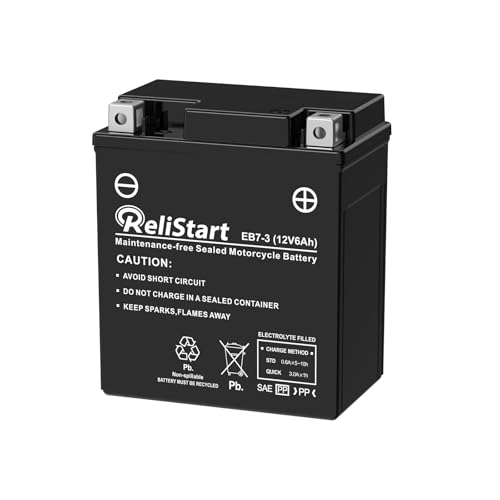
Relistart 12V 6Ah SLA AGM Motorcycle Battery

NPP 6V 200Ah AGM SLA Golf Cart Battery (6-Pack)

NPP 6V 225Ah Deep Cycle AGM Golf Cart Battery
Meet The Standout Selections
A six-pack of 6V 225Ah AGM batteries sounds like overkill until you wire two in series for a 12V house bank and still have four left over for expansion. For owners running larger RVs with residential refrigerators, inverters, and solar arrays, the headroom is welcome. The sealed AGM design means you can mount the batteries in less-ventilated compartments without worrying about off-gassing the way flooded lead-acid cells do.
The T16 (M8) terminal hardware accepts standard ring lugs, so existing cable kits typically drop right in. Trolling motors, golf carts, and off-grid cabins often use this configuration, which makes the same battery useful across multiple hobbies. For full-timers who treat their rig like a small apartment, this kind of reserve pays off during cloudy stretches when solar input drops.
Points In Its Favor
- Six matching units simplify building a balanced 12V or 24V bank
- 225Ah per cell gives generous runtime for inverters and 12V accessories
- Sealed AGM construction permits flexible mounting orientation
- No routine water refilling means lower maintenance over years of service
- M8 terminal hardware fits common ring lugs and bus bars
Things To Consider
- Combined weight is substantial, so check your RV’s cargo capacity before ordering
- Lead-acid chemistry self-discharges slowly, so periodic top-up charging during storage helps preserve capacity
Best Suited To
Full-time RVers and solar-heavy setups that need a deep reserve and the flexibility to expand later.
Look Elsewhere When
The NPP 6V 200Ah AGM SLA Golf Cart Battery (6-Pack) makes more sense if you prefer 200Ah cells for easier handling without sacrificing total capacity.
A 200Ah 6V cell in a four-pack hits a sweet spot for mid-sized RVs. Two in series give you a 12V house bank at 200Ah, and the extra pair sits ready for parallel expansion or rotation. Compared with the heavier 225Ah cells above, these units weigh a bit less per battery, which matters when you are loading them into a compartment solo.
The T16A terminal style is a familiar fit for deep-cycle applications including solar arrays, floor scrubbers, and trolling motors. That cross-compatibility makes the pack useful for someone who splits time between the campground and the lake house. Weekend warriors running modest lighting, water pumps, and electronics for three or four days will find this a comfortable reserve.
Strong Points
- 200Ah rating balances capacity with manageable per-unit weight
- Four cells fit common 12V or 24V series configurations
- AGM seal suits indoor battery compartments without venting upgrades
- Works across RV, marine, and solar storage scenarios
Honest Caveats
- Not the lightest option in the 200Ah class, so plan help for installation
- Like all AGM batteries, you should avoid frequent deep discharges below 50% to maximize cycle life
- Some owners report the terminal posts arriving with light oxidation that needs cleaning before first use
Key Product Details
Who It Suits Best
Travelers running a mid-sized rig with solar, an inverter, and regular weekend off-grid use benefit from the balance of capacity and weight.
Skip It When
The NPP 6V 200Ah AGM SLA Golf Cart Battery (2-Pack) is a better match if you only need a starter 12V bank and want to keep weight and cost down.
Two 6V 200Ah cells wired in series is the classic 12V RV house battery configuration, and this two-pack delivers exactly that. It is the right starting point for a couple running lights, a fridge, phone chargers, and a water pump without heavy inverter loads. The sealed construction keeps things tidy in tight battery compartments.
At roughly 63.9 lbs per unit and a footprint of about 12.68 x 7.01 x 8.94 inches, these cells fit standard RV battery trays without modification. The M8 button-style terminal accepts standard lugs, which keeps cable work straightforward. Compared with the heavier 225Ah options, this two-pack trades a bit of capacity for easier handling during installation.
Useful Touches
- Compact two-cell setup forms a clean 12V series bank
- AGM design eliminates water topping and reduces venting needs
- Compatible with 24V and 48V configurations for future expansion
- Low self-discharge below 3% per month helps during seasonal storage
Worth Noting
- Two cells in series means a single failing unit can take down the whole bank, so inspect connections regularly
- Capacity is modest for high-draw inverters running microwaves or air conditioning
Right Fit For
Couples and solo travelers in smaller RVs or camper vans who want a reliable 12V house bank without excess weight.
A Better Fit Elsewhere
The NPP 6V 225Ah AGM SLA Battery (2-Pack) is worth stepping up to for travelers who need extra runtime per cycle.
The two-pack 225Ah variant sits between the smaller 200Ah pair and the full six-pack covered above. It is a natural upgrade for RV owners who started with 200Ah cells and want to stretch runtime without committing to a four- or six-pack bank. The T16 (M8) terminal hardware is the same fit used across many golf cart and floor scrubber installations, so cabling is rarely a problem.
Maintenance-free AGM chemistry suits travelers who do not want to schedule electrolyte checks into their travel routine. Sealed construction also makes the cells safer to mount inside passenger compartments where accidental spills would be unwelcome. The 2-pack format gives you one matched series pair now and the option to add a second pair in parallel later when your power needs grow.
Strengths Worth Knowing
- 225Ah rating provides about 12% more runtime than the 200Ah pair
- Sealed design fits enclosed RV compartments without venting modifications
- Supports series and parallel wiring for 12V, 24V, or higher banks
- Works across RV, trolling motor, and solar storage applications
Points To Keep In Mind
- Heavier per cell than the 200Ah pair, so get help positioning them in low compartments
- Performance depends on a proper 3-stage charger to reach stated cycle life
Made For
Long-weekend travelers running moderate inverter loads who want extra capacity without jumping to a six-cell bank.
Swap It Out When
The NPP 6V 200Ah AGM SLA Golf Cart Battery (4-Pack) fits better for owners building a larger series or parallel bank from the start.
This is a small-format replacement battery rather than a house bank cell. The Miady 6V 5Ah fits ride-on toys, emergency lighting packs, small alarm backup units, and similar compact electronics. It is the kind of battery that shows up in a closet drawer, not in an RV battery compartment.
AGM construction means you can mount it in any orientation without worrying about leaks. The F1 terminal is a standard tab style found on many small SLA batteries, so swapping in this unit usually requires no rewiring. For RV owners, the real use case is keeping a lightweight spare on hand for the auxiliary gear that quietly disappears into the background.
The Value In It
- Tiny footprint fits tight enclosures and portable gear
- Sealed AGM design allows mounting in any orientation
- Maintenance-free operation suits infrequent-use devices
- Rechargeable chemistry keeps replacement costs low over time
Practical Considerations
- 5Ah capacity is far too small for any RV house or starting battery role
- F1 spade terminals require compatible connectors, not ring lugs
Whose Shelf It Belongs On
Owners of small backup devices, ride-on toys, and portable emergency lights who need a maintenance-free replacement cell.
Where Another Pick Suits Better
The NPP 6V 225Ah AGM SLA Battery (6-Pack) is the right shelf when you actually want to power an RV house system.
The Relistart 12V 6Ah is a starter-style battery aimed at motorcycles, scooters, and small engines. Sealed lead-acid AGM construction keeps the unit spill-proof, which matters when a battery sits under a seat or inside a fairing where orientation changes constantly. For RV owners, the relevance is more about generator starters or auxiliary equipment than house power.
This battery does the small, focused job of cranking an engine and recharging quickly from the vehicle’s charging system. The 12V 6Ah rating sits in the same neighborhood as a typical motorcycle battery, so it is a drop-in option for many sport bikes, ATVs, and lawn equipment. If your RV tows a small trailer with electric brakes and a breakaway system, this is roughly the size of battery those systems expect.
Where It Delivers
- Sealed construction prevents acid leaks in any mounting position
- Compact size fits motorcycle, scooter, and small engine bays
- AGM design holds voltage longer between uses than older flooded cells
- Drop-in form factor for many common powersports applications
Some Limits To Know
- Not designed for deep-cycle RV house use, so reserve it for starter duty
- Small capacity means sensitive to leaving accessories on when the engine is off
Who Should Grab It
Riders and RV owners needing a maintenance-free replacement for a small engine starter battery or breakaway system.
Not Your Match When
The NPP 6V 200Ah AGM SLA Golf Cart Battery (2-Pack) is the better path for anyone building an actual RV house bank.
Six 200Ah 6V cells give a full-timer serious building blocks for a 12V, 24V, or 48V system. Wire three pairs in series and parallel and you have a 600Ah house bank capable of running larger inverters through the night. The six-pack format matches what many golf cart owners already run, so the configuration is familiar territory for technicians.
The sealed AGM design tolerates mounting in enclosed bays, which helps when you are squeezing batteries into a chassis that was not originally designed for a large lithium pack. Owners commonly report that the M8 button terminal hardware pairs cleanly with common marine and RV bus bars. Compared with the 225Ah six-pack at the top of the list, these cells trade a bit of capacity for slightly easier per-unit handling.
The Helpful Details
- Six matching units simplify building balanced 12V or 48V banks
- AGM seal suits indoor battery compartments without venting upgrades
- 1200+ cycle rating supports years of regular off-grid use
- Low self-discharge keeps charge during long storage periods
Room For Improvement
- Combined weight requires sturdy mounting brackets and a clear floor-loading plan
- Lead-acid cycle life is shorter than lithium alternatives if you regularly discharge below 50%
Feature Snapshot
Perfect Match For
Full-time RVers and serious off-grid setups that need the deepest possible lead-acid reserve without going to lithium.
Reach For A Different Pick When
The NPP 6V 225Ah AGM SLA Battery (6-Pack) is the better call if you want maximum per-cell capacity and can handle the extra weight.
Sometimes you only need a single replacement cell to bring a bank back to full strength, and a standalone 6V 225Ah unit is the right shape for that job. This NPP deep-cycle AGM battery carries the same T16 (M8) terminal and 225Ah rating as the larger packs in this list, just without the extras. For someone with one weak cell in a series string, replacing it with a matching unit is the cleanest fix.
The AGM construction means you can install it in any orientation, which matters when the failing cell lives under a seat or in a tight bay. Owners commonly use these cells in solar battery banks for cabins, in trolling motor setups, and as part of RV house configurations. The single-unit format is also a low-commitment way to test the NPP platform before scaling up to a multi-pack bank.
What Stands Out
- 225Ah capacity matches the larger NPP packs for consistent bank upgrades
- Sealed AGM build fits tight or unusual battery compartments
- Single-unit purchase fits replacement or starter-scale projects
- M8 terminal hardware accepts standard ring lugs and bus bars
Trade-Offs
- Per-unit cost runs higher than buying a multi-pack, so plan ahead for future expansion
- Lead-acid weight still applies even for one cell, so handle with care during installation
Built With In Mind
RV owners needing a single replacement cell, a starter bank, or a low-commitment test of the NPP deep-cycle platform.
Consider Something Else When
The NPP 6V 225Ah AGM SLA Battery (2-Pack) makes more sense if you would rather buy a matched series pair up front.
What To Weigh Before Buying Agm 6 Volt Batteries For Rv
Capacity And How You Actually Use Power
Capacity, measured in amp-hours (Ah), tells you how much energy a battery can deliver before needing a recharge. A 200Ah cell wired into a 12V bank gives roughly half of that as usable energy if you want to preserve cycle life. Match the bank’s total Ah against your real consumption: a residential fridge and a few LED lights draw far less than a microwave, induction cooktop, or roof air through an inverter. Full-timers with cloudy-week solar often want 400Ah or more.
Voltage, Series Wiring, And System Match
Most RVs run on 12V house systems, but the batteries themselves are 6V because two in series produce a stable 12V with better deep-cycle durability than a single 12V battery. Larger builds sometimes step up to 24V or 48V systems, which require more batteries in series. Always match new batteries to the existing bank’s voltage and chemistry. Mixing 6V AGM with lithium or with old flooded cells causes uneven charging and shortened life.
Physical Fit And Weight
6V golf-cart batteries are physically large and heavy, often 60 to 70 lbs each. Measure your battery compartment before ordering and verify the floor can handle the total load, especially in slide-out trays or under-floor storage. T16 and T16A terminals are nearly interchangeable, but checking the existing hardware avoids surprises during installation. If access is tight, a lighter 200Ah cell is easier to wrestle into place than a 225Ah unit.
Charging And Long-Term Care
AGM batteries prefer a 3-stage charger with an absorption stage around 14.4 to 14.6V for 12V systems and a float stage around 13.6V. Letting them sit at a full float charge for months is fine, but storing them below a full charge invites sulfation. Owners commonly report best results from a charger with a dedicated AGM mode and periodic equalization. For seasonal RVs, a small solar maintainer keeps the bank topped up between trips.
Key Considerations Across These Picks
Common Shopping Slip Ups
The most frequent mistake is buying 6V deep-cycle batteries without checking the existing bank voltage and chemistry. Two 6V cells in series must be identical in age, brand, and capacity, otherwise the weaker one drags the pair down. Another common slip is underestimating weight: a six-pack of 200Ah cells exceeds 380 lbs, and some RV compartments are not designed for that load. Measure twice before you order.
What The Higher Tier Buys
Stepping from a 200Ah cell to a 225Ah cell buys roughly 12% more runtime per cycle, and the extra capacity is welcome on longer boondocking trips. Higher-tier packs also tend to include matched production dates and tighter quality control, which helps when you wire six cells in series and parallel. The premium is mostly about capacity per cell and build consistency, not exotic features. For weekend warriors, the extra cost is harder to justify than for full-timers who lean on every amp-hour they can get.
Frequently Asked Questions
How long do AGM 6V batteries typically last in an RV?
With proper charging and avoiding frequent discharges below 50%, AGM 6V batteries commonly deliver several years of seasonal service before noticeable capacity loss. Full-timers who cycle daily may see shorter lifespans than weekend travelers.
Can I mix AGM 6V batteries with lithium batteries in the same RV?
Mixing chemistries in the same bank is not recommended because the charge profiles differ and the weaker chemistry limits the stronger one. Lithium and AGM banks should be physically separated with their own charging sources.
Do AGM 6V batteries require any maintenance?
Sealed AGM cells need no water refilling, which is the main appeal over flooded lead-acid. Periodic terminal cleaning, proper charging voltage, and avoiding deep discharges below 50% cover the rest of the routine.
What size AGM 6V bank do I need for boondocking?
A typical weekend setup with a fridge, lights, water pump, and phone charging runs well on 200 to 400Ah at 12V. Adding an inverter for cooking or entertainment pushes the requirement toward 400Ah or more.
How should I store AGM 6V batteries during the off-season?
Store them fully charged in a cool, dry place and top them up every few months, or leave a small solar maintainer connected. AGM self-discharge is slow, but letting them sit partially discharged for months invites permanent capacity loss.
The Takeaway
AGM 6V batteries remain a sensible, low-maintenance foundation for RV house power, especially for travelers who want familiar lead-acid chemistry without the watering routine. Match the bank’s total capacity to your real electrical load, keep the cells in matched series pairs, and feed them with a charger that has a proper AGM profile. Done well, a well-chosen bank will quietly serve you for years of weekends and full-timing alike.