Walking to the kitchen drawer and finding a remote that won’t respond is one of those tiny frustrations that adds up fast. Rechargeable AAA cells solve the cycle of buying disposables, but the chemistry, capacity, and charging setup vary wildly between options. This list walks through seven current picks that match common households, from low-drain clocks to higher-drain wireless gear.
The Choices Worth Comparing

12 Pack Rechargeable AAA Lithium Batteries with USB-C Charger

Energizer Power Plus Rechargeable AAA Batteries (4 Pack), 800mAh

Energizer Recharge Universal Rechargeable AAA Batteries (8 Pack)
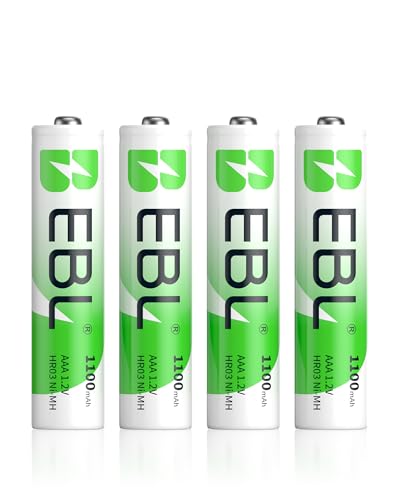
EBL 1100mAh Super Capacity AAA Rechargeable Batteries, 4 Pack

EBL AAA Rechargeable Batteries 24 Counts, NiMH 1.2V

PHILIPS AA Lithium Rechargeable Batteries 1.5V 3000mWh 8 Pack

Rechargeable AAA Batteries with Charger 8-Pack 1100mAh
More On The Choices That Made The List
For a household swimming in remotes, wireless mice, and small electronics, the M2CSMK 12-pack removes one of the recurring chores: finding a charging cradle or a separate charger dock. Each cell recharges through a built-in USB-C port on the side of the battery, so you plug in the same cable you’d use for a phone. For most living rooms, that’s a meaningful simplification.
The cells ship at a 1.5V lithium profile, which matters for devices that read a battery’s voltage curve and behave oddly with traditional NiMH (nickel-metal hydride, the standard recharge chemistry) packs. Owners commonly report longer intervals between charges compared to alkaline disposables, and the pack size covers nearly every AAA device in a typical home without constant rotation.
Where It Excels
- Built-in USB-C port per cell removes the need for a separate charging cradle or dock.
- 1.5V lithium output keeps voltage steady during use, which sensitive gadgets tend to appreciate.
- Twelve cells cover the kitchen, living room, and office without leaving anything in rotation.
- Common everyday use cases (remotes, mice, alarm clocks, kids’ toys) all sit well within its comfort zone.
Things To Consider
- Charging twelve cells one at a time takes patience, since each requires its own cable connection.
- Lithium cells tend to weigh more than alkaline disposables, which some ultra-light remotes may feel slightly different with.
Feature Snapshot
Made For
Households with many AAA-powered remotes, wireless mice, and kids’ toys that want to stop buying disposables.
Consider Something Else When
You already own a good NiMH charger and want the lower per-cycle cost of the EBL 1100mAh Super Capacity pack instead.
The Energizer Power Plus 4-pack is the kind of cell that lives quietly in a kitchen drawer for years. At 800mAh (milliamp-hours, the unit that measures how much charge a battery can hold), it sits at the modest end of the capacity spectrum, so it’s not the pick for high-drain toys or game controllers. For low-drain devices like TV remotes, wall clocks, and simple flashlights, it’s perfectly matched to the workload.
The standout feature here is build composition. Energizer builds these cells using a meaningful percentage of recycled materials, which appeals to anyone trying to reduce the environmental footprint of their battery drawer. You will need a NiMH charger, since these are traditional rechargeable chemistry.
Why It Works Well
- Recycled-material construction appeals to sustainability-minded households.
- Standard NiMH chemistry works with virtually any existing AAA charger.
- Four-cell pack is a tidy starter size for one or two remote users.
Points To Note
- 800mAh capacity drains quickly in wireless game controllers or motorized toys.
- Requires a separate charger purchase if you don’t already own one.
Best Suited To
Low-drain households running remotes and clocks who prioritize recycled construction over maximum capacity.
Look Elsewhere When
You want one battery set to cover remotes, mice, and game controllers, in which case the Energizer Recharge Universal 8-pack has more capacity to spare.
The Energizer Recharge Universal 8-pack strikes a balance that suits most households. Eight cells cover a generous spread of devices, and the NiMH chemistry means you can top them up on any standard charger. Compared to the 4-pack Power Plus above, you get more runtime per cell, which shows up in wireless mice and gaming accessories that drain cells faster.
You won’t find fancy extras here. There’s no USB-C port built into each cell, no LCD screen, and no lithium 1.5V profile. What you get is a steady, predictable NiMH cell that does what the chemistry promises, charge after charge.
What Earns Its Place
- Eight cells keep the household rotation stocked for remotes, mice, and small electronics.
- Standard NiMH profile pairs with any existing AAA charger on hand.
- Rechargeable design reduces disposable waste over months of household use.
Less Ideal Details
- Voltage drops gradually through use, which some sensitive electronics tolerate poorly.
- No bundled charger, so first-time users need to factor that in separately.
Feature Snapshot
Perfect Match For
Mid-drain household electronics like wireless mice, gaming controllers, and flashlights that need steady replacement cells.
Reach For A Different Pick When
You want USB-C direct charging instead of a separate dock, in which case the M2CSMK 12-pack fits that workflow better.
The EBL 1100mAh 4-pack pushes capacity noticeably higher than the Energizer Power Plus at a similar pack size. That extra headroom matters in devices that chew through cells, such as game controllers, motorized toys, and flashlights used regularly. EBL also pairs these cells with low self-discharge technology, which means they hold their charge on the shelf for extended idle periods.
The cells arrive in a storage case, which doubles as organization for a drawer and protects the contacts from getting scuffed. Standard NiMH chemistry means you need your own charger, which most people who reach for this kind of pack already own.
What Works In Its Favor
- 1100mAh capacity handles mid-drain devices like wireless mice and game controllers.
- Low self-discharge tech keeps charge available after months of drawer storage.
- Storage case included, which keeps contacts clean and pairs tidy.
Some Limits To Know
- 1.2V NiMH output sags gradually, which sensitive electronics may react to.
- Four cells is a smaller count than the eight-cell options above.
Feature Rundown
Who It Suits Best
Anyone running a mix of remotes, mice, and gaming accessories who wants NiMH capacity without committing to a multi-pack.
Swap It Out When
You want a single bulk purchase to cover every device in the house, in which case the EBL 24-count pack is the obvious step up.
The EBL 24-count pack is for the household that’s done running out of cells mid-week. Twenty-four rechargeables spread across remotes, gaming gear, flashlights, and small appliances leaves enough slack to keep a rotating charge going without anyone hunting for spares.
EBL pairs the high count with their ProCyco charging technology and a supercell lattice design, which together aim to maximize power retention between cycles. The chemistry is standard NiMH at 1.2V, so you can swap these into any device that accepts AAA without compatibility fuss.
Standout Benefits
- Twenty-four cells cover an entire household’s worth of AAA devices in one purchase.
- NiMH 1.2V profile fits remotes, toys, mice, and game controllers without special handling.
- ProCyco and supercell lattice design target longer cycle life for heavy rotation.
- Low self-discharge structure helps cells hold charge during idle months.
Trade Offs
- Twenty-four cells takes meaningful drawer or storage-bin space, depending on how you organize them.
- Standard NiMH voltage curve drops during heavy use, which some gadgets don’t love.
Key Product Details
Whose Shelf It Belongs On
Busy homes, offices, or shared spaces with lots of small electronics that all need AAA cells running at once.
Not Your Match When
You need only a handful of cells for two or three remotes, in which case the smaller EBL 4-pack is plenty.
A quick note before this one: the listing is titled as AA, so it’s worth confirming it matches your device before checkout. Assuming the AAA version follows the same design language, the appeal is the constant 1.5V output, which is the lithium chemistry’s signature advantage over standard NiMH. Many sensitive electronics behave better when the voltage doesn’t dip mid-use, and these cells hold steady through the cycle.
Capacity sits at 3000mWh (milliwatt-hours, an energy measure that captures voltage multiplied by capacity, useful for comparing lithium cells directly). Independent charging per slot means you can rotate cells without waiting for pairs. For higher-drain gear like studio flashes, premium microphones, or digital thermometers with active sensors, the steady voltage shows up in real performance.
Notable Gains
- Constant 1.5V lithium output keeps performance predictable through the discharge cycle.
- High 3000mWh energy rating supports power-hungry devices better than most NiMH.
- Independent charging slots let you rotate individual cells without pairing.
Worth Noting
- Listing reads as AA, so verify size before checkout to avoid surprises.
- Lithium cells typically cost more upfront than NiMH equivalents.
Who Should Grab It
Households with sensitive electronics that misbehave with sagging NiMH voltage, including digital thermometers, flash units, and small audio gear.
A Better Fit Elsewhere
Standard remotes and clocks work perfectly with the Energizer Power Plus 4-pack, which costs less per cell.
The YoPower 8-pack is built for first-time rechargeable users. Eight cells, a charger, and 1100mAh of capacity arrive in one bundle, so there’s no separate shopping trip. For someone transitioning from alkaline disposables, that completeness removes the biggest friction point: figuring out which charger matches which cells.
YoPower rates the cells for up to 1500 recharge cycles, with low self-discharge tech that retains most of its charge during months on a shelf. It’s a clean starter setup, and it offers meaningful headroom for households scaling up their rechargeable rotation.
Where It Delivers
- Eight cells plus a charger come in a single bundle for first-time users.
- 1100mAh capacity suits mid-drain devices like mice and game controllers.
- Rated for up to 1500 recharge cycles, which stretches value over years.
- Low self-discharge design holds charge during long idle periods.
Details To Watch
- Bundled charger is a basic model, so charging speed isn’t its standout trait.
- Standard NiMH chemistry still drops voltage gradually through use.
Feature Overview
The Right Fit
Beginners buying their first rechargeable setup who need a charger, cells, and reasonable capacity in one package.
Where A Sibling Pick Shines
You want USB-C direct charging without a separate dock, in which case the M2CSMK 12-pack is the simpler workflow.
Picking The Right Rechargeable AAA For Your Drawer
Capacity tells you how long a cell lasts between charges, but it’s only half the story. Voltage profile matters just as much: standard NiMH cells run at 1.2V and sag gradually, while lithium rechargeables hold a steady 1.5V until they hit cutoff. Sensitive electronics, like digital thermometers, wireless microphones, and flash units, often behave better with that steady output. Low-drain remotes and clocks rarely notice the difference.
Cycle life matters for the long view. Cells rated for 1000 to 1500 recharge cycles pay back the higher upfront cost over years, while packs rated for a few hundred cycles need replacing sooner. Self-discharge rate decides whether a cell still works after sitting in a drawer for six months. Low self-discharge chemistry retains most of its charge during storage, which is what you want for occasional-use devices.
Pack size and charger setup also steer the decision. A 4-pack suits a single-room setup, while an 8- or 24-pack covers a whole household. Bundled chargers save a separate purchase, while USB-C direct-charging cells eliminate the dock entirely. Match the pack count to your device count, and the charging method to where you store them.
Where These Picks Differ Most
Where Shoppers Go Wrong
A common mistake is assuming higher mAh always means better. Capacity helps with mid- and high-drain devices, but low-drain remotes don’t tap into that extra headroom. Buying the highest-capacity pack for clock batteries wastes money on capacity you’ll never use.
Another slip is overlooking voltage profile. NiMH cells run at 1.2V, which some sensitive electronics read as nearly empty even when fully charged. Lithium 1.5V cells solve this, but only if the device tolerates lithium chemistry. Confirm compatibility before committing.
When Paying More Pays Off
Higher-tier rechargeable cells typically upgrade three things: cycle life, self-discharge performance, and voltage stability. A premium pack rated for 1500 cycles saves you from replacing cells every year or two, which adds up across a full household.
Voltage stability matters most in sensitive electronics. If your gear behaves oddly with NiMH, the upgrade to lithium 1.5V is genuinely worth the premium. For simple remotes and clocks, however, the extra cost rarely translates into better daily experience.
Frequently Asked Questions
What’s the difference between NiMH and lithium rechargeable AAA cells?
NiMH cells run at 1.2V and sag gradually as they discharge. Lithium rechargeables hold a steady 1.5V through most of the cycle. Most low-drain devices don’t notice the difference, but sensitive electronics often prefer the steady lithium output.
How long do rechargeable AAA batteries typically last per charge?
It depends entirely on the device. A low-drain remote can run for months on a single charge, while a high-drain game controller may need recharging every few days. Capacity ratings like 800mAh to 1100mAh give a rough comparison, but actual runtime depends on the device’s draw.
Can I use rechargeable AAA batteries in any device that takes AAA?
Most devices accept either NiMH or lithium rechargeables without issue. The exception is a small number of gadgets that read voltage strictly, where NiMH at 1.2V may register as low even when fully charged. Check the device manual if you have any doubt.
How many recharge cycles can I expect from a quality AAA cell?
Standard NiMH cells typically support a few hundred to around a thousand cycles. Higher-end packs rated for 1500 cycles stretch further, though actual lifespan depends on charging habits, depth of discharge, and storage conditions.
Do rechargeable AAA batteries lose charge when sitting unused?
All rechargeables self-discharge over time. Standard NiMH cells can lose a meaningful chunk of charge within weeks. Low self-discharge chemistry, common in newer packs, retains roughly 85% of charge after months of idle storage, which suits occasional-use devices well.
Final Verdict
For most households, the choice comes down to count, chemistry, and charging workflow. The M2CSMK 12-pack solves charger clutter with USB-C direct charging. The EBL 24-count pack covers an entire household in one purchase. The PHILIPS lithium pack handles sensitive electronics that demand steady voltage. Match the pack to your device count and the chemistry to your device mix, and the rest of the decision usually takes care of itself.