Living the RV life means planning around power. From weekend boondocking trips to full-time off-grid living, the battery under your floor decides how long the lights stay on, how quietly the fridge hums, and whether you wake up to a charged phone. Lithium has quietly replaced lead-acid as the default for serious RVers, and the newest 12V deep cycle options pack more usable capacity, longer cycle life, and smarter protection into a smaller, lighter box than what your parents’ rig probably ran.

The lineup below covers the realistic range: cold-weather warriors that heat themselves before charging, big-amp-hour bricks for off-grid solar, Bluetooth-equipped units for the data-curious, and budget-friendly Group 24 picks that slot into a standard battery box. Capacity, weight, low-temperature protection, and expandability all matter; matching the right balance to your travel style matters more.
The Shortlist At A Glance
Power Queen 12V 100Ah LiFePO4 Lithium Battery with Self-Heating
LiTime 12V 230Ah Deep Cycle LiFePO4 Battery for RV
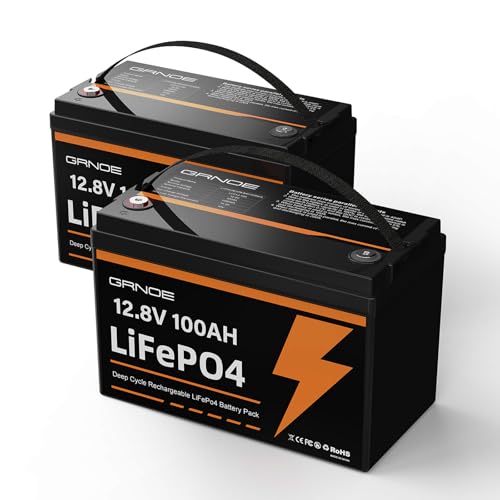
GRNOE 12V 100Ah LiFePO4 Lithium Battery Group 31 2 Pack

Balanergy 12V 100Ah LiFePO4 Lithium Battery Group 24 with Bluetooth

Balanergy 12V 100Ah LiFePO4 Battery BCI Group 24

Balanergy 12V 100Ah LiFePO4 Lithium Battery Group 31 with Bluetooth

Balanergy 12V 100Ah LiFePO4 Lithium Battery 2 Pack Group 31

Balanergy 12V 300Ah LiFePO4 Lithium Battery Built-in 150A BMS
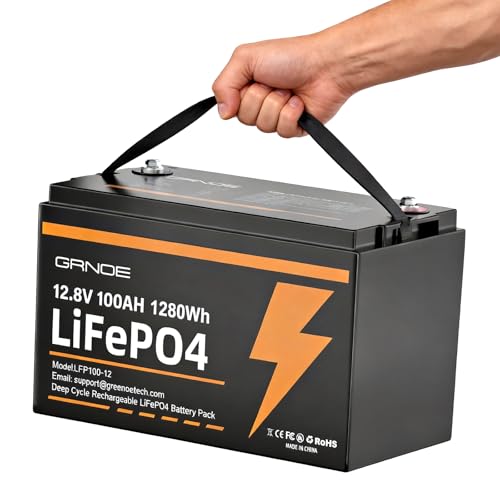
GRNOE 12V 100Ah LiFePO4 Battery Group 31 Lithium Battery

GRNOE 12V 300Ah LiFePO4 Battery Built-in 200A BMS
The Picks, Examined More Closely
Winter campers and shoulder-season travelers know the frustration of lithium refusing a charge when the mercury drops. The Power Queen solves that with a pair of integrated heating pads, letting the battery warm its cells before accepting current on a freezing morning.
For most four-season RVers, the unit sits in a standard Group 31 footprint, fits existing boxes, and weighs roughly a third of a comparable lead-acid battery. Built-in low-temperature cutoff protects the chemistry when conditions get truly bitter, and the BMS (battery management system) handles the rest.
What Pays Off
- Dual 100W heating pads warm the cells quickly from bitter-cold conditions
- Standard Group 31 dimensions fit common RV battery trays
- Self-protecting BMS prevents charging below safe temperature thresholds
- Noticeably lighter than the lead-acid battery it replaces
- Reliable power for heat blankets, water pumps, and lighting on cold nights
Things To Consider
- Self-heating draws power from the bank, so the first cold charge costs extra
- Slightly heavier than non-heated lithium equivalents in the same capacity
- Worth verifying heater wattage matches your solar controller’s available headroom
Feature Snapshot
Built With In Mind
Four-season campers and anyone wintering in a cold climate who refuses to baby a battery with blankets.
A Better Fit Elsewhere
Full-time desert dwellers with mild winters should save weight and step up to a bigger-capacity pick like the LiTime 12V 230Ah instead.
When one battery has to carry an entire off-grid setup, capacity matters more than clever features. The LiTime 230Ah pushes deep into serious-house-bank territory while still fitting a Group 4D footprint, and it weighs roughly 46 pounds, which is light enough for a single person to wrestle into a battery bay.
Compared to the Power Queen above, this is a capacity play rather than a cold-climate play. You trade the heating pads for more usable watt-hours, which most weekend and seasonal campers prefer unless they regularly camp below freezing.
Useful Highlights
- 230Ah in a single 4D-sized enclosure
- Multi-layer BMS with over 20 stated protection features
- Low-temp charging protection pauses the bank when conditions demand
- Roughly one-third the weight of a comparable lead-acid bank
- Advertised 4,000-plus cycle lifespan for daily cycling
Honest Caveats
- Larger physical footprint requires verifying tray dimensions before ordering
- Heavier than 100Ah alternatives; plan help for installation in tight bays
- Single high-capacity brick leaves less redundancy than a paralleled pair
The Right Fit
Off-grid full-timers and solar-heavy rigs that need maximum runtime from a single footprint.
Look Elsewhere When
Travelers who prioritize winter charging should look at the Power Queen 12V 100Ah with self-heating instead.
Solar systems rarely stay the same size. The GRNOE 2-pack ships two Group 31-sized 100Ah cells that can be wired in series or parallel, scaled up to 48V configurations or stacked into multi-kWh banks as your roof array grows.
The two-battery format appeals to builders who want to commission half the bank now and expand later without mixing brands. Each unit carries a built-in 100A BMS and arrives in separate boxes because of weight, so plan a hand truck.
Strengths Worth Knowing
- Flexible wiring supports 12V, 24V, and 48V configurations
- Each unit fits a Group 31 box for easy placement
- Parallel capacity reaches 20.48kWh at full expansion
- Built-in 100A BMS handles cell balancing internally
- Identical units simplify future expansion without mismatched banks
Trade Offs
- Two separate heavy boxes mean planning for delivery and lift help
- Two batteries require twice the wiring discipline during series hookups
- Multi-pack shipments often arrive on different trucks, so patience matters
Whose Shelf It Belongs On
Solar owners planning phased expansion who want matched cells today and tomorrow.
Swap It Out When
RVers who only need a single compact battery should consider the Power Queen 12V 100Ah instead.
Some RVers like to see exactly what their battery is doing. The Balanergy Group 24 brings Bluetooth telemetry (wireless data reporting) to the lithium world, letting you check voltage, current draw, and state of charge from a phone without climbing into the bay.
It also delivers a useful side benefit for cold campers: low-temperature cutoff that pauses charging before the cells can be damaged. Compared to the GRNOE 2-pack above, this is a more compact single-unit option with smarter monitoring rather than raw expansion.
Strong Points
- Bluetooth monitoring removes guesswork from state-of-charge tracking
- Compact Group 24 footprint fits the smallest RV battery trays
- Low-temperature cutoff adds cold-weather safety
- Built-in 100A BMS for straightforward drop-in installation
- 1,280Wh of usable capacity in a light package
Small Caveats
- Bluetooth range is limited to roughly the cabin radius
- Smaller box means slightly less capacity than Group 31 siblings
- App-only monitoring offers no display if the handset dies
Made For
Tech-curious RVers who want real-time battery data without external shunt installations.
Reach For A Different Pick When
Builders chasing maximum expansion should choose the GRNOE 12V 100Ah 2 Pack instead.
The plain Group 24 Balanergy keeps things simple. Same form factor as the Bluetooth-equipped sibling above, minus the wireless monitoring and Bluetooth module, which trims a bit of cost and complexity for RVers who do not need an app to feel confident about their battery.
It still brings the low-temperature charging cutoff and the long-cycle LiFePO4 chemistry. For drop-in replacements of tired lead-acid banks, this is the most straightforward path on the list.
The Case For It
- Standard BCI Group 24 footprint slots into existing battery boxes
- Low-temperature cutoff protects cells in shoulder-season camping
- Stated 15,000-cycle lifespan targets daily solar cycling
- No app dependency for users who prefer analog confidence
Points To Keep In Mind
- No real-time monitoring means checking status with a multimeter
- Smaller box limits capacity compared to 4D-sized alternatives
- Worth confirming your charger outputs the lithium-compatible voltage range
Best Suited To
Weekend RVers replacing a Group 24 lead-acid battery with the smallest possible learning curve.
Skip It When
Anyone who wants phone-based state-of-charge data should pick the Bluetooth-equipped Balanergy Group 24 instead.
Step up to the Group 31 footprint and you gain a bit more capacity without giving up the Bluetooth connectivity that makes the smaller sibling attractive. This Balanergy fills battery boxes that are sized for larger lead-acid replacements.
For most RV bays that already accommodate Group 31 trays, the slightly heavier brick is a non-issue. The trade-off versus the Group 24 version above is footprint and cost for the same general feature set.
A Strong Showing
- Group 31 sizing matches many OEM (original equipment manufacturer) RV battery trays
- Bluetooth monitoring shows voltage, current, and remaining capacity
- Low-temperature charging cutoff included
- Built-in 100A BMS balances cells automatically
Possible Compromises
- Bluetooth requires the companion app for full benefit
- Larger box may not fit trays designed for smaller groups
- Single-unit capacity still trails the 230Ah and 300Ah options
Perfect Match For
RVers with Group 31 battery trays who want both monitoring and cold-weather safety in one unit.
Consider Something Else When
Anyone needing far more capacity per battery should jump to the Balanergy 12V 300Ah LiFePO4 Lithium Battery.
Sometimes the easiest path to a serious house bank is two matched batteries instead of one giant brick. The Balanergy 2-pack ships a pair of Group 31 100Ah cells with matched BMS units, which makes parallel or series wiring predictable.
Compared to the GRNOE 2-pack earlier in the list, this version trades configuration flexibility for simpler ordering and a familiar Group 31 footprint. If you know you want a parallel pair rather than a 24V or 48V stack, the choice between them comes down to footprint preference.
Useful Strengths
- Two matched units arrive together for a parallel house bank
- Group 31 sizing fits common RV trays
- Low-temp charging cutoff on each cell
- Combined capacity reaches 200Ah without mixing brands
Points To Note
- Two heavy boxes require planning for delivery and bay placement
- Series configurations are possible; verify your charge controller supports the higher voltage
- Less headline-grabbing than the 300Ah single-battery options
Right Fit For
Anyone replacing a pair of worn lead-acid batteries with a matched lithium set on day one.
Another Choice May Suit
RVers who prefer a single tall bank over dual batteries should consider the GRNOE 12V 300Ah instead.
When the inverter draws a coffee maker, microwave, and hair dryer in the same morning, small banks run out of breath fast. The 300Ah Balanergy triples the runtime of a single 100Ah cell while staying within a manageable 57-pound weight.
Compared to the LiTime 230Ah earlier, this unit trades a slightly larger footprint for substantially more capacity and a 150A BMS rated for inverter loads. It targets the upper end of single-battery needs.
Advantages To Know
- 300Ah in a single brick simplifies wiring
- 150A BMS supports higher inverter loads than 100A siblings
- Stated cycle life targets 15,000 cycles at reduced depth-of-discharge
- Low-temp charging cutoff for cold mornings
- Max output supports serious AC appliance draws
A Few Limitations
- Heavier than 100Ah alternatives; plan bay access
- Larger footprint requires verifying compartment dimensions
- Single-battery redundancy is lower than a paralleled pair
Who Should Grab It
Power-hungry RVers running inverters for microwaves, coffee makers, or induction cooking off-grid.
Where A Sibling Pick Shines
Travelers focused on cold-weather charging should look at the Power Queen 12V 100Ah with self-heating instead.
Weight savings matter when every pound chips away at your payload capacity. The GRNOE Group 31 unit hits roughly 22 pounds, about a third of a comparable lead-acid battery, while still delivering 1,280Wh of usable energy.
It skips Bluetooth and cold-weather heaters, keeping the package lean and uncomplicated. For temperate-climate RVers who want the lightest possible 100Ah lithium, this one is hard to argue with.
What Helps Most
- Roughly 22-pound curb weight eases installation
- Group 31 dimensions fit common trays
- Stated 15,000-cycle lifespan for daily solar cycling
- Built-in 100A BMS with stated cell-balancing behavior
Practical Considerations
- Requires a 14.6V-capable charger for full topping-off
- Top-up every two to three months during storage preserves long-term health
- Match charge voltages closely when wiring in series to avoid imbalance
Who Will Love This
Weight-conscious RVers tracking payload on smaller tow vehicles or vans.
A Better Fit Elsewhere
Cold-weather travelers benefit more from the self-heating Power Queen 12V 100Ah.
Top of the heap sits a 300Ah battery with a 200A BMS, capable of feeding a 2,000W-plus inverter without breaking a sweat. At roughly 56 pounds, it still weighs a fraction of an equivalent lead-acid bank.
For solar-heavy builds running air conditioning or induction cooking off-grid, the headroom matters more than a few pounds saved. Compared to the Balanergy 300Ah earlier, this GRNOE adds discharge current and expandable scale up to a 4P4S (4 parallel x 4 series) configuration.
Positive Takeaways
- 200A continuous discharge handles demanding inverter loads
- 3,840Wh usable capacity per battery
- Expansion supported up to 4P4S configurations
- Lightweight at roughly 56 pounds for the capacity
- Solar charging supported with appropriate controller
Factors To Consider
- Optimal charging current of 60A requires appropriately sized solar or shore charger
- General-purpose SLA (sealed lead-acid) chargers may damage cells and should be avoided
- Premium capacity commands a higher weight-class footprint than 100Ah units
Who Should Grab It
Builders running serious solar arrays with high-wattage inverters and expandable ambitions.
Not Your Match When
Light weekend campers should save weight and step down to the GRNOE 12V 100Ah Group 31 instead.
What To Weigh Before Choosing A 12 Volt Deep Cycle Rv Battery
Capacity sits at the top of the checklist, but it rarely tells the whole story. A 100Ah lithium battery delivers roughly 1,280Wh of usable energy, which is enough for a weekend of LED lighting and water-pump use but tight for a coffee-maker-and-microwave morning. RVers running induction cooking or AC off-grid typically want at least 200Ah to 300Ah, while weekend warriors often cruise comfortably on a single 100Ah cell.
Footprint and form factor matter just as much. BCI (Battery Council International) sizes Group 24, Group 27, Group 31, and Group 4D define the rough dimensions of a battery box. Drop-in replacements need to fit the existing tray; going larger may require fabrication or a relocated battery bay.
Low-temperature protection prevents charging damage in cold weather. Standard BMS units pause charging below freezing, while self-heating models like the Power Queen actively warm the cells first. Cold-climate RVers gain real flexibility from the heated option; temperate campers can ignore it.
Cycle life separates lithium from lead-acid. Quality LiFePO4 cells advertise 4,000 to 15,000 cycles depending on depth-of-discharge (the percentage of battery capacity used before recharging), which is ten to fifty times more than a flooded lead-acid battery at the same use pattern. Daily solar users benefit most from the upper end of that range.
Bluetooth and monitoring add convenience but not capacity. Telemetry helps catch problems early, yet it is optional. RVers comfortable with a multimeter and a shunt (a precision resistor that measures current flow) can skip Bluetooth and save cost.
Weight savings translate directly to payload. A 100Ah lithium at roughly 22 to 30 pounds replaces a 60- to 70-pound lead-acid battery. Across a four-battery bank, that opens up 150+ pounds of carrying capacity for water, gear, or passengers.
Practical Points To Keep In Mind
Mistakes Worth Dodging
Picking a battery without measuring the tray first is the most common slip-up. A Group 31 unit simply will not drop into a Group 24 box, and a 4D-sized battery demands a different compartment entirely. Tape-measure the existing space before committing, and verify terminal orientation matches existing cables.
Using the wrong charger quietly ruins lithium banks. Standard lead-acid chargers often lack the voltage profile LiFePO4 needs to fully top off, and over-voltage settings can damage cells over time. A lithium-profile charger or a quality multi-stage unit designed for the chemistry protects the investment.
Mixing battery brands or ages in a bank creates imbalance. Paralleled lithium banks should match in capacity, age, and ideally model. Mismatched cells drift apart in state of charge and shorten the weaker battery’s lifespan.
Ignoring storage habits shortens lifespan. Lithium prefers partial state-of-charge storage over prolonged full charge. Topping up every two to three months during off-season keeps cells healthy.
Where The Extra Money Goes
Higher-tier 12V deep cycle batteries earn their premium through better BMS protection, more accurate cell balancing, and tighter quality control on the LiFePO4 cells themselves. The difference shows up as more usable cycles over a decade of daily solar use, more reliable cold-weather behavior, and longer real-world lifespan before noticeable degradation.
Premium models also add features that cheaper units skip: self-heating pads for freezing conditions, Bluetooth telemetry for proactive monitoring, and higher continuous discharge ratings for inverter loads. For weekend campers, those features may feel like overkill. For full-timers and serious solar builders, they pay back in fewer surprises and longer service life.
Frequently Asked Questions
How long does a 12V deep cycle RV battery actually last?
Quality LiFePO4 batteries typically deliver 4,000 to 15,000 cycles depending on depth-of-discharge, translating to roughly ten years of regular RV use before noticeable capacity loss.
Can I replace my lead-acid battery with lithium directly?
Most modern RVs can drop in lithium with no rewiring, but the charger should support a lithium profile or multi-stage charging that reaches the higher voltage lithium cells need to fully charge.
Do lithium RV batteries work in freezing weather?
Standard lithium batteries protect themselves by pausing charging in freezing conditions, while self-heating models like the Power Queen warm the cells first to allow charging in sub-freezing temperatures.
What size battery bank do I actually need for boondocking?
Weekend campers with modest loads do well with 100Ah to 200Ah, while full-timers running inverters for coffee makers and induction cooking typically want 300Ah or more.
Is Bluetooth monitoring worth the extra cost?
Bluetooth adds convenience for owners who want real-time state-of-charge data on a phone, but a shunt-based monitor performs the same job and may suit owners who prefer hardwired instrumentation.
The Takeaway
The right 12 volt deep cycle RV battery depends less on chasing specs and more on matching capacity, footprint, and feature set to the way you actually camp. Cold-weather travelers benefit from self-heating models like the Power Queen. Off-grid full-timers chasing runtime per footprint gravitate toward the LiTime 230Ah or the 300Ah workhorses. Data-curious owners land on the Bluetooth-equipped Balanergy units. Whatever your style, the LiFePO4 chemistry at the heart of every pick here offers a meaningful step up from the lead-acid banks that came with most older rigs.