A dead battery rarely announces itself. One moment your home alarm panel is humming along, the next your kid’s ride-on toy sputters to a halt mid-driveway, and the fish finder on the boat goes blank just past the breakwater. The 12V 7Ah format is everywhere in the background of daily life, from backup sump pumps and access-control boxes to small solar setups and mobility scooters, which is exactly why picking the right replacement matters.
The list below mixes sealed lead-acid (SLA) units, the traditional and affordable workhorses, with lithium iron phosphate (LiFePO4) options that trade heavier weight for longer cycle life and a fraction of the mass. You’ll see compact 7Ah cells for tight enclosures, plus larger 10Ah to 20Ah lithium packs for anyone running gear that drains a small battery fast. Every pick below is sized to slot into common 12V 7Ah form factors or scaled up where you need more runtime, so the upgrade feels like a swap, not a project.
Your Options, Compared

Bright Way Replacement Battery for SLA GE Caddx

GOLDENMATE 12V 10Ah LiFePO4 Lithium Battery

GOLDENMATE 12V 7Ah Lithium LiFePO4 Battery

Energizer EN7-12 12V 7Ah AGM

Energizer EN7-12 2-Pack AGM Battery

NPP 12V 7Ah AGM F1 Terminal Battery
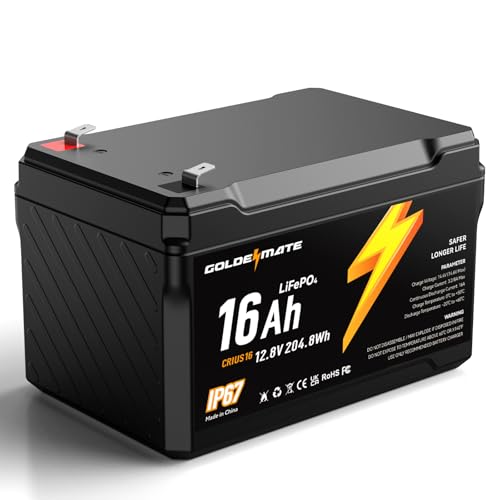
GOLDENMATE 12V 16Ah LiFePO4 Battery

GOLDENMATE 12V 20Ah LiFePO4 2-Pack

GOLDENMATE 12V 10Ah LiFePO4 2-Pack
Taking A Closer Look At The Options
Bright Way’s 12V 7Ah SLA cell is built for a very specific kind of owner, the one staring at a low-battery chirp from a wall-mounted alarm panel. It’s a sealed lead-acid (SLA) battery, which means the electrolyte is held in absorbent mats and the case is valve-regulated so you never top it up with water. The F1 spade terminals and 5.9 by 2.5 by 3.9-inch footprint match common alarm panels, including the GE Caddx-NetworX NX-4 referenced in the listing.
Because it’s maintenance-free, you mount it, connect the leads, and largely forget about it until the next multi-year replacement cycle. For homeowners who want a familiar SLA swap rather than a chemistry change, this slot is the easiest path back to a quiet, fully armed panel.
Notable Gains
- Sealed, valve-regulated construction means no routine water checks.
- F1 terminals and standard 7Ah dimensions fit typical alarm enclosures without adapter cables.
- Rugged case tolerates the temperature swings of an unfinished basement or attic closet.
- Multi-application compatibility covers everything from fire panels to small UPS boxes.
Things To Consider
- Heavier than lithium alternatives, so ceiling-mounted cabinets may need a sturdy shelf.
- SLA self-discharges faster in storage than LiFePO4, so spares need a top-up charge every few months.
Key Product Details
Made For
Homeowners running a legacy alarm panel who want a like-for-like SLA swap.
Look Elsewhere When
You want a lithium upgrade and lighter weight; the GOLDENMATE 12V 7Ah Lithium LiFePO4 Battery is the better pick.
The GOLDENMATE 12V 10Ah is where the list starts to feel like a real upgrade. Lithium iron phosphate (LiFePO4) is a different chemistry from the SLA cells above: it stores more usable energy per pound and tolerates many more charge cycles before wearing out. The IP67 rating means the case is sealed against dust and temporary immersion, which opens up outdoor and marine use that an SLA cell would struggle with.
The built-in BMS (battery management system) handles the safety work you’d otherwise worry about: overcharge, over-discharge, short circuit, and current spikes all get cut off automatically. For anyone running a fish finder, a small trolling motor, or a portable camping light bank, the weight savings alone can justify the jump from a brick-like SLA cell.
What Helps Most
- Fraction of the weight of a comparable SLA, easier to carry to a dock or campsite.
- IP67 sealed case handles splashes, rain, and brief submersion.
- BMS protection stops the cell from being damaged by common user mistakes.
- Long cycle life means infrequent replacement even with regular deep discharges.
Worth Noting
- A dedicated LiFePO4 charger is required; a standard SLA charger can undercharge the cell.
- Higher upfront cost than a basic 7Ah SLA, though offset by cycle life.
- You may find the 10Ah capacity marginal for extended overnight camping without a solar top-up.
Feature Snapshot
Right Fit For
Anglers, campers, and DIYers who want a portable 12V lithium that shrugs off weather.
Consider Something Else When
You run an indoor alarm panel that doesn’t need waterproofing; the NPP 12V 7Ah AGM is a closer fit.
This 7Ah GOLDENMATE is the direct lithium answer to the SLA cells earlier in the list. It runs the same nominal 12V at the same 7Ah capacity, so it can replace a worn-out lead-acid battery in most compatible enclosures without rewiring. The catch, and the reward, is the weight: roughly 2 pounds versus the 4 to 5 pounds of an equivalent SLA, which matters the moment a child has to carry the battery to a ride-on toy or you have to lift it into a ceiling-mounted control box.
The same IP67 seal and BMS protections from the larger 10Ah sibling carry over, so outdoor and toy applications get the same weather tolerance and electrical safety. It’s the most balanced lithium option on the list for anyone who wants to modernize one specific device rather than scale up to a portable power station.
Why It Works Well
- Drop-in 12V 7Ah form factor makes it an easy SLA replacement.
- About 2 lb, light enough for kids’ ride-on toys and overhead installs.
- BMS keeps the cell safe through repeated charge and discharge cycles.
- IP67 rating suits outdoor lights and fish finders as well as indoor gear.
Trade Offs
- Costs noticeably more than a budget SLA of the same 7Ah rating.
- Requires a LiFePO4-compatible charger for full pack longevity.
Built With In Mind
Parents replacing tired SLA bricks in power wheels and hobbyists running small 12V lighting rigs.
Swap It Out When
You need more capacity for a longer camping trip; the GOLDENMATE 12V 16Ah LiFePO4 Battery adds runtime without much extra bulk.
Energizer’s EN7-12 is the kind of battery that ends up in a closet because the name on the case is recognizable. The build uses AGM (absorbent glass mat) technology, a subtype of SLA where the electrolyte is held in fiberglass mats. That gives you the sealed, maintenance-free convenience of a standard SLA plus better resistance to vibration and a slower self-discharge rate, which is why AGM is the default chemistry for motorcycle batteries and many alarm panels.
The 12V 7Ah rating puts it in direct competition with the Bright Way and NPP cells in this list, and for many shoppers the deciding factor is the brand familiarity rather than any spec difference. It also makes a sensible spare to keep on the shelf if your alarm system is older and you’ve already replaced batteries once.
Real-World Strengths
- AGM construction resists vibration and tolerates a wide range of mounting orientations.
- Low self-discharge keeps the battery ready through long standby stretches.
- Recognizable brand name reduces guesswork for first-time battery shoppers.
- Valve-regulated design means no electrolyte top-ups.
Honest Caveats
- Single-unit pack means higher per-battery cost than the two-pack option below.
- Still SLA, so the 4 to 5 lb weight hits you on overhead installs.
Quick Facts
Who It Suits Best
Shoppers who want a name-brand SLA for a single alarm panel or small UPS unit.
A Better Fit Elsewhere
You run a multi-zone system; the Energizer EN7-12 2-Pack AGM Battery gives you a matched pair.
Two EN7-12s in one box solve the most common household scenario: a security system with more than one panel, or a panel plus a separate backup for a garage door opener or mobility scooter charger. You get the same AGM construction as the single-pack version above, with calcium tin alloy grids supporting higher power density and a long float life that suits always-on backup duty.
The valve-regulated, spill-proof design includes overpressure venting to release any gas that builds up during heavy charge cycles. For homeowners who replace batteries in matched pairs so the system ages evenly, this is the cleanest shelf-ready option.
The Value In It
- Two matched batteries ship together, simplifying whole-system replacement.
- Calcium tin alloy grids support long service life in float and cyclic use.
- Spill-proof case and overpressure venting reduce risk in enclosed cabinets.
- Low monthly discharge rate keeps spares ready during extended storage.
Points To Keep In Mind
- Heavier and bulkier to ship and store than a single 7Ah unit.
- Spare AGM batteries still benefit from periodic top-up charges if shelved for a year.
Perfect Match For
Households with multi-panel alarm systems or paired backup battery bays.
Reach For A Different Pick When
You’re upgrading one device at a time; the single-pack Energizer EN7-12 is the easier starting point.
NPP’s 12V 7Ah sits in the same SLA/AGM category as the Energizer and Bright Way cells, but it’s the one most often recommended as a like-for-like swap in ADT panels, Verizon Fios backup boxes, and other common home security enclosures. The F1 spade terminals and 6FM7 form factor match the footprint of the batteries those systems ship with, so installation is mostly a two-screw, two-spade job.
The listing offers the same cell in single, two, four, and six-pack quantities, which is the kind of flexibility homeowners with multiple panels appreciate. The tradeoff is the same as every SLA on this list: it’s heavy, and it doesn’t like being deeply discharged over and over, but for standby duty behind a wall panel, it’s hard to beat the value.
Everyday Perks
- F1 terminals and standard dimensions fit the most common alarm bays.
- Multiple pack quantities let you stock spares or service a whole-house system at once.
- AGM sealed construction requires no routine maintenance.
- UB1270 compatibility covers many third-party enclosures that take a 12V 7Ah brick.
Practical Considerations
- At roughly 4 to 5 lb per cell, ceiling installations take a moment to position safely.
- Spare batteries should be recharged every few months in storage to preserve capacity.
Product Snapshot
Whose Shelf It Belongs On
ADT, Fios, and similar system owners who need a confirmed-fit alarm battery.
Not Your Match When
You want to leave the SLA world behind; the GOLDENMATE 12V 7Ah Lithium LiFePO4 Battery delivers the same capacity at a fraction of the weight.
The 16Ah GOLDENMATE is the middle child of the lithium line on this list. It’s the step up from a standard 7Ah or 10Ah cell for anyone who needs more runtime without jumping all the way to a 20Ah pack. You still get the IP67 sealed case and the BMS protection that defines the rest of the GOLDENMATE family, plus a higher 16A continuous BMS rating that handles more demanding accessories.
It’s a useful size for DIY portable power stations, larger fish finder setups, or any 12V device that drains a small battery too quickly. The form factor stays close enough to a 7Ah cell to fit many existing battery boxes, though you should measure first.
Positive Points
- Extra 6Ah over a 10Ah lithium noticeably extends runtime on the same load.
- IP67 rating handles dockside splashes and rainy camp setups.
- 16A BMS supports higher-draw accessories without tripping protection.
- Low self-discharge means it holds a charge through off-season storage.
Where It May Fall Short
- Larger footprint than a 7Ah cell; verify fit before swapping into an existing enclosure.
- Pairing two units in series or parallel requires matched batteries and proper wiring knowledge.
Best Suited To
Makers building portable 12V kits that need more than a small battery can give.
Another Choice May Suit
You want a matched pair ready to go; the GOLDENMATE 12V 10Ah LiFePO4 2-Pack arrives already paired.
This is the heavy hitter of the list: two 20Ah LiFePO4 cells in one shipment. Twenty amp-hours is roughly three times the capacity of a standard 7Ah SLA, which is enough capacity to run a small trolling motor, a campsite lighting rig, or a kayak fish finder for an entire day without recharging. The 20A BMS handles the continuous draw that bigger accessories demand, which a 7Ah or even 16Ah cell would struggle with.
Two matched batteries also open up options. You can run them in parallel for a combined 40Ah of 12V power, or series them for a 24V pack if your application needs it. For off-grid cabins, marine setups, and serious RV accessories, the per-pack pricing starts to look reasonable.
Where It Helps
- Two 20Ah units cover both high-capacity and dual-voltage builds.
- IP67 sealing stands up to marine spray and outdoor exposure.
- 20A BMS supports higher-draw devices that smaller batteries can’t sustain.
- Matched pair simplifies parallel or series wiring decisions.
Things To Weigh
- Significant weight and footprint, so transport and mounting need planning.
- Requires a LiFePO4-rated charger for safe, full charging.
Who Should Grab It
Boaters, off-grid hobbyists, and RV owners running 12V gear away from shore power.
Where A Sibling Pick Shines
You only need one unit for a smaller project; the single GOLDENMATE 12V 10Ah LiFePO4 Battery is the leaner option.
The two-pack version of the 10Ah lithium lands in the sweet spot for many households. Two matched 10Ah LiFePO4 cells give you one for the immediate job, like a power wheels battery or a fish finder swap, plus a spare ready to go when the next device fails. The cells share the same IP67 rating, BMS protection, and 5000-plus cycle life as the single-pack sibling reviewed earlier.
The shape and weight are close enough to a 7Ah SLA that the swap usually works without any bracket mods, though a quick measurement never hurts. For parents managing a fleet of ride-on toys or anyone who treats 12V batteries like a recurring expense, the twin pack keeps the next replacement a shelf away.
A Few Strong Suits
- Two matched cells arrive ready to deploy or hold as spares.
- 10Ah capacity stretches runtime over a 7Ah SLA without a major size jump.
- BMS protection prevents the most common user-side damage scenarios.
- IP67 build tolerates outdoor and marine use.
Possible Compromises
- You need a LiFePO4-compatible charger to get the rated cycle life.
- Heavier per-cell than the smaller 7Ah lithium variant for overhead installs.
Who Will Love This
Parents, hobbyists, and light off-grid users who want a primary cell plus a backup.
Skip It When
You only need one battery right now; the single GOLDENMATE 12V 10Ah LiFePO4 Battery is the right entry point.
What To Look For Before Picking A 12V 7Ah Battery
Chemistry: SLA/AGM Versus LiFePO4
The two dominant chemistries in this category serve different owners. Sealed lead-acid (SLA), and its absorbent glass mat (AGM) variant, is the traditional, lower-cost option with a long track record in alarm panels, UPS units, and mobility scooters. Lithium iron phosphate (LiFePO4) is lighter, holds more usable capacity per pound, and survives many more charge cycles, but it costs more up front and demands a compatible charger. Pick SLA for stationary backup duty where weight doesn’t matter; pick LiFePO4 for portable, outdoor, or frequently cycled applications.
Capacity, Voltage, And Physical Fit
A genuine 12V 7Ah replacement should match the footprint and terminal type of the original. Measure the battery bay and confirm whether the device uses F1 (small spade) or F2 (larger spade) terminals before ordering. If you need more runtime without changing enclosures, stepping up to a 10Ah or 16Ah LiFePO4 in the same form factor is usually possible, but verify the dimensions first.
Use-Case Fit And Protection
Outdoor and marine use calls for at least an IP65 rating, ideally IP67. High-draw devices like trolling motors or portable refrigerators need a BMS rated for the continuous current they pull. For alarm panels and UPS backups, slow self-discharge and long float life matter more than peak current, so AGM is often the better fit. Matching the battery to the job is more important than chasing the biggest spec on the listing.
Key Considerations Across These Picks
Common Shopping Slip Ups
A frequent mistake is grabbing any 12V 7Ah battery without checking the terminal type, since F1 and F2 spades aren’t interchangeable without an adapter. Another is assuming any SLA charger will safely charge a LiFePO4 cell; the voltage profiles differ, and using the wrong charger can shorten the pack’s life. Always confirm chemistry, terminal, and charger compatibility before placing an order.
What The Higher Tier Buys
Stepping up to a lithium pack usually buys three things at once: roughly half the weight, several times the cycle life, and a built-in BMS for electrical safety. For a stationary alarm backup that rarely cycles, the upgrade rarely justifies the higher price. For a kayak fish finder, a ride-on toy, or a portable camping setup, the lithium jump pays back quickly through longer service and easier handling.