Upgrading the battery on a high-watt e-bike or electric motorcycle is rarely as simple as swapping a flashlight cell. Voltage, amp-hour capacity, BMS (Battery Management System) ratings, and connector type all have to line up with your existing motor and controller. A wrong match means either underwhelming performance or a pack that never lives up to its label.
This lineup focuses on 60V-class packs suited to mid-power commuters, off-road electric mountain bikes, and light electric motorcycles. Each pick is evaluated for cell quality, BMS headroom, real-world range expectations, and how cleanly the pack drops into common conversion setups.
The Lineup, Simplified

SOLLVIE 60V 20AH Ebike Battery with 50A BMS

SOLLVIE 52V20AH Ebike Battery with 50A BMS

60V25Ah Universal Power Pack Rechargeable Battery
60V Energy Device Battery 20 25 30 35 AH Capacity Options

DICHOU 52V/60V 25Ah Shark Battery Pack
SOLLVIE 60V 20AH Ebike Battery 50A BMS

SOLLVIE 52V30AH Ebike Battery 50A BMS

BtrPower 60V 72V 30AH Iron Shell Battery
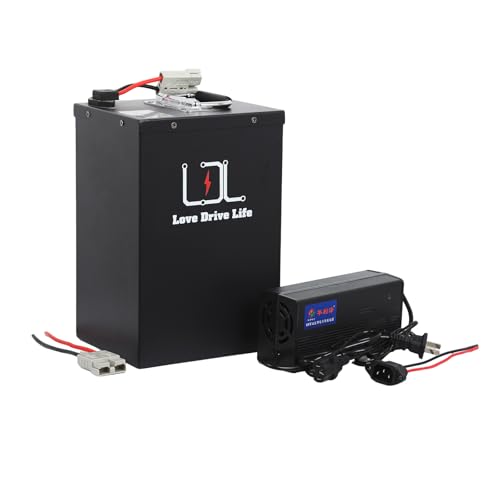
BtrPower 60V 30Ah LiFePO4 Battery Pack
BtrPower 60V 72V Multi-AH Battery Pack
A Closer Look At Each Pick
The opening pick is a sensible middle-of-the-pack choice for riders running motors in the 1000W to 2000W range. The 20Ah capacity delivers enough stored energy for a solid commute or a weekend loop, while the 50A BMS, the onboard circuit that protects cells from overcharge, deep discharge, and short circuits, leaves useful headroom for short bursts of throttle.
Compared with the higher-amp picks later in this list, this one trades raw output for a friendlier weight profile. Commuters who don’t need top-tier current draw will likely find it an easy match for typical mid-drive and hub setups. The integrated XT60 connector (a polarized high-current plug common in RC and e-bike builds) and base mount also mean installation stays close to a drop-in experience.
What It Does Well
- 50A BMS gives meaningful protection headroom for daily use
- 20Ah capacity suits both weekday commuting and weekend rides
- XT60 connector pairs cleanly with most common conversion kits
- Safe-lock base helps deter casual removal when parked in public
- Supports motors from 100W entry-level to 2000W performance builds
Worth Noting
- Owners of 3000W-class motors should look further down the list
- Cell chemistry specifics aren’t published, so cycle life claims are hard to verify
- Buyers commonly report that the included documentation is thin, so plan to verify polarity yourself
Built With In Mind
Riders running 1000W to 2000W mid-drive or hub motors who want a balanced 60V pack without paying for high-amperage headroom they won’t use.
A Better Fit Elsewhere
The 60V25Ah Universal Power Pack is a smarter match for anyone running a 3000W motor who wants the same brand-agnostic connector approach.
This 52V option steps down a touch in nominal voltage but keeps the same 20Ah capacity and a 50A BMS. For shoppers already committed to a 52V controller, that’s an important distinction: pairing a 60V pack with a 52V system can push the controller beyond its safe operating range.
The 1500W motor ceiling makes this a natural fit for high-power commuters rather than off-road builds. Lithium construction keeps weight well below a comparable lead-acid pack, which matters if you mount the battery on a rear rack. Owners commonly report that the safe-lock base keeps the pack seated over rough pavement.
What Pays Off
- Lighter than lead-acid alternatives at the same capacity
- Compatible with 52V controllers that the 60V picks would overtax
- XT60 connector simplifies wiring on conversion kits
- 50A BMS offers solid protection against deep discharge on long rides
Trade Offs
- 1500W motor cap excludes high-output electric motorcycles
- 20Ah is generous but not class-leading for distance-focused riders
Key Specs
Right Fit For
52V system owners who want a 20Ah replacement without upgrading controllers or chasing higher nominal voltage.
Swap It Out When
Step up to the SOLLVIE 60V 20AH Ebike Battery if your controller is rated for 60V and you want the extra power ceiling.
This is the pack to look at when wattage climbs into serious territory. With a 50A BMS and support for motors up to 3000W, it’s clearly aimed at off-road builds, fat-tire conversions, and electric motorcycles. The 25Ah capacity is also meaningfully higher than most 20Ah picks earlier in this list.
The 20S1P cell configuration (20 cells in series, one parallel string) means nominal 60V output, and the 30A continuous discharge rating sets a clear ceiling on sustained draw. Riders running sustained throttle rather than pedal-assisted cruising may want to weigh that limit against their typical riding style.
Real Benefits
- 25Ah capacity stretches range on long routes
- 50A BMS supports up to 3000W motors
- LiFePO4 chemistry (lithium iron phosphate, known for thermal stability and long cycle life) for improved safety and durability
Points To Keep In Mind
- 30A continuous discharge is below the BMS peak; high-draw riders may want to check controller limits
- The pack is heavier than smaller-capacity 60V options
- Generic branding means spare-parts support varies
Who It Suits Best
Riders with motors between 1500W and 3000W who want the extra capacity headroom and don’t mind the added weight on the frame.
Look Elsewhere When
The BtrPower 60V 72V Multi-AH Battery Pack is a stronger match if you want similar wattage support with a more robust 50A continuous current rating.
What separates this entry from the rest of the SOLLVIE-leaning picks is flexibility. With 20Ah, 25Ah, 30Ah, and 35Ah capacity options on a single product page, the same listing covers a short urban commute or a long weekend loop. The trade-off is that you commit to one capacity at checkout, so the decision still matters.
The LiFePO4 chemistry is a quiet win for shoppers who prioritize longevity. Cell packaging at roughly 6.3 by 7.3 by 11.2 inches keeps the pack narrow enough for down-tube mounting on most frames. For conversion builders, the trade-off is a heavier pack as capacity climbs.
Everyday Advantages
- Four capacity options let you match pack to your actual mileage
- LiFePO4 cells typically deliver longer cycle life than NMC (nickel manganese cobalt) alternatives
- Compact footprint fits most down-tube battery brackets
Honest Caveats
- Higher-capacity versions add noticeable weight
- Available wattage range isn’t clearly listed on the product page
Made For
Range-conscious riders who want to choose capacity based on their daily mileage, not a one-size-fits-all default.
Consider Something Else When
The BtrPower 60V 30Ah LiFePO4 Battery Pack is a stronger choice if you want a clearly defined 1800W motor ceiling and a bundled fast charger.
The Shark-style frame design sets this apart visually and functionally. Where most packs in this list mount on a rear rack or down-tube bracket, the elongated 368 by 95 by 150mm shell slips into specific shark-style enclosures common on Bafang-style mid-drive builds and many rear-hub conversions.
Compatibility is the headline here. The product explicitly lists fitment with Bafang, Voilamart, AW, and Ancheer motors, which covers a substantial chunk of the conversion-kit market. Buyers running uncommon controllers should still measure their available cavity before committing.
The Helpful Details
- Shark frame fits common Bafang and Voilamart conversion kits
- LG cells (a well-regarded lithium-ion cell manufacturer) in selected capacity tiers
- XT60 connector streamlines wiring for builders
- 0 to 2000W motor compatibility across voltage options
Some Limits To Know
- Shark-style enclosure won’t fit bikes built for down-tube or rear-rack packs
- Cell brand varies by voltage configuration
Feature Card
Best Suited To
DIY conversion builders running Bafang mid-drives or common rear-hub kits who need a pack shaped for a shark-style enclosure.
Where Another Pick Suits Better
The SOLLVIE 60V 20AH Ebike Battery is a friendlier choice for shoppers who want a standard down-tube or rack mount without measuring a custom enclosure.
The 1900W motor ceiling on this SOLLVIE pack positions it slightly more conservatively than the 2000W sibling earlier in this list. For typical commuter-class builds, that ceiling is generous headroom rather than a constraint, but high-power off-roaders should note the gap.
Compared with the 52V counterpart, the move to 60V nominal means more available power at the cost of a slightly less common controller requirement. The safe-lock base, which keeps the pack anchored to the mount when parked, is a practical touch for city riders locking up outside cafés or workplaces.
Everyday Wins
- Safe-lock base improves security when parked in public
- 20Ah capacity suits weekday commuting
- XT60 connector pairs with most conversion kits
- 50A BMS offers solid protection during deep discharge
Things To Consider
- 1900W ceiling rules out the most powerful conversion motors
- Similar form factor to the sibling SOLLVIE 2000W pack, so verify the right ASIN at checkout
Perfect Match For
Daily commuters who want a 60V pack with confident BMS protection and a secure mounting base for street parking.
Skip It When
The SOLLVIE 60V 20AH Ebike Battery with the 2000W ceiling is the better call if your motor sits closer to that wattage range.
This is the highest-amp-hour pick in the SOLLVIE lineup and the obvious answer for range-first riders. At 30Ah on a 52V platform, the stored energy supports longer rides without forcing a mid-day charge. The 50A BMS keeps current protection in line with the smaller-capacity siblings.
The 1900W motor ceiling mirrors the 60V 20AH pack reviewed earlier, which means you trade some voltage headroom for added capacity. That’s a fair exchange for commuters and touring riders prioritizing distance over peak power.
Good Reasons To Consider
- 30Ah capacity stretches range well beyond 20Ah picks
- 52V platform fits controllers already in 52V ecosystems
- Safe-lock base matches the rest of the SOLLVIE line
Less Ideal Details
- Higher capacity adds weight over the 20Ah SOLLVIE picks
- 52V nominal means less available power than 60V alternatives
Whose Shelf It Belongs On
Touring riders and long-distance commuters who want maximum amp-hours on a 52V system.
Another Choice May Suit
The SOLLVIE 60V 20AH Ebike Battery is a better fit for anyone whose priority is voltage headroom rather than raw capacity.
The iron-shell construction is the headline detail on this BtrPower pack, and it’s a meaningful difference from the plastic-housed alternatives earlier in this list. Riders dealing with trail vibrations, accidental drops during transport, or cold-weather expansion will appreciate the more rigid enclosure.
The 30A BMS sits below the 50A ratings on some competitors, which keeps the supported motor range at 0 to 1800W. For commuters, that’s plenty. For high-watt off-road builds, the limit may become the deciding factor.
Well-Handled Touches
- Iron shell resists impact better than plastic enclosures
- 30Ah capacity supports longer routes
- 20S1P cell configuration for stable 60V nominal output
Practical Considerations
- 30A BMS limits the upper motor ceiling to 1800W
- Iron shell adds weight compared with ABS-housed alternatives
- Buyers commonly report the dimensions need to be confirmed against available frame space
Who Should Grab It
Riders prioritizing enclosure durability over peak current who run motors in the 1000W to 1800W range.
Reach For A Different Pick When
The BtrPower 60V 72V Multi-AH Battery Pack is the better fit for builds needing 3000W-class headroom.
The included 4A fast charger is the practical edge on this BtrPower pack. A standard 2A charger turns a 30Ah refill into an overnight affair, while 4A cuts that meaningfully. Riders who commute daily and don’t want to babysit a charging battery will feel that difference immediately.
The 1800W motor ceiling matches the iron-shell sibling reviewed above, but the LiFePO4 chemistry typically outlasts NMC packs in cycle count. For shoppers planning to keep the same battery across multiple bike generations, that longer service life is a quiet advantage.
Notable Upsides
- 4A fast charger bundle shortens downtime between rides
- LiFePO4 chemistry supports more charge cycles
- 30Ah capacity suits long-range riders
- Multi-voltage capacity options on the same listing
Where It May Fall Short
- 30A continuous discharge is below the BMS peak; verify against your controller’s draw
- LiFePO4 packs of this capacity run heavier than NMC equivalents
Right Fit For
Riders who charge frequently and want shorter turnaround times between rides without sacrificing cycle life.
Where A Sibling Pick Shines
The BtrPower 60V 72V Multi-AH Battery Pack offers higher motor headroom if 1800W feels tight for your build.
This is the high-output closer for the lineup. With 50A continuous discharge and support for motors up to 3000W, it covers the most demanding builds in this roundup, including off-road electric motorcycles and high-wattage fat-tire conversions. The 50A BMS also gives meaningful headroom over the 30A siblings.
Capacity options run from 25Ah up through 80Ah on the same product page, which makes the listing more of a configurator than a single SKU. Choose based on your typical ride length rather than the maximum the listing allows; the higher capacities get heavy fast.
Everyday Perks
- 50A continuous discharge supports sustained high draw
- 3000W motor ceiling covers the most demanding builds
- 100A peak discharge for short bursts
Things To Weigh
- Higher-capacity versions add significant weight
- Iron-shell durability increases total pack mass further
Feature Card
Who Will Love This
High-power builders running 3000W-class motors who need both capacity options and serious current headroom.
Not Your Match When
The BtrPower 60V 30Ah LiFePO4 Battery Pack is a friendlier pick if you don’t need the higher wattage ceiling and want a faster charger.
Matching Wattage, Capacity, and Connector Type
Choosing a 60V e bike battery comes down to four real-world constraints: motor wattage, controller voltage, amp-hour capacity, and connector compatibility. Get any of these wrong and the pack either won’t deliver what its label promises or won’t drop into your bike at all.
Start with the motor and controller pairing. A 2000W motor on a 60V controller draws roughly 33A at full load, which means the BMS needs to support that sustained draw with some headroom. Picking a 30A BMS for a 2000W motor is a common mistake: the BMS will trip under sustained throttle and you’ll think the battery is faulty. Match the BMS rating to the motor’s typical draw, not its peak.
Capacity is the next decision. As a rough guide, a 20Ah 60V pack stores about 1.2 kWh (kilowatt-hours) of energy. A 1500W motor running flat-out will drain that in under an hour, but most commuters cruise at 300W to 500W with pedal assist, which stretches that same pack across 30 to 50 miles of mixed riding. Higher-capacity packs add weight, which affects handling, so resist the urge to over-buy if your typical ride is short.
Connector type matters more than most shoppers expect. XT60 connectors are common in this category, but some kits use Anderson Powerpole, 3-pin DIN, or proprietary plugs. Confirm the connector before you order; adapters exist but add resistance and a potential failure point. Finally, chemistry matters for longevity. LiFePO4 packs typically outlast NMC packs in cycle count but run heavier at the same capacity. For daily commuters, that weight difference shows up every time you lift the bike.
Key Considerations Across These Picks
Pitfalls Shoppers Hit
The most common mistake is matching a 60V battery to a 52V controller. The voltage gap may seem small, but controllers are designed for specific input ranges, and over-volting can damage MOSFETs (the transistors that switch current to the motor) over time. Confirm your controller’s rated voltage before settling on a pack.
The second trap is assuming a higher amp-hour rating automatically means more range. Real-world range depends on terrain, rider weight, assist level, and ambient temperature. A 25Ah pack used aggressively may deliver less distance than a 20Ah pack used conservatively. Match capacity to your actual riding profile rather than the number on the label.
Why Top Tier Costs More
The jump from a 20Ah pack to a 30Ah or 35Ah pack isn’t just bigger cells. Higher-capacity packs require more rigorous cell matching, more robust BMS hardware, and often heavier enclosures to manage thermal load. Iron shells, branded cells like LG, and bundled fast chargers all add to the cost.
For most commuters running 1000W to 1500W motors, a mid-capacity 20Ah pack delivers the right balance of range, weight, and value. Stepping up to 30Ah makes sense when you routinely ride past 40 miles in a session or want to reduce charge cycles per week. The extra money buys you genuine headroom, not just a bigger number on the label.
Frequently Asked Questions
How long does a 60V e bike battery last on a single charge?
Range depends on battery capacity, motor wattage, terrain, and assist level. A 20Ah 60V pack on a 1000W motor with moderate pedal assist typically delivers 30 to 50 miles. Higher-watt motors or throttle-only riding shortens that significantly, while conservative assist can extend it.
Can I use a 60V battery on a 48V or 52V e-bike?
Generally, no. Controllers are designed for specific voltage ranges, and over-volting can damage the electronics. A 48V system needs a 48V battery, and a 52V system needs a 52V battery. Using a 60V pack on either risks component failure and voids typical warranty coverage.
What does the BMS rating actually protect against?
The Battery Management System monitors cell voltage, current draw, and temperature. It disconnects the pack if cells drop too low, charge too high, draw too much current, or overheat. A higher-rated BMS simply allows more sustained current before tripping its protection circuit.
Is LiFePO4 better than standard lithium-ion for e-bikes?
LiFePO4 cells typically deliver more charge cycles (often 2000+ vs. 500 to 800 for NMC) and better thermal stability, which reduces fire risk. The trade-off is weight: LiFePO4 packs run heavier at the same capacity. For daily commuters prioritizing longevity, LiFePO4 is usually worth the extra mass.
How do I know if a battery fits my bike?
Measure the available battery cavity on your frame, then compare against the pack dimensions. Check the connector type on your existing wiring harness, confirm your controller’s rated voltage, and verify that the pack’s motor-wattage range covers your motor’s draw. Getting all four aligned avoids the most common compatibility headaches.
Closing Remarks
Picking a 60V e bike battery is less about chasing the largest capacity or highest amp rating and more about matching the pack to your motor, controller, and typical ride length. The picks above cover the common configurations shoppers actually run, from 1000W commuters to 3000W off-road builds. Take your motor’s wattage, your controller’s voltage, and your real weekly mileage, then let those three numbers narrow the list.