A dead battery on a foldable commuter or a long-range cruiser can ruin an entire day, and grabbing the wrong charger makes the problem worse by cooking a perfectly good pack. The right 48v ebike battery charger matches your battery’s voltage, speaks the right connector language, and doesn’t punish you for leaving it plugged in too long. This lineup covers universal multi-tip units, brand-tuned replacements, and a few higher-voltage LiFePO4 packs for riders building custom EV setups.
A Closer Look At The Lineup

PacPow 54.6V 2A Ebike Charger with 7 Connectors
Syvrac 48-54.6V 2A Electric Bike Charger
Suptopone 48V Charger for Lectric Ebike

BICMDO 54.6V 2A 7-in-1 Ebike Charger
Zylvro Universal 54.6V Ebike Charger
Suptopone 52V Charger with 5 Plugs
Blwny 72V 50Ah LiFePO4 Deep Cycle Battery
HTLINONY 72V 40Ah LiFePO4 Trike Battery
HTLINONY 72V 40Ah LiFePO4 DIY Battery
The Strengths Of Each Pick
The PacPow 54.6V 2A charger lands at the top because it ships with seven connector tips, which covers most 48V packs you’ll meet without buying a second adapter brick. Output is 54.6V at 2A, the standard full-charge voltage for a 13-series (13S) lithium-ion pack, and the input runs on standard 100-240V household current. For a household running two different e-bikes or a scooter alongside a bike, that single unit replaces a tangle of brand-specific wall warts.
The aluminum housing is a quiet upgrade from the bargain plastic bricks that run hot under extended use, and a small cooling fan helps with thermal headroom during long top-off sessions. Owners commonly report the indicator switches cleanly between charging and full states.
What Makes Sense
- Seven included tips cover most common barrel, XLR, and 3-pin connectors you’ll encounter on mid-drive and hub setups.
- Aluminum shell with active cooling reduces the heat-soak problem cheap chargers tend to develop.
- 54.6V 2A output matches the standard full-charge profile for 13S lithium packs.
- Wide input range means the same brick works on most household circuits without a step-down transformer.
Points To Note
- 2A output means a full top-off on larger 15Ah+ packs takes several hours, so overnight planning helps.
- You still need to confirm your specific port matches one of the seven included tips before plugging in.
- The brick itself runs heavier than a typical phone charger, so the wall outlet gets crowded fast.
Key Specs
Who It Suits Best
Households running multiple 48V e-bikes or pairing an e-bike with a scooter and a hoverboard benefit most, since one brick swaps between them.
Consider Something Else When
Riders who own a Lectric XP and want a brand-tuned replacement should look at the Suptopone 48V charger instead, since its DC2.1 jack matches the Lectric port out of the box.
The Syvrac 48-54.6V 2A charger is the no-nonsense pick for someone whose DC2.1 barrel port fits and who doesn’t need an adapter bundle. It runs at 120V AC input, which lines up with standard North American outlets without any transformer gymnastics. The DC2.1 jack is one of the more common connector standards on budget-friendly 48V packs, so for many commuters this means plug, wait, ride.
Indicator logic is straightforward: red while charging, green when topped off or if the pack reads below roughly 35.7V (which suggests the pack itself has an issue). Built-in OVP, OCP, and SCP protection (over-voltage, over-current, and short-circuit safeguards) cover the common failure modes without needing a separate surge strip.
What Stands Out
- Red-to-green indicator gives a clear charging status at a glance.
- DC2.1 barrel jack matches a wide swath of 48V packs sold for commuters.
- OVP, OCP, and SCP protection handle common electrical fault scenarios.
Trade-Offs To Consider
- Single connector type means you’re locked to DC2.1 ports, with no fallback tip for non-standard barrels.
- 120V-only input may be limiting if you travel internationally and don’t carry a transformer.
Made For
Daily commuters with a DC2.1 charging port who want a single-purpose replacement charger that doesn’t require reading a manual.
Look Elsewhere When
Riders managing several different connector standards across multiple vehicles should consider the PacPow 54.6V 2A charger, which ships with seven tip options.
The Suptopone 54.6V 2A charger is the right shape for Lectric XP owners who lost the original brick or want a backup. The DC2.1 jack matches the Lectric charging port exactly, sidestepping the compatibility guessing game that comes with multi-tip packs. Output tops out at 54.6V 2A, which is the standard full-charge window for the 48V nominal packs Lectric ships.
Input runs 100-240V at 50/60Hz, so it handles international travel with just a plug adapter. Where the universal chargers try to be everything at once, this one trades flexibility for a snug fit, and that trade-off works in its favor when you don’t want to dig through a tip bag at 7 a.m.
What It Does Well
- DC2.1 jack is a direct match for Lectric XP-series charging ports.
- Wide input range works on most household circuits without fuss.
- 2A output keeps charging times predictable for the standard 10-14Ah Lectric packs.
Honest Caveats
- No bundled extra tips means it won’t double as a charger for a second bike with a different port.
- Verify your port is the 5.5×2.1mm spec and not the 5.5×2.5mm variant before plugging in, since the two look similar.
Best Suited To
Lectric XP owners who want a direct replacement or backup charger without paying for tip bundles they’ll never use.
Reach For A Different Pick When
Households juggling a Lectric alongside an Ancheer or Vivi should grab the BICMDO 54.6V 2A 7-in-1 charger instead, since it covers both brands in one unit.
The BICMDO 54.6V 2A charger is tuned specifically for the popular 48V 13S lithium configuration, and that focus shows in its compatibility list, which explicitly names Ancheer, Vivi, Jaison, Funhang, TST, Heybike, Qlife, and AMYET packs. Seven connector tips cover the most common barrel sizes including 5.5×2.1mm and 5.5×2.5mm.
Where the PacPow covers everything in general, the BICMDO leans into the budget commuter segment, which means a slightly tighter compatibility footprint but better fit for those specific brands. The SGS certification noted in the listing points to third-party safety testing, a useful marker when comparing unbranded chargers. Overcharge protection is built into the charging profile.
The Practical Payoff
- Brand-specific tuning for Ancheer, Vivi, Jaison, and similar popular commuter packs.
- Seven-tip bundle covers the most common barrel sizes you’ll meet on those bikes.
- Third-party safety certification adds a layer of assurance over generic imports.
- Overcharge protection stops the charging cycle once the pack tops off.
Worth Bearing In Mind
- Not designed for 24V, 36V, 52V, or 60V packs, so it stays inside the 48V 13S lane only.
- Lead-acid battery packs are excluded, so riders with older chemistry need a different unit.
Feature Snapshot
Who Will Love This
Riders running popular budget commuter brands like Ancheer, Vivi, or Jaison benefit most, since the brand-specific tuning reduces the guessing involved in picking a charger.
Swap It Out When
Anyone with a Lectric XP should look at the Suptopone 48V charger, since its DC2.1 jack matches Lectric’s port configuration exactly.
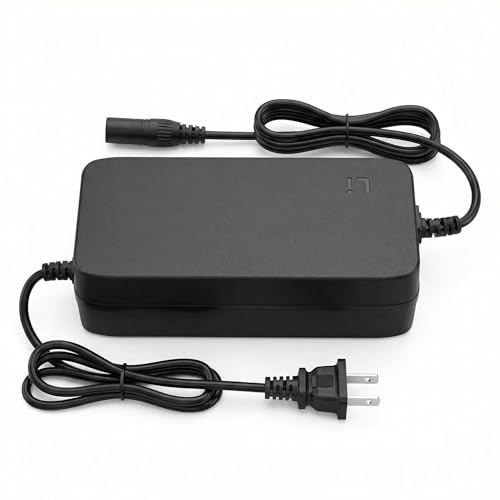
The Zylvro 54.6V 2A universal charger targets riders with less-common 48V packs from brands like DeepPower, K301, E14, DTTZH, ASKGO, APYEAR, and LELEKUAI. Where the bigger picks cover household-name brands, this one covers the niche import segment where finding a matching charger is genuinely hard.
The black housing keeps a low profile, and the universal design aims to bridge the gap when the original brand-specific charger has gone out of stock or vanished from the market. Built-in protections guard against overcharge, overheat, and short-circuit scenarios, the standard set of safety nets worth having.
Practical Advantages
- Covers lesser-known 48V pack brands where replacement chargers are scarce.
- Built-in overcharge, overheat, and short-circuit protection.
- Compact housing travels easily in a backpack or pannier.
Things To Consider
- Connector compatibility is brand-specific, so confirm your port matches before plugging in.
- Less aftermarket documentation than the more popular universal brands.
Right Fit For
Riders with a niche 48V pack from one of the listed compatibility brands benefit most, since the alternatives are limited in this segment.
A Better Fit Elsewhere
Riders with mainstream Ancheer, Vivi, or Lectric packs will find more thoroughly documented options in the BICMDO 54.6V 2A 7-in-1 charger or the Suptopone 48V charger.
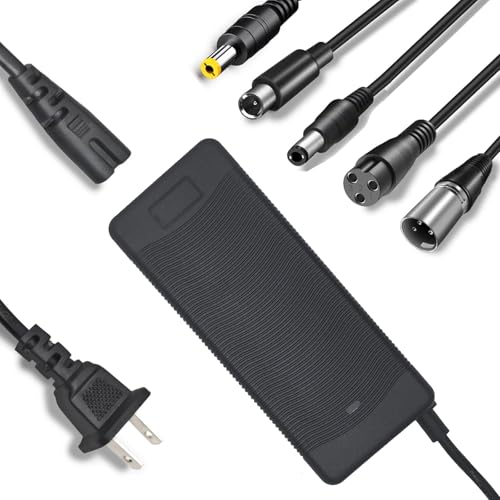
The Suptopone 52V charger is the right pick for riders running 52V nominal packs, a step up from the standard 48V configuration found on most commuters. Output runs 58.8V at 2A, which matches the full-charge target for a 14-series (14S) lithium pack. The five included connector tips cover 5.5×2.5mm, 5.5×2.1mm, a 12mm 3-prong, 8mm RCA, and a 3-pin male XLR, covering most higher-end scooter and bike ports.
This is the charger for anyone who upgraded from a 48V to a 52V pack and discovered the original brick no longer reaches the right top-off voltage. Without the extra two cells of headroom, a 48V charger tops out the pack short and slowly starves capacity over time.
Points In Its Favor
- 58.8V output correctly tops off 14S 52V nominal lithium packs.
- Five connector types cover the most common 52V pack ports.
- Wide input range handles most household circuits.
Small Caveats
- Not suitable for lead-acid battery packs, a common confusion on 52V listings.
- Charging rate of 2A means longer wait times on larger 52V packs above 15Ah.
Feature Rundown
Built With In Mind
Riders who upgraded to 52V nominal packs and need a charger that reaches the correct top voltage without undercharging the extra cells.
Skip It When
Standard 48V 13S pack owners should grab the PacPow 54.6V 2A charger instead, which targets the lower-voltage chemistry directly.
The Blwny 72V 50Ah LiFePO4 battery steps out of the charger category and into the deep-cycle battery lane, and earns its spot here because DIY EV builders running 250W to 3500W motors need a pack, not just a brick on the wall. LiFePO4 chemistry (lithium iron phosphate) trades raw energy density for longer cycle life and thermal stability, with the manufacturer citing 4000+ deep cycles. That’s a meaningfully different cost-per-use profile over years of daily riding.
The sprayed alloy shell is built to handle rain, mud, and the occasional curb strike without corroding through the housing. Pair it with a compatible 72V LiFePO4 charger (not included), and you’ve got a serviceable replacement pack for a tired e-trike or a ground-up motorcycle conversion.
The Upside
- 4000+ cycle rating dramatically outlasts typical lithium-ion commuter packs.
- 50Ah capacity covers long-distance e-trike and motorcycle builds.
- Sprayed alloy housing resists water, impact, and oxidation.
- Compatible with motors from 250W up to 3500W for flexible build sizes.
Points To Keep In Mind
- This is a battery, not a charger, so you’ll need a separate 72V LiFePO4-compatible charger to use it.
- Larger physical size and heavier weight than a typical commuter pack.
- DIY installation requires familiarity with battery management systems (BMS) wiring.
Perfect Match For
Garage builders and tinkerers putting together e-trikes or lightweight electric motorcycles who want a long-cycle pack at 72V.
Consider Something Else When
Riders looking for a charger to top off an existing 48V pack should skip this entirely and stay with the PacPow 54.6V 2A charger.
The HTLINONY 72V 40Ah pack is sized for electric trikes and mid-power scooters, where 40Ah strikes a balance between range and physical footprint. LiFePO4 cells are rated for 4000+ cycles, and a 50A BMS (battery management system) handles overcharge, over-discharge, short-circuit, and temperature extremes without complaint.
The specialty spray-coated alloy housing shares the Blwny’s weather-resistant DNA, which matters for trike riders who don’t baby their vehicles. Owners commonly cite the build quality as noticeably tighter than the budget import packs at this voltage level.
Real-World Strengths
- 50A BMS adds a layer of fault protection over cheaper BMS designs.
- 4000+ cycle rating for long daily-use life.
- Weather-resistant alloy housing suits outdoor trike and scooter builds.
Less-Strong Areas
- Requires a separate 72V LiFePO4 charger, since none is included with the pack.
- 40Ah capacity trails the Blwny 50Ah for riders prioritizing maximum range.
Whose Shelf It Belongs On
E-trike owners and scooter builders who want a weather-tough pack with strong cycle life and don’t mind sourcing a charger separately.
Where A Sibling Pick Shines
Riders wanting more capacity per charge should consider the Blwny 72V 50Ah battery, which trades a heavier footprint for higher total range.
The HTLINONY 72V 40Ah DIY battery leans hard into the workshop scene, with marketing that calls out three explicit build environments: city scooters, off-road motorcycles, and cargo e-trikes. Automotive-grade LiFePO4 cells deliver stable high-output power, and the manufacturer targets motors from 250W to 3500W. The spray-alloy housing tracks the same protection profile as the sibling trike-focused pack.
Where the previous HTLINONY entry is positioned as a trike replacement, this one is framed more broadly for any DIY build where stable voltage delivery matters. Cycle life and BMS protection are similar to the trike-tuned sibling, with the main differentiator being the broader intended-use framing.
A Favorable Mix
- Broad motor compatibility from 250W city builds up to 3500W off-road setups.
- Automotive-grade LiFePO4 cells for stable discharge under load.
- Spray-alloy housing matches the protection profile of the trike sibling.
- 4000+ cycle rating supports multi-year daily use.
Where It Is Less Suited
- Needs a separate 72V LiFePO4 charger to function, which adds to the build cost.
- DIY install assumes familiarity with BMS wiring and safe lithium pack handling.
Quick Facts
Who Should Grab It
DIY motorcycle, scooter, and e-trike builders who want a versatile 72V pack that handles multiple riding environments in one unit.
Not Your Match When
Riders looking for a charger to maintain an existing 48V commuter pack should stay with the PacPow 54.6V 2A charger, since this is a battery, not a charger.
What To Weigh Before Choosing 48v Ebike Battery Chargers
Match The Pack Voltage First
A 48V nominal lithium pack actually charges to 54.6V when full, which is why most chargers in this lineup advertise that number. A 52V pack charges to 58.8V, so the math changes. Mixing up the two voltages is the single fastest way to ruin a battery, so verify the exact chemistry of your pack before plugging in. The number printed on the pack label or in the product manual is the source of truth.
Check The Connector Type Before Anything Else
The most common barrel sizes on 48V commuter packs are 5.5×2.1mm and 5.5×2.5mm, and they look almost identical at a glance. Some scooters and higher-end bikes use 3-pin XLR or 3-prong connectors instead. A universal charger with seven tips handles the guesswork, but a single-purpose charger means confirming your port matches before purchase.
Decide Between Universal And Brand-Tuned
Universal chargers with multiple tips work across bikes and scooters in the same household, but they bundle tips you may never use. Brand-tuned chargers skip the extras but lock you into a specific connector standard. For single-bike owners, brand-tuned is simpler; for multi-vehicle households, universal saves wall outlet space.
Consider Charging Speed Versus Pack Longevity
A 2A output takes several hours to refill a 10-15Ah pack, but it treats the cells gently and extends their useful life. Faster 3-4A options exist, though they generate more heat and accelerate long-term cell wear. For most commuters who charge overnight, the slower rate is the better trade.
Key Considerations Across These Picks
Pitfalls Shoppers Hit
The most common mistake is grabbing a 48V charger for a 52V pack or vice versa, which undercharges or actively damages cells. Connector confusion runs a close second: a 5.5×2.1mm barrel won’t seat properly in a 5.5×2.5mm port even though they look nearly identical, and forcing it can damage the pins.
Another trap is buying a charger without built-in overcharge protection. Cheaper imports sometimes skip the BMS handshake, which means the charger keeps pumping current past full and slowly degrades the pack. Sticking with chargers that explicitly list OVP, OCP, and SCP protection avoids that slow-burn failure.
Why Top Tier Costs More
Higher-tier chargers tend to use aluminum housings instead of plastic, include active cooling fans, and bundle more connector tips for cross-vehicle use. The third-party safety certifications add testing costs that get passed along, though the trade-off is a more thoroughly verified safety profile. For someone charging a single budget commuter, the entry tier does the job. For multi-bike households or anyone storing the charger in an enclosed space, the upgrade to a metal-housed, fan-cooled unit is worth the spend.
Frequently Asked Questions
Can I use a 48V charger on a 36V battery?
No. The voltage mismatch will push too much current into the lower-voltage pack and damage the cells. Always match the charger’s nominal output to the battery’s nominal voltage exactly.
How long does it take to charge a 48V 10Ah battery?
With a standard 2A charger, expect roughly 5-6 hours from empty to full, assuming the cells are healthy and the charger delivers its rated current consistently. Larger packs scale up proportionally.
What is OVP, OCP, and SCP protection?
These are standard electrical fault safeguards: over-voltage protection (OVP), over-current protection (OCP), and short-circuit protection (SCP). Chargers with these features cut power automatically when something goes wrong, which protects both the charger and the pack.
Do I need a different charger for lithium-ion versus lead-acid batteries?
Yes. Lithium-ion and lead-acid use different charging profiles entirely, and using the wrong charger type either undercharges or damages the pack. Most modern e-bikes use lithium-ion, but it’s worth confirming before buying.
Can I leave my ebike charger plugged in overnight?
Modern chargers with auto-shutoff or green-light indicators stop drawing current once the pack reaches full, so overnight charging is generally safe. Older or uncertified chargers without that cutoff can overcharge the pack over time, so it’s worth verifying the feature list.
Wrap Up
Pick the charger that matches your battery’s voltage and connector first, then worry about extras like multi-tip bundles or cooling fans. For most 48V commuters, a universal 54.6V 2A unit with several connector tips covers daily life without taking up much shelf space. Riders with 52V packs, custom builds, or niche import brands need to look at the higher-voltage and LiFePO4 options further down the list. The right match comes down to chemistry, connector, and how many vehicles you need to keep charged.