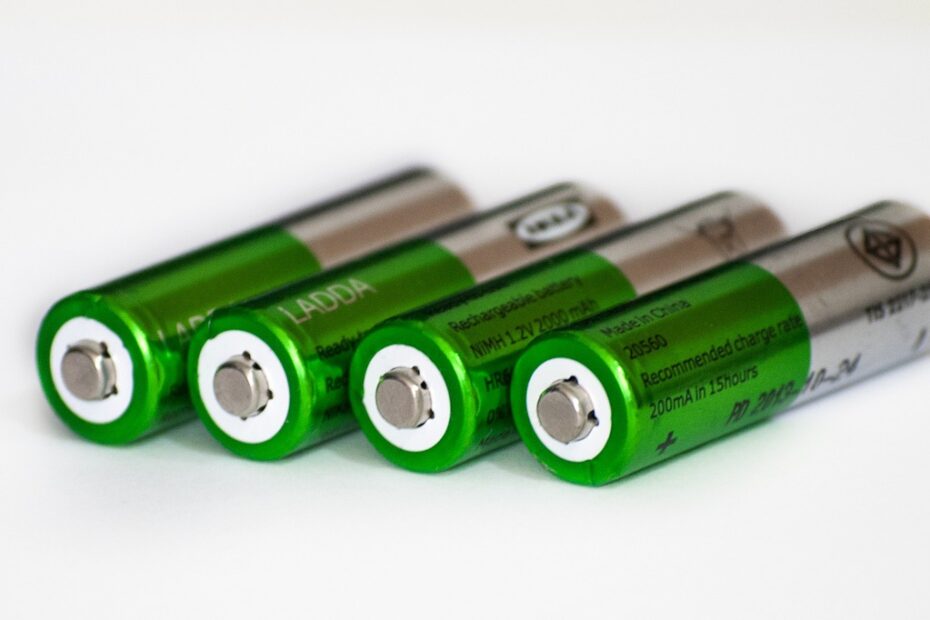
A single-use cell typically carries less manufacturing impact than a rechargeable model, whose higher upfront burden is spread over repeated charging. Your game controller can use dozens of alkaline cells over time, while a rechargeable set lowers material demand only through regular, long-term reuse.
This guide compares household battery choices through sourcing, manufacturing, chemistry, charging power, and lifespan, helping a parent choosing cells for remotes, toys, and portable electronics weigh the practical environmental factors.
Single-Use Cells and Rechargeables Have Different Material Burdens
Primary cells deliver stored energy once, while secondary cells accept repeated charging. Alkaline disposable batteries and lithium primary batteries fall into the primary category. Nickel-metal hydride (NiMH) rechargeable batteries and lithium-ion rechargeable batteries belong to the secondary category.
Your choice starts with the device’s energy demand. A rechargeable battery contains added materials and requires more factory energy before its first charge. That larger starting burden becomes less significant only after your battery completes enough useful cycles.
| Factor | Disposable primary cell | Rechargeable secondary cell |
|---|---|---|
| Basic purpose | One discharge, followed by collection | Repeated charging and discharging |
| Production burden | Lower for each individual cell | Higher because of added materials and processing |
| Result during regular use | Waste grows with each replacement | Impact per use falls across a long service life |
| Strong household fit | Long-storage, low-drain, or specified devices | Frequently used, high-drain devices |
| End-of-life route | Battery collection location | Chemistry-aware battery collection location |
Milliamp-hour ratings and purchase price tell only part of the story. A high-capacity rechargeable left untouched in a drawer until failure has little chance to offset its production emissions. Your household routine, rather than package language, decides whether reuse produces a material advantage.
Repeated service changes the calculation
A television remote can run for years on one alkaline pair. In that setting, your rechargeable pair has limited room to spread its larger production burden. A wireless game controller that drains cells every few weeks tells a different story because each new alkaline pair repeats extraction, packaging, transport, and disposal.
That contrast leads to a life cycle assessment (LCA). An LCA traces raw materials, factory work, shipping, charging electricity, and end-of-life handling. It shows why the disposable vs rechargeable battery environmental impact cannot be judged from the store shelf alone.
Life-Cycle Stages Show Where Environmental Effects Differ
Each replacement repeats a chain of mining, refining, assembly, transport, and collection. Rechargeables place more of that burden at the beginning, then distribute it across successful cycles. Your reuse count decides whether that front-loaded burden becomes worthwhile.
Four AA alkaline cells in a camera can become four more sets of steel, manganese compounds, zinc, packaging, freight, and e-waste every month. A durable NiMH set can remain in service through the same period. The difference becomes clearer in devices that drain batteries quickly.
| Life-cycle stage | Disposable batteries | Rechargeable batteries |
|---|---|---|
| Raw materials | Zinc and manganese dominate alkaline cells; primary lithium uses lithium metal and specialized materials. | NiMH uses nickel and metal-hydride alloys; lithium-ion uses lithium and metals such as nickel, cobalt, manganese, or iron phosphate. |
| Manufacturing | Lower energy per cell, repeated for each replacement. | Higher energy and material input per unit, spread across successful cycles. |
| Transport and packaging | New retail packaging and shipment follow every replacement. | One cell or pack can displace repeated future shipments. |
| Use phase | No charging electricity, but no additional service life. | Charging draws electricity and produces charger losses. |
| End-of-life handling | Collection need arrives after one discharge. | Collection arrives later, though damaged lithium cells need fire-safe handling. |
Rechargeable production impacts arrive early
Nickel refining, electrode coating, cell assembly, and quality control give rechargeable cells a heavier starting footprint. Lithium-ion rechargeable batteries add a complex electronics chain in small consumer packs. Your reuse count turns that added material burden into a lower impact per hour of service.
Manufacturing greenhouse gas emissions do not disappear because a cell accepts charging. They become smaller per use only while the battery retains enough capacity for its assigned task. A pack retired after ten shallow cycles leaves much of its original material investment unused.
Replacement waste grows with each spent cell
Alkaline batteries are not biodegradable, and rechargeable cells are not biodegradable either. Crushed, burned, or damaged batteries can release materials into waste streams. Damaged lithium cells can heat rapidly after a short circuit, so your collection route matters after the final discharge.
Transport creates a quieter burden. One pack of disposable batteries seems minor, yet recurring freight and retail distribution grow with each replacement cycle. Reuse reduces that repetition, which widens the environmental gap in power-hungry equipment.
That advantage still varies because cell materials, voltage, and toxicity determine what each replacement actually entails.
Battery Chemistry Changes the Comparison
AA batteries can share a size while containing very different materials, voltages, and hazards. Alkaline, lithium primary, NiMH, lithium-ion, and nickel-cadmium cells need separate handling at home and at collection sites. Your device manual should identify the chemistry and voltage it needs.
| Chemistry | Common household role | Environmental and handling concern |
|---|---|---|
| Alkaline | Remote controls, clocks, basic flashlights | Single-use zinc and manganese chemistry; use a collection route rather than routine trash where local rules direct it. |
| Lithium primary | Long-life sensors, cameras, emergency gear | Long storage life, with added fire risk after damage or improper collection. |
| Nickel-metal hydride (NiMH) | AA and AAA cells for toys and controllers | Reusable nickel-based chemistry with collection routes in numerous areas. |
| Lithium-ion | Phones, headphones, power tools, battery packs | High energy density and fire risk from crushing, swelling, heat, or short circuits. |
| Nickel-cadmium (NiCd) | Older tools, emergency lights, legacy equipment | Cadmium presents a hazardous waste concern and needs dedicated collection. |
NiMH cells fit repeated AA and AAA use
NiMH rechargeable AA batteries run at about 1.2 volts under nominal conditions. Fresh alkaline AA cells start near 1.5 volts. Your low-battery indicator can appear sooner with NiMH cells, even while the cells still hold usable energy.
Low-self-discharge NiMH cells retain stored energy longer than older designs. They suit game controllers, toys, wireless mice, and flashlights that draw power at a steady pace. Your actual capacity retention matters more than a claim printed on packaging.
Lithium and cadmium need stricter handling
Lithium-ion batteries store substantial energy in a small space. A crushed pouch cell, swollen pack, or loose terminal can short circuit and heat rapidly. Tape exposed terminals where your collection location requests it, and keep damaged cells out of household trash.
Never place a swollen, leaking, hot, or physically damaged lithium-ion battery in a curbside bin. Your local household hazardous-waste program or battery collector can direct you to a fire-safe drop-off route.
Nickel-cadmium batteries need added caution because cadmium can contaminate soil and water. Older cordless tools and emergency lighting can still contain NiCd cells. Your collection location needs the correct chemistry information to recover or isolate that hazardous material.
Real Reuse Sets the Rechargeable Break-Even Point
A rechargeable battery environmental break-even point is the number of successful cycles needed to offset the larger footprint created before the first charge. No fixed count applies to every cell. Chemistry, capacity loss, charger losses, energy grid mix, and the disposable cell being replaced all move that point.
Your practical goal is straightforward: keep a compatible rechargeable battery in active use until its retained capacity no longer meets the device’s needs. A long-lived cell replacing dozens of disposable cells has a stronger environmental result than a cell bought, lightly used, and retired.
The replaced battery matters
Replacing one alkaline pair in a wall clock each year gives a rechargeable battery little room to recover its larger production burden. Replacing a pair every ten days in a child’s toy changes the calculation quickly. Your replacement frequency reveals the more useful comparison.
Capacity matters as well. A rechargeable battery that delivers half its original run time can still suit a remote control or lamp. That same aging cell can frustrate a camera flash that needs short bursts of current, so moving it to a lower-demand task can extend its useful service.
Cycle ratings set an upper boundary
Manufacturers list charge-discharge cycle life under controlled temperatures, discharge depth, and charge rates. Real homes introduce heat, long storage, mismatched cells, and accidental deep discharge. Your actual cycle count can fall well below a laboratory number.
Calendar aging affects lithium-ion chemistry even during storage. Repeated heat exposure damages both lithium-based cells and NiMH cells. Useful work across time matters more than a large cycle figure on the package.
That usable lifespan depends partly on how much energy charging wastes and how often heat shortens it.
Charging Electricity and Heat Affect Rechargeable Emissions
The wall outlet becomes part of a rechargeable battery’s footprint every time current flows. Electricity from coal-heavy grids produces more greenhouse gas emissions than power from hydro, wind, solar, or nuclear sources. Your region’s energy grid mix changes the charge-related share of total impact.
Charging uses far less electricity than a refrigerator or space heater, yet wasted electricity still accumulates over years. An inefficient charger turns part of incoming electricity into heat. A charger left connected after charging ends can draw standby power without a battery attached.
Efficient charging reduces wasted electricity
A compatible smart charger can stop or reduce charging after a battery reaches full capacity. That feature limits long trickle periods that warm cells and draw unnecessary electricity. Your charger needs to match the battery chemistry, size, and charging method stated by the manufacturer.
- Match charger chemistry: Charge NiMH cells in NiMH equipment and lithium packs only through their stated charging system.
- Use smart cutoff: Select a charger that detects full cells instead of sending a fixed charge to every battery.
- Keep cells cool: Charge on a hard, open surface away from sunlight, blankets, dashboards, and heating vents.
- Unplug idle chargers: Remove wall power from chargers that draw standby electricity after batteries are removed.
- Pair similar cells: Keep similar-age cells with similar capacity together in multi-cell devices.
Energy-efficient battery chargers reduce avoidable charging losses, though your grid still shapes the carbon burden. A rechargeable battery charged with lower-carbon electricity has a smaller use-phase burden than the same battery charged from a fossil-heavy grid. The environmental impact of battery charging changes the margin, not the value of sustained reuse.
Heat creates two losses at once
Hot batteries lose capacity faster, and charging wastes more energy as heat rises. A lithium-ion pack left in a hot car can age quickly without use. Your shaded indoor shelf is a better place for charging and storage.
Repeated topping-up can add avoidable heat, especially with older charging hardware that lacks strong charge termination. Partial charging does not harm modern lithium-ion packs by itself, but heat and long periods at full charge put more strain on them. Use the charger’s design as your cue rather than treating every cell alike.
High-Drain Devices Favor Rechargeable Cells
Camera flashes, game controllers, motorized toys, and bright flashlights expose replacement waste quickly. High-drain devices empty disposable batteries at a faster pace, multiplying extraction, packaging, transport, and collection demand. Your rechargeable set has its clearest advantage during this repeat work.
A game controller that needs two AA cells and drains a disposable pair each month can use 48 alkaline cells across two years. Two or four well-cared-for NiMH cells can cover the same role with far less replacement material, even after charging electricity enters the calculation.
Device demand points toward the right chemistry
- Game controllers: Use low-self-discharge NiMH cells because regular play drains disposable AA cells at a steady pace.
- Children’s toys: Keep two matched rechargeable sets so one pair runs the toy while the alternate pair charges.
- Digital cameras: Choose high-capacity NiMH cells for flash-heavy shooting, where alkalines can fade abruptly under load.
- LED flashlights: Use rechargeables for work lights and frequent outdoor use, where charging replaces repeated cell purchases.
- Wireless accessories: Rechargeable AA or AAA cells suit keyboards, mice, and headsets used each workday.
- Portable fans: Built-in lithium-ion packs fit regular seasonal use where the charging port remains undamaged.
Keep multi-cell sets together. Mark a set with a small letter, charge those cells together, and return them to the same device. Mixing a weak older cell with a newer cell can shorten run time and push both cells toward earlier retirement.
A motorized toy shows cumulative waste
A toy vehicle used for an hour most evenings can drain disposable alkaline cells rapidly. Alkalines can sag under a motor’s current draw, leading to shorter run times and frequent replacement. NiMH cells hold voltage differently under load, giving the toy steadier performance across repeated weekends.
That advantage has limits. Rechargeables are not an automatic substitute for every drawer battery. Long storage, low drain, and safety-related device requirements need a stricter reliability screen.
Low-Drain and Emergency Devices Need Specific Battery Types
A smoke alarm is not the place to force a sustainability choice that conflicts with manufacturer directions. Some alarm makers specify a primary battery because storage life, voltage behavior, and warning systems depend on that chemistry. Your priority in safety equipment is dependable operation.
Lithium primary batteries can hold charge for years, fitting certain sensors, emergency radios, and backup devices. Disposable alkaline batteries also suit remotes, clocks, and rarely used items where one set lasts a long time. Your replacement history should guide the choice rather than guilt about using a primary battery.
Voltage behavior affects reliability
Fresh alkaline cells begin near 1.5 volts, while standard NiMH cells sit near 1.2 volts for much of their discharge curve. Some electronics tolerate that difference well. Others misread a rechargeable cell as partly depleted, shut down early, or fail to meet a required voltage threshold.
Rechargeable cells can differ slightly in size, and tight battery compartments leave little clearance. Built-in charging circuits can accept only a proprietary lithium pack rather than loose AA cells. Your manual controls the decision where a product states that rechargeable batteries are unsuitable.
Follow the stated battery type in smoke alarms, carbon monoxide alarms, medical equipment, and emergency communications gear. A lower-impact cell is not the right choice where it weakens a safety function.
Routine checks reduce false confidence
Check emergency devices on the schedule stated in their instructions. Replace weak cells before storm season, inspect for corrosion, and confirm that the device powers on. Your stored spare batteries should have intact wrappers and clear date markings.
Do not mix alkaline and rechargeable cells in the same device. Their voltage curves and charge states differ, leading to leakage, poor performance, or uneven discharge. That same care carries into battery recycling.
Storage and Collection Reduce End-of-Life Harm
A drained battery still contains metals and materials that do not belong in routine household waste. Battery collection programs sort chemistries, reduce contamination risk, and direct suitable material toward recovery channels. Your final handling choice matters as much as the battery choice at the start.
Call2Recycle operates collection locations across much of the United States and accepts numerous household rechargeable batteries. Local solid-waste departments can run hazardous-waste events for primary lithium, damaged batteries, or chemistries excluded by nearby retail collection points. Your local rules decide what a collector accepts.
Storage habits extend useful service
- Choose a dry drawer: Keep loose cells away from sinks, laundry rooms, condensation, and metal objects that can bridge terminals.
- Separate loose cells: Store batteries in original packaging or a battery case so terminals cannot contact keys or coins.
- Separate battery ages: Keep new and worn cells apart to limit leakage and uneven discharge in multi-cell equipment.
- Remove dormant cells: Take batteries out of unused devices where instructions permit, especially before long storage periods.
- Inspect damaged cells: Set aside corroded, swollen, leaking, or dented batteries for special local disposal directions.
- Label paired sets: Keep rechargeable groups together so a weak cell does not shorten the service of newer companions.
Cool, dry conditions slow self-discharge and reduce corrosion risk. Refrigeration is not needed for household batteries, and condensation can cause problems after a cold cell returns to room air. Your storage routine can add months or years of workable service.
Collection rules depend on chemistry and condition
Local drop-off programs often sort household batteries by size, chemistry, and condition before accepting them. Tape terminals on lithium and lithium-ion cells where requested, place cells in separate bags where required, and avoid mailing damaged batteries without explicit carrier directions.
EPA household battery disposal guidance directs households to check local requirements because collection rules vary across locations and battery types. Nickel, steel, cobalt, and related metals move through different recovery paths. Small mixed batteries can be harder to process than large packs, yet collection keeps hazardous waste out of ordinary disposal streams.
Do not place batteries in a fire pit, burn barrel, or incinerator. Heat can rupture cells, release hazardous compounds, and start fires. Your practical end-of-life rule is simple: use each battery fully within its intended role, then send it to the correct collection route.
Those disposal habits work best when the original purchase matches how often and how hard a device runs.
The Practical Household Choice Comes Down to Device Use
Your lowest-impact battery matches the device, lasts through useful service, and reaches suitable collection afterward. Rechargeables fit regularly used, high-drain equipment because repeated cycles spread their production burden across real work. Primary cells remain sensible for long-storage or manufacturer-specified roles, especially where reliability protects your safety.
No. Your strongest environmental result comes from using rechargeable cells repeatedly in power-hungry equipment, charging them with compatible equipment, avoiding heat damage, and using primary cells where storage life or device directions require them.
FAQ
Are rechargeable batteries better for the environment than disposable batteries?
Rechargeables have a lower environmental impact per use after enough successful charge cycles offset their heavier production footprint. Your strongest result comes from using them for high-drain devices, charging them efficiently, protecting them from heat, and sending them to a suitable collection program at end of life.
What are the key environmental differences between disposable and rechargeable batteries?
Disposable batteries use fewer resources per individual cell but need a new cell after one discharge. Rechargeables need more material and manufacturing energy at the start, yet your repeated use can spread that burden across many cycles and reduce packaging, transport, and waste.
How many times must a rechargeable battery be used to offset its manufacturing impact?
No fixed cycle count applies to every battery. The rechargeable battery environmental break-even point changes with chemistry, charger efficiency, electricity grid carbon intensity, retained capacity, and the disposable battery being replaced. Your practical goal is to keep a compatible rechargeable cell in active service until it no longer performs its assigned task.
Which household battery chemistry is most environmentally friendly?
Low-self-discharge NiMH cells are a strong household choice for repeatedly used AA and AAA devices because your reuse can displace alkaline replacements. Lithium-ion packs suit built-in rechargeable electronics, while primary lithium cells fit long-storage equipment that needs dependable power over years.
Do rechargeable batteries still have an advantage if charging electricity comes from fossil fuels?
Charging electricity affects rechargeable battery emissions because every charge draws power from your local grid. A fossil-heavy grid narrows the advantage, yet repeated reuse can still reduce replacement material, packaging, freight, and e-waste. Your compatible charger and heat control reduce avoidable charging losses.
Can alkaline, lithium, NiMH, and lithium-ion batteries be recycled?
Collection options depend on battery chemistry, size, condition, and local rules. Your collection location can accept NiMH and lithium-ion batteries, while household hazardous-waste programs can handle damaged batteries and some primary lithium cells. Tape exposed lithium terminals where the collection location requests it.