A 48V 20Ah battery sits at the sweet spot for anyone who needs real, sustained power, whether you’re pedaling an e-bike through a long commute, replacing a tired lead-acid pack on a golf cart, or building out a serious home backup bank. The right match depends on more than voltage alone. Discharge current, BMS headroom, form factor, and how the chemistry holds up over years of daily use all decide whether your setup feels dependable or frustrating. This lineup sorts nine options by use case: deep-cycle home storage, e-bike drop-in replacements, and golf cart conversions. Read the buyer profile under each pick before deciding, because the strongest option for an off-grid cabin is rarely the right call for a folding commuter bike.
A Closer Look At The Lineup

ECO-WORTHY Powermega 48V 314Ah LiFePO4 Energy Storage System with Liber 10KP

ECO-WORTHY Powermega 48V 314Ah LiFePO4 Battery
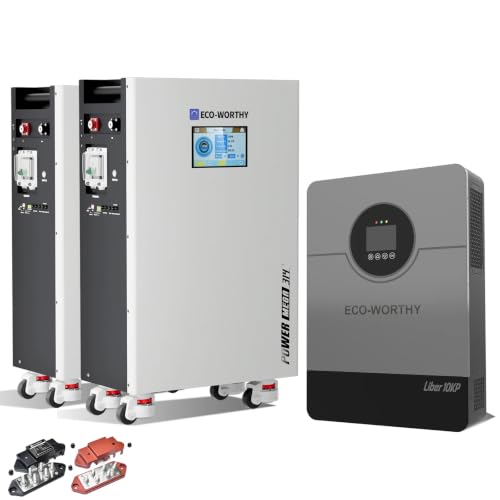
ECO-WORTHY Powermega 48V 314Ah (2 Pack) LiFePO4 Energy Storage System

Leonidas Ebike Battery 48V 20AH Electric Bike Battery

OGRPHY 48V Lithium Golf Cart Battery 105AH
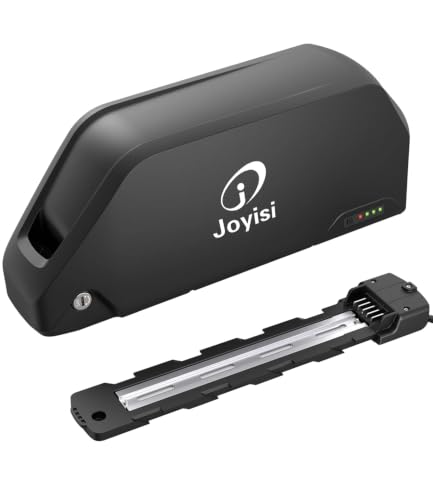
Joyisi Ebike Battery 48V 20AH Electric Bike Battery

VODIPOWER 48V 20Ah Folding E-Bike Lithium Battery

OGRPHY 48V Lithium Golf Cart Battery 105AH Touch/Mobile APP

OGRPHY 48V 100Ah Lithium Golf Cart Battery with Onboard Charger
The Picks, Examined More Closely
This pairing is the deepest bench in the roundup. The Powermega 48V 314Ah LiFePO4 pack teams up with the Liber 10KP 10kW hybrid inverter to give a household roughly 16kWh of usable storage without cobbling together mismatched components. A BMS (Battery Management System) keeps individual cells balanced while an integrated LCD plus WiFi shows charge status from the kitchen counter, not just from inside the garage.
The communication ports deserve attention. RS485, CAN, and RS232 support broad inverter compatibility, so adding solar charge controllers or generator inputs later is a wiring job rather than a hardware swap. For owners planning a serious off-grid array, that flexibility tends to matter more than headline wattage.
Everyday Wins
- Hybrid inverter handles both solar charging and AC output in one unit, cutting down on parts and cabling clutter.
- Active cell balancing extends pack life, which matters when the battery represents a meaningful chunk of the system budget.
- Built-in WiFi and Bluetooth turn the LCD screen into a remote monitor you can check from your phone.
- LiFePO4 chemistry tolerates deeper discharge cycles than lead-acid, so rated capacity stays closer to real usable capacity.
- Modular expansion lets households add capacity later if power needs grow.
Things To Consider
- The system is heavy and physically large, so most owners will want to plan a permanent installation spot rather than a movable setup.
- Working knowledge of inverters, wiring gauge, and breaker sizing is helpful for installation; professional help is common.
Key Specs
Made For
Off-grid households and cabin owners who want one integrated system rather than mixing batteries with a separate inverter brand.
Consider Something Else When
Your power needs are smaller and portable, in which case the OGRPHY 48V 100Ah Lithium Golf Cart Battery with onboard charger is a more compact fit.
Drop the inverter and you get the standalone ECO-WORTHY Powermega 48V 314Ah LiFePO4 Battery. This is the pack to consider when you already own an inverter, charge controller, or generator setup that you trust, and want to swap in higher-capacity storage without rebuilding the rest of the system. The upgraded V2 design adds active cell balancing and integrated aerosol fire protection, two features that quietly do a lot for long-term safety.
Compatibility is the underrated strength. The pack maintains parallel expansion with older V1 units, so a household that already invested in the prior generation can grow capacity without throwing out working hardware. For solar cabin owners weighing a single-pack or dual-pack bank, that continuity is often the deciding factor.
Where It Excels
- 16.1kWh capacity supports multi-day off-grid use for moderate loads.
- Active cell balancing keeps voltage drift between cells low, which preserves capacity over years of cycling.
- Aerosol fire suppression inside the enclosure addresses a concern that most pack-level specs gloss over.
- Backward compatibility with V1 units makes parallel expansion simple for existing owners.
Worth Noting
- Hazardous-materials shipping rules apply, so delivery can take longer than a typical household order.
- Without an inverter included, total system cost climbs once compatible charging hardware is added.
Who It Suits Best
Solar cabin owners and backup-power households who already own inverter-grade gear and want a high-capacity LiFePO4 drop-in.
Look Elsewhere When
You want an all-in-one package with matched inverter, in which case the ECO-WORTHY Powermega 48V 314Ah LiFePO4 Energy Storage System with Liber 10KP bundles both halves.
Two 314Ah packs paired with the same Liber 10KP hybrid inverter push this ECO-WORTHY bundle past the 30kWh mark. For households that want to ride through multi-day outages or run air conditioning and kitchen circuits off stored solar, the doubled capacity translates directly into fewer compromises about which appliances get used and when.
The included conduit box helps with the side of the install that usually gets ignored: cable management. Owners commonly report that battery banks of this size generate a tangle of paralleling wires, and a dedicated enclosure tends to make the difference between a clean install and an inspection headache.
Practical Advantages
- 30kWh+ of usable energy covers whole-home loads for sustained outages.
- Dual-pack configuration spreads wear across more cells, often extending pack service life.
- Conduit box simplifies parallel wiring and helps meet code in many jurisdictions.
- Same hybrid inverter features WiFi, Bluetooth, and active cell balancing at the system level.
Room For Improvement
- Two packs plus inverter push weight and footprint into “permanent room” territory.
- Higher up-front cost means it only pencils out for households with genuinely heavy power draw.
Feature Snapshot
Right Fit For
Whole-home power users in storm-prone regions or remote properties where multi-day backup matters more than compactness.
A Better Fit Elsewhere
Households with modest loads should default to the single-pack ECO-WORTHY Powermega 48V 314Ah LiFePO4 Energy Storage System with Liber 10KP instead.
Move down the lineup to something a lot more portable. The Leonidas Ebike Battery 48V 20AH is built around LG cells and sized for the 100W to 1500W motor range, which covers the bulk of mid-drive kits in use today. Bafang, Voilamart, and AW setups all fall inside its compatibility window, so this is a sensible replacement choice for most conversion builds.
The 40A BMS handles realistic throttle bursts without throttling the motor back. That tends to matter on hills, where lower-rated boards can leave a rider feeling like the bike suddenly got weaker halfway up the climb.
A Favorable Mix
- LG cell chemistry tends to deliver stable cycle life under daily commuting.
- XT60 discharge connector is widely available, simplifying spare-part planning.
- 40A BMS handles peak loads common with 750W and 1000W motors.
- Voltage and capacity fit standard down-tube battery trays on most conversion bikes.
Points To Note
- Owners should verify battery tray dimensions against the existing mount before ordering, since ebike frames vary.
- A dedicated ebike charger is not always bundled, so the total cost may include a separate accessory.
Best Suited To
Bafang, Voilamart, and AW conversion builders who need a 40A-capable drop-in for a 750W or 1000W mid-drive.
Skip It When
You ride a folding commuter and want a smaller enclosure, in which case the VODIPOWER 48V 20Ah Folding E-Bike Lithium Battery is the better fit.
The OGRPHY 48V 105AH LiFePO4 pack targets cart owners who push their vehicles hard. A 200A BMS paired with a claimed 1000A peak for several seconds gives the motor controller headroom for steep grades and tall grass without sagging voltage. The touch LCD monitor is a small touch, but it surfaces the kind of state-of-charge and fault data that older lead-acid setups never displayed.
Grade A cells with UL certification speak to long-term cycle life, which matters because golf carts typically see more partial cycles than deep discharges. The included 18A charger means the pack arrives ready to top off overnight in a standard garage outlet.
Strong Points
- 200A continuous BMS with 1000A peak handles hill climbs and rough terrain.
- Touch LCD gives at-a-glance diagnostics without needing a phone.
- LiFePO4 cycle life translates to roughly a decade of typical seasonal cart use.
- Onboard charger support simplifies overnight top-ups at standard outlets.
Softer Spots
- Physical dimensions may not match every cart tray; measurement before ordering avoids return hassle.
- Peak current claims assume ambient conditions, so sustained hill-climb performance can vary with temperature.
Quick Facts
Perfect Match For
Hill-heavy cart owners and course-adjacent properties where peak current under load matters more than capacity headroom.
Another Choice May Suit
Tech-minded owners who prefer phone monitoring should consider the OGRPHY 48V Lithium Golf Cart Battery with touch monitor and mobile APP.
Wet-weather commuters are usually the ones who care about battery sealing, and the Joyisi Ebike Battery 48V 20AH pays attention to that detail. The PVC outer shell is rated for insulation, anti-corrosion, and wear resistance, with waterproof glue at both ends of the enclosure to keep spray out of the cell cavity. Tesla 4800-format cells back the pack, so capacity holds up under daily discharge cycles.
The 40A continuous discharge matches the Leonidas pack from earlier, but the included 58.8V 3A charger is what tips the scale for some shoppers. No separate charger order required, which is helpful for first-time conversion builders who would otherwise have to learn the difference between 2A, 3A, and 5A charger profiles.
What Helps Most
- Waterproof PVC shell plus sealed ends handle rainy commutes and puddle splash.
- Tesla 4800-format cells tend to keep capacity stable through hundreds of cycles.
- Included 58.8V 3A charger removes a separate purchase for first-time builders.
- Compatible with the same Bafang and similar mid-drive kits as the Leonidas pack.
Honest Caveats
- Long-term durability under truly torrential conditions depends on connector care; spraying the discharge port directly is not advised.
Who Will Love This
Wet-weather commuters and casual trail riders who want a sealed shell and bundled charger without sorting accessories separately.
Reach For A Different Pick When
You want LG cells specifically for cell-level brand familiarity, in which case the Leonidas Ebike Battery 48V 20AH is the closer match.
Most drop-in ebike batteries assume a standard down-tube shape, which doesn’t work for a folder. The VODIPOWER 48V 20Ah pack sizes down to roughly 14.4 by 5.1 by 3.4 inches and lands around 10.8 pounds, which matters more than it sounds when you’re carrying the bike up a stairwell or onto transit.
The 30A BMS is a step below the Leonidas and Joyisi packs on paper, so this is not the right match for a 1500W motor. For folding-bike builds running 250W to 750W hub or mid-drive kits, it stays inside its safe operating range with margin to spare.
Useful Touches
- Compact footprint fits folding-bike frames where standard packs won’t.
- Bundle includes battery holder, screws, keys, and 54.6V 3A charger.
- Lightweight design reduces the penalty on portable commuting setups.
- 30A BMS provides standard protection against overcharge, over-discharge, and short circuits.
Minor Gripes
- The 30A continuous rating caps motor compatibility well below the 1500W ceiling claimed by the Leonidas and Joyisi packs.
Feature Card
Built With In Mind
Folding-bike commuters and RV travelers who need a compact pack that fits non-standard frames and lighter motor setups.
Swap It Out When
You run a 1000W to 1500W mid-drive on a standard frame, where the Leonidas Ebike Battery 48V 20AH gives more headroom.
Take the same 105Ah LiFePO4 cell capacity as the earlier OGRPHY pick and add a mobile app alongside the touch monitor. The OGRPHY 48V Lithium Golf Cart Battery with touch monitor and mobile APP gives owners remote visibility into state of charge and faults, which is genuinely useful when the cart is parked in a shed and the only practical check is from inside the house.
The 200A BMS and 1000A peak current claims carry over from the sibling pack, so performance on hills stays consistent. Grade A prismatic cells replace the cylindrical format used in many budget packs, and prismatic designs tend to hold up better to the vibration profile of off-road cart paths.
Advantages To Know
- Mobile app support lets owners check battery status without walking to the cart.
- Prismatic LiFePO4 cells handle vibration and thermal cycling well.
- 4000+ cycle rating supports years of typical seasonal use before noticeable capacity loss.
- Compatibility spans most major golf cart controller brands on the market.
Factors To Consider
- App reliability depends on Bluetooth pairing staying active; some owners report re-pairing after long idle periods.
Whose Shelf It Belongs On
Tech-minded cart owners who want phone-based monitoring in addition to a physical on-cart display.
Where A Sibling Pick Shines
Shoppers who don’t use a smartphone for monitoring should default to the OGRPHY 48V Lithium Golf Cart Battery 105AH, which keeps the same hardware minus the app.
The OGRPHY 48V 100Ah Lithium Golf Cart Battery with onboard charger is built around a small but practical idea: the charger lives inside the pack. That means the only accessory in your garage is a standard extension cord, and there’s no separate brick to mount, lose, or replace. For garage-kept carts that plug in after every outing, the simplicity is hard to overstate.
The 200A BMS and 1000A peak rating match the other OGRPHY picks, and the 5.12kWh capacity is slightly smaller than the 105Ah siblings. You trade a small amount of runtime for a tidier install, which is a fair exchange for owners who treat the cart as a daily errand vehicle rather than a long-distance runner.
Good Reasons To Consider
- Built-in charger eliminates a separate component and a mounting step.
- Standard extension-cord charging simplifies overnight top-ups.
- 5.12kWh capacity suits typical neighborhood and short-course use.
- LiFePO4 chemistry supports roughly 5000 deep cycles over its service life.
Practical Considerations
- Capacity is lower than the 105Ah OGRPHY siblings, so extended outings will need earlier recharges.
- Onboard charger repairs, if ever needed, tend to be more involved than swapping an external unit.
Feature Rundown
Who Should Grab It
Garage-kept cart owners who want the cleanest possible install and plug in after every outing rather than running long errands.
Not Your Match When
You regularly drive longer distances and want maximum capacity, where the OGRPHY 48V Lithium Golf Cart Battery 105AH Touch/Mobile APP delivers more runtime per charge.
What To Weigh Before Buying A 48V 20Ah Battery
Capacity vs Real-World Usable Energy
A 48V 20Ah label reads the same across a folding-bike pack and a home storage bank, but the energy math is wildly different. E-bike cells live or die by peak discharge current, since the motor draws hard under throttle, while home storage packs prioritize cycle life and total kWh. Look at amp-hour and watt-hour figures together, not just voltage. For LiFePO4 home banks, usable capacity is often close to rated capacity, while lead-acid systems lose a meaningful chunk to depth-of-discharge limits.
BMS Headroom And Peak Current
The BMS (Battery Management System) protects cells from overcharge, over-discharge, and short-circuit conditions, but its continuous and peak current ratings decide whether a motor or inverter ever gets the power it asks for. A 30A BMS will throttle a 1500W motor; a 200A BMS handles golf-cart inverters without flinching. Match the rating to your heaviest load plus a safety margin, not your average draw.
Form Factor, Chemistry, And Build
Lithium-ion packs cover multiple chemistries: LiFePO4 favors long cycle life and thermal stability, while NMC-style cells often pack more energy density into smaller ebike shells. Outer-shell material matters too. PVC-coated enclosures handle wet commutes, while steel or aluminum battery trays suit permanent installs. Owners commonly report that tray fit and connector type derail more builds than cell quality does, so measure twice before ordering.
Who Each Pack Fits
E-bike shoppers should match the BMS ceiling to their motor wattage and verify tray dimensions. Golf-cart owners should weigh onboard charging convenience against maximum runtime per charge. Off-grid households need to balance inverter inclusion, communication ports, and whether parallel expansion matters over the system’s lifetime. Choosing the right profile up front avoids a costly second purchase within a year.
Smart Buying Advice Across The Lineup
Where Shoppers Go Wrong
Capacity mismatch is the most common slip. Many shoppers anchor on a 48V 20Ah label and ignore whether the cell format, BMS rating, and enclosure actually fit their motor or inverter. Another trap is ignoring connector type: a pack with the right voltage but the wrong discharge plug forces an adapter or a wiring rework that adds cost and reliability risk. Measure your existing tray or inverter input before clicking through, and double-check that the BMS continuous rating sits above your peak motor draw.
Where The Extra Money Goes
Higher-tier packs spend the upcharge on cell grade, BMS sophistication, and integrated safety hardware like aerosol fire suppression. For golf-cart owners, the upgrade typically buys a touch monitor, mobile app, or onboard charger that simplifies daily use. For home storage, the premium tends to buy active cell balancing and matched inverter integration, both of which extend service life and reduce maintenance headaches. The honest read is that the upgrade pays off when the pack sees heavy daily use; for occasional weekend riding or seasonal backup, a mid-tier option usually does the job.