A dead golf cart battery never arrives at a convenient time. Most of the time it shows up right before a round, a neighborhood cruise, or a long day on the course. Picking the right 48v battery charger comes down to matching the plug to your cart, matching the chemistry to your battery bank, and knowing how much current you actually need to keep things moving.
This list covers ten solid options across lead-acid chargers, lithium battery packs with built-in chargers, and model-specific smart chargers for EZGO, Club Car, and Yamaha carts. You’ll find picks for budget-friendly replacements, heavy-duty lithium upgrades, and weatherproof onboard units, all chosen to fit real ownership situations rather than spec-sheet fantasies.
The Main Contenders
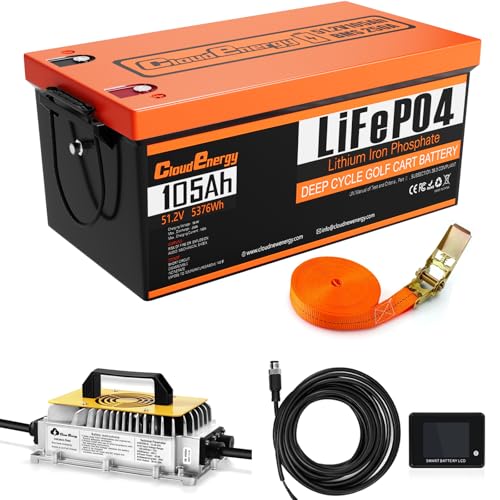
Cloudenergy 48V 105Ah LiFePO4 Lithium Golf Cart Battery

FORM 48V 15A EZGO RXV & TXT Charger

Mehrpow 48V 100AH Lithium Battery Kit
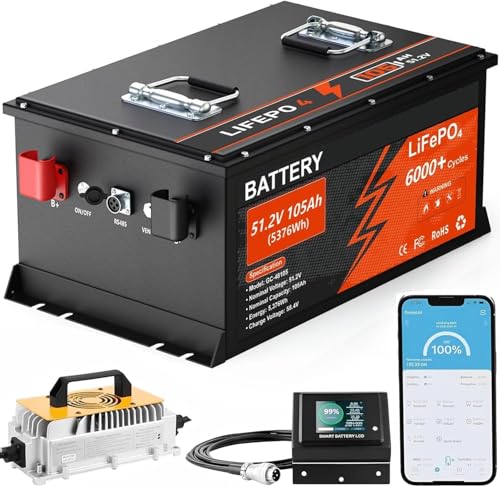
KEZIMO 48V 105AH LiFePO4 Golf Cart Battery

Akizbeir 15A 48V EZGO Charger (Silver)

FORM 48V 15A Onboard Universal Charger
FORM 48V 15A Club Car Charger

Akizbeir 15A 48V Club Car Charger (Red)

Akizbeir 15A 48V Club Car Charger (Silver)

Akizbeir 15A 48V Yamaha G29 Charger
The Details Behind The Selections
Anyone tired of watering lead-acid batteries every few weeks will appreciate what Cloudenergy packs into this LiFePO4 unit. The 51.2V 105Ah rating translates to roughly five times the usable energy of a tired six-pack of 8V flooded batteries, and the built-in 250A BMS (battery management system) keeps cell balance honest during heavy hill climbs.
What sets it apart from the other lithium entries on this list is the mobile app and onboard touch monitor. You can glance at state of charge before you head out instead of guessing based on dashboard lights. The included retention strap helps in carts not originally designed around a single lithium brick.
Positive Takeaways
- Built-in 250A BMS handles steep terrain and high-draw accessories without tripping.
- Touch monitor and Bluetooth app give real-time visibility into voltage, current, and temperature.
- 6,000+ cycle rating means years of daily use before noticeable capacity loss.
- Retains strap and charger included for a turnkey swap from flooded lead-acid.
Points To Keep In Mind
- Single lithium block is heavier than a comparable AGM (absorbent glass mat) pack, so plan for two-person lifting.
- Battery compartment dimensions may need minor fabrication on older cart frames.
Key Specs
Made For
Golfers running neighborhood or off-road carts who want a set-and-forget lithium upgrade with phone-based monitoring.
Consider Something Else When
The KEZIMO 48V 105AH LiFePO4 Golf Cart Battery is a better fit for shoppers wanting a metal-cased pack with higher peak output.
FORM designed this charger as a direct, lightweight replacement for EZGO’s own 48V power supplies. At roughly 80% lighter than the OEM (original equipment manufacturer) model, it’s easy to lift in and out of a cart’s front basket, and the extended 14-foot power cable reaches outlets in tight garages without dragging the charger into puddles.
For EZGO RXV and TXT owners still running lead-acid packs, this is the straightforward swap. The triangular EZGO plug fits without adapters, and 15 amps is the right size to top off a 48V bank overnight without cooking the plates.
Strong Points
- Lightweight shell makes transport and storage painless.
- 14-foot cable reaches distant garage outlets comfortably.
- Native EZGO Triangle Plug avoids adapter hassle.
Small Caveats
- Tuned for lead-acid; not ideal for LiFePO4 banks without a separate lithium profile.
- Not weatherproof, so outdoor storage needs a cover or shed.
Right Fit For
EZGO RXV and TXT owners replacing a failed OEM lead-acid charger on a budget.
Skip It When
The Akizbeir 15A 48V EZGO Charger (Silver) suits shoppers who want IP67-rated weather resistance for outdoor-stored carts.
Mehrpow markets this kit as a true conversion package rather than a bare battery. The 48V 100Ah LiFePO4 pack uses 16 Grade-A EVE cells, and the company rates deep cycle life past 10,000 cycles at 80% depth of discharge, roughly ten times the longevity of an AGM bank in the same role.
Installation leans toward plug-and-play, with the company claiming no complicated rewiring for most carts. This item is classified as non-returnable due to hazardous-materials shipping rules, so double-check your cart’s voltage and tray dimensions before ordering.
A Favorable Mix
- 10,000+ cycle rating at 80% DOD (depth of discharge) outlasts most AGM replacements by years.
- Grade-A EVE cells with UL certification add a layer of cell-level confidence.
- Plug-and-play wiring cuts install time for DIY (do-it-yourself) owners.
Honest Caveats
- Non-returnable hazardous-materials item, so verify fitment twice.
- Heavier than a comparable 48V lead-acid bank; confirm tray capacity.
- Specialized lithium charger may be required for full lifespan benefits.
Feature Snapshot
Best Suited To
DIY converters who want a complete lithium kit with long cycle life and don’t mind the non-returnable shipping rule.
Look Elsewhere When
The Cloudenergy 48V 105Ah LiFePO4 Lithium Golf Cart Battery fits shoppers who want Bluetooth monitoring baked in.
KEZIMO positions this pack as a high-output option, claiming a maximum output of 10.24 kW, which translates to confident launches and steady climbing power on hilly courses. The metal case adds ruggedness compared to plastic-housed lithium packs, and the integrated LCD touch monitor plus mobile app echo the connected feel of the Cloudenergy pick above.
The included 58.4V 18A charger tops the pack faster than a 15-amp lead-acid charger, which matters for carts that get heavy daily use. For off-road or steep-terrain driving, the 200A BMS is the spec to watch.
The Good Stuff
- 10.24 kW maximum output supports aggressive acceleration and hills.
- Metal case resists cracking from vibration on rough trails.
- 200A continuous BMS handles accessory loads without tripping.
- 18A charger included for faster turnaround between rounds.
Less Ideal Details
- Metal case adds weight over plastic-housed lithium packs.
- Higher output can overwhelm older motor controllers set for lead-acid current.
Whose Shelf It Belongs On
Hilly-terrain owners who want extra headroom in peak output and a tougher metal enclosure.
Swap It Out When
The Mehrpow 48V 100AH Lithium Battery Kit is a smarter pick for shoppers prioritizing cycle count over peak amps.
Akizbeir targets the same EZGO RXV and TXT crowd as the FORM charger, but with a sealed IP67 (fully dustproof and submersible-up-to-1m) housing that shrugs off rain, sprinkler overspray, and the occasional hose-down. For carts stored under a carport or in an open shed, that rating takes a real worry off the table.
The 3-pin triangular plug mirrors the OEM EZGO pattern, so no splicing is needed. Built-in multi-protection circuitry guards against overcharge, short circuits, and reverse polarity, common failure points on cheaper aftermarket chargers.
Notable Upsides
- IP67-rated housing handles outdoor storage and weather.
- Multi-protection circuitry cuts overcharge and short-circuit risk.
- Native 3-pin triangular plug fits EZGO carts without adapters.
Things To Weigh
- Lead-acid focused; lithium users need a different charging profile.
- Silver finish shows scuffs more than matte black alternatives.
Perfect Match For
EZGO owners who keep their carts outdoors and need a weatherproof charger that survives the elements.
Where Another Pick Suits Better
The FORM 48V 15A EZGO RXV & TXT Charger is the better buy for indoor-stored carts where weight matters more than weatherproofing.
This FORM model is the “fits almost everything” entry on the list. Ring terminals instead of a brand-specific plug mean it works with lead-acid, lithium, and LiFePO4 banks across cart brands, and the onboard mounting design lets you bolt it permanently into the cart rather than wrestling with a portable brick.
The 80% weight reduction versus typical OEM onboard chargers is the real talking point. Pulling a heavy steel charger out for service used to be a two-person job; this one-handed swap is a small quality-of-life upgrade.
Reasons It Performs
- Multi-chemistry support covers lead-acid, lithium, and LiFePO4 banks.
- Onboard mounting frees up cargo space.
- Ring terminals fit custom cart and utility-vehicle wiring.
Some Limits To Know
- No brand-specific plug means sourcing your own connector or hardwiring.
- Onboard mounting complicates removal for off-season storage.
Quick Facts
Who Should Grab It
Multi-cart owners or shops working on different battery chemistries who want one universal onboard unit.
Not Your Match When
The FORM 48V 15A Club Car Charger is a better fit when you want a brand-specific Club Car plug and simpler install.
FORM’s Club Car entry mirrors the EZGO model’s design language but swaps the connector for the classic Club Car Circle Plug used on Precedent and DS carts. Multi-chemistry support means it charges lead-acid, LiFePO4, and lithium packs without forcing you into a separate charger when you eventually upgrade.
Same lightweight shell and 14-foot cable as the EZGO sibling, which keeps installation painless. For Club Car households running a mix of old flooded packs and newer lithium drops, this charger is the bridge.
Where It Excels
- Native Club Car Circle Plug for Precedent and DS carts.
- Multi-chemistry support bridges lead-acid and lithium transitions.
- Extended 14-foot cable adds reach in long garages.
A Few Limitations
- Not weatherproof; indoor or covered storage recommended.
- Circle plug won’t fit aftermarket non-Club-Car carts without adapters.
Who Will Love This
Club Car Precedent and DS owners who want one charger that handles today’s batteries and tomorrow’s lithium swap.
Another Choice May Suit
The Akizbeir 15A 48V Club Car Charger (Red) is the stronger pick for outdoor-stored carts needing IP67 sealing.
The red Akizbeir matches the FORM Club Car charger on plug type but adds a one-piece 3-pin round plug with a solid copper core. That detail sounds small until you fight a worn two-piece connector on a humid morning; the upgraded design runs cooler and grips tighter.
IP67 sealing returns here, so outdoor Club Car owners no longer need to rush the charger inside before a rainstorm. Smart charging management and a trickle mode top off batteries without overcooking them during long winter storage.
What Stands Out
- Solid copper core plug improves conductivity and heat tolerance.
- IP67 housing protects against weather and washdowns.
- Trickle charging mode suits long-term storage.
Where It Is Less Suited
- Lead-acid charging profile; lithium users should look elsewhere.
- Red finish is harder to hide in a neutral garage setup.
Right Fit For
Club Car owners with lead-acid banks who park outside and want a weatherproof charger with a stronger plug.
A Better Fit Elsewhere
The FORM 48V 15A Onboard Universal Charger suits drivers who want onboard mounting and lithium support in one unit.
The silver Akizbeir is the same internal hardware as the red sibling above, with a finish that blends into most garage shelves. Same IP67 sealing, same one-piece copper-core plug, same multi-protection circuitry, just dressed in a less attention-grabbing color.
If you want the weatherproofing and plug upgrades without the red housing calling attention to itself on the workbench, this version keeps a low profile while doing the same job.
Where It Delivers
- Neutral silver finish suits clean garage setups.
- IP67-rated housing for outdoor or covered storage.
- Multi-protection circuitry safeguards against common charging faults.
Practical Considerations
- Same lead-acid focus as the red variant; no lithium profile.
- Silver finish shows fingerprints and dust more than darker housings.
Who Will Love This
Shoppers who want the Akizbeir feature set in a color that doesn’t dominate the garage wall.
Reach For A Different Pick When
The KEZIMO 48V 105AH LiFePO4 Golf Cart Battery makes more sense for owners ready to skip lead-acid entirely.
Yamaha G29 Drive and Drive 2 owners get their own dedicated Akizbeir entry, this one built around the brand’s distinctive 3-pin leaf plug. Without the right plug, you’re staring at an adapter rabbit hole, so a direct-fit charger is the smarter move.
Same IP67 sealing and multi-protection suite as the EZGO and Club Car Akizbeir models, so Yamaha owners get the same weather resistance and charging safeguards. The leaf connector is the only real differentiator.
Benefits That Matter
- Native 3-pin leaf plug fits Yamaha G29 carts without adapters.
- IP67-rated shell handles outdoor Yamaha cart storage.
- Multi-protection circuitry extends battery life under varied conditions.
Potential Compromises
- Lead-acid charging profile; not ideal for lithium Yamaha conversions.
- Leaf plug is brand-specific, limiting cross-shop versatility.
Feature Card
Perfect Match For
Yamaha G29 Drive and Drive 2 owners who want a weatherproof, plug-and-play lead-acid charger.
Look Elsewhere When
The Akizbeir 15A 48V Club Car Charger (Silver) is the right call for Club Car owners wanting the same weatherproof feature set.
What To Match Before You Pick A 48v Battery Charger
Connector type is the first filter. EZGO uses a triangular plug, Club Car uses a circle plug on Precedent and DS models, and Yamaha G29 Drive carts use a leaf-style plug. Plugging a mismatched connector into a cart risks damaging the receptacle and the charger, so identify the socket on your cart before anything else.
Battery chemistry is the second filter. Lead-acid chargers push higher absorption voltages that lithium batteries can’t tolerate without damage. Lithium-compatible chargers, like the FORM onboard unit or most of the lithium battery packs with built-in chargers on this list, use lower float voltages and staged cutoff curves. Mismatching a lead-acid charger to a LiFePO4 bank is one of the fastest ways to shorten pack life.
Amperage and charge time shape daily convenience. A 15-amp charger typically tops a 48V lead-acid bank in 8 to 10 hours, while an 18-amp lithium charger can cut that to roughly 5 to 7 hours. For weekend-only carts, 15 amps is plenty; for daily drivers or rentals, faster charging matters.
Build quality and sealing matter most for outdoor-stored carts. IP67 ratings, like those on the Akizbeir line, keep moisture and dust out of the housing, which directly affects charger lifespan. For indoor-stored carts, lighter non-sealed units are usually fine.
Onboard versus portable comes down to your routine. Onboard chargers free up cargo space and stay plugged in, while portable chargers can move between carts and store indoors during winter. Shops and multi-cart owners often prefer onboard; single-cart households often prefer portable.
Match The Plug First
Every charger on this list targets a specific cart brand and connector. Verify the plug on your cart’s charge port before ordering, since the wrong plug is a return-worthy problem rather than a creative workaround.
Match The Chemistry Next
Lead-acid and lithium batteries want different voltage profiles. Cross-using a lead-acid charger on a LiFePO4 bank can damage cells; using a lithium profile on flooded batteries undercharges them and shortens plate life.
Size The Amperage To Your Routine
Most 48V packs charge fully overnight on a 15-amp supply. Heavy daily use, large amp-hour banks, or impatience all push toward higher-amperage chargers, but oversized charging current on smaller banks can stress plates and connectors.
Key Considerations Across These Picks
Common Shopping Slip Ups
The most frequent mistake is buying by brand recognition alone. EZGO, Club Car, and Yamaha each use different plugs, so a “golf cart charger” without specifying the brand and connector is rarely a safe match. The second mistake is ignoring chemistry: lead-acid chargers used on lithium packs can ruin cells in a season or two.
Why Top Tier Costs More
Higher-priced options on this list earn their keep through longer cycle life, app-based monitoring, weatherproof housings, and stronger internal components like solid copper plugs and upgraded BMS units. The premium is real, but it pays off most for daily drivers, hilly-terrain users, and outdoor-stored carts where cheaper units would degrade quickly.
Frequently Asked Questions
How do I know which charger fits my golf cart? Check the connector on your cart’s charge receptacle and match it to the charger’s plug type. EZGO uses a triangular plug, Club Car Precedent and DS use a circle plug, and Yamaha G29 Drive models use a leaf plug. Also confirm whether your battery bank is lead-acid or lithium, since the charger’s voltage profile has to match.
Can I use a lithium charger on a lead-acid battery? No, the voltage profiles are different. Lithium chargers use lower float voltages and tighter cutoff limits, which leave lead-acid batteries chronically undercharged and prone to sulfation (crystal buildup on plates that reduces capacity). Match the charger to the battery chemistry, not the cart brand.
How long does it take to charge a 48V golf cart battery? A 15-amp charger typically tops a 48V lead-acid bank in 8 to 10 hours. Higher-amperage lithium setups with 18-amp chargers can finish in 5 to 7 hours, though exact times depend on battery capacity, depth of discharge, and ambient temperature.
Is an onboard charger better than a portable one? Onboard chargers stay mounted in the cart, freeing up cargo space and eliminating the daily plug-and-unplug routine. Portable chargers move easily between carts and store indoors during winter. For multi-cart households or shops, onboard wins; for single-cart owners with covered storage, portable is usually simpler.
What does IP67 mean on a golf cart charger? IP67 means the housing is fully dustproof and can survive temporary submersion in water up to one meter deep. For chargers stored outdoors or used in washdown areas, that rating keeps moisture and dust out of the electronics and meaningfully extends service life.
The Takeaway
The right 48v battery charger comes down to your cart’s connector, your battery’s chemistry, and how often you drive. EZGO, Club Car, and Yamaha owners will find direct-fit options in the FORM and Akizbeir lines, while lithium upgraders should focus on the Cloudenergy, Mehrpow, and KEZIMO packs. Match the basics first, then prioritize weatherproofing or smart features based on where and how often you charge.