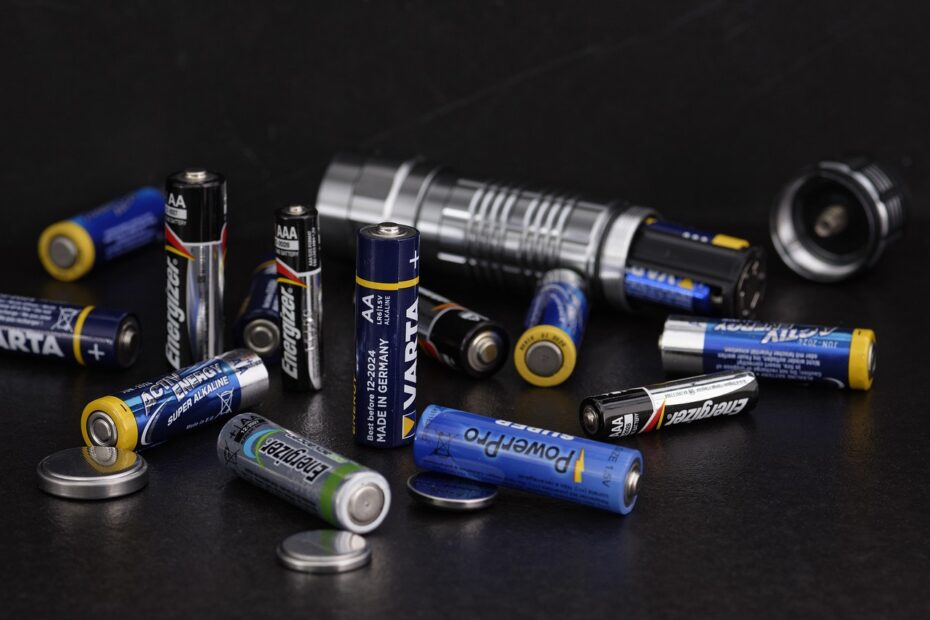
Every amp of current meets opposition inside a cell, converting part of its stored energy into voltage drop and heat. Your battery can show normal voltage at rest yet struggle under a starter motor, inverter, or power-tool load because terminal voltage falls as load current rises.
This explanation covers the electrical model, electrochemical losses, load symptoms, temperature effects, and practical measurement methods for cells and 12 V batteries.
Internal Resistance Limits Current Inside Every Battery
A real cell cannot send every volt from its chemistry directly to your equipment. Electrodes, electrolyte, separators, tabs, welds, and terminals each resist electron or ion movement. Together, those losses form an electrical opposition rather than a single physical resistor hidden inside the case.
Your meter shows open-circuit voltage with no meaningful load attached. Terminal voltage is the voltage your flashlight, inverter, motor, or vehicle receives while current flows. The difference between those readings reveals voltage lost inside the cell and its connections.
Milliohms Matter at High Current
Resistance uses ohms as its unit, yet high-power cells are commonly described in milliohms, or thousandths of an ohm. At 100 A, 0.020 ohms produces a 2 V drop. Your 12 V system feels that loss immediately during a heavy electrical demand.
Small cells have thin electrodes and limited active area, which narrows the current path. A large AGM battery has more plate area and thicker connections, allowing your equipment to draw much higher current before terminal voltage drops sharply.
Ohm’s Law Explains Terminal Voltage Under Load
An ideal voltage source in series with a small resistor gives you a useful electrical model. The voltage source represents stored chemical energy, while the resistance consumes part of that voltage before current reaches your load.
Discharge Pulls Terminal Voltage Down
Under load, a cell’s terminal voltage equals its open-circuit voltage minus the current multiplied by its resistance. Under Ohm’s law, voltage drop equals current times resistance, written as I x R. Your load current controls how visible that internal loss becomes.
| Battery condition | Open-circuit voltage | Load current | Terminal voltage |
|---|---|---|---|
| Low resistance: 0.020 ohms | 12.60 V at rest | 50 A load | 11.60 V available to your device |
| Higher resistance: 0.080 ohms | 12.60 V at rest | 50 A load | 8.60 V available to your device |
Both batteries look normal at rest in this example. Under 50 A, the higher-resistance unit loses 4 V inside itself. Your motor receives 8.6 V, so speed, torque, and electronic stability fall.
Charging Raises Terminal Voltage
Charging reverses the visible voltage behavior. Charger current must overcome resistance and electrochemical polarization, so terminal voltage rises above the cell’s equilibrium voltage. A high charger voltage does not prove that the cell has stored the energy that number appears to show.
Surface charge can briefly make a worn battery appear stronger than it is. A controlled load reveals whether your battery can deliver current to the equipment connected to it, which makes load behavior more useful than a resting-voltage check alone.
That voltage drop is not purely resistive, because chemical polarization and connection quality add losses of their own.
Electrochemical and Contact Losses Build the Total Reading
Metal paths are only part of the resistance you measure. Electrons move through active material, current collectors, tabs, welds, and terminals, while ions move through electrolyte and separator pores. Your battery needs both paths to keep pace with demand.
Several Electrical Losses Change During Use
Ohmic resistance comes from conductive parts and electrolyte paths. Charge-transfer resistance appears where ions and electrons exchange at electrode surfaces. Diffusion limits develop during sustained demand, after lithium ions or lead-acid reactants must travel farther through active material.
- Electrode paths: Thick coatings and aging active material can slow electron movement through the battery layers.
- Electrolyte movement: Cold or depleted electrolyte slows ion movement and reduces the current available to your load.
- Separator pores: Restricted pores lengthen the ion path between positive and negative plates, reducing available current.
- Tabs and welds: Loose or corroded joints add resistance outside the active chemistry and can distort your reading.
- Surface reactions: Polarization rises during a load because electrode reactions need time to respond to current demand.
Your apparent reading changes with current level, pulse length, battery temperature, battery state of charge, and recent charging or discharging. An AC electrochemical impedance instrument sends a small alternating signal through the cell, helping separate fast ohmic behavior from slower charge-transfer and diffusion effects.
That time-dependent behavior explains why two instruments can show different milliohm values on the same cell. Keep temperature, state of charge, timing, leads, and test method consistent before comparing your measurements.
Voltage Sag and Heat Rise During Heavy Loads
A starter motor can expose weakness in less than 1 second. High current creates a larger voltage drop because the internal loss rises directly with current. Your engine can crank slowly, a drill can lose torque, or a digital device can reset even though resting voltage looks normal.
Heat Rises Faster Than Current
Resistive heating follows current squared multiplied by resistance, written as I2R. Double the current while resistance stays unchanged, and heat rises fourfold. Your battery can feel ordinary under a small load yet grow warm during a hard discharge.
Heat is energy lost before it reaches your equipment. In a lithium-ion battery pack, added heat can cause the battery management system to reduce output, leaving your device with less power before stored capacity reaches empty.
High Resistance Leaves Clear Clues
- Normal resting voltage: Your meter appears reassuring until a meaningful load reaches the battery.
- Rapid voltage collapse: Terminal voltage falls sharply during cranking, tool work, or inverter demand.
- Weak high-drain output: Motors slow down and bright lamps dim sooner during a demanding load.
- Unusual warmth: A cell, cable, or terminal heats during a load that similar batteries handle without excess heat.
- Slow recovery: Voltage takes time to rebound after the load is removed.
Stop using a battery that swells, leaks, smells sharp, becomes very hot, or has damaged insulation. Your resistance reading does not outweigh visible physical danger.
Temperature, Charge Level, Age, and Chemistry Change the Result
Cold slows ion movement and electrode reactions, raising resistance and reducing available cranking power. Your vehicle can feel weak on a freezing morning yet recover after the battery warms, without a permanent capacity change.
| Battery type | What drives the reading | Practical effect for you |
|---|---|---|
| Alkaline AA cell | Small size and falling state of charge | Your high-drain devices lose voltage early |
| Lithium-ion cell | Cold, aging, and high discharge demand | You can see power limits before the pack is empty |
| 12 V lead-acid battery | Plate condition, electrolyte state, and temperature | Your cranking voltage can collapse under starter load |
| AGM battery | Plate area and absorbed-electrolyte condition | Low resistance handles your short, heavy current bursts |
Age changes several mechanisms at once. Lead-acid plates can sulfate, lithium-ion cells can form thicker interphase layers, and connections can corrode. Resistance tends to rise with age, though capacity loss and resistance growth do not move at the same pace in every battery.
A large cell can show a lower milliohm value than a small cell and still be in poorer condition for its design. For your baseline, compare the same chemistry, rated capacity, temperature, and battery state of charge.
Resistance Is One Signal of Battery Health
A battery can still store useful energy yet fail at high-power work. Capacity describes how much charge it delivers over time, while resistance describes how much terminal voltage it loses during current demand. Your cordless tool can run a small fan for hours but stall during drilling.
State of charge shows how full the battery is at a given moment. Battery health covers capacity, power ability, self-discharge, charging behavior, and physical condition. Battery internal resistance gives your diagnosis a useful clue, but it cannot serve as a complete health verdict.
Use Several Battery Health Signals
- Runtime trend: Record how long your device operates under the same load and temperature.
- Loaded voltage: Watch for a sudden terminal-voltage drop during repeatable current demand.
- Charge behavior: Watch for excess heating or voltage that rises unusually fast during charging.
- Physical condition: Inspect your terminals, case shape, venting, and cable connections.
- History match: Compare current readings with earlier readings from the same battery and method.
A battery with reduced capacity can still deliver strong current bursts. The reverse can also happen: a cell can retain fair runtime at a light load but lack peak-power ability. Your diagnosis needs both energy behavior and load behavior.
Because peak-power weakness can hide behind acceptable runtime, a brief controlled load test helps expose it.
A Controlled Load Step Estimates Resistance
A brief known load turns a vague voltage check into a usable estimate. Record voltage after the battery rests, connect a suitable load for a short interval, record loaded voltage and current, then remove the load. Your chosen load must suit the cell size and discharge rating.
A Short Load Step Reduces Stress
- Inspect the battery: Set aside swollen, leaking, cracked, or badly corroded units before connecting your equipment.
- Stabilize voltage: Disconnect chargers and loads long enough for surface effects to settle before taking a reading.
- Record resting voltage: Write down open-circuit voltage with a suitable meter.
- Connect the load: Use a rated load briefly while recording actual current and loaded voltage.
- Calculate the estimate: Divide voltage change by current change using consistent units.
Suppose your 12 V battery rests at 12.60 V and a 20 A load pulls it to 12.00 V. The voltage change is 0.60 V. Your battery internal-resistance calculation is 0.60 divided by 20, equal to 0.030 ohms, or 30 milliohms.
Your result includes polarization, cable resistance, clamp resistance, and timing effects. A reading taken at 100 milliseconds differs from a reading after 10 seconds because chemical processes continue changing while the cell remains under load.
Use fused leads, insulated clamps, and eye protection around 12 V lead-acid batteries. Keep sparks away from battery gases, and never short a terminal pair with loose wire or a tool.
Comparable Baselines Give Readings Meaning
The 30-milliohm example matters only beside a comparable battery and method. A DC load step captures voltage response during real current demand, while a battery internal-resistance tester using conductance or AC impedance applies a small signal and estimates a related electrical property.
| Method | What it captures | Best use for your work |
|---|---|---|
| DC load step | Voltage drop during actual current | Finding sag under a known load |
| Conductance instrument | Response to a small electrical signal | Fast trend checks across similar batteries |
| AC impedance instrument | Frequency-dependent ohmic and chemical effects | Detailed cell research and pack diagnostics |
No universal acceptable battery internal resistance value exists. Chemistry, size, rated capacity, battery temperature, state of charge, lead length, and instrument method change the number. Your strongest reference is a known-healthy equivalent checked under matching conditions.
12 V Starter Batteries Need Context
For a 12V car battery internal-resistance check, watch voltage during cranking alongside the instrument reading. SAE J537 describes automotive battery performance concepts, while IEC 60896 covers stationary lead-acid battery areas. Neither standard gives your battery a single milliohm target that works as a pass-or-fail rule.
Weak cranking, rapid voltage collapse, warm cables, and poor load performance deserve attention even with normal resting voltage. Clean and tighten external terminals before blaming the battery, because a corroded clamp can imitate an internal fault.
Bottom Line
Your battery’s resting voltage tells only part of the story. The decisive moment arrives under load, where internal losses reduce terminal voltage and turn energy into heat. Use a repeatable baseline, a safe load step, and the battery’s actual job, from low-drain electronics to starter cranking, to judge whether power delivery still fits your needs.
Voltage, current, temperature, and battery health all affect the number on your meter. A single reading cannot diagnose every problem, yet repeated readings under matched conditions can reveal a meaningful loss of power capability before your equipment stops working reliably.
FAQ
What is an acceptable battery internal resistance?
An acceptable value depends on chemistry, cell size, rated capacity, temperature, state of charge, and instrument method. Your most useful number comes from a similar healthy battery checked with the same leads, load, timing, and battery temperature rather than a universal milliohm chart.
What causes internal resistance in a battery?
Electrodes, electrolyte, separators, tabs, welds, terminals, and electrochemical reactions all add resistance. Aging can add sulfation in lead-acid batteries or thicker reaction layers in lithium-ion cells, while cold temperatures slow ion movement and raise the value your instrument reports.
What are the symptoms of high internal resistance in a battery?
High resistance causes normal-looking resting voltage followed by rapid voltage sag under load. Your car can crank weakly, lights can dim, electronics can reset, motors can slow down, and the battery or its connections can become warmer during heavy current demand.
How do you calculate a battery’s internal resistance from voltage and load current?
Subtract loaded voltage from stabilized open-circuit voltage, then divide the voltage change by the current change. Your battery dropping from 12.60 V to 12.00 V at 20 A gives 0.60 divided by 20, or 0.030 ohms, equal to 30 milliohms.
How does temperature affect battery internal resistance?
Cold raises resistance because ions move more slowly through electrolyte and electrode reactions proceed less readily. Your battery can deliver less peak current in winter despite sound resting voltage, then show stronger power after warming to a moderate temperature.
Can a battery internal-resistance tester accurately determine battery health?
A sudden rise in a tester reading can flag a change in power capability, especially across a matched group of similar batteries. Your battery health judgment still needs loaded voltage, runtime, charging behavior, physical inspection, and a baseline reading because resistance alone cannot reveal every capacity or connection problem.