Swapping a tired set of lead-acid cells for a modern 48V lithium pack can quietly transform how your golf cart behaves. Acceleration feels sharper, hill climbs stop feeling like a gamble, and you spend less time parked at the charger between rounds. The hardest part is narrowing the field, since specs like amp hours, BMS ratings, and peak current tell only part of the story.
This roundup focuses on packs that fit the most common 48V carts from EZGO, Club Car, and Yamaha, with options for flat-course cruisers and lifted, off-road buggies alike. Each pick below has a clear personality, so you can match the battery to your terrain, range needs, and budget rather than guessing.
The Lineup, Simplified
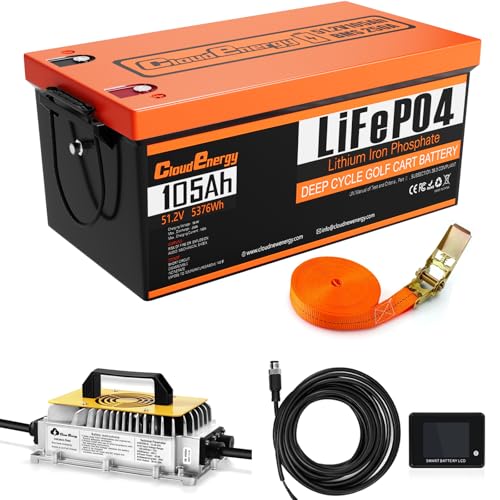
Cloudenergy 48V 105Ah LiFePO4 Lithium Golf Cart Battery with 250A BMS

HumsiENK 48V 100Ah Lithium Golf Cart Battery with 58.4V Charger

LOSSIGY 48V Lithium Battery Golf Cart Conversion Kit with Charger & Monitor

Mehrpow 48V 100Ah Lithium Golf Cart Battery Kit

KEZIMO 48V 105Ah Lithium Battery with 200A BMS and Touch Monitor

HumsiENK 48V 150Ah Extended Range Lithium Golf Cart Battery

DC HOUSE Metal Case 48V 100Ah Lithium Golf Cart Battery Kit with 18A Charger

LOSSIGY 48V 100Ah LiFePO4 Battery 5.12kWh with Bluetooth BMS

HumsiENK 48V 100Ah Metal Casing LiFePO4 Golf Cart Battery
What Each Pick Brings To The Table
The Cloudenergy 48V pack lands at a comfortable middle ground for most cart owners, pairing a 105Ah capacity with a built-in 250A BMS (battery management system, the small circuit board that protects cells from overcharge and over-discharge). That BMS is the kind of detail that quietly saves you from headaches, since it cuts power before the cells dip into damaging territory on a long, hilly round.
Compared to the lead-acid setup it replaces, you shed a meaningful chunk of weight and gain a touch monitor plus an app that lets you peek at charge level from the clubhouse. For a neighborhood cart that sees daily use, that combination of capacity, monitoring, and a 6000+ cycle rating covers nearly every ownership scenario without overspending on features you won’t tap into.
Standout Benefits
- 250A BMS handles sustained current for hill climbs and heavier four-passenger loads.
- 6000+ cycle rating translates into well over a decade of typical weekend use.
- Touch monitor plus mobile app give you at-a-glance state of charge and diagnostics.
- Included charger and retention strap simplify first-time installation.
Worth Noting
- The size and weight still demand a moment of planning before you lift it into the battery tray.
- App connectivity depends on staying within Bluetooth range, which can feel fiddly if you store the cart in a metal shed.
Key Specs
Made For
Daily course commuters and neighborhood drivers who want one well-rounded pack without hunting for add-on accessories.
Swap It Out When
The HumsiENK 48V 150Ah Extended Range model suits you better if your lifted cart demands longer range between charges.
Pulling out six tired 8V lead-acid batteries is the kind of job most people would rather avoid, and the HumsiENK 48V 100Ah pack was clearly designed with that chore in mind. Its footprint is shaped to slide into the same tray, and at roughly 90 pounds it cuts a serious amount of weight from the back of the cart.
The aluminum-shell 58.4V charger is rated IP65 (sealed against dust and low-pressure water jets), which is a meaningful upgrade if you charge outside or in a damp garage. For someone upgrading their first cart from lead-acid, that combo of fit, weight savings, and weather-ready charging is a low-risk entry into lithium.
Positive Takeaways
- Direct replacement for 4x12V or 6x8V lead-acid configurations in EZGO, Club Car, and Yamaha carts.
- IP65 charger stands up to outdoor or garage charging conditions.
- Substantial weight reduction sharpens acceleration and reduces turf compaction.
Trade Offs
- The simpler feature set lacks the app or touch monitor found on Cloudenergy and KEZIMO.
- You’ll want to double-check tray dimensions against older carts, since minor revisions over the years can shift fitment.
Right Fit For
First-time lithium converters who want a straightforward swap without extra monitoring gadgets.
Look Elsewhere When
The DC HOUSE Metal Case 48V 100Ah kit fits your needs more if you ride rougher terrain and want a tougher enclosure.
The LOSSIGY conversion kit gives you a rare bit of flexibility in a category where most listings lock you into one capacity. It ships in 100Ah and 150Ah versions built around auto-grade LiFePO4 (lithium iron phosphate, the safest and longest-lived lithium chemistry for deep-cycle use) cells, with a charger and on-board monitor bundled in.
If you already know your cart eats through 100Ah on a long weekend and you’re debating whether the next step up is worth it, that choice matters. The included monitor keeps you honest about state of charge so you don’t get caught mid-round, and the 4000+ cycle rating covers a decade-plus of normal use.
Everyday Advantages
- Available in both 100Ah and 150Ah capacities to match your real range needs.
- Bundled charger and monitor remove the guesswork of buying matching accessories.
- Auto-grade LiFePO4 cells prioritize safety and long-term stability.
Honest Caveats
- Without the same app or Bluetooth tooling that the Cloudenergy and KEZIMO packs offer, monitoring is more basic.
- Capacity choice is permanent for that listing, so you want to think through future cart or accessory upgrades before ordering.
Who It Suits Best
Owners who already know their amp-hour needs and want a matched kit with no compatibility guesswork.
Consider Something Else When
The Mehrpow 48V 100Ah Lithium Golf Cart Battery Kit is a smarter fit if maximum cycle life is your top priority.
Cycle life is the spec most shoppers glance past and then regret ignoring later, and the Mehrpow kit is one of the more aggressive in this roundup on that front. Built around 16 EVE Grade A LiFePO4 cells (premium cells that have passed stricter factory grading for capacity matching), it’s rated for well over 10,000 deep cycles at 80% depth of discharge, which is roughly ten times what a typical AGM (absorbent glass mat, a common sealed lead-acid chemistry) pack delivers.
The kit is genuinely plug-and-play in most 48V carts, with no rewiring required for the swap. For year-round daily drivers or rental fleets where downtime means lost income, that longevity claim changes the math on total ownership cost.
The Good Stuff
- 10,000+ cycle rating at 80% DOD (depth of discharge, how much of the battery’s capacity you use per cycle) means a realistic lifespan measured in years rather than seasons.
- Plug-and-play wiring keeps installation time close to a lead-acid swap.
- Balanced EVE cells improve pack consistency, which matters as the battery ages.
Worth Bearing In Mind
- Hazardous-materials shipping rules mean this item is non-returnable, so verify your cart’s fitment carefully before ordering.
- The kit is a workhorse rather than a tech showcase, so don’t expect a fancy monitor or Bluetooth app in the box.
Best Suited To
Frequent year-round drivers and rental fleets that rack up cycles faster than the average weekend rider.
Reach For A Different Pick When
The HumsiENK 48V 100Ah Metal Casing LiFePO4 Battery is a stronger match when steep hills are part of your daily route.
KEZIMO leans into the tech side of the category, and the result feels closer to a smart-home device than a golf accessory. The 48V 105Ah pack pairs with a 200A BMS and a touch monitor mounted inside the dash, plus an app for remote state-of-charge checks.
On a busy course day with lights, a stereo, and a USB charger all pulling from the same pack, the BMS keeps current delivery steady where weaker packs would sag. For the tech-comfortable owner who likes data on their phone, this is the one you’ll keep opening the app to check.
What Works In Its Favor
- Touch monitor delivers quick-glance readouts without pulling out your phone.
- 200A BMS handles sustained loads from accessories like lights and infotainment.
- App integration makes long-term state-of-health tracking painless.
Soft Spots
- More onboard electronics mean more setup steps before the first ride.
- Firmware-driven features can feel like overkill if you just want a battery that works.
Feature Snapshot
Perfect Match For
Owners who want modern monitoring features and already use apps to manage their gear.
Not Your Match When
The HumsiENK 48V 100Ah Lithium Golf Cart Battery is a cleaner fit if you prioritize simple, no-frills installation.
If you’ve lifted your cart, added a rear seat kit, or run chunky off-road tires, range suddenly becomes the bottleneck. The HumsiENK 48V 150Ah pack is built specifically for that crowd, with a 7.68kWh capacity that the manufacturer targets at lifted carts, six-passenger builds, and heavier off-road buggies.
Where a stock 100Ah pack might leave you walking back from the back nine, the extra 50Ah here buys the kind of buffer that makes a full day of neighborhood cruising or extended trail use realistic. If range anxiety is the main reason you haven’t converted to lithium yet, this is the pack designed to erase it.
What Pays Off
- 7.68kWh of total energy extends usable range noticeably over 100Ah packs.
- Tuned for the heavier electrical loads of lifted and multi-passenger carts.
- Reduces mid-day charging stops on long weekends or rental rotations.
Things To Weigh
- The larger capacity adds both weight and cost, which can feel excessive for flat-course carts.
- Your existing charger may charge this pack more slowly than a smaller one, so a matched fast charger is worth considering.
Who Should Grab It
Lifted-cart owners, six-passenger builds, and off-road buggies that drain smaller packs before the day ends.
A Better Fit Elsewhere
The Cloudenergy 48V 105Ah Lithium Golf Cart Battery is the more sensible match if your cart is mostly stock and courses stay flat.
Most lithium packs ship in plastic or composite enclosures that handle pavement fine but can crack under real abuse. The DC HOUSE kit wraps its 48V 100Ah cells in a metal case, which feels reassuring the first time you clip a stump or hit a washboard trail.
It pairs that rugged enclosure with Bluetooth, an LCD monitor, and a 670A peak current rating for those moments when your cart demands a sudden burst. The 18A charger in the kit keeps top-up times reasonable after a long ride, and the 4000+ cycle rating puts it in solid long-term company.
Notable Upsides
- Metal enclosure handles branch strikes and trail abuse better than typical plastic cases.
- 670A peak current supports aggressive acceleration and hill starts.
- Bluetooth plus LCD monitor covers both quick-glance and detailed monitoring.
Small Caveats
- The metal case adds a few pounds compared to plastic-enclosed competitors.
- The 18A charger is faster than basic 10A units, but slower than the 25A+ chargers some shops recommend for daily multi-cart use.
Quick Facts
Built With In Mind
Rough-terrain riders and rural-property owners who value a tougher enclosure over the lightest possible pack.
Where A Sibling Pick Shines
The HumsiENK 48V 150Ah Extended Range battery makes more sense if you’d rather add capacity than add ruggedness.
Not every 48V lithium pack is destined to live its whole life in a golf cart, and the LOSSIGY 100Ah kit is designed with that flexibility in mind. With a 5.12kWh capacity and a Bluetooth-enabled 200A BMS that supports 1000A peak current for a few seconds, it’s equally comfortable powering a small off-grid solar setup or a modest RV house battery bank.
That dual-purpose design makes it a sensible choice if you already split time between the course and the campsite, or if you’d like a pack that can move to a different job if your cart needs change. The included charger and monitor keep it as turnkey as the cart-focused kits, even when the destination isn’t a fairway.
Well-Handled Touches
- Doubles as a solar storage or RV house battery without reconfiguration.
- 1000A peak (3-5 seconds) handles motor startup surges that smaller packs struggle with.
- Bluetooth BMS lets you monitor state of charge from your phone in any setup.
Points To Keep In Mind
- Not optimized purely for golf use, so it lacks the cart-specific dashboards of dedicated options.
- For purely cart-focused buyers, the extra flexibility may not justify any premium over cart-tuned kits.
Whose Shelf It Belongs On
RV owners and solar tinkerers who want one battery that can serve a golf cart today and a small off-grid setup later.
Another Choice May Suit
The Cloudenergy 48V 105Ah Lithium Golf Cart Battery is the cleaner pick if your battery will live exclusively in the cart.
Steep driveways and hilly neighborhoods are where mid-range lithium packs start to show their seams, and this HumsiENK 100Ah model is engineered specifically for that pressure. A 200A Smart BMS paired with a 700A peak burst keeps voltage steady when a fully loaded four-seater starts up an incline.
The metal casing adds confidence if you ever brush against a curb or a rock wall, and the 10.24kW continuous output covers everything from stock controllers to moderate aftermarket upgrades. If your round includes more climbing than coasting, this is the pack that won’t flinch halfway up.
What Earns Its Place
- 700A peak current handles steep inclines without voltage drop.
- 10.24kW continuous output supports fully loaded carts and modest upgrades.
- Metal enclosure stands up to incidental contact and trail debris.
Where It May Fall Short
- The aggressive current rating is overkill on flat courses, so lighter carts don’t get the full benefit.
- Specialized focus on output means fewer monitoring extras than the Cloudenergy or KEZIMO packs.
Technical Highlights
Who Will Love This
Drivers in hilly neighborhoods, mountain communities, or anywhere a flat pack would force a mid-route stop.
Skip It When
The HumsiENK 48V 150Ah Extended Range battery is the better match if you’d rather upgrade range than climb performance on a stock cart.
Picking The Right Pack For Your Cart and Your Routes
Match Capacity To Real Use, Not Marketing
A 100Ah lithium pack delivers enough usable energy for most 18-hole rounds on flat courses, but the moment you add lights, a stereo, USB chargers, larger tires, or a rear seat kit, your real-world draw climbs fast. Owners with lifted carts or multi-passenger setups commonly find that 150Ah is the more honest fit, since capacity directly translates into usable miles between charges.
Understand BMS Rating Before You Buy
The BMS, or battery management system, is the safety circuit that prevents overcharge, over-discharge, and excessive current draw. A 200A BMS covers stock carts comfortably, while 250A and higher ratings give you headroom for steeper hills, heavier loads, and any aftermarket controller you might add later. Picking a BMS rated below your motor’s peak draw can lead to nuisance cutoffs mid-climb.
Verify Fitment Early
Tray dimensions, terminal placement, and battery height vary across EZGO, Club Car, and Yamaha models, and even within the same brand across production years. Measure your existing battery tray before ordering, since most lithium packs in this category are non-returnable once shipped. A five-minute tape measure check saves a frustrating return process later.
Check The Charger Match
Lithium batteries need a charger matched to their chemistry and voltage profile, not a leftover lead-acid unit. Most kits include a compatible charger, but if you’re upgrading an existing cart, confirm the charger’s voltage and amperage match the new pack. A faster 18A charger shortens turnaround, while a basic 10A unit simply means longer overnight waits.
What Smart Shoppers Overlook
Common Buying Slip Ups
A surprisingly common mistake is choosing a pack based on peak amp-hours without checking the BMS rating, which then forces the system to cut power on hills. Another is assuming every “drop-in” lithium pack fits every 48V cart, when in reality tray dimensions vary enough to cause real headaches. Finally, skipping the charger question leaves some owners stuck with a lead-acid charger that quietly damages their new lithium cells over months of use.
Where The Extra Money Goes
Higher-tier packs earn their premium through longer cycle ratings, more robust BMS protection, and tougher enclosures that survive real-world use. Metal casings, UL-certified cells, and Bluetooth monitoring all add cost that pays off over years of ownership rather than weeks of spec shopping. The upgrade is worth it for daily drivers, lifted carts, and anyone keeping their cart long enough to see a second battery cycle through. For occasional weekend use on flat ground, the mid-tier packs still deliver most of the practical benefit at a friendlier entry point.
Frequently Asked Questions
How long does a 48V lithium golf cart battery typically last?
Most quality LiFePO4 packs in this category are rated for somewhere between 4000 and 6000+ deep cycles, which translates into roughly 10 years of regular weekend use before noticeable capacity loss. Daily-use scenarios shorten that timeline, while occasional-use setups can stretch it well beyond a decade.
Can I install a 48V lithium pack myself?
Most kits on this list are designed as direct drop-in replacements for lead-acid batteries and don’t require rewiring beyond connecting the main leads. You’ll still want basic mechanical comfort, proper torque on terminal connections, and a safe way to lift a 90+ pound pack into the tray.
Do lithium golf cart batteries need a special charger?
Yes, lithium chemistries require chargers matched to their voltage profile, which differs from lead-acid. Every kit on this list ships with a compatible charger, but you should never use a leftover lead-acid charger on a new lithium pack, since incorrect charging profiles shorten cell life.
Will a 48V lithium battery work in any golf cart?
The packs here are built around the standard 48V system used in most EZGO, Club Car, and Yamaha carts, but tray dimensions and terminal layouts vary by model and year. Measure your existing tray before ordering, especially on older carts, since most lithium batteries ship as non-returnable hazardous materials.
Is the higher peak current rating really useful?
Peak current matters most when your cart faces sudden loads like starting up a hill with a full passenger load. On flat ground with one or two riders, even a modest BMS handles normal driving comfortably, but anyone with hills or heavier accessories will appreciate the headroom.
The Takeaway
The right 48V lithium battery comes down to matching capacity and BMS strength to your actual routes rather than chasing the biggest number on the spec sheet. Flat-course weekend riders can comfortably start with a quality 100Ah pack, while hilly neighborhoods and lifted builds earn their keep with the higher-capacity and higher-current options above. Pick the pack that fits your cart and your terrain, and the rest of the ownership experience tends to take care of itself.