Pulling a tired cart up the 17th fairway on a fading lead-acid pack is the kind of frustration that pushes people toward a 48 volt lithium battery in the first place. Lithium chemistry delivers flatter voltage, longer cycle life, and far less weight, so your cart climbs without sagging and you stop worrying about corrosion. This roundup focuses on drop-in kits that actually fit common golf cart trays, with notes on capacity, BMS smarts, and what each one trades away. Whether you cruise a flat neighborhood course or push a lifted cart through rough terrain, there’s a strong match ahead.
A Fast Comparison Of The Options

Mosasaur 48V 100Ah LiFePO4 Golf Cart Battery

HumsiENK 48V 100Ah Lithium Golf Cart Battery

LOSSIGY 48V Lithium Golf Cart Conversion Kit

Mehrpow 48V Lithium Battery Golf Cart Kit

HumsiENK 48V 150Ah Extended Range Lithium Battery
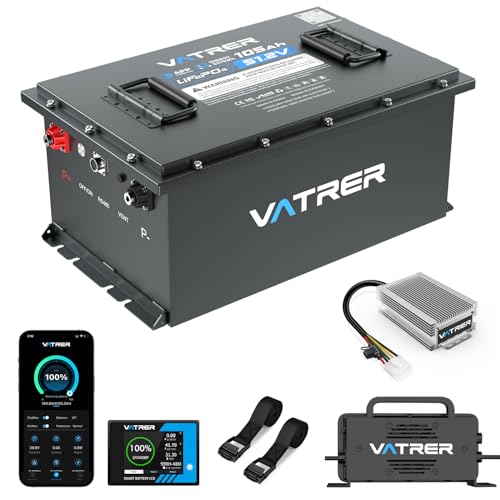
VATRER POWER 48V 105Ah UL2271 Certified Battery

DC HOUSE Metal Case 48V 100Ah Lithium Battery Kit

LOSSIGY 48V 100Ah 5.12kWh LiFePO4 Kit

HumsiENK 48V 100Ah Metal Casing LiFePO4 Battery
More Details On Our Top Picks
If you want a 48V drop-in that talks back, this Mosasaur stands out for blending LiFePO4 cells with a smart 200A BMS (battery management system, the circuitry that prevents overcharge, deep discharge, and overheating) and dual monitoring. Compared with the LOSSIGY kit reviewed later, the trade-off is slightly less peak current, but the visibility is harder to beat.
At roughly 77 lbs and housed in a familiar lead-acid footprint, it’s friendly for a one-person lift into most EZGO, Club Car, and Yamaha trays. The bundled 18A charger and included instructional video mean most owners can finish a swap in an afternoon.
The Case For It
- 10.24kW peak output handles steep climbs without voltage sag.
- Mobile app plus LCD touch screen keep SOC (state of charge, the battery’s remaining percentage) and current visible at a glance.
- Lead-acid case dimensions allow a clean drop-in, no tray mods.
- 4,000+ cycle rating supports years of weekend rounds before noticeable wear.
Things To Consider
- App connectivity depends on staying within Bluetooth range, which can feel limited in larger carts.
- Hazardous-materials shipping may extend delivery timelines in some regions.
Key Specs
Who It Suits Best
Tech-friendly owners who like to track battery health from their phone and prefer a fully bundled kit with charger included.
Where Another Pick Suits Better
Pick the HumsiENK 48V 100Ah metal-casing battery if you prioritize raw climbing amps over software monitoring.
Cart kept outside or in a damp garage? This HumsiENK arrives with an IP65 aluminum-shell fast charger rated to shrug off water jets, a small detail that pays off when you forget to bring the cart in during a storm. The LiFePO4 core swaps cleanly into existing 48V SLA (sealed lead-acid) trays, with no rewiring required.
At about 90 lbs, it’s a bit heavier than the Mosasaur unit above, but the rugged charger and 58.4V output shorten top-up times noticeably between rounds. It targets EZGO, Club Car, and Yamaha owners who want a sturdy, weather-tolerant setup.
The Good Stuff
- IP65-rated aluminum charger resists rain, dust, and accidental spray.
- Direct replacement for 4x12V or 6x8V lead-acid banks.
- 58.4V fast charging cuts downtime between long weekend outings.
Worth Noting
- Heavier than some competitors at roughly 90 lbs.
- Limited visibility into cell-level health without third-party monitoring.
Made For
Owners who store carts outdoors and want a charging setup that won’t flinch at a wet driveway.
Consider Something Else When
Skip toward the Mosasaur 48V 100Ah unit if on-battery monitoring matters more than weather-tough charging gear.
LOSSIGY offers this conversion kit in both 100Ah and 150Ah variants, which is rare at this price band and gives you room to grow without changing brands. Auto-grade A cells deliver higher energy density, and the integrated BMS guards against thermal and electrical faults.
The 4,000-cycle service rating keeps replacement costs distant, and bundled accessories aim to shorten installation time. It’s a sensible middle path for shoppers not sure whether they need extended range.
Everyday Perks
- Two capacity options (100Ah and 150Ah) in one product family.
- Grade-A LiFePO4 cells balance weight savings with steady output.
- Built-in BMS cuts common failure modes before they escalate.
- Long 4,000+ cycle life reduces total cost over years of ownership.
Honest Caveats
- Peak surge current is lower than the DC HOUSE kit reviewed later.
- Monitor features may require a separate Bluetooth dongle depending on configuration.
Right Fit For
Undecided shoppers who want flexibility between 100Ah and 150Ah without jumping to a different brand.
Look Elsewhere When
Choose the VATRER POWER 48V 105Ah UL2271 battery instead if independent safety certification is non-negotiable.
Where most competitors quote 4,000 cycles, Mehrpow leans into longevity with a claimed 10,000+ deep-cycle rating at 80% DoD (depth of discharge, meaning you can drain the battery to 80% empty without harming longevity). Built around 16 UL-listed EVE Grade-A cells with balanced voltage, this kit is the marathon runner of the lineup.
Owners commonly appreciate the plug-and-play wiring, though the battery ships under hazardous-materials regulation, so carriers may restrict routes. For daily-course commuters, the extra cycle headroom is hard to ignore.
What Stands Out
- 10,000+ cycle rating at 80% DoD dwarfs typical 4,000-cycle rivals.
- 16 EVE Grade-A cells with UL certification add a layer of confidence.
- Plug-and-play installation avoids complicated rewiring.
Trade Offs
- Hazardous-materials rules may delay delivery or limit carrier options.
- Higher upfront cost reflects the longer service promise.
Best Suited To
Daily cart commuters who rack up deep cycles and want a battery that outlasts the vehicle itself.
Skip It When
Reach for the HumsiENK 48V 150Ah extended-range battery instead if a single-charge range bump matters more than cycle count.
Lifted carts and six-passenger buggies eat batteries alive. This HumsiENK delivers 7.68kWh of usable energy, targeting heavy loads and off-road setups where standard 5kWh packs come up short on the back nine.
It shares the brand’s smart BMS architecture with its smaller sibling reviewed earlier, but the larger cell bank stretches runtime dramatically. Depending on terrain and load, owners commonly see multi-day range between charges.
The Upside
- 7.68kWh capacity supports long outings on lifted or 6-passenger carts.
- Targets high-draw accessories like winches and light bars.
- Same smart BMS protection as smaller HumsiENK units.
Possible Compromises
- Physically larger and heavier than 100Ah options.
- Charging takes longer without a high-output charger matched to capacity.
Quick Facts
Who Will Love This
Owners of lifted carts, 6-seaters, and off-road buggies who run heavy electrical accessories.
A Better Fit Elsewhere
Pick the Mehrpow 48V 100Ah kit if you prioritize cycle count and lighter weight over raw capacity.
Independent certification is the headline here. VATRER POWER submits this pack to UL2271 testing through Intertek, addressing overcharge, vibration, thermal runaway, and impact resistance. The 105Ah rating sits between common 100Ah and 150Ah tiers, giving a small but meaningful range boost over standard kits.
For buyers worried about safety in attached garages or shared storage areas, the third-party paperwork tends to bring real peace of mind. You give up a little peak current compared with the DC HOUSE metal-case option reviewed later.
What It Does Well
- UL2271 certification verified by Intertek covers thermal and mechanical abuse.
- 105Ah capacity offers a modest range boost over standard 100Ah packs.
- LiFePO4 chemistry remains stable under heavy load cycles.
Less Ideal Details
- Lower peak current than some metal-cased competitors.
- Safety certification isn’t a substitute for proper installation, which still matters.
Perfect Match For
Safety-conscious owners, HOAs, or shared-cart programs that require certified lithium packs.
Reach For A Different Pick When
Choose the DC HOUSE metal-case battery if you want the highest peak current for steep terrain.
DC HOUSE wraps its LiFePO4 cells in a metal shell rather than plastic, and the 670A peak current rating is the highest among the 100Ah options in this lineup. For DIY installers working in a home garage, that rugged housing adds drop and puncture resistance that plastic cases don’t match.
Bluetooth monitoring and an LCD screen help you spot trouble early. The trade-off is weight: a metal case adds heft, and you may need a second pair of hands during installation.
What Pays Off
- 670A peak current handles aggressive acceleration and tough climbs.
- Metal case resists impact better than typical plastic housings.
- Bluetooth app plus LCD monitor offer dual data views.
- 200A BMS supports high accessory loads.
Points To Keep In Mind
- Metal shell adds noticeable weight over plastic-cased units.
- Larger footprint may not fit every tray without small adjustments.
Who Should Grab It
Garage tinkerers and pros who want rugged construction and the strongest peak output in the 100Ah class.
Swap It Out When
Pick the VATRER POWER 48V 105Ah unit instead if independent safety certification outweighs peak amps for you.
Where most golf cart batteries are sized for the course, this LOSSIGY kit doubles as an off-grid storage block for solar cabins and RV systems. The 5.12kWh capacity, 200A Bluetooth BMS, and 1,000A short-burst peak current make it flexible across roles.
Grade-A LiFePO4 cells and 4,000+ cycle durability suit repeated deep discharge, which is exactly what daily solar cycling demands. The honest read is that solar-ready buyers get more value here than pure cart owners would.
Points In Its Favor
- 5.12kWh usable capacity works for both cart and stationary solar use.
- 1,000A peak surge (3-5 seconds) handles motor startup spikes.
- Bluetooth BMS enables remote health monitoring.
- Strong cycle life supports daily deep discharge patterns.
Some Limits To Know
- Solar pairings may require an inverter matched to the BMS profile.
- Size and weight are substantial for a “drop-in” label.
Spec Snapshot
Built With In Mind
Off-grid cabin owners and RV enthusiasts who want one battery to bridge cart duty and home solar storage.
Another Choice May Suit
Pick the Mosasaur 48V 100Ah unit instead if your cart never sees solar duty and you want simpler app monitoring.
Where most 100Ah kits tap out around 200A continuous, this HumsiENK pushes 700A peak for one-second bursts, the kind of headroom that matters when a fully loaded cart hits a 15-percent grade. The metal casing also helps shed heat during those hard pulls.
It’s a focused tool for hilly neighborhoods, mountain communities, or anyone towing a cart up a boat ramp. You trade a little range for confident torque, and that’s usually the right call on steep terrain.
Real-World Strengths
- 700A peak current maintains voltage under steep climbs.
- Metal casing aids heat dissipation during heavy loads.
- Smart BMS protects against the surges it actually delivers.
Details To Watch
- Higher peak output can shorten runtime if used aggressively.
- Metal shell adds handling weight versus plastic alternatives.
Whose Shelf It Belongs On
Owners in hilly regions or those running fully loaded 4-seaters who face real elevation gains.
Where A Sibling Pick Shines
Pick the Mehrpow 48V 100Ah kit if you ride mostly flat ground and value cycle count over peak amps.
What To Weigh Before Choosing A 48 Volt Lithium Battery
Capacity And Real-World Range
A 100Ah pack comfortably covers 18 to 36 holes depending on terrain and load, while 150Ah extends that window for lifted carts and longer trips. Consider your typical day: neighborhood cruising, trail use, or extended backcountry courses all stretch capacity differently. In our view, most 4-seater owners do fine with 100Ah unless they regularly carry extra weight or climb.
BMS Quality And Safety Layers
The BMS is the brain of any lithium pack, handling cell balancing, temperature monitoring, and fault protection. Look for 100A to 200A continuous ratings and short-burst peaks suited to your motor. If you charge indoors, third-party certifications like UL2271 add meaningful oversight.
Physical Fit And Weight
Drop-in is a generous term. Tray dimensions vary between EZGO, Club Car, and Yamaha models, and a metal-cased battery can weigh 20+ pounds more than a plastic-shelled alternative. Measure first, and have a second pair of hands ready if you go heavy-duty.
Charging And Monitoring
Bundled chargers vary widely, from 18A onboard units to weatherproof fast chargers that cut downtime. Bluetooth and LCD monitoring let you catch problems early, though simple carts in mild climates often skip these extras without issue.
Key Considerations Across These Picks
Where Shoppers Go Wrong
Many shoppers chase the biggest amp-hour rating without checking tray dimensions, ending up with a battery that physically won’t fit. Others skip checking connector polarity and cable length, which forces last-minute rewiring. Reading the spec sheet against your cart model saves both time and frustration.
When Paying More Pays Off
Higher-tier batteries in this category earn the premium through certifications, longer cycle ratings, and tougher casings. Owners planning daily use or living in hilly areas tend to recover the cost through fewer replacements and stronger performance. For casual weekend players on flat ground, a standard kit typically delivers enough headroom.
Frequently Asked Questions
How long does a 48 volt lithium battery last in a golf cart?
Most quality LiFePO4 packs deliver 4,000+ deep cycles, translating to roughly 8 to 10 years of typical weekend use before noticeable capacity loss. Daily-course riders may see shorter lifespans depending on depth of discharge habits.
Can I replace lead-acid batteries with lithium without changing my charger?
Often, but check the charger’s voltage profile first. Lithium packs need chargers that reach full absorption voltage and then stop, rather than float-trickle like legacy SLA chargers. Mixing profiles can damage cells over time.
Are 48V lithium golf cart batteries safe indoors?
LiFePO4 chemistry is thermally stable compared to other lithium types, and certified packs like UL2271-listed units add third-party verification. Still, install a BMS-rated pack, avoid physical damage, and keep ventilation accessible.
What size battery do I need for a lifted cart?
Lifted carts and 6-seaters benefit from 150Ah packs that deliver 7kWh or more. The extra capacity offsets the heavier rolling resistance and accessory loads these builds typically draw.
Do lithium batteries work in cold weather?
LiFePO4 accepts charging down to roughly 32°F, with discharge working in colder conditions but at reduced capacity. Owners in northern climates commonly store carts in moderate-temperature spaces during deep winter to preserve runtime.
Final Verdict
The right 48 volt lithium battery comes down to how and where you actually drive. Flat-course weekend riders get excellent value from any well-built 100Ah kit, while lifted-cart owners and hill climbers benefit from higher peak current and larger capacity. Match the pack to your terrain, confirm the tray fit, and your cart will feel transformed from the first acceleration.