Dead batteries ruin mornings. A smart 12-volt charger keeps the family car, the lawn tractor, and the motorcycle ready to fire, even after a long winter in the garage. The right pick depends on how often you drive, what you own, and whether you need pure trickle maintenance or a garage-grade workhorse. This roundup walks through ten solid options that cover everything from compact maintainers to wheeled workshop starters.
A Side-By-Side Look

CTEK 4.3 Test & Charge 12V Charger

BatteryMINDer 2012 12V 2Amp Smart Charger

Schumacher SL1674 1500A Lithium Jump Starter

NOCO GENIUS1 1A 6V/12V Smart Charger
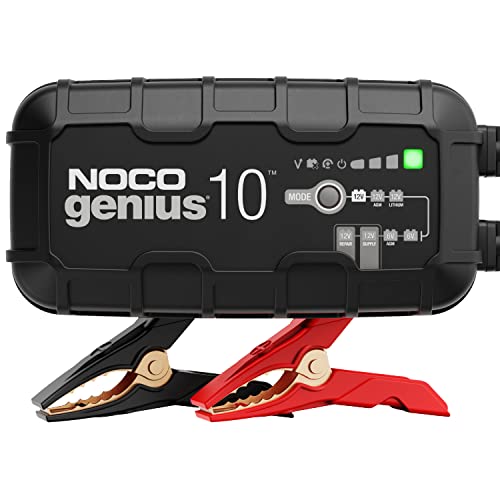
NOCO GENIUS10 10A 6V/12V Smart Charger

OPTIMA D1200+ 12V Performance Charger

NOCO GENIUS5 5A 6V/12V Smart Charger

Schumacher SC1355 1.5A 6V/12V Charger

Schumacher SC1280 15A 6V/12V Charger

Schumacher SC1445 Wheeled 250A Starter
The Strengths Of Each Pick
Classic car owners and weekend garage tinkerers usually want one thing from a charger: confidence that the battery will hold steady through months of sitting. The CTEK 4.3 pairs its 12-volt charging routine with a built-in alternator and battery test function, which is a feature most home maintainers skip over without realising how handy it is. Plug it in, run the test, and you get a quick read on whether the alternator is pushing the right voltage before you chase phantom electrical gremlins.
Spark-free operation and reverse-polarity protection make it forgiving during a quick hookup. The unit ships ready for long-term storage duty, which fits anyone parking a convertible, a motorcycle, or a third car for the season. You may find the alligator clips slightly stiff at first, but they bite down solidly once seated.
Useful Strengths
- Patented recovery and maintenance cycle that handles common lead-acid chemistry without manual resets.
- Integrated alternator test removes guesswork from no-start diagnostics at home.
- Clean voltage delivery protects sensitive vehicle electronics during long hookups.
- Spark-proof clamps add a margin of safety in dim garages.
Points To Keep In Mind
- Priced higher than basic maintainers, which can feel steep for a single-vehicle household.
- Cable reach is moderate, so a longer extension leads to a more convenient install in deep engine bays.
Quick Facts
Made For
Garage owners with multiple vehicles or a classic that sits for long stretches between drives.
Look Elsewhere When
You want a budget-maintainer for a single lawn tractor. The NOCO GENIUS1 in slot four covers that scenario at a lower price point.
Weak batteries that refuse to hold a charge are usually suffering from sulfation, which is a buildup of lead-sulfate crystals that forms when a battery sits discharged for too long. The BatteryMINDer 2012 runs a high-frequency pulse cycle designed to break that buildup down over time. That makes it a smart choice when a battery is too far gone for a standard charger but too valuable to scrap outright.
The 2-amp output is gentle, so it works well on smaller batteries found in motorcycles, lawn mowers, and RVs. It runs continuously as a maintainer without overcharging, which suits anyone storing equipment for the winter. Owners commonly leave it connected for weeks at a time with no issues.
What Makes Sense
- Patented desulfation pulse aims to recover batteries that other chargers write off.
- Automatic full-time operation lets you connect it and walk away for the season.
- Works across cars, ATVs, and marine setups on a single unit.
- Stable trickle output suits long-term storage without overcooking the cells.
Trade-Offs
- 2 amps is slow for reviving a deeply discharged battery, so overnight sessions are common.
- The desulfation benefit shows up gradually, which can feel like the unit isn’t doing anything at first.
Best Suited To
Anyone reviving neglected batteries or maintaining a fleet of seasonal vehicles at low speed.
A Better Fit Elsewhere
For a single daily-driver car that just needs a maintenance top-off, the Schumacher SC1280 covered later delivers more amps for faster top-ups.
Not every charger lives in the garage. The Schumacher SL1674 is technically a jump starter, but its lithium battery and USB outputs mean it doubles as a power pack for phones, tablets, and laptops. Drivers who commute long stretches or travel through rural stretches get the most out of it. A dead phone or a dead battery both stop the trip, and this handles either without a second device.
The 1500-amp rating delivers serious jump-start muscle for cars, light trucks, and SUVs. A 10W wireless charging pad sits on top for cable-free phone top-ups, which is convenient during a roadside stop. The multi-mode LED flashlight rounds it out as a complete emergency tool for the trunk.
Everyday Advantages
- Jump-starts most passenger vehicles from a unit that fits in a glove box.
- 10W wireless charging pad eliminates cable fuss during a quick stop.
- USB-A and USB-C fast-charge ports cover phones, tablets, and laptops.
- Multi-mode LED flashlight is genuinely useful during a roadside repair.
Room For Improvement
- Not a maintenance charger, so it sits idle for weeks between uses if you don’t top off the lithium cell.
- The lithium pack loses charge over months, so a quarterly plug-in keeps it ready.
Whose Shelf It Belongs On
Road-trippers, rideshare drivers, and anyone who wants a trunk-ready power pack that does more than one job.
Swap It Out When
You need a charger that lives on the wall for weekly battery maintenance. The NOCO GENIUS5 in slot seven is the better at-home workhorse.
Small batteries don’t need big chargers. The NOCO GENIUS1 delivers a single amp in a casing barely larger than a deck of cards, which makes it a natural fit for motorcycles, classic scooters, lawn mowers, and ATVs. Owners of seasonal gear appreciate how easily it tucks into a saddlebag or a shelf without dominating the space.
It accepts both 6V and 12V batteries, so a vintage tractor and a modern motorcycle can share one unit. The charging routine handles flooded, AGM, gel, and lithium-iron-phosphate chemistries. You may want to size up for a full-size car battery, but for anything smaller, the GENIUS1 is hard to beat on footprint.
Where It Excels
- Tiny enclosure fits on crowded workbenches or inside tight garage corners.
- Set-and-forget maintenance mode is safe to leave connected indefinitely.
- Multi-chemistry support covers most powersports batteries out of the box.
- Integrated desulfation helps lightly neglected batteries recover capacity.
Softer Spots
- 1 amp is too gentle for reviving a deeply discharged full-size car battery in any reasonable window.
- The leads are short, so an extension or a remote-mount setup helps in tight engine bays.
The Right Fit
Owners of powersports vehicles, lawn equipment, and small engines that sit for weeks between uses.
Not Your Match When
You need a quick top-up on a full-size car battery before tomorrow’s commute. The NOCO GENIUS10 in slot five handles that workload much faster.
Bigger batteries demand more amperage, and the GENIUS10 brings 10 amps to the same compact form factor that made the smaller GENIUS models popular. Daily drivers with a single full-size car battery, deeper-cycle marine cells, or larger AGM banks all recover noticeably faster at this output. For a household that wants one charger to cover everything from a sedan to a deep-cycle boat bank, this is the unit to reach for.
Force Mode pushes voltage into a battery that has dropped below the charger’s normal detection threshold, which is genuinely useful when a battery is so flat it won’t register on a meter. Temperature compensation adjusts output based on ambient conditions, so it won’t overcook a battery on a hot summer day. It also desulfates across long hookups.
The Case For It
- 10 amps cuts charging time on larger batteries compared to smaller maintainers.
- Force Mode handles batteries flat enough that other chargers refuse to engage.
- Temperature compensation keeps the output safe across seasonal extremes.
- Works on 6V and 12V lead-acid or lithium cells without manual switching.
Points To Note
- 10 amps is overkill for a small powersports battery, so the GENIUS1 covers those situations more economically.
- Fan noise is noticeable on long sessions in a quiet garage.
Who It Suits Best
Multi-vehicle households, marine owners, and anyone running a deep-cycle battery that needs a real workout to recharge.
Consider Something Else When
You only need to maintain a single lawn tractor. The Schumacher SC1355 in slot eight delivers simpler, slower maintenance for less money.
OPTIMA batteries have a devoted following in the performance and off-road crowd, and the D1200+ is the brand’s matching charger. It pairs a wall-organizer bracket with quick-connect cable assemblies, so the unit mounts on the garage wall and swaps between clamp-style and ring-terminal leads in seconds. Owners who want a tidy permanent install get the most out of it.
It’s a charger and maintainer in one package, with the smarts to handle the brand’s spiral-cell batteries and standard flooded or AGM cells alike. The interchangeable leads mean you can leave a permanent ring terminal on the battery and just snap the charger on when needed. In most home garages, that setup encourages weekly maintenance without the cable-clutter headache.
Where It Delivers
- Wall-mount bracket keeps cords off the floor and the unit ready for routine hookups.
- Quick-connect leads swap between clamps and ring terminals without tools.
- Charging profile tuned for OPTIMA’s spiral-cell technology and standard chemistries.
Things To Consider
- Premium pricing reflects the brand-matched feature set, which can feel steep for a casual user.
- Mounting it on a wall requires drilling and a nearby outlet for the best experience.
Who Should Grab It
OPTIMA battery owners and performance enthusiasts who want a polished, mounted charging station at home.
Reach For A Different Pick When
You want flexibility without committing to a wall-mounted installation. The NOCO GENIUS10 in slot five travels wherever you need it.
The middle child of the NOCO GENIUS lineup, the 5-amp GENIUS5 splits the difference between the motorcycle-friendly GENIUS1 and the heavy-hitting GENIUS10. Five amps handles a full-size car battery without the fan noise of the 10-amp model, which matters in attached garages where the charger sits within earshot of living space. Daily drivers in mild climates get the most out of this output level.
It handles flooded, AGM, gel, and lithium-iron-phosphate cells, plus 6V batteries for older vehicles. The integrated desulfation mode gives neglected batteries a fighting chance. Force Mode handles deeply discharged units that won’t register, which is a common frustration with cheaper chargers.
What Earns Its Place
- 5 amps balances recovery speed and quiet operation for residential garages.
- Force Mode revives batteries too flat for ordinary chargers to engage.
- Multi-chemistry support covers most vehicles on a typical driveway.
- Long-term maintenance mode prevents overcharging during winter storage.
Minor Gripes
- 5 amps is slower than the GENIUS10 on a truly dead battery, so overnight sessions are normal.
- Cable length is short for trucks and SUVs with batteries tucked behind body panels.
Perfect Match For
Daily-driver households that want one charger that handles occasional recovery without being oversized.
A Better Fit Elsewhere
For a deep-cycle marine bank that needs real recovery current, the NOCO GENIUS10 in slot five is the better match.
Not every shop needs a feature-rich maintainer. The Schumacher SC1355 sticks to the essentials: a 1.5-amp output, multi-chemistry support, and a charging-maintaining-reconditioning routine. It works on cars, motorcycles, ATVs, trucks, SUVs, and boats, so it covers the basics for a household with mixed garage inventory at a friendly entry-level price.
The reconditioning mode helps recover batteries that have been sitting too long without replacing the unit entirely. For a second vehicle that only comes out on weekends, or a spare battery on a parts shelf, the SC1355 handles the slow top-up without overcomplicating things.
A Few Highlights
- Budget entry point for first-time charger owners.
- Multi-chemistry support covers most small-to-medium vehicle batteries.
- Recondition mode revives lightly sulfated batteries from storage.
- Automatic operation reduces the risk of accidentally overcharging.
Some Limits To Know
- 1.5 amps is too slow for a deeply discharged full-size car battery before a morning commute.
- No advanced diagnostics or alternator testing, so troubleshooting stays manual.
Who Will Love This
First-time charger owners on a budget and anyone maintaining a single secondary vehicle on slow top-ups.
Skip It When
You need faster recovery on a daily-driver battery. The Schumacher SC1280 in slot nine offers more amps for a similar outlay.
Boat owners and RV enthusiasts need a charger that handles deep-cycle marine batteries without forcing a trip to the shop every spring. The Schumacher SC1280 delivers 15 amps of charging current in a microprocessor-controlled routine that recognizes AGM, gel, and deep-cycle cells. That’s enough muscle to top off a sizeable marine bank overnight without babysitting the unit.
Beyond charging, it tests and restores batteries that have been drained during storage, which is a common springtime headache for seasonal boaters. Owners commonly run a charge-and-store cycle before launch each year and report the unit handling both steps without manual switching. For anyone with a single car plus a deep-cycle bank on the side, it pulls double duty.
What It Does Well
- 15 amps handles deep-cycle marine banks faster than smaller maintainers.
- Multi-stage charging recovers, charges, and maintains without manual switching.
- Restore mode helps recover batteries that drained during winter storage.
- Works across AGM, gel, and standard flooded chemistries in one routine.
Practical Considerations
- The full output is overkill for a small motorcycle battery, so the GENIUS1 handles that scenario better.
- Fan cooling kicks in during heavy charging sessions, which adds noise in enclosed spaces.
Built With In Mind
Marine owners, RV users, and anyone running a deep-cycle battery alongside a standard car.
Where A Sibling Pick Shines
For a quiet residential garage with only a daily-driver battery, the NOCO GENIUS5 in slot seven is the quieter option.
Home garages that double as small workshops eventually outgrow a wall-hugging maintainer. The Schumacher SC1445 is a manual charger and engine starter on wheels, with a 250-amp engine-start rating that cranks stubborn trucks, SUVs, and equipment engines. It also delivers 10 amps of regular charging for routine top-ups, so it covers both jobs in one footprint.
The wheeled design with a tall handle means you roll it to the vehicle rather than dragging the battery inside. Workshop owners and small-fleet operators get the most out of it, though anyone with a stubborn diesel or a stored classic will appreciate the engine-start function once a year. It’s heavier and louder than a wall unit, which is the honest trade-off for that raw starting power.
Advantages To Know
- 250-amp engine start handles stubborn engines without calling a tow.
- 10-amp charging covers routine top-ups on standard vehicle batteries.
- Wheeled chassis rolls to the vehicle rather than carrying the battery to the charger.
- Works on both 6V and 12V systems across light-duty automotive use.
Where It May Fall Short
- Manual operation requires more user attention than fully automatic maintainers.
- Bulk and weight make it overkill for an apartment-dweller with a single sedan.
The Right Fit
Workshop owners, hobbyist mechanics, and rural drivers who occasionally need serious engine-starting muscle.
Where Another Pick Suits Better
For a typical homeowner maintaining a daily driver, the Schumacher SC1280 in slot nine handles charging without the rolling-cart footprint.
What To Weigh Before Choosing a 12 Volt Battery Charger
A charger that does too little wastes time. One that does too much costs money and space you didn’t need to spend. Match the unit to the battery, the vehicle, and how you actually use the garage.
Battery Type And Size Come First
Lead-acid, AGM, gel, and lithium-iron-phosphate all behave differently under charge. AGM (absorbent glass mat) and gel batteries tolerate specific voltage profiles that flooded cells don’t, and lithium-iron-phosphate needs a charger that recognises its lower resting voltage. Pick a unit that explicitly lists the chemistry of every battery in your garage before worrying about amps.
Amp Output Sets The Pace
Amperage decides how fast the unit pushes current into the battery. A 1-amp trickle maintainer is fine for a stored motorcycle. A 10-amp or 15-amp charger cuts hours off a deeply discharged full-size car or marine bank. The honest read is that most households benefit from a 5-amp to 10-amp unit, since that handles routine work without overdoing small batteries.
Smart Modes That Actually Matter
Float mode holds a full battery at a safe voltage indefinitely, which is essential for winter storage. Desulfation uses high-frequency pulses to break down lead-sulfate crystals that form during long sits. Force mode pushes current into a battery too flat to register, which saves a tow on cold mornings. Pick the smart features that match your real frustration, not the longest feature list.
How Often You Drive And Store
Daily drivers rarely need more than a maintenance top-up every few weeks. Weekend cars and seasonal equipment benefit more from a long-term float routine. Boats and RVs that drain batteries during storage need both charging and recovery modes. The shape of your week determines which charger earns its place on the wall.
Key Considerations Across These Picks
Pitfalls Shoppers Hit
The most common slip-up is buying a charger sized for a motorcycle when the daily driver needs faster recovery. Another is choosing a unit that lacks the chemistry support for AGM or lithium batteries, which leaves out a large share of modern vehicles. A third trap is overpaying for features you won’t use, like wireless charging pads on a wall-mounted home unit. Match the charger to the largest battery in your garage and the most demanding chemistry, not the longest spec sheet.
When Paying More Pays Off
Premium-tier models earn their higher price through features that genuinely save time: faster recovery amperage, integrated diagnostics like alternator testing, wall-mount brackets that tidy the install, and quick-connect leads that swap between clamps and ring terminals. For a household with a deep-cycle marine bank, a daily driver, and seasonal equipment, a higher-tier unit replaces two cheaper chargers. For a single-battery apartment dweller, that money goes further elsewhere.
Frequently Asked Questions
How Long Does A 12 Volt Battery Charger Take To Fully Charge A Dead Battery?
Charge time depends on the battery’s amp-hour rating and the charger’s output. A typical 50-amp-hour car battery at 10 amps reaches a full charge in roughly five to six hours, while a deeply discharged unit can take overnight at a lower amperage. Trickle maintainers at 1 to 2 amps take much longer, often a full day or more.
Can You Leave A 12 Volt Battery Charger Connected Indefinitely?
Modern smart chargers with float or maintenance modes are designed for long-term connection and automatically taper voltage once the battery reaches full charge. Older manual chargers lack this protection and can overcharge a battery if left connected for days. Always check that the unit has an automatic maintenance mode before leaving it attached through the winter.
Is It Safe To Charge A Battery While It Is Still Connected To The Vehicle?
Most modern smart chargers are safe for connected charging because they deliver clean voltage without damaging surges. Disconnecting the battery is a habit from older charger designs, and it remains the safer choice if you’re working on sensitive aftermarket electronics. For routine top-ups on stock vehicles, leaving the battery connected is generally fine.
What’s The Difference Between A Charger And A Maintainer?
A charger pushes current at a higher rate to recover or recharge a depleted battery, often over several hours. A maintainer delivers a small, steady current designed to hold a full battery at peak voltage during long storage. Many modern units combine both functions, switching from charge mode to float mode automatically.
Do Lithium Batteries Need A Special Charger?
Lithium-iron-phosphate (LiFePO4) batteries use a different voltage profile than lead-acid cells and require a charger that explicitly supports the chemistry. Using a standard lead-acid charger on a lithium battery can result in undercharging or, in some cases, damage to the cells. Always match the charger’s chemistry list to your battery type before plugging in.
Closing Remarks
The right 12 volt battery charger depends on what you own and how you use it. Smaller maintainers cover seasonal equipment with set-and-forget ease, while higher-amperage units handle daily drivers and deep-cycle banks in a single overnight session. Match the unit to your largest battery and your most demanding chemistry, and the rest of the choice tends to fall into place.