The right 12 volt setup keeps your vehicle dependable through cold mornings, long commutes, and the slow drain of accessories you forgot were plugged in. This lineup pairs actual replacement batteries with the chargers and maintainers that keep them healthy, so you can match the part to the job instead of guessing. Whether you commute daily, tinker in a workshop, or need a small alkaline cell for a key fob, the picks below cover the most common ownership scenarios.
A Closer Look At The Lineup

Duracell 27 12V Alkaline Battery for Key Fobs

Mighty Max ML18-12 12V 18AH SLA Battery Pack of 2

Impact Battery 12V 12Ah Replacement for Power Wheels
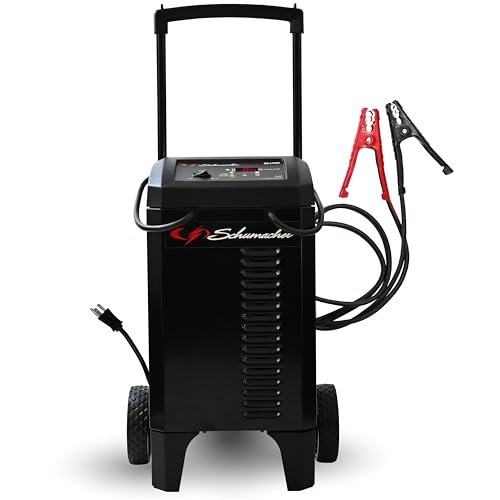
Schumacher SC1400 6A Wheeled Charger & Maintainer

Schumacher SC1364 6A Wheeled Charger & Maintainer

Schumacher DSR131 DSR Pro Series 6V/12V Charger

Mighty Max ML18-12 12V 18AH SLA AGM Battery (NB Terminal)

Schumacher SC1446 10A Wheeled Charger & Maintainer

Schumacher SC1445 6/12V 250A Wheeled Starter/Charger
A Deeper Look At The Lineup
Small enough to lose in a junk drawer and important enough that you notice the moment it dies, the Duracell 27 sits in a different category than every other pick here. It is a tiny alkaline cell designed for low-drain specialty devices, not for cranking an engine. Think key fobs, garage-door openers, and aftermarket car alarms that sip power instead of gulping it.
That scale makes it the right answer when a fob range drops or a tracker goes silent. The single-pack format suits households that only need one replacement at a time, and you can stash a spare without dedicating shelf space. For anything that needs real cranking amps, jump ahead to the larger batteries and chargers later in the lineup.
Noteworthy Benefits
- Sized for low-drain 12V specialty devices like fobs and alarms
- Single-cell pack keeps spares affordable and easy to store
- Drop-in fit for the most common automotive remote battery slots
- Long shelf life means you can buy one ahead of need
Trade Offs
- Not designed for engine starting or accessory loads
- Single-pack only, so replacements for multiple fobs add up
At A Glance
Made For
Drivers replacing a single dying key-fob or alarm battery in a regular household vehicle.
Skip It When
You need to crank an engine or run accessories, where the Mighty Max ML18-12 single battery or the Schumacher SC1400 charger suit the job far better.
Where the Duracell cell above handles fobs, this pair of sealed lead-acid batteries tackles the next step up. The ML18-12 ships as a twin of 12V 18Ah cells, which is the common capacity for mobility scooters, small UPS backups, and certain ride-on applications. The sealed, maintenance-free build means no topping up water or checking acid levels, which most people genuinely appreciate.
Buying two at once suits anyone rotating a spare into service or running gear that uses matched cells. The chemistry leans toward steady, moderate discharge rather than heavy engine cranking, so it pairs best with equipment that draws current slowly over hours. Keep the terminals clean and the batteries on a smart maintainer during long storage for the longest service life.
What It Does Well
- Maintenance-free sealed construction for indoor or enclosed use
- Two-pack format supports rotation or matched-cell setups
- Rechargeable AGM chemistry tolerates float charging well
- Compact footprint fits common scooter and backup cabinets
Things To Consider
- Not designed as a starter battery for car or truck engines
- Heavier than lithium replacements, so check your carry weight
Right Fit For
Homeowners running mobility gear, small UPS systems, or accessory banks that need a matched pair of deep-cycle cells.
Look Elsewhere When
You need a single replacement for a kids ride-on toy, where the Impact Battery 12V 12Ah is the better fit.
Childhood rarely pauses for a dead battery, and the Impact Battery 12V 12Ah is the kind of replacement that gets a toy back on the driveway the same afternoon. It is built to match the gray rechargeable Power Wheels units referenced by part numbers in its listing, so you can confirm fit before ordering. The sealed design and internal fuse add the kind of safety margin parents look for in a ride-on toy.
Compared with the heavier ML18-12 pair reviewed above, this single 12Ah cell is purpose-built for smaller frames and lighter loads. Kids get back to driving sooner, and you avoid the trial-and-error of a mismatched battery. Charge it after each use, store it indoors during the off-season, and the unit typically outlasts a couple of ride-on years in most households.
The Helpful Details
- Direct replacement for the gray Power Wheels rechargeable units
- Sealed, non-spillable construction for worry-free play
- Internal self-resetting fuse adds a layer of electrical safety
- 12Ah capacity matches the original equipment runtime
Honest Caveats
- Specific to the gray rechargeable models, not universal across every ride-on brand
- Charging habits matter, as deep discharges shorten cycle life noticeably
Feature Snapshot
Best Suited To
Parents replacing a tired battery in a Power Wheels gray rechargeable ride-on for kids roughly three to seven years old.
Consider Something Else When
You need a small alkaline cell for a fob, where the Duracell 27 covers a very different ownership case.
Rolling out of the garage on its own wheels, the Schumacher SC1400 is the kind of charger that earns a permanent corner. The 6A output suits standard car and light-truck batteries, and the automatic operation takes the anxiety out of leaving it connected overnight. For drivers who store a second vehicle, a lawn tractor, or a motorcycle through the winter, that hands-off behavior is the real benefit.
The SC1400 sits a step below the larger SC1364 reviewed next, trading raw starting amps for a simpler, more approachable package. If your routine is overnight charging and weekend maintenance rather than reviving a deeply discharged truck, this fits the bill without overwhelming the wall outlet. Wheel it out, clamp on, and let the automatic cycles do the rest.
Practical Advantages
- 6A output suits most everyday automotive batteries
- Automatic charging reduces the risk of overcharging overnight
- Wheeled design makes it easy to position in tight garage corners
- Also handles long-term maintenance for stored vehicles
Worth Noting
- Not built for heavy-duty commercial engine starting
- Heavier than compact maintainers, so it stays in one spot
Who It Suits Best
Daily drivers with a home garage who want a reliable charger they can leave connected without watching it.
A Better Fit Elsewhere
Fleet operators and shop techs wanting stronger starting amps should look at the Schumacher DSR131 instead.
The SC1364 steps up the SC1400’s formula with extra starting and boost capability for trucks, SUVs, and marine batteries. The wheeled chassis still parks easily in a garage bay, but the underlying hardware reaches further when a battery refuses to turn over. For households that run a half-ton truck or a fishing boat alongside the family sedan, that extra headroom matters.
Used as a 4-in-1 tool, this unit charges, maintains, jump-starts, and reconditions, which is why it earns the workshop label. You can nurse a sulfated battery back over the course of a weekend rather than replacing it outright. Store it with the clamps coiled neatly, and the unit stays ready for the next dead morning.
Notable Gains
- Engine-start assist adds jump-style capability beyond basic charging
- Boost mode helps recover deeply discharged batteries faster
- Works with both automotive and marine applications
- Wheeled design keeps the heavier transformer mobile
A Few Limitations
- Larger and heavier than simple maintainers
- More capability than casual users may ever touch
Quick Facts
Perfect Match For
Truck, SUV, or boat owners who want a single garage tool for charging, maintaining, and emergency starting.
Swap It Out When
You only need to top off a small battery or two, where the lighter Schumacher SC1446 manual charger is plenty.
The DSR131 is the heaviest hitter in this roundup, with the kind of output commercial shops expect. Dual 6V and 12V support lets it service older passenger cars alongside modern trucks, and the engine-start amps clear stubborn no-start situations quickly. For small fleets, repair bays, or farm operations, that flexibility earns its keep within a season.
Owners commonly rely on this class of charger for boost-mode recovery on deeply discharged batteries, where smaller maintainers give up early. The wheeled frame, long leads, and chunky clamps are built for repeated daily duty rather than occasional weekend use. Treat it as shop equipment, and it will hold up accordingly.
Where It Excels
- High engine-start output for fast jump-style recovery
- Dual 6V and 12V support broadens the range of vehicles serviced
- Boost mode tackles deeply discharged batteries effectively
- Heavy-duty chassis suits repeated shop or farm use
Trade-Offs To Consider
- Significantly heavier than consumer-grade chargers
- Capability overkill for drivers who only maintain one commuter
Spec Overview
Who Should Grab It
Shop owners, fleet mechanics, and serious hobbyists who service a rotating lineup of vehicles through the week.
Reach For A Different Pick When
You only maintain the family car on weekends, where the Schumacher SC1400 covers the job without the bulk.
Compared with the two-pack reviewed earlier, this single ML18-12 ships as a standalone replacement. The nut-and-bolt terminal layout suits equipment that needs a secure, low-resistance connection, and the AGM chemistry tolerates a wide range of mounting orientations. For mobility scooters, solar storage banks, and select ride-on toys, that flexibility is the main draw.
AGM, which stands for absorbent glass mat, holds the electrolyte in fiberglass separators rather than free-flowing liquid. That design reduces spills and lets the battery sit in cabinets or enclosures without venting concerns. Owners commonly pair it with a smart maintainer, which extends cycle life far beyond what trickle chargers deliver.
What Stands Out
- AGM construction resists spills in enclosed cabinets
- Nut-and-bolt terminal gives a secure, low-resistance connection
- Rechargeable chemistry pairs well with maintainers for long life
- Compact dimensions fit common mobility and backup gear
Small Caveats
- Not a starter battery for combustion engines
- Single unit only, so matched setups need a second purchase
Whose Shelf It Belongs On
Mobility users and small solar or backup-power owners replacing a tired 12V deep-cycle cell.
Where A Sibling Pick Shines
Power Wheels owners get a better match from the Impact Battery 12V 12Ah unit reviewed earlier.
Manual controls set the SC1446 apart from its automatic siblings. Where many modern chargers refuse to wake up on a battery that reads below a threshold, this one lets you push current through on your own terms. For tractors, generators, and older vehicles that sit through long winters, that direct control is genuinely useful.
The 10A charging rate sits above the SC1400 and SC1364 covered earlier, cutting recharge time on larger batteries. The trade-off is that you trade the set-and-forget simplicity for hands-on operation. Anyone comfortable reading a voltmeter and watching amp draw will appreciate the extra capability, while casual owners may prefer the automatic route.
The Case For It
- 10A output shortens charging time on larger batteries
- Manual control can revive batteries automatic units skip
- Wheeled design keeps it mobile around the workshop
- Solid fit for farm, garage, and off-grid use
Some Limits To Know
- Requires more user attention than automatic chargers
- Bulkier than compact maintainers for daily top-ups
Built With In Mind
Farm owners, tractor collectors, and DIYers who service older batteries that automatic chargers struggle to detect.
Not Your Match When
You mostly leave the charger connected overnight, where the automatic Schumacher SC1400 fits the routine better.
Rounding out the roundup, the SC1445 combines a manual 10A charger with a 250A engine starter in one wheeled frame. For a home garage that swings between a vintage 6V classic and a modern 12V daily, that dual-voltage capability removes the need for two separate tools. The starter side pulls serious current, so it needs a healthy outlet and a confident approach to clamp placement.
Compared with the more automatic SC1364 covered earlier, this one asks more of the operator. You set the rate, watch the gauge, and stop when the battery reaches target. Owners of mixed-vehicle fleets tend to favor this kind of unit because it handles edge cases that smarter chargers miss. Treat the manual controls with respect, and the unit pays back in versatility.
The Practical Payoff
- Dual 6V and 12V support suits mixed-era garages
- 250A engine-start mode handles full-size vehicle recovery
- 10A manual charging rate gives hands-on control
- Wheeled steel chassis tolerates repeated workshop use
A Few Caveats
- Manual operation requires more user attention than automatic units
- Larger and heavier than simple maintainers
Who Should Grab It
Collectors and hobbyists who maintain both classic 6V cars and modern 12V vehicles in the same workspace.
Consider Something Else When
You only maintain a single modern daily driver, where the lighter Schumacher SC1400 covers the routine without the bulk.
Matching The Right 12 Volt Setup To Your Garage
Start with the actual job the battery or charger has to do, and the rest of the decision falls into place quickly.
Voltage And Capacity Basics
Voltage (V) describes the electrical pressure the unit delivers, while amp-hours (Ah) describe how much current it can supply over time. A 12V 18Ah cell like the Mighty Max ML18-12 pair runs smaller gear for hours, while a 12V automotive starter battery delivers a short, intense burst to crank an engine. Matching these numbers to the equipment matters more than chasing the biggest rating on the shelf.
Chemistry And Build Type
Sealed lead-acid, often called SLA, ships fully sealed and requires no water top-ups. Absorbent glass mat, abbreviated AGM, is a subtype of SLA where fiberglass mats hold the electrolyte, allowing flexible mounting and stronger vibration resistance. Alkaline cells like the Duracell 27 are a different chemistry altogether, intended for low-drain specialty devices rather than engine starting.
Charger Output And Use Case
Charger amperage controls how fast a battery refills, and a 6A unit suits overnight maintenance while a 10A unit cuts that time substantially. Engine-start ratings, sometimes listed at 125A, 250A, or higher, describe jump-style recovery current for stubborn batteries. Automatic units sense voltage and taper output, while manual units like the SC1446 leave that judgment to the operator.
Physical Size And Terminal Layout
Group sizes, terminal types, and footprint determine whether a battery physically fits the application. The Impact Battery 12V 12Ah matches Power Wheels harnesses, while the Mighty Max nut-and-bolt terminals suit mobility and solar cabinets. Measure the existing compartment, note the terminal orientation, and confirm polarity before ordering.
Key Considerations Across These Picks
Where Shoppers Go Wrong
Plenty of owners pick a higher-rated battery than their equipment actually needs, then wonder why it never seems to charge fully. Deep-cycle cells like the ML18-12 reward slow, steady top-ups, while starter batteries prefer short bursts. Using the wrong charger profile can shorten service life noticeably, so match the chemistry and capacity before plugging in. Equally common is ignoring terminal type, which turns a five-minute swap into a parts-store run.
When Paying More Pays Off
The jump from a basic maintainer to a wheeled Schumacher SC1364 or SC1445 buys higher amperage, engine-start assist, and dual-voltage support. That extra capability pays off quickly in mixed fleets or workshops with older vehicles, where a smart charger may refuse to wake a deeply discharged battery. For a single modern commuter, the upgrade is harder to justify and the SC1400 covers the routine at lower cost.
Frequently Asked Questions
What Is The Difference Between AGM And Standard Lead-Acid Batteries?
AGM batteries use fiberglass separators to hold the electrolyte, which reduces spills and allows flexible mounting compared with flooded lead-acid designs. They also tend to handle vibration better and recharge faster, which suits modern vehicles with high accessory loads.
How Often Should You Run A Battery Maintainer?
For stored vehicles, monthly top-up cycles or continuous maintenance mode keep the battery at full charge without overcharging. Daily drivers usually need only occasional charging if the alternator is functioning properly.
Can A 12V Charger Be Used On A 6V Battery?
No, a 12V charger delivers too much voltage for a 6V cell and will damage it. Dual-voltage units like the Schumacher SC1445 or DSR131 include a 6V setting that drops the output to a safe level.
Are Sealed Lead-Acid Batteries Safe Indoors?
SLA batteries are valve-regulated, which means they vent very little gas under normal conditions. Still, charging in a well-ventilated area is the safer habit, especially for larger capacity banks.
What Does Amp-Hour Rating Mean For Replacement Batteries?
An 18Ah rating means the battery can deliver one amp for eighteen hours, or three amps for six hours, under ideal conditions. Matching the original capacity keeps runtime predictable across accessories and standby applications.
Bottom Line
The lineup covers a wide spread of 12 volt ownership scenarios, from a tiny alkaline cell for a key fob to wheeled shop-grade chargers. Match the chemistry and capacity to the equipment first, then pick the charger that matches your routine. Doing that turns a frustrating swap into a confident purchase, and your garage ends up with gear that pulls its weight.