A dead battery on a freezing morning turns a routine commute into a roadside headache. Runners of diesel trucks, off-grid solar setups, marine motors, and weekend RVs all chase the same thing: dependable cranking power and steady deep-cycle endurance from a Group 31 footprint. The ten options below span AGM (Absorbent Glass Mat, a sealed lead-acid design that holds electrolyte in fiberglass mats) and lithium LiFePO4 (Lithium Iron Phosphate, a longer-lasting chemistry known for thermal stability) chemistries, covering start-and-stop car use, trolling motor banks, van builds, and dual-purpose marine duty.
The Choices Worth Comparing

Power Queen 12V 100Ah LiFePO4 Lithium Battery with Self-Heating

Litime 12V 100Ah RV LiFePO4 Lithium Battery for Trolling Motors (2-Pack)

Litime 12V 100Ah Group 24 LiFePO4 Lithium Battery for RV Solar Van Marine

Redodo 12V 100Ah Ultra-Mini LiFePO4 Bluetooth Deep Cycle Battery

Mighty Max Battery MM-G24 Start and Stop Car BCI Group Size 24

Mighty Max Battery MM-G26 BCI Group 26 12V 45AH AGM
Redodo 12V 100Ah Dual Purpose Group 27 Lithium Starting Marine Battery

Redodo Lithium Marine Battery 12V 100Ah Dual Purpose Group27 (900CCA)
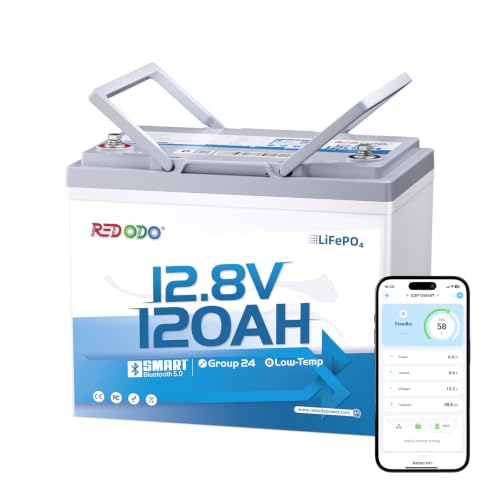
Redodo 12.8V 120Ah Bluetooth LiFePO4 Battery Group 24
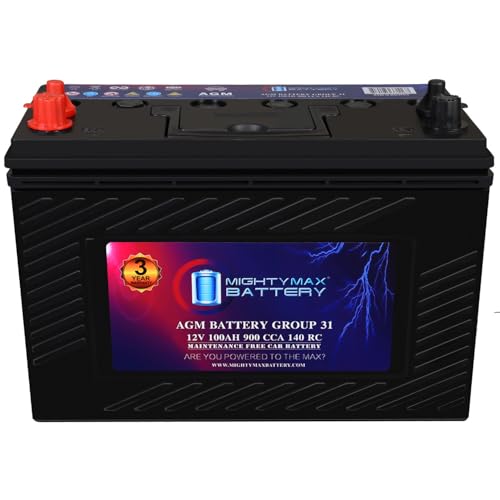
Mighty Max Battery MM-G31 Start and Stop Car BCI Group 31
A Closer Look At Each Pick
Cold mornings punish ordinary lithium packs, slowing ion movement and making charging risky. The Power Queen counters that with two built-in 100W heating pads that warm the cells from 14°F to roughly 41°F in about half an hour, roughly twice the speed of a single-pad design.
The chemistry is standard LiFePO4 in a 12V 100Ah form, with a low-temp cutoff that pauses charging below freezing and resumes automatically once warm. For van dwellers parked in snow states, this removes the usual “charge in the cold or don’t charge at all” dilemma.
Positive Points
- Self-heating function removes winter charging anxiety for off-grid users.
- LiFePO4 chemistry holds steady voltage across deep discharges, useful for solar banks.
- Drop-in replacement weight for a Group 31 bay, much lighter than equivalent lead-acid.
- Smart low-temp cutoff protects cells from damage below 32°F.
Things To Consider
- Self-heating draws power from the pack itself, which shortens usable capacity during warm-up cycles.
- Some owners report that firmware/app features vary by batch and may not match the brochure exactly.
Who It Suits Best
RVers and off-grid cabin owners in regions where winter nights regularly drop well below freezing.
Where Another Pick Suits Better
For pure trolling-motor runtime without cold-weather demands, the Litime 12V 100Ah RV LiFePO4 Lithium Battery (2-Pack) delivers similar chemistry in a ready-to-pair bundle.
Two batteries show up in one box, pre-matched for series or parallel runs. For bass anglers chasing all-day electronics and a 24V trolling motor, that removes the guesswork of pairing two random packs.
Each unit carries an onboard BMS (Battery Management System, the internal circuit board that guards against overcharge, over-discharge, and short circuits), Bluetooth monitoring through the LiTime app, and low-temperature protection that halts charging near 32°F. The shells drop into Group 24, 27, or 31 trays, so most bay layouts accept them without rework.
The Practical Payoff
- Bundle saves the hassle of buying and matching two separate 100Ah units.
- App-based state-of-charge readings mean fewer surprise dead-battery mornings on the lake.
- Universal box fit covers most johnboat and bass-boat layouts.
- Low-temp cutoff guards cells on chilly pre-dawn launches.
Honest Caveats
- Two-pack shipping adds weight and may require hand-carry from the curb.
- Bluetooth range tops out around 10 meters, so checking from the helm of a larger boat may need a phone relocation.
Made For
Weekend anglers running 24V trolling motors who want a matched pair without sourcing cells individually.
Consider Something Else When
Van and travel-trailer owners prioritizing cold-weather charging should consider the Power Queen 12V 100Ah LiFePO4 Lithium Battery with Self-Heating instead.
Van builders obsess over cubic inches, and this Group 24 Litime slips into bays originally cut for smaller batteries. At roughly 21.9 pounds, it cuts about 63% of the weight a 100Ah AGM would carry, which translates to better payload math on Promaster and Sprinter conversions.
A 100A BMS with low-temp protection and an IP65-rated case (sealed against dust and low-pressure water jets) keep it usable in marine bilges and dusty van floors alike. Bluetooth SOC (State of Charge) monitoring from the cab saves the awkward reach behind cabinetry just to read voltage.
Good Reasons To Consider
- 1,280Wh of usable energy in a Group 24 shell doubles what lead-acid delivers at half the depth.
- Bluetooth readout means checking voltage from the driver’s seat instead of the storage bay.
- IP65 rating handles splashing bilge water and dusty trails without a separate enclosure.
- 4,000+ cycle rating promises years of solar cycling before noticeable capacity loss.
Soft Spots
- Group 24 footprint won’t fill larger Group 31 trays without an adapter plate.
- Low-temp charging protection still pauses the pack below freezing, so cold-climate owners need a heated bay or self-heating model.
Whose Shelf It Belongs On
Van-lifers and travel-trailer owners running solar who want app monitoring without bolting on extra gauges.
Skip It When
Deep freeze camping is on the calendar; the Power Queen 12V 100Ah LiFePO4 Lithium Battery with Self-Heating handles cold charging more gracefully.
Redodo trimmed roughly an inch off the standard Group 24 dimensions, landing at about 9.02 x 5.43 x 8.19 inches and just under 20 pounds. For builds where the battery tray was built around a legacy lead-acid outline, that small footprint can be the difference between fitting or rebuilding.
The trade-off shows up in capacity: 1,280Wh still equals a full 100Ah at 12V, but the case leaves less room for thermal mass. Owners commonly report monitoring charge behavior in summer heat more closely than with larger housings.
Reasons It Performs
- Compact footprint fits tight cabinetry and aftermarket battery boxes.
- Bluetooth within 10 meters covers most cab or cabin readouts.
- 1,280Wh usable energy in a 20-pound package beats any AGM in its class.
- Standard LiFePO4 longevity supports thousands of deep cycles for daily solar use.
Points To Keep In Mind
- Smaller case may run warmer in enclosed compartments, so ventilation matters.
- Terminal orientation differs slightly from full-size Group 31 trays, which complicates some OEM cable layouts.
Quick Facts
Best Suited To
Skoolie and camper-van owners fighting for every cubic inch under seats or inside cabinets.
Look Elsewhere When
Maximum Group 31 cranking power matters; the Mighty Max Battery MM-G31 Start and Stop Car BCI Group 31 12V 100AH fills that role in classic lead-acid form.
Modern start-stop systems cycle the engine dozens of times per commute, punishing batteries that aren’t built for constant partial discharge. The MM-G24 answers with sealed AGM construction and a 710 CCA (Cold Cranking Amps, the current a battery can deliver at 0°F for 30 seconds while staying above 7.2V) rating that holds strong in deep winter.
Reserve capacity (RC, the minutes a battery can sustain a 25-amp load before dropping below 10.5V) sits at 120 minutes, which means the headlights, fans, and infotainment stay alive if the alternator ever flakes out. Spill-proof construction also makes installation in awkward engine bays less stressful.
Notable Gains
- 710 CCA keeps cold morning starts consistent down into single-digit temps.
- 120-minute reserve capacity covers accessory loads if the alternator gives up.
- Sealed AGM case mounts in any orientation without leak risk.
- Deep-discharge recovery handles the constant cycling of start-stop systems.
Practical Considerations
- AGM chemistry is heavier than lithium, so expect roughly 50 pounds in the tray.
- No Bluetooth or app monitoring, so voltage checks mean popping the hood.
Perfect Match For
Daily-driven sedans and crossovers with auto start-stop who want a sealed replacement without lithium pricing.
Reach For A Different Pick When
Lightweight deep cycling is the goal; the Litime 12V 100Ah Group 24 LiFePO4 Lithium Battery cuts the weight and adds app monitoring.
Some engine bays were never designed around tall Group 31 footprints. The MM-G26 sits in a smaller BCI Group 26 case (BCI, Battery Council International, the organization that sets the standardized case sizes most retailers and vehicles follow) and still delivers 540 CCA, enough to swing most four- and six-cylinder motors in cold weather.
Reserve capacity lands at 80 minutes, which is plenty for short errands but not a replacement for an alternator. The sealed SLA (Sealed Lead-Acid) AGM construction means it can sit on a shelf in any orientation without venting concerns.
Useful Strengths
- Compact Group 26 case fits mid-size sedans, older trucks, and lawn tractors.
- 540 CCA handles typical commuter engines in temperate to moderately cold climates.
- Sealed case requires no maintenance watering over its service life.
- Lower price point than Group 31 or lithium options for budget builds.
Trade-Offs To Consider
- 45Ah capacity limits how long accessories can run with the engine off.
- 80-minute RC is tight compared with larger Group 31 options.
- AGM weight still adds noticeable mass compared with lithium replacements.
Right Fit For
Mid-size sedans, compact pickups, and older vehicles where space and budget both matter.
A Better Fit Elsewhere
Drivers wanting more reserve capacity and higher cranking should move up to the Mighty Max Battery MM-G31 Start and Stop Car BCI Group 31 12V 100AH.
Fuel-burning outboards want a real hit of cranking amps, then steady power for fish finders and live wells. The Redodo dual-purpose combines 900 CCA and 1,000 MCA (Marine Cranking Amps, measured at 32°F rather than 0°F, the marine-industry standard) for the starter with 100Ah of deep-cycle capacity for the rest of the rig.
Bluetooth 5.0 keeps tabs on SOC and cycles through the Redodo app, so the helmsman can check battery health before the next trolling run. The Group 27 outline fits most bass-boat and center-console trays.
Everyday Wins
- Dual-purpose design replaces a separate starting and house battery in one slot.
- 900 CCA spins over larger outboards without the slow cranking of a deep-cycle-only pack.
- Bluetooth readout on the phone saves climbing into a hatch to check voltage.
- Group 27 form factor is a direct swap for many OEM marine trays.
Where It Is Less Suited
- Dual-purpose chemistry splits priorities, so neither cranking nor deep cycling is quite as extreme as single-purpose units.
- Saltwater owners commonly rinse terminals more often since lithium housings can trap moisture around posts.
Who Should Grab It
Boaters with fuel-powered outboards who want one battery to crank the engine and run the electronics.
Swap It Out When
Pure trolling-motor runtime on a quiet electric boat is the priority; the Litime 12V 100Ah RV LiFePO4 Lithium Battery (2-Pack) is built for that workload.
This sibling to the previous Redodo leans harder on the cranking side, advertising up to 12C instantaneous discharge (12 times the rated capacity, a measure of how much current the pack can dump in a brief surge). That extra punch matters when a big four-stroke outboard demands a confident spin on the first key turn.
The same Group 27 footprint and Bluetooth monitoring carry over, so installation looks identical to the dual-purpose unit above. Owners get a unit tuned more for starting large motors than for extended house-bank discharge.
Positive Takeaways
- 12C peak current gives large outboards the surge they expect at first crank.
- Group 27 case fits common marine trays without fabrication.
- Bluetooth status check from the phone keeps the helmsman informed.
- Lightweight lithium trims overall boat weight versus AGM.
Points To Note
- Tuned for cranking rather than full deep-cycle duty, so it may not suit house-bank replacement.
- App interface and firmware details vary by production batch.
Technical Sheet
Built With In Mind
Saltwater anglers running fuel-hungry outboards who need reliable first-crank performance.
Where A Sibling Pick Shines
For more balanced cranking and house loads in one unit, the Redodo 12V 100Ah Dual Purpose Group 27 Lithium Starting Marine Battery spreads duties more evenly.
Redodo squeezed 120Ah into a Group 24 case, lifting energy to 1,536Wh, about 256Wh more than a typical same-size 100Ah pack. For solar builds that count every watt-hour before the sun drops, that extra reserve means longer nights off the inverter.
The 10.24 x 6.61 x 8.27-inch case drops into most Group 24 trays, and Bluetooth 5.0 monitoring exposes SOC, voltage, and temperature through the Redodo app. Owners commonly pair it with a 100W to 200W portable solar panel for weekend off-grid camping.
Where It Helps
- 1,536Wh in a Group 24 footprint extends runtime without a larger case.
- Bluetooth 5.0 reports voltage, current, and temperature in real time.
- LiFePO4 cycle life supports years of daily solar cycling.
- Standard Group 24 dimensions keep tray swaps simple.
Factors To Consider
- Higher energy density in the same case can lead to slightly warmer operation under heavy loads.
- Charging gear may need adjustment to accept the higher sustained current LiFePO4 can absorb.
The Right Fit
Solar-storage users and longer weekend campers who want maximum watt-hours without upsizing the tray.
Not Your Match When
Cold-climate charging is on the menu; the Power Queen 12V 100Ah LiFePO4 Lithium Battery with Self-Heating warms cells before charging kicks in.
The MM-G31 sits in the full BCI Group 31 case, the same footprint used by heavy-duty trucks and large work vans. With 900 CCA on tap, it has the headroom to swing big-displacement gas and diesel engines even after a cold snap.
Reserve capacity tops the line at 140 minutes, so accessories, lighting, and inverters can run for well over two hours if the alternator ever drops out. The sealed AGM construction finishes the package by resisting spills during rough work-site installs.
The Case For It
- 900 CCA delivers strong cold cranking for diesel and large-displacement gas engines.
- 140-minute reserve capacity ranks at the top of this list.
- Sealed AGM case allows flexible mounting under hood or in body compartments.
- Deep discharge recovery supports stop-start cycling and accessory loads.
Small Caveats
- AGM weight at this capacity typically lands around 60 pounds, so plan the lift.
- No Bluetooth readout means voltage checks require a multimeter or dash gauge.
Perfect Match For
Work-truck owners, diesel pickups, and fleet vans running heavy electrical loads and tough start cycles.
Reach For A Different Pick When
Weight savings and Bluetooth monitoring matter more than peak cranking; the Litime 12V 100Ah Group 24 LiFePO4 Lithium Battery trades cranking for app-driven convenience.
What To Weigh Before Choosing A Group 31 Battery
Chemistry sits at the top of the decision. Sealed AGM batteries cost less upfront and tolerate cold cranking without extra accessories, which makes them a natural fit for daily drivers and work trucks. Lithium LiFePO4 packs cost more but weigh roughly half as much and deliver thousands of deep cycles, which pays off in solar banks, trolling motors, and van builds. Cold-weather charging changes the math again, since LiFePO4 cells below freezing need either self-heating pads, a low-temp cutoff that pauses charging, or a heated bay to avoid damage.
Footprint matters more than capacity on tight builds. BCI Group 24, 26, 27, and 31 cases each fit specific trays, and swapping across sizes usually requires adapter plates or new hold-downs. Measure the tray, the terminal orientation, and the cable reach before committing. A battery that delivers 100Ah is a poor upgrade if it doesn’t sit where the old one sat.
Cranking amps versus reserve capacity defines the workload. Start-and-stop driving demands high CCA so the engine spins over cleanly every time the system cycles. House banks for camping or marine electronics care more about reserve minutes and deep-cycle recovery, since the engine rarely comes into play. Dual-purpose marine units split the difference, which works for one-battery boats but rarely for serious house banks.
Bluetooth monitoring has shifted from luxury to expectation on lithium models. SOC, voltage, and temperature at a glance from the cab or helm save the routine trip to open a hatch or pop a hood. AGM batteries rarely ship with app integration, so multimeters and dash gauges still cover that gap for traditional vehicles.
Key Considerations Across These Picks
Mistakes Worth Dodging
Mixing chemistries inside a bank tops the list of common slip-ups. Wiring an AGM in parallel with a LiFePO4 pack confuses charge profiles and shortens both batteries. Sticking with a single chemistry across the whole bank keeps the BMS or charge controller happy.
Skipping terminal orientation checks causes plenty of returns too. Group 24 and Group 31 layouts place posts on opposite sides in many cases, and cables rarely reach across the tray. A quick tape measure before checkout prevents a Saturday return trip.
What The Higher Tier Buys
Step-up pricing on lithium packs buys longer cycle life, deeper discharge depth, and Bluetooth telemetry that AGM units rarely include. For daily drivers who start and stop the engine, the AGM line still wins on upfront cost. The upgrade pays off for solar banks, electric trolling setups, and van builds where weight and runtime both matter over years of daily cycling.
Frequently Asked Questions
What does BCI Group 31 mean for a battery? BCI Group 31 refers to a standardized case size of roughly 13 x 6.8 x 9.4 inches, defined by the Battery Council International. The size covers most heavy-duty truck and marine applications, and any “Group 31” replacement should drop into the same tray without modification.
Can a Group 31 AGM fit a Group 27 battery box? No. Group 31 cases are larger than Group 27 in length and height. Attempting to fit one typically requires upgrading to a Group 31 box or modifying the hold-down, which can compromise vibration resistance.
Is lithium LiFePO4 worth it over AGM for a daily driver? For most commuters, AGM remains the practical choice because of upfront cost and proven cold-cranking behavior. Lithium earns its place in solar banks, trolling-motor setups, and van builds where weight, deep-cycle endurance, and app monitoring matter more than peak cranking amps.
Do lithium marine batteries need a special charger? Yes. Standard lead-acid chargers can push voltages that LiFePO4 cells don’t tolerate. A lithium-profile charger, or a charger with a selectable LiFePO4 mode, protects cycle life and avoids triggering the BMS cutoff.
How long does a Group 31 AGM battery typically last? AGM batteries in start-stop service commonly last 4 to 6 years before noticeable capacity loss, depending on climate and accessory load. Lithium LiFePO4 packs in similar roles can stretch well beyond a decade with proper charging and storage habits.
Bottom Line
Group 31 footprints anchor everything from diesel trucks to off-grid solar, and the right chemistry depends on the workload. AGM delivers cold-cranking confidence at a friendlier upfront cost, while LiFePO4 rewards long-term deep cycling with lighter weight and app-driven monitoring. Match the case size to the tray, the chemistry to the duty cycle, and the cranking amps to the engine. The right battery quietly disappears into the routine, which is exactly what dependable power should feel like.