Anyone who keeps a drawer full of 18650 cells, RC car packs, or heated-apparel batteries eventually runs into the same problem: the stock charger either takes forever, won’t recognize the chemistry, or quietly cooks cells past 100 percent. A solid 3.7V-class charger handles single-cell Li-ion, LiPo, and NiMH packs without the guesswork. The picks below cover benchtop four-bay units, USB-friendly travel cables, and one full-size lead-acid charger for context, so you can match capacity, current, and connector to whatever sits in your gear bag.
An Overview Of The Picks

Tenergy TLP-4000 Universal 1A Smart Charger (3.7V-14.8V)
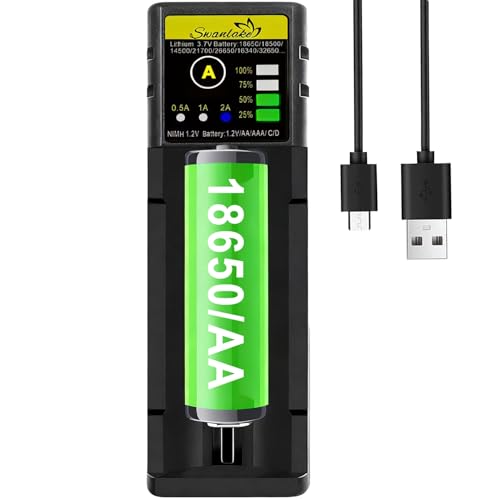
Swanlake 18650 Multi-Chemistry Smart Charger

Keenstone 18650 Smart Universal Charger LCD
BM Premium EN-EL15 Battery and Charger Kit

Meshnology 3.7V 4000mAh LiPo with USB Cable
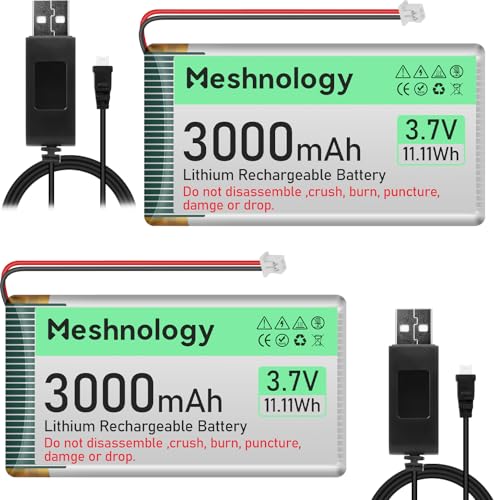
Meshnology 3.7V 3000mAh LiPo Two-Pack

Venustas 7.4V/12V Heated Apparel Battery Pack

VICMILE 3.7V 800mAh Li-ion Two-Pack with USB

IMREN 4-Bay 18650 USB-C Smart Charger

HTRC 12V/24V 15A Smart Lead-Acid Charger
The Tenergy TLP-4000 earns the editor’s slot because it spans the practical 3.7V-14.8V range that most household Li-ion and LiPo packs fall into, so you don’t need a different brick for every battery type. The onboard detection watches for full charge and cuts power automatically, which is the kind of hands-off behavior that protects cells you paid real money for.
It targets packs with a built-in protection circuit, meaning standard 18650, 14500, and similar cells from name-brand tool batteries. That’s the right scope for anyone topping off flashlight cells or replacing a worn laptop-bank pack. If you fly RC or run hobby packs without protection boards, look at one of the smart bay chargers further down.
What Pays Off
- Smart cut-off stops charging the moment a pack reaches full capacity, reducing the risk of overcharge damage on unattended sessions.
- 1A output is gentle enough for high-capacity Li-ion packs yet still finishes a 3000mAh cell in a few hours rather than overnight.
- Single unit covers 1-4 cell configurations, so swapping between a single-cell flashlight pack and a 4S camera setup needs no extra hardware.
- Compatible with Li-Ion and Li-Polymer chemistries, covering most consumer-grade packs above 1000mAh that sit in electronics drawers.
Honest Caveats
- Not designed for unprotected hobby packs, so RC and airsoft users should pick a balance-charging alternative from this list.
- Owners commonly report the unit runs warm during extended sessions, so airflow around the brick matters in a crowded power strip.
Key Product Details
Whose Shelf It Belongs On
Tinkerers and household shoppers who want one universal Li-ion and LiPo charger for flashlights, tools, and camera banks.
Swap It Out When
RC hobbyists running unprotected packs should reach for the Keenstone 18650 Smart Universal Charger instead, since its bay format handles a wider cell mix.
The Swanlake multi-chemistry charger takes the multi-format problem seriously, accepting 3.7V Li-ion in sizes from 10440 up through 26650 alongside 1.2V NiMH and NiCd cells. Three current settings, 0.5A, 1A, and 2A, let you trade speed for cell longevity depending on what sits in the bay.
An LCD readout shows capacity at 25, 50, 75, and 100 percent steps, which beats a blinking LED when you’re trying to figure out whether to leave a pack on the desk overnight. Compared with the Tenergy TLP-4000 above, this unit handles a much wider cell catalog at the cost of needing manual current selection.
Practical Pluses
- Current selector (0.5A/1A/2A) lets you fast-charge a 26650 cell or slow-charge a 14500 to extend cycle life.
- LCD indicator shows four discrete capacity levels, so you know roughly how much longer a pack needs without removing it.
- Auto power-off when full prevents the silent overcharge that slowly degrades Li-ion capacity over months.
- Accepts NiMH A, AA, AAA, AAAA, and C cells, useful for remotes and flash units that share the same benchtop charger.
Trade-Offs To Consider
- Batteries ship separately, so this is a charger-only purchase, a real consideration if you came looking for a starter set.
- 2A mode generates noticeable heat on long runs, so positioning in a well-ventilated spot helps with longevity.
Built With In Mind
Households with a mixed pile of Li-ion and NiMH cells who want one bay to handle both without swapping plates.
Where Another Pick Suits Better
Camera owners shooting Nikon EN-EL15 setups should look at the BM Premium kit, which is purpose-built for that specific cell footprint.
The Keenstone unit reads like a chemistry encyclopedia: Li-ion, LiFePO4, IMR, INR, ICR, and NiMH all share the same bay, with slots for AA, AAA, AAAA, SC, and C round cells alongside cylindrical Li-ion sizes from 10440 to 26650. The LCD readout gives the same level-granular feedback as the Swanlake above, which makes it easier to plan charging order.
It is the kind of charger that suits a workbench drawer where the question “will this charge that” gets asked every week. For someone running a flashlight collection, a radio fleet, and a few solar lanterns, the format flexibility beats single-chemistry picks.
The Case For It
- LiFePO4 support broadens use to solar storage cells and some e-bike accessories that other consumer chargers skip.
- Independent bay slots mean a fully charged 18650 can come out without disturbing a still-charging AAA.
- LCD capacity indicator supports quick visual checks during long sessions, which matters when topping off mixed-size batches.
Points To Keep In Mind
- Some users find the spring-loaded contacts require a firm push for longer protected cells, so very thick button-top batteries can be fiddly.
- Power brick and cable are sometimes packed separately from the unit, which can confuse a quick unboxing.
Made For
Home users juggling Li-ion, NiMH, and the occasional LiFePO4 pack from solar lights or backup gear.
Reach For A Different Pick When
Anyone charging heated apparel batteries should move to the Venustas 7.4V/12V Battery Pack, which is tuned for that specific ecosystem.
The BM Premium kit is the camera-shooter pick on this list: two EN-EL15 cells and a charger specifically for Nikon bodies from the D7000 era through the D850 and Z-series mirrorless lineup. The 7V-class Li-ion chemistry here is dedicated, so there is no menu of sizes to scroll through, just dedicated charging for a single cell footprint.
Wedding, wildlife, and travel photographers who chew through batteries at twice the rate casual shooters do benefit most from the two-pack configuration. It also doubles as a backup for shooters who already own one OEM battery and just need a charging station for a second cell.
Why It Works Well
- Two-pack format solves the “one battery always dying mid-shoot” problem without buying three separate kits.
- Dedicated charger means no manual chemistry selection, which matters when you’re packing a camera bag at 5 a.m.
- Broad Nikon body compatibility, including D500, D7500, D850, and Z6/Z7, covers most working photographers’ current kits.
Small Caveats
- Single-format charger wastes bench space if your household also runs 18650 cells from flashlights or vape gear.
- Some owners report the cells hold charge slightly differently from OEM, which can complicate exact percentage readings in-camera.
Right Fit For
Working Nikon shooters who burn through EN-EL15 cells at events and need a charger that travels with the bag.
A Better Fit Elsewhere
Anyone without a Nikon body should pick the Tenergy TLP-4000, which covers a much broader Li-ion family.
Meshnology’s single-cell LiPo kit lands in maker territory: a 3.7V 4000mAh cell with a Micro JST 1.25 connector and a USB charging cable that tops it off from any USB port. The built-in protection board handles the basics like over-discharge and short-circuit, which matters when a battery sits half-buried in a project box for months.
This is the kind of pack that ends up powering a homemade IoT sensor, an ESP32 dev board, or a small robotics arm where form factor matters more than raw capacity. The Micro JST plug is small enough to fit through most project enclosures without drilling.
What Makes Sense
- 4000mAh capacity in a single-cell pack supports multi-day deployments for low-power Arduino or LoRa projects.
- USB cable charging removes the need for a dedicated hobby charger, a real plus for travel or makers on the go.
- Protection board on the cell reduces the chance of an over-discharged pack dying in a forgotten project box.
Factors To Consider
- Single-cell output won’t drive anything that needs 7V or 12V, so heated apparel and certain sensors need a different pack.
- Micro JST 1.25 plug is small and convenient but not standardized across hobby electronics, so wiring adapters may be needed for some projects.
Who Will Love This
Makers building ESP32 or Arduino prototypes who want a tidy USB-rechargeable power source without a separate hobby charger.
Skip It When
Heated jacket users should reach for the Venustas 7.4V/12V Battery Pack instead, since the voltage and connector are purpose-built for that gear.
This second Meshnology entry trims capacity slightly to 3000mAh but doubles the count to two cells, which changes the math for anyone running multiple project boards at once. The USB charging cable and Micro JST 1.25 plug are identical to the 4000mAh kit above, so swapping between them in the same project box is seamless.
For makers maintaining a bench with several always-on sensors, the two-pack lets one cell charge while the other runs. Compared with the Meshnology 4000mAh single pack, this trades run time per cell for redundancy, which is the right call for unattended deployments.
Where It Helps
- Two-pack format keeps a spare charged and ready, useful for rotating between active projects without downtime.
- USB charging through the included cable means no dedicated hobby charger required, even at a shared workbench.
- Protection board on each cell reduces the failure risk that comes from leaving LiPo packs idle for weeks at a time.
Possible Compromises
- 3000mAh per cell is less headroom than the 4000mAh single pack, which can shorten runtime on power-hungry ESP32 camera boards.
- Identical connector to the 4000mAh pack means it’s easy to grab the wrong one from a parts bin, so labeling helps.
Perfect Match For
Budget-minded hobbyists running two or more small electronics projects who want a redundant USB-rechargeable power source.
Where A Sibling Pick Shines
Long-deployment IoT builds that need maximum runtime per cell should move to the Meshnology 4000mAh single pack, which holds more charge per cell.
The Venustas pack is the dedicated power bank for the brand’s heated vest, jacket, and hoodie ecosystem, rated for both 7.4V and 12V output depending on garment. The 74Wh capacity (equivalent to roughly 20000mAh at the 3.7V cell level) clears airline carry-on limits while still pushing all-day runtime on a moderate heating setting.
Ski patrollers, ice anglers, and winter hikers who already own a Venustas jacket will get the most from this pack since the connector and voltage map are matched. Anyone without the matching apparel should look elsewhere; this is a niche-fit accessory, not a general household charger.
Features That Help
- Switchable 7.4V/12V output covers both low- and high-heat garments, useful for households owning multiple Venustas pieces.
- 74Wh rating supports multi-hour heating sessions on a moderate setting, a real plus for full-day outdoor work.
- Apparel-specific connector removes the wiring guesswork that comes with using a generic USB power bank on heated gear.
Worth Bearing In Mind
- Tied to the Venustas ecosystem, so users of other heated apparel brands likely need a different pack entirely.
- Charging takes several hours from empty with a higher-watt adapter, so a top-up the night before is the practical move.
Who Should Grab It
Cold-weather users already invested in Venustas heated apparel who need a replacement or secondary pack for the rotation.
Not Your Match When
Makers and hobbyists building their own electronics should stick with the Meshnology 3.7V 4000mAh LiPo, which is wired for project use.
The VICMILE two-pack is built for the small RC car and toy vehicle crowd, with 800mAh cells, an SM-2P plug, and a 51x14mm footprint that fits common E35, DE38, DE40, DE50, DE55, TB202, and TM141 chassis. The included USB chargers let a parent or kid top off cells from any USB port without learning balance-charging vocabulary.
For a household running two of the same toy cars, the two-pack format means one is always ready while the other charges. Anyone running larger RC vehicles or hobby planes should skip this and pick a balance charger rated for higher cell counts.
Benefits That Matter
- Match-fit for common entry-level toy car chassis, so drop-in replacement beats trying to adapt a generic 18650 cell.
- USB charging cable means no dedicated hobby charger on the shelf, a real plus for casual users.
- Two-pack keeps a backup charged for kids who burn through play sessions in an afternoon.
Less Ideal Details
- 800mAh capacity limits runtime per charge compared with larger RC packs, so serious racers will outgrow it quickly.
- SM-2P plug is specific to small toy vehicles, so this won’t transfer to a hobby-grade RC truck.
Best Suited To
Parents of kids with entry-level RC toy cars who want a simple replacement battery kit without learning hobby charging routines.
Look Elsewhere When
Anyone running hobby-grade RC gear should pick the IMREN 4-Bay charger, which is built around the larger cylindrical cells those vehicles use.
The IMREN 4-Bay charger leans into modern convenience with USB-C input, which means the same cable that charges a laptop or phone powers the unit. The four bays cover everything from 10440 coin-sized cells up through 26650 fat-boys, plus AA and AAA NiMH, making it a strong “one box covers the drawer” pick.
Independent bay charging means you don’t have to fill all four slots to use the unit, and finished cells can come out without disrupting the others. Compared with the Swanlake above, this one swaps a button-controlled current selector for a fully automatic bay-by-bay mode.
Reasons It Performs
- USB-C input removes the need for a proprietary wall brick, useful for travel kits and small charging setups.
- Independent bay management extends cell life by avoiding forced pair-charging on partially full slots.
- Cell catalog runs from 10440 through 26650, covering flashlight, e-bike accessory, and radio fleet cells.
- Accepts NiMH AA and AAA alongside Li-ion, so the same charger handles remote and clock batteries.
Points To Note
- USB-C input caps total charging speed, so filling four large 26650 cells takes longer than a wall-powered equivalent.
- Owners commonly report the spring contacts need occasional cleaning to maintain solid contact on flat-top cells.
Feature Snapshot
Who It Suits Best
Households and hobbyists who want a single USB-powered charger for a varied rotation of Li-ion and NiMH cells.
Consider Something Else When
Owners of small RC toy cars should reach for the VICMILE 3.7V 800mAh two-pack, which ships with the right plug and capacity for those vehicles.
The HTRC rounds out the list as the outlier: a 12V/24V lead-acid and LiFePO4 charger for cars, trucks, motorcycles, lawn mowers, boats, ATVs, and similar vehicles. Current steps run from 2A up to 15A depending on battery size, and the built-in protections cover reverse polarity, sparks, overload, and short circuits, which matters when clipping onto a deeply discharged battery.
It earns a spot because “3.7V charger” searchers sometimes end up here looking for a full-size charger for an automotive battery. Anyone shopping for a flashlight or vape cell charger should look at the bay-style picks above; this is a garage-floor tool, not a desk drawer unit.
Where It Delivers
- Selectable current (2A/5A/8A/10A/15A) matches battery size, slow for a small motorcycle, faster for a truck or boat.
- Multi-stage charging supports AGM, GEL, EFB, SLA, VRLA, and wet cells, covering most vehicles on the road.
- LiFePO4 mode opens use to modern lithium-starter batteries in addition to legacy lead-acid chemistry.
- Reverse-polarity and short-circuit protection reduce the risk of fried clips when jumping a confused battery setup.
Practical Considerations
- Far larger and heavier than the bay-style Li-ion chargers above, so it belongs in a garage, not on a desk.
- Requires a nearby 100-240V AC outlet, which limits use to a driveway or shop rather than remote roadside recovery.
Made For
Home mechanics and vehicle owners who want a single charger for cars, motorcycles, lawn equipment, and boats across multiple seasons.
Where Another Pick Suits Better
Anyone charging flashlights or hobby cells should pick the IMREN 4-Bay charger, which is the right format for small cylindrical Li-ion cells.
Picking The Right Charger For Your Battery Drawer
Voltage and chemistry compatibility come first. A “3.7V charger” almost always means a single Li-ion or LiPo cell, but the cell size (10440, 14500, 18650, 21700, 26650) varies wildly, and a bay that grips one format may not grip another. Match the bay width to your most common cell before chasing features like LCD readouts or USB-C inputs.
Current rating matters more than people expect. A 0.5A slow charge extends cycle life on small cells, while a 2A fast charge fills a 3000mAh 18650 in roughly 90 minutes. Chargers with selectable current let you choose between longevity and speed per session, which is the practical sweet spot for mixed battery drawers.
Connector type can sink an otherwise perfect pick. SM-2P plugs fit small toy RC cars, Micro JST 1.25 fits maker projects, and bay-style chargers use spring contacts that work with most cylindrical Li-ion cells. Check the connector list against what your gear actually uses before falling for a smart-looking spec sheet.
Independent bay charging earns its keep fast. Chargers that force pair-charging on partially full slots waste time and stress cells. Look for bay-by-bay management if you regularly top off one or two cells at a time.
Pitfalls Shoppers Hit
The most common mistake is grabbing the wrong chemistry. A NiMH-only charger won’t safely top a Li-ion cell, and a Li-ion-only charger won’t recover a deeply discharged LiFePO4 pack. Read the supported chemistry list twice before checkout, especially if your drawer contains a mix of old and new cell types.
Another trap is ignoring the protection circuit note. Some Li-ion cells include a small PCB (protection circuit board) that prevents over-discharge; hobby packs often skip this PCB to save cost. A charger designed for protected packs can damage unprotected ones, so match the pack type, not just the voltage.
Where The Extra Money Goes
Higher-tier chargers buy three things: better bay electronics that manage each cell independently, smarter cut-off logic that recognizes full charge without overshooting, and clearer displays that show progress in percentage steps rather than blinking LEDs. The upgrade pays off when you rotate mixed cells weekly, since the time saved and the cell-life extension stack up over a year. For a drawer that sees one charge session a month, a basic bay unit is plenty.