A 27A 12V battery powers the gadgets most people forget exist until they quit, including the remote for the garage door, the car’s key fob, the wireless doorbell, the ceiling fan pull, and the small alarm sensor taped above the kitchen door. They’re tiny alkaline cells that don’t get replaced often, which is exactly why the wrong pack leaves you stranded at the worst moment.
This roundup looks at ten widely available 27A battery packs that cover everyone from the homeowner who needs a single spare to the landlord who stocks twenty at a time. The focus is build quality, shelf life, pack sizing, and the kind of compatibility quirks that catch people out when an older remote still calls for an MN27 or L828 cell.
How The Shortlist Stacks Up
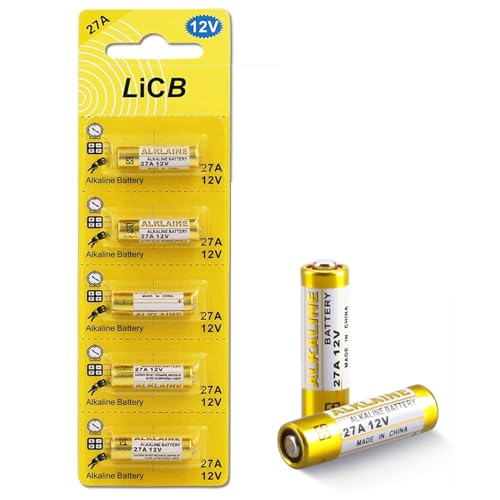
LiCB A27 27A 12V Alkaline Battery (5-Pack)

Kunying 27A 12V Alkaline Battery (5-Pack)

Bvgokcell A27 27A 12V Alkaline Battery (5-Pack)

Bvgokcell 10-Pack A27 27A 12V Alkaline Battery

Bvgokcell A27 27A 12V Alkaline Battery (20-Pack)

YKM A27 27A 12V Alkaline Batteries (5-Pack)

YKM 10 Pack A27 12V Alkaline Battery

YKM 20 Pack 27A A27 12V Alkaline Battery

SKOANBE 27A 12V Alkaline Battery (5-Pack)

Kunying A27 27A 12V Battery (5-Pack)
The LiCB 5-pack is the kind of starter pack most people grab without thinking, and for good reason. It covers the usual suspects: a single car key fob, a garage door remote, a wireless doorbell chime, and a spare or two tucked into the junk drawer. Each cell ships at a full 12 volts, so you get the crisp signal strength you expect when you pop one in.
Compared with bulkier options further down this list, the 5-count format is friendlier for a single household. You don’t end up with a dozen spares gathering dust, but you still have enough to rotate through devices as old cells die. For most homeowners replacing a fob battery every year or two, this pack hits a sensible sweet spot.
The Helpful Details
- Full 12-volt charge out of the pack, so remotes respond right away without a warm-up period.
- Three-year shelf life means a few spares in the drawer stay usable when the fob finally quits.
- Five-cell count matches the common household pattern of two or three active devices plus spares.
- Works across key fobs, garage openers, alarm sensors, and similar low-drain electronics.
Things To Consider
- Only five cells, so larger households with many remotes will cycle through quickly.
- Alkaline chemistry holds up well indoors, but very cold car fobs in winter may see shorter life.
Key Specs
Who It Suits Best
Homeowners with two or three low-drain devices who want a modest spare without committing to a bulk pack.
Look Elsewhere When
Tenants running multiple rental units get better mileage from the Bvgokcell 20-pack, which spreads the cost across more replacements.
The Kunying 5-pack leans hard on compatibility, which matters more than people realize. Many older remotes still print MN27, L828, or EL-812 next to the battery slot, and not every generic 27A replacement handles the cross-reference gracefully. This pack lists the alternative designations clearly so you don’t have to guess.
It’s a similar shape and feel to the LiCB pick above, but the broader compatibility list is the practical edge. If your home has a mix of older ceiling fan pulls, a vintage car alarm, and a newer smart doorbell, you’ll probably appreciate the wider net. You may find the labeling less polished than premium brands, though the cells themselves behave the same in most real-world use cases.
A Favorable Mix
- Cross-compatibility across GP27A, MN27, L828, EL-812, and similar legacy cell codes.
- Stable 12V output suits everything from doorbells to anti-theft alarm controls.
- Useful for households juggling older remotes alongside newer smart devices.
Worth Noting
- No clear indication of long-term leakage protection in stored spares, so rotate spares every year or two.
- Five-cell count runs out fast in homes with many low-drain gadgets.
Made For
Mixed-vintage households where some remotes carry older part numbers that don’t say “27A” on the case.
A Better Fit Elsewhere
Workshops and rental managers with many units to maintain should consider the YKM 20-pack for fewer reorder cycles.
The Bvgokcell 5-pack sits in the middle of this list for a reason: it covers the basics without trying to be anything more. The plastic packaging keeps each cell separate until you’re ready to use it, which reduces the chance of a stray cell rolling into the back of a drawer and shorting against something metallic.
If the LiCB 5-pack is your everyday standard, think of this as its practical sibling. Performance lands in the same ballpark for doorbells, alarm fobs, and ceiling fan remotes. Depending on your priorities, you may find the slightly different packaging format more convenient for storage in a toolbox or a kitchen drawer organizer.
Key Advantages
- Stable 12V output for typical low-drain devices.
- Plastic blister format keeps fresh replacements protected until needed.
- Low self-discharge chemistry extends usable life in storage.
Trade Offs
- Modest count means a household with many devices will need a follow-up pack within months.
- Less well-known brand, so long-term leakage data isn’t widely discussed.
Best Suited To
Casual users who just need a few cells to refresh an aging key fob or doorbell chime.
Swap It Out When
Anyone managing multiple properties should jump to the Bvgokcell 10-pack for fewer restocking trips.
Stepping up to ten cells changes the math for households with more than a handful of devices. Two key fobs, a couple of doorbell chimes, a garage remote, and a wireless sensor array all eat through small batteries faster than you’d expect, especially if you have an older car whose fob is constantly searching for a signal.
Same chemistry as the smaller Bvgokcell pack, just doubled. The 10-count format is a good middle ground for families who don’t quite need a 20-pack but want fewer reorder moments throughout the year.
A Strong Showing
- Ten cells is enough to cover a typical family across multiple vehicles and remotes.
- Low self-discharge chemistry so spares stay useful in storage.
- Plastic packaging reduces the risk of loose cells shorting against other items.
Small Caveats
- Larger pack size demands more drawer real estate, which can matter in compact kitchens.
- Alkaline cells can leak over very long storage, so rotate within a year or two.
Quick Facts
Perfect Match For
Multi-driver households and busy entryways where a single 5-pack disappears in a few months.
Not Your Match When
Someone with only one or two low-drain devices might prefer the smaller LiCB 5-pack to avoid waste.
Twenty cells in a single pack is a statement of intent. This is the Bvgokcell line scaled up for property managers, small offices, and homeowners who simply prefer buying batteries once every few years instead of twice a year. Same chemistry, same packaging format, just more of it.
The trade-off shows up in storage. Twenty loose cells need a proper bin or a labeled drawer, and you have to commit to using them within the shelf life to avoid waste. For the right user profile, that’s a fair deal.
What Helps Most
- Bulk count reduces reorder frequency for heavy users.
- Stable chemistry across the line means predictable performance.
- Useful for offices with multiple alarm panels and remote-controlled devices.
Points To Keep In Mind
- Bulky format requires intentional storage planning.
- Risk of unused cells sitting past their prime if replacements are infrequent.
Who Will Love This
Property managers, small offices, and homeowners with multiple alarm panels who prefer buying batteries in larger amounts.
Where A Sibling Pick Shines
Casual users with one or two devices will find the LiCB 5-pack easier to finish before any cell ages out.
YKM positions this pack with ceiling fan remotes in mind, which is more useful than it sounds. Ceiling fan remotes tend to sit in unusual spots, like a kitchen counter or a bedside table, where the battery rarely gets touched until it dies. Having a labeled spare ready matters more than having the cheapest pack on hand.
The 5-cell format works for a single-room retrofit or a small apartment where the fan remote and the doorbell are the main 27A users. You may find the brand name less familiar than LiCB, but the underlying chemistry is comparable for typical household use.
Good Reasons To Consider
- A-grade cells with stable 12V output for ceiling fan and doorbell remotes.
- Compact 5-pack suits apartments with fewer low-drain devices.
- Broad device compatibility across smart light switches and alarm controls.
Honest Caveats
- Smaller count means you’ll reorder sooner in homes with multiple rooms.
- Brand visibility is lower than mainstream options, which may matter to some.
Right Fit For
Apartment dwellers or single-room retrofits where ceiling fan remotes and doorbells are the main 27A devices.
Consider Something Else When
Whole-house setups with multiple fans benefit more from the YKM 10-pack further down the list.
The YKM 10-pack splits the difference between the smaller ceiling-fan-focused 5-pack and the bulkier 20-pack. It works well for households with multiple fans, a couple of key fobs, and one or two alarm sensors that all sip from the same chemistry.
Compared with the Bvgokcell 10-pack above, the underlying story is similar: low self-discharge cells, plastic packaging, and broad compatibility. The honest read is that the choice between the two mostly comes down to brand preference and price on the day you shop.
A Few Strong Suits
- Ten-cell count balances storage footprint with reorder frequency.
- A-grade cells suited for ceiling fan, garage, and doorbell use.
- Compatible across MN27, LR27A, L828F, and standard 27A labels.
Room For Improvement
- Same alkaline limitations as every other pack on this list for very cold garages.
- Packaging is functional but not particularly resealable for spares.
Feature Snapshot
Built With In Mind
Multi-room households with several fans, fobs, and alarm panels that need a mid-range refill cadence.
Another Choice May Suit
Anyone running a workshop or a few rental units gets more value from the YKM 20-pack below.
The YKM 20-pack is the largest count in this shortlist and is built for users who treat 27A cells like any other maintenance supply. Workshops, rental properties, small commercial spaces with alarm systems, and even some automotive hobbyists fall into that profile.
Same chemistry and similar packaging format as the smaller YKM packs, just scaled. You trade shelf space and discipline for fewer restocking moments. Owners commonly report that this size makes sense once you have more than a handful of devices actively using the cell.
What Pays Off
- Largest single-pack count in this shortlist for heavy users.
- Broad compatibility across smart light switches, keyless entry, and garage openers.
- Useful across multiple unrelated device types in a single property.
- Reduces the number of times you have to remember to reorder.
Things To Weigh Up
- Demands dedicated storage to keep track of unused cells.
- Long intervals between uses mean you should mark the pack with the purchase date.
Whose Shelf It Belongs On
Workshops, rental managers, and small offices that cycle through multiple fobs, alarms, and remotes.
Reach For A Different Pick When
Single-home users who only replace a fob every couple of years will end up with most cells aging out unused.
The SKOANBE 5-pack is the no-frills option in this shortlist. It doesn’t try to be the best at anything specific, and it doesn’t claim exotic features. It just offers five cells that work in the usual places: doorbells, ceiling fans, garage remotes, and the occasional forgotten device in a junk drawer.
If you’ve ever pulled an aging remote off the wall only to wonder whether the dead cell was actually an MN27, a GP27A, or a plain 27A, this pack covers that confusion without much fuss. For most basic replacements, it’s perfectly serviceable.
Real-World Strengths
- Simple, reliable 12V alkaline cells for standard low-drain devices.
- Five-cell format works for single-device households or one-time refreshes.
- Useful for doorbells, fans, and older remotes without brand-specific quirks.
Softer Spots
- Smaller brand footprint means less public data on long-term leakage behavior.
- Modest pack size disappears fast in homes with many active devices.
The Right Fit
Anyone who wants a basic, no-nonsense replacement for a single dead remote without overthinking the choice.
Not Your Match When
Homes with multiple vehicles and several alarm sensors will benefit more from the Bvgokcell 10-pack’s larger count.
The Kunying 5-pack rounds out this list as the steady generalist. It covers the common device categories without leaning on any particular marketing angle, which makes it a sensible default for households that just need a working cell on hand. Grade A cell construction keeps the output stable for typical fob and remote use.
For most people replacing a remote battery once a year or two, this pack lands in the same practical territory as the LiCB and Bvgokcell 5-packs above. The honest read is that the differences between these mid-size 5-packs are subtle, and the right pick often comes down to which one is in stock when you need it.
The Practical Payoff
- Compatible with a wide range of remotes, calculators, and CMOS devices.
- Stable 12V output for low-drain electronics.
- Plastic packaging keeps spare cells organized and protected.
A Few Limitations
- Five-cell format won’t satisfy users who burn through batteries quickly.
- Limited shelf-life data compared with more established brands.
Key Product Details
Who Should Grab It
Casual users who want a sensible, no-surprise replacement pack for the occasional dead remote.
Skip It When
Anyone managing a property with multiple alarm panels will get more mileage from the YKM 20-pack.
What To Weigh Before Choosing A 27A Cell
Picking a 27A battery sounds trivial until you stand in the battery aisle realizing the same cell carries half a dozen names. “27A” is the most common label, but the same physical cell also ships as A27, MN27, GP27A, L828, EL-812, and a handful of less common codes. The smart move is matching the code on your device rather than trusting the shape alone.
Voltage And Chemistry Basics
Every cell on this list is a 12V alkaline, which is the standard chemistry for this footprint. Alkaline holds charge well in storage, costs less than silver-oxide alternatives, and works across the full device range. The trade-off is that output drops gradually as the cell drains, which is why an old remote works at shorter and shorter range before finally failing.
Pack Size And Use Frequency
The biggest practical decision is how many cells to buy at once. Households with two or three active devices do fine with a 5-pack. Properties with multiple vehicles, alarm panels, and ceiling fans tend to drain through 10-packs reasonably quickly. Workshops and rental managers should look at 20-packs to reduce reorder cycles.
Shelf Life And Storage Habits
Alkaline cells slowly self-discharge even when sitting unused. Most packs on this list claim a three-year shelf life, which assumes cool, dry storage. In practice, rotating your stock within two years in humid climates is the safer call. Marking the pack with the purchase date helps avoid grabbing a stale cell when a remote finally dies.
Device Compatibility Quirks
Older devices sometimes print MN27 or L828 on the battery door, which can cause confusion at replacement time. Several packs on this shortlist, including the Kunying 5-pack, explicitly list cross-compatible codes for that reason. When in doubt, match the code on the device, not the marketing language on the front of the pack.
Practical Pointers Worth Remembering
Common Buying Missteps
The biggest mistake is buying by shape alone without checking the actual code on the device. A cell that physically fits can still deliver the wrong voltage curve for older alarm panels. Another common slip is grabbing a generic no-name 5-pack when a 10-pack costs only a little more per cell, especially if you have more than two devices actively using 27A cells.
When Spending More Makes Sense
Higher-tier 27A packs on the market use silver-oxide chemistry rather than alkaline, which holds voltage more steadily over the cell’s life. That matters for precision devices like medical monitors or high-end car fobs with long-range requirements. For most doorbells, fans, and standard key fobs, alkaline delivers the same practical result at a lower cost per cell.
Frequently Asked Questions
What devices use a 27A 12V battery?
Car key fobs, garage door remotes, wireless doorbells, ceiling fan controllers, alarm sensors, and some small toys all use this cell. It’s also common in glucose monitors and certain access control devices.
How long does a 27A battery typically last?
In a low-use remote like a garage door opener, expect two to three years. In a frequently pressed car fob, plan on one to two years. Shelf life in storage is usually three years under cool, dry conditions.
Are 27A and A27 the same battery?
Yes. A27 and 27A refer to the same physical cell, which also ships under codes like MN27, GP27A, L828, and EL-812. Always match the code printed on your device rather than the marketing name on the pack.
Can I use a higher-voltage battery as a substitute?
No. Devices designed for 12V input should only receive 12V cells. Substituting a different voltage can damage the remote or the connected electronics, so stick with the specified code.
Should I buy alkaline or silver-oxide 27A cells?
Alkaline works for most everyday remotes and doorbells at a lower cost. Silver-oxide holds voltage more steadily, which helps in medical monitors and high-end key fobs that benefit from consistent output.
Closing Remarks
The right 27A 12V battery comes down to how many devices you actually run and how often you want to think about replacing cells. A modest 5-pack covers most households with a couple of remotes, while a 10-pack or 20-pack makes more sense for multi-driver families and rental properties. Match the code on the device, store spares somewhere cool and dry, and the rest is just buying enough cells to stop thinking about batteries for another year or two.