Cold morning, click of the key, and nothing. That dead-battery feeling hits right when you need the car most. A fresh Group 24F AGM battery turns that groan into a clean start, and the ten picks below cover the situations drivers actually face: short commutes, brutal winters, start-stop city traffic, and the rare upgrade for anyone tired of replacing batteries every couple of years. Group 24F refers to a standardized Battery Council International (BCI) case size with the negative terminal on the left and positive on the right, used in many Toyota, Lexus, Honda, Acura, and Nissan vehicles. Match the dimensions and terminals before you click, and the rest comes down to cranking power and how long you want it to last.
The Essentials At A Glance

Odyssey ODX-AGM24F Extreme Series Battery

Weize Platinum AGM Battery BCI Group 24F

MARXON Group 24F AGM Maintenance Free Battery

Autocessking Group 24F Start and Stop AGM Battery
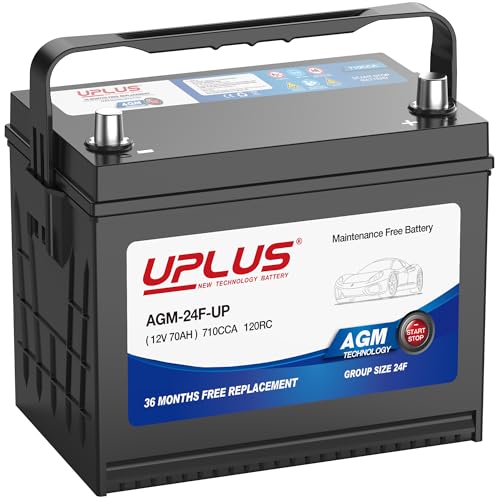
UPLUS BCI Group 24F AGM Start-Stop Battery

Interstate Batteries MTX AGM Group 24F Battery

Goodyear 24F-AGM Platinum Series Battery

Daakmax Platinum AGM Group 24F Battery

Mighty Max MM-G24F Start and Stop AGM Battery

Lipower Group 24F Solid State Battery
Why These Options Stand Out
The Odyssey ODX-AGM24F sits at the top of the absorbed glass-mat (AGM) category for a reason: its Extreme Series plate design packs more lead into the case, which translates into stronger cranking bursts and a deeper reserve than the typical Group 24F unit. For drivers running high-demand accessories (plowed trucks, car audio rigs, ambulances, tow vehicles) the added margin matters on cold mornings.
If your daily drive includes heavy electrical loads or long stretches of idling, this battery tends to hold voltage where standard AGMs sag. You pay a premium for the construction, and the unit weighs more than cheaper alternatives, so expect a sturdier carry during install.
The Practical Payoff
- Strong cranking reserve for vehicles with demanding start-stop cycles and accessory loads
- AGM sealed construction resists vibration damage on rough roads or job sites
- Higher lead density supports longer runtimes when the alternator drops offline
- Maintenance-free design, no water checks or terminal cleanings on a schedule
Things To Consider
- Heavier than standard Group 24F AGM units, which may require two hands during install
- Higher price tier, so the value case weakens for a basic commuter with modest electrical demands
Who It Suits Best
Owners of vehicles with aggressive start-stop systems, accessory-heavy builds, or anyone replacing batteries that keep dying under heavy electrical loads.
Consider Something Else When
Budget-focused drivers in mild climates should look at the Weize Platinum AGM Battery BCI Group 24F instead, which covers a standard commuter at a noticeably friendlier tier.
The Weize Platinum AGM lands the standard Group 24F spec sheet at a price most commuters can stomach. It posts 710 cold cranking amps (CCA, the current a battery delivers at 0°F for 30 seconds) and a 120-minute reserve capacity (RC, the minutes a fully charged battery can run accessories if the alternator fails), which covers the vast majority of sedans and crossovers calling for a 24F fitment. The tapered terminal layout and 10.75 x 6.81 x 8.98-inch case match the factory spec closely enough that swapping one in rarely demands a bracket mod.
What you give up versus premium tiers is vibration tolerance and deep-cycle recovery. For a daily driver parked in a garage and driven to work, those margins rarely matter.
Strong Points
- Standard 710 CCA rating matches what most 24F-equipped vehicles demand from a fresh battery
- 120-minute reserve capacity keeps accessories alive during short alternator hiccups
- 36-month warranty provides replacement confidence for the early years of ownership
- Sealed AGM design means no acid spills on the trunk mat or garage floor during install
Trade Offs
- Spec sheet is identical to several competitors in this list, so brand loyalty is the main differentiator
- Not engineered for extreme deep-cycling, so pairing with heavy aftermarket audio may shorten service life
Feature Snapshot
Made For
Daily commuters driving a Toyota, Lexus, Honda, or Nissan that calls for a Group 24F and want reliable cold-morning starts without the premium-tier price.
Skip It When
Drivers chasing the longest possible service life should reach for the Interstate Batteries MTX AGM Group 24F Battery, which leans toward longevity over upfront value.
MARXON positions this Group 24F unit as the straightforward replacement: same 710 CCA, same 120-minute reserve, same maintenance-free sealed body as the Weize. The dimensions land at 10.7 x 6.77 x 8.98 inches, which sits within a hair of the factory tray, so installation rarely demands shimming. If your old battery matches those measurements and the negative sits on the left, this drops in cleanly.
It’s the kind of pick a careful owner orders, double-checks against the old case with a tape measure, and forgets about for several winters.
What Earns Its Place
- Maintenance-free AGM chemistry removes the periodic water-check chore of older flooded designs
- Standard CCA and RC ratings cover the spec most 24F vehicles call for at the dealership
- Compact case dimensions fit common OEM trays without adapter plates or shimming
Honest Caveats
- Spec parity with several competitors in this list means the choice often comes down to which listing is in stock
- Limited public documentation on cycle life under heavy accessory loads
Best Suited To
Owners who want a direct, no-drama replacement for a stock 24F battery and prefer a sealed design they never have to top off.
A Better Fit Elsewhere
Anyone in a brutally cold northern climate should consider the Goodyear 24F-AGM Platinum Series Battery, which leans into all-weather stability.
The Autocessking Group 24F leans into AGM safety: the glass-mat separator suspends the acid so leaks, spills, and corrosion become far less of a worry during installation or a hard knock on the road. Owners commonly report the sealed case feeling sturdy in the hand compared to older flooded units, and the maintenance-free format removes the routine top-off that some people forget for years.
The 710 CCA and 120-minute reserve keep the spec sheet in line with mainstream Group 24F expectations, which makes the upgrade path easy to justify if your old battery was a flooded design.
Positive Points
- Leak-proof glass-mat construction keeps acid contained even if the case takes a sharp angle on a trail or curb
- Maintenance-free design suits drivers who never want to pop cell caps again
- Standard 710 CCA and 120 RC ratings for mainstream start-stop duty cycles
- Generally fits the factory 24F tray without modification on most supported vehicles
Points To Note
- Brand awareness is lower than household names, so warranty claims may require a phone call rather than a quick counter swap
- Performance claims of two to three times the lifespan of flooded batteries are commonly cited by the brand, but real-world results vary by climate and load
Feature Snapshot
Right Fit For
Drivers upgrading from an old flooded battery to sealed AGM chemistry and wanting a safer install on a daily-driven sedan or crossover.
Look Elsewhere When
Owners who want a more established warranty network should reach for the Weize Platinum AGM Battery BCI Group 24F instead.
UPLUS markets this Group 24F as a premium start-stop unit, and the marketing matches the spec sheet: 710 CCA, 120-minute reserve, sealed AGM, and the standard 10.7 x 6.77 x 8.98-inch case. The selling point is the start-stop cycling tolerance, which matters in city traffic where the engine shuts off at every light and restarts dozens of times per commute.
If you drive a modern Toyota Camry, Honda Accord, or similar sedan with active start-stop, this battery is engineered for that exact duty cycle.
Noteworthy Benefits
- Engineered specifically for start-stop cycling, where the engine restarts many times daily
- Sealed AGM body supports in-cabin or trunk mounting on vehicles designed for it
- Standard dimensions simplify the swap from a stock 24F unit
Practical Considerations
- Performance edge over generic 24F AGMs may not show up in light suburban driving
- Brand support network is thinner than legacy names like Interstate, which can complicate rare warranty claims
Feature Snapshot
Who Will Love This
City commuters in start-stop-equipped sedans who rack up frequent engine restarts and want a battery engineered for that specific wear pattern.
Reach For A Different Pick When
Drivers in extreme cold or extreme heat should look at the Goodyear 24F-AGM Platinum Series Battery, which calls out broad weather stability.
Interstate’s MTX AGM takes the standard Group 24F footprint and packs more lead into the plates, which the brand cites as the path to longer service life in start-stop vehicles. The 710 CCA and 70 Ah ratings cover typical commuter demands, and the brand’s nationwide distributor network is the real hidden value: warranty claims tend to resolve at a local shop rather than a shipping label.
Compared to the Weize Platinum earlier in the list, this unit targets longevity over upfront savings.
Why It Works Well
- Pure lead MTX plate design aims for the longest cycle life in the start-stop category
- Strong nationwide distributor presence simplifies any rare warranty exchange
- AGM sealed format fits vehicles with in-cabin or trunk-mounted battery trays
- 70 Ah capacity supports accessories without dropping core voltage
A Few Limitations
- Pricier than spec-identical competitors, so the value case depends on how long you plan to keep the vehicle
- Heavier than some competitors, which can complicate a one-handed install in a tight engine bay
Perfect Match For
Owners planning to keep their start-stop-equipped vehicle for many years and who want the longest possible service interval from a single battery.
Not Your Match When
Short-term owners or shoppers on a tight replacement budget should grab the Daakmax Platinum AGM Group 24F Battery for a similar spec at a lower entry tier.
The Goodyear 24F-AGM Platinum pairs the standard 710 CCA and 120-minute reserve with mounting flexibility, since the case can sit in multiple positions (just not fully inverted). For owners with non-stock battery trays, custom enclosures, or tucked-in engine bays, that flexibility removes the friction of fighting a one-orientation case during install. The brand calls out stable performance in both freezing and scorching conditions, which suits drivers in continental climates where the car sees 100°F summers and 0°F winters.
The Platinum Series name signals this as a step up from entry-level AGMs, though the spec sheet overlaps with cheaper options in the same group size.
The Case For It
- Multi-position mounting (except upside down) suits custom or tucked-in battery trays
- Engineered temperature stability for climates with hot summers and cold winters
- Standard 710 CCA and 120 RC ratings meet most 24F vehicle requirements
Points To Keep In Mind
- The “Platinum” branding adds cost without changing the headline specs over competitors
- Brand battery lines are commonly rebadged from OEM suppliers, so build quality varies by production run
Built With In Mind
Drivers in continental climates with hot summers and freezing winters, plus anyone with a non-standard battery tray that needs mounting flexibility.
Swap It Out When
Pure longevity chasers should reach for the Interstate Batteries MTX AGM Group 24F Battery, which targets cycle life more directly.
The Daakmax Platinum AGM mirrors the standard 24F recipe: 710 CCA, 120 RC, 12V 70Ah, and a 10.75 x 6.81 x 8.98-inch case with the tapered terminal layout (left negative, right positive). What separates it from the Weize earlier in this list is the 36-month warranty, which adds a layer of confidence if you’d rather not gamble on the cheapest listing. For a commuter driven daily and parked in a temperate climate, the spec-to-cost ratio is hard to beat.
Useful Strengths
- 36-month warranty adds coverage beyond the typical two-year entry tier
- Standard Group 24F dimensions and tapered terminal orientation match factory specs
- AGM sealed body removes spill concerns during installation in tight engine bays
Where It May Fall Short
- Limited brand recognition means warranty claims depend on responsive seller support
- Spec parity with several competitors makes the choice largely about price and availability
Feature Snapshot
The Right Fit
Cost-focused drivers replacing a stock 24F battery who still want a multi-year warranty to back the purchase.
Where Another Pick Suits Better
Drivers needing the longest possible lifespan should look at the Interstate Batteries MTX AGM Group 24F Battery for a longevity-focused build.
The MM-G24F from Mighty Max covers the same 710 CCA and 120 RC spec as the rest of the standard-tier 24F group, but the brand calls out deep discharge recovery as a defining trait. For drivers who leave the car sitting for stretches (a stored classic, a second vehicle, a summer-only convertible) the ability to recover from a deep drain matters more than peak cranking on the first try.
The sealed AGM format keeps installation tidy, and maintenance-free chemistry means you can leave it on a tender and walk away.
Where It Excels
- Strong deep discharge recovery for vehicles that sit unused for weeks at a time
- Sealed, spill-proof AGM body suits a range of mounting orientations
- Standard 710 CCA and 120 RC ratings cover most 24F daily-driver needs
Worth Bearing In Mind
- Not specifically engineered for extreme start-stop cycling, so heavy city commuters may prefer UPLUS
- Performance in deep-cold snaps can trail premium units that pack more lead into the plates
Feature Snapshot
Whose Shelf It Belongs On
Owners of seasonal vehicles, weekend cars, or any ride that sits idle for stretches between drives.
Another Choice May Suit
Daily commuters in start-stop traffic should look at the UPLUS BCI Group 24F AGM Start-Stop Battery, which is engineered for that specific duty cycle.
The Lipower Group 24F steps away from lead-acid entirely, using solid-state lithium chemistry that the brand rates for roughly a decade of service and thousands of deep cycles. Compared to the AGM units filling out the rest of this list, the weight drop is dramatic, and the long-life claim is the headline feature. For tinkerers, overlanders, or anyone rebuilding an electrical system from scratch, the upgrade path is genuinely different chemistry.
The honest read: solid-state 24F drop-ins are still a niche category, and you should verify your vehicle’s charging profile plays nicely with lithium before committing.
A Strong Showing
- Solid-state lithium chemistry promises a multi-year service life beyond typical lead-acid units
- Lightweight case simplifies install and reduces overall vehicle weight
- Deep cycle tolerance suits vehicles with heavy accessory loads or auxiliary batteries
Some Limits To Know
- Higher upfront cost than AGM alternatives, so the payback requires holding the vehicle for years
- Charging system compatibility should be verified on older vehicles before swapping in a lithium chemistry
Who Should Grab It
Tinkerers, overlanders, and long-term owners who want to step away from lead-acid chemistry and accept the premium for a longer service interval.
Not Your Match When
Anyone replacing a stock battery on a leased vehicle or a short-term commuter should stick with the Weize Platinum AGM Battery BCI Group 24F for a simpler, friendlier entry tier.
What To Weigh Before Choosing Your Group 24F
Picking the right Group 24F battery starts with fit, not features. Measure the old case, confirm the negative terminal sits on the left, and check that the hold-down bracket lines up before anything else. CCA matters most in cold climates, where a 710 CCA rating covers most sedans and crossovers, while vehicles with start-stop systems benefit from AGM chemistry rated for repeated cycling.
Capacity and reserve tell different stories. Amp-hours (Ah) measure total stored energy for accessories, while reserve capacity (RC) tracks how many minutes the battery can run essentials if the alternator quits. For drivers who idle a lot or run accessories with the engine off, a higher RC rating buys comfort during unexpected alternator drops.
Warranty length varies widely across this category, from entry-level coverage to multi-year promises on premium tiers. Match the warranty to how long you expect to keep the vehicle, and remember that AGM sealed designs eliminate the periodic water checks older flooded batteries demanded. For deeper buying guidance, the buying guide below walks through each factor with more room to breathe.
Buying Guide: Matching A 24F Battery To The Way You Drive
Fit First, Specs Second
Group 24F is a BCI size, meaning the case dimensions and terminal positions are standardized across manufacturers. Confirm the old battery’s footprint (most 24F units sit around 10.75 x 6.81 x 8.98 inches) and the negative-on-left orientation before clicking through. A mismatch here returns fast and costs an afternoon.
CCA, RC, And What They Mean In Real Use
Cold cranking amps (CCA) measure starting power at 0°F: higher numbers help in colder climates. Reserve capacity (RC) tracks runtime for accessories when the alternator drops out. For a commuter in a temperate zone, 710 CCA and 120 minutes of RC cover the typical sedan or crossover. Drivers facing subzero mornings or heavy accessory loads benefit from upgraded ratings.
AGM Vs. Flooded Vs. Solid State
AGM (absorbed glass-mat) batteries seal the acid in glass mats, resist vibration, and tolerate start-stop cycling better than older flooded designs. Solid-state lithium options weigh far less and claim longer service life, but cost more and require charging-system checks on older vehicles. Pick the chemistry that matches your driving pattern and your tolerance for premium pricing.
Warranty And Long-Term Ownership
Warranty windows range from a year on budget units to several years on premium tiers. Long-term keepers benefit from multi-year coverage, while short-term owners can reasonably skip the longest plans. Sealed AGM designs remove the maintenance chore that older flooded batteries demanded, which simplifies long-term ownership regardless of warranty.
Key Considerations Across These Picks
Pitfalls Shoppers Hit
The most common 24F mistake is trusting the model number alone. Terminal position differs across group sizes, so a 24F swapped for a 24 (or vice versa) can leave the cables stretched or reversed. Always confirm dimensions and polarity against the old battery before ordering, and verify the hold-down bracket fits the new case.
Another slip is chasing the highest CCA without checking whether the vehicle’s charging system supports it. Most modern alternators handle any 710-to-850 CCA 24F AGM without issue, but pairing an extreme-performance battery with an old, weak alternator can shorten service life on both components.
Where The Extra Money Goes
Premium tiers typically add more lead per plate, stronger internal construction, and longer cycle life under start-stop stress. The honest read: a daily driver in a temperate climate rarely recoups the cost difference, while a high-mileage commuter or a vehicle with aggressive start-stop cycling benefits measurably from the upgraded construction.
Solid-state lithium units sit in their own tier, with the higher price reflecting new chemistry, lighter weight, and a multi-year service claim. The upgrade pays off for tinkerers and long-term holders, but a leased-vehicle commuter can skip the premium and still get reliable starts from a mainstream AGM.
Frequently Asked Questions
What vehicles use a Group 24F battery?
Group 24F batteries fit many Toyota, Lexus, Honda, Acura, and Nissan models, plus some Chrysler and Subaru applications. Always confirm your vehicle’s group size in the owner’s manual or by measuring the existing battery before ordering.
How long does a Group 24F AGM battery typically last?
Most AGM Group 24F units last roughly four to six years in moderate climates with normal driving. Extreme heat, frequent short trips, or heavy accessory loads can shorten that window, while a tender on a stored vehicle can extend it.
Do I need AGM for a start-stop system?
Most vehicles with active start-stop systems require AGM chemistry, since flooded batteries wear out quickly under repeated engine restarts. Confirm the spec in your owner’s manual before substituting a flooded unit, and stick with the group size your vehicle calls for.
Can I install a Group 24F battery myself?
A straightforward battery swap takes basic tools and about thirty minutes: disconnect the negative terminal first, swap the unit, reconnect the positive first. Tight engine bays, in-trunk mounts, or vehicles with battery management systems may require a professional or a memory saver for the electronics.
What is the difference between Group 24 and Group 24F?
Group 24 and Group 24F share similar case dimensions but differ in terminal position. Group 24 has the positive terminal on the left, while Group 24F reverses that layout. Always check the existing battery’s polarity before ordering to avoid a cable-stretching mismatch.
The Takeaway
The right Group 24F battery comes down to fit, climate, and how long you plan to keep the vehicle. Measure first, match the CCA to your winters, and pick a chemistry that suits your driving pattern. Any of the ten units above will turn the key cleanly, so the real decision is how much extra margin you want beyond that.