The 21700 lithium ion battery has quietly become the workhorse cell powering everything from high-output flashlights to cordless drills. Its larger format delivers higher capacity and better thermal headroom than the older 18650, which translates to longer runtimes in demanding gear. Picking the right cell, charger, or accessory for the format saves money and prevents the frustration of an under-powered setup.
The Essentials At A Glance

OYRMIL Replacement Milwaukee M18 Battery 12.0Ah (21700 Cells)
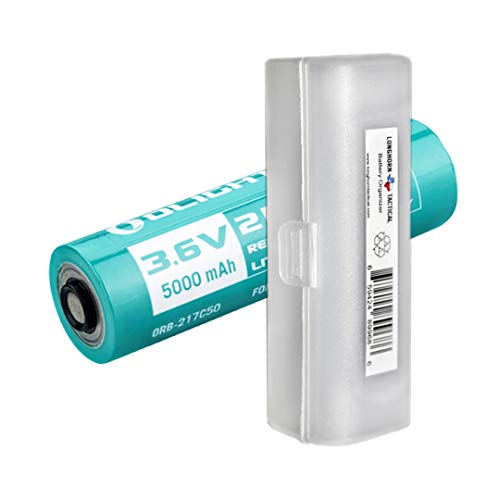
OLIGHT 5000mAH 217C50 Rechargeable Battery

BWIETE 4-Bay Multi-Format Battery Charger

Nitecore UMS4 Four Slot USB Charger

SUNLYTOUR Intelligent 21700/18650 LCD Charger

Solnique Nickel Strips for Battery Welding (0.15mm × 7mm × 10m)

XTAR VC8 Plus 8-Bay Smart Charger

Swanlake 2-Bay LCD Battery Charger
A Deeper Look At The Lineup
For contractors living on Milwaukee M18 platforms, the OYRMIL replacement battery promises marathon runtime through a 12.0Ah rating and modern 21700 lithium cells inside. Compared to the charger picks lower in the list, this one is built to slide into a drill or impact wrench rather than sit on a desk.
Tradespeople running framing crews or remodeling jobs will feel the benefit most: fewer battery swaps across an eight-hour shift. In most shop environments, the higher cell count translates to noticeably cooler operation under heavy load.
Features That Help
- 12.0Ah capacity supports long stretches of sawing, drilling, or grinding without a swap.
- 21700 cell format improves energy density and thermal headroom over older 18650-based packs.
- Direct compatibility with the Milwaukee 18V M18 ecosystem keeps existing chargers and tools working.
Things To Consider
- As a third-party pack, long-term cell aging reports vary, so storing it at moderate charge levels helps longevity.
- The added capacity adds weight compared to a standard 5.0Ah pack, which matters on overhead work.
Feature Snapshot
Built With In Mind
Milwaukee M18 owners who burn through packs on long jobs and want a budget-friendly high-capacity spare.
Consider Something Else When
The OLIGHT 5000mAH 217C50 is the better match if your gear is an OLIGHT flashlight rather than a cordless tool.
The OLIGHT 217C50 is not a generic 21700 lithium ion battery. It carries a custom housing and a built-in protection board tuned specifically for OLIGHT’s Seeker 2/3/4 Pro, Warrior X Pro, Freyr, Prowess, and Odin flashlights.
Where the OYRMIL pack above targets job sites, this one targets the nightstand or gear bag. EDC (everyday carry) flashlight enthusiasts running high-lumen OLIGHT models will appreciate the 5000mAh capacity paired with that dedicated protection circuit.
Real Benefits
- Custom fit eliminates rattle and ensures the flashlight’s tail cap and charging contacts align properly.
- 5000mAh capacity extends high-output runtimes for 3000-lumen class Seeker models.
- Built-in protection guards against over-discharge, overcharge, and short circuits during repeated cycles.
Points To Note
- Will not function in non-OLIGHT flashlights because of the proprietary shape and protection board.
- Comes at a premium compared to bare 21700 cells from other brands.
Whose Shelf It Belongs On
OLIGHT Seeker and Warrior series owners who want a factory-spec spare with matching protection circuitry.
A Better Fit Elsewhere
The OYRMIL Milwaukee M18 battery is the stronger choice if your power comes from a cordless drill rather than a flashlight.
BWIETE’s four-bay charger accepts a sprawling list of cell sizes, from tiny 10440s through the 21700 lithium ion battery format up to 26650s. Charging happens over a standard USB cable, so it pulls power from a laptop, car adapter, or USB wall wart.
For travelers, campers, or anyone whose cell rotation crosses formats, the universal bay layout beats carrying a drawer of single-format chargers. You may find the lack of an LCD limiting if you want to see exact voltages.
The Good Stuff
- Multi-format slots cover 18650, 20700, 21700, 26650, and many smaller sizes in one unit.
- USB input keeps it travel-friendly, no proprietary brick required.
- Four bays handle a small rotation without monopolizing a wall outlet.
Honest Caveats
- Charging speed is modest compared to the QC-equipped Nitecore UMS4 later in the list.
- No per-bay LCD, so monitoring individual cell health mid-charge requires guesswork.
Made For
Campers and travelers running mixed flashlight and hobby batteries who value portability over charging speed.
Look Elsewhere When
The Nitecore UMS4 is the smarter pick if you want visible per-cell charging data and faster QC input.
The Nitecore UMS4 is aimed squarely at hobbyists who want information. A per-slot LCD reports charging current, voltage, and cell health in real time, so you can spot a weak cell before it ruins a night shoot or vape session.
Pair it with a QC 3.0 adapter and a single bay pushes 3000mA, which dramatically cuts wait times on a 21700 lithium ion battery. Compared to BWIETE’s simpler four-bay above, this one trades portability for visibility and speed.
Well-Handled Touches
- Per-bay LCD shows voltage, current, and charging mode at a glance.
- QC input lifts single-slot output to 3000mA for faster top-offs.
- Broad chemistry support covers Li-ion, Ni-MH, Ni-Cd, and IMR cells.
Trade-Offs To Consider
- Needs a QC power adapter to hit the advertised speeds, which is sold separately in many cases.
- Slightly bulkier than travel-oriented chargers like the BWIETE.
Quick Facts
Best Suited To
Vape, flashlight, and photography hobbyists who want per-cell diagnostics and faster turnaround.
Reach For A Different Pick When
The BWIETE four-bay charger is easier to toss in a bag if you mostly care about lightweight USB convenience.
SUNLYTOUR’s intelligent charger supports an unusually wide range, from 16340 RCR123 cells up to the longer 26700 format, plus Ni-MH AAs and AAAs. The built-in LCD gives basic status feedback without the per-cell detail of the Nitecore.
Households with a rotation of vape mods, flashlights, and remote controls will appreciate the chemistry flexibility. For most living rooms, that versatility outweighs the absence of QC-level fast charging.
Useful Touches
- Supports 20700, 21700, 22700, 26650, and 26700 lithium-ion cells alongside Ni-MH.
- LCD provides charge status without crowding the front panel.
- Recognizes non-rechargeable CR123 cells and refuses to charge them, a useful safety guard.
Small Caveats
- Cannot charge 1.5V Li-ion cells, which limits newer device battery types.
- Older Ni-MH cells past their prime should be replaced rather than recharged, a detail worth remembering.
Spec Overview
Right Fit For
Mixed-device households juggling vape mods, flashlights, and household Ni-MH cells in one drawer.
Swap It Out When
The XTAR VC8 Plus makes more sense for charging in larger batches across eight bays at once.
Solnique’s nickel strip sits in a different lane from the rest of the list. Instead of a battery or charger, it’s raw material for builders assembling custom 21700 lithium ion battery packs. The 0.15mm thickness and 7mm width fit standard spot-welding setups for cylindrical cells.
DIY builders working on e-bike packs, portable power stations, or flashlight banks will find the 10m roll enough for several packs. The high nickel content (around 37%) supports stronger welds than plated steel alternatives.
The Helpful Details
- Pure-nickel construction improves conductivity over nickel-plated steel alternatives.
- 7mm width pairs cleanly with 18650 and 21700 cell tops without overhang.
- 10m roll supports multiple pack builds from a single purchase.
Worth Bearing In Mind
- Requires a spot welder, which is a separate investment for new builders.
Who Should Grab It
Hobby pack builders assembling e-bike or portable battery banks who already own a spot welder.
Where Another Pick Suits Better
Skip this entirely if you only need a charger or ready-to-use battery; the OYRMIL Milwaukee pack is a more practical start.
XTAR’s VC8 Plus is the eight-bay answer to the smaller chargers earlier in this lineup. With a 12V 3A adapter included, it can charge eight protected 21700 lithium ion battery cells simultaneously, or push up to 3A into a single bay when slots are empty.
Workshops, vape shops, and serious flashlight collectors will find the LCD and adjustable current settings worth the extra footprint. Five current tiers (0.25A, 0.5A, 1A, 2A, 3A) let you balance speed against battery health.
What Makes Sense
- Eight independent bays handle protected 20700 and 21700 cells in parallel.
- Selectable current up to 3A per bay speeds up large-capacity cells.
- LCD shows charging status across all slots without crowding.
A Few Limitations
- Bulkier than travel chargers like BWIETE, so it lives on a desk rather than in a bag.
- Higher amperage requires the included 12V adapter, not a random USB brick.
Key Specs
Perfect Match For
Workshop and vape-shop operators who cycle through dozens of cells weekly and need batch charging.
Skip It When
The Swanlake 2-bay charger is a smarter fit for casual home users charging just a couple of cells at a time.
The Swanlake two-bay charger rounds out the list as the simplest option. It supports 21700 lithium ion battery cells along with 18650, 20700, and smaller sizes, with adjustable current between 0.5A, 1A, and 2A.
Casual users charging a flashlight and a vape mod will find the LCD and twin slots cover the basics without paying for eight bays. Compared to the larger XTAR above, this one trades capacity for countertop space.
Positive Takeaways
- Adjustable 0.5A, 1A, and 2A output matches common lithium cells and protects smaller Ni-MH sizes.
- Two-bay footprint fits on a nightstand or small shelf.
- LCD display shows charging status without overwhelming detail.
Honest Caveats
- Only two slots means slower turnaround for users with larger rotations.
- Ni-MH cells charge at a fixed 0.5A regardless of selector position.
At A Glance
Who Will Love This
Casual home users charging one or two flashlight or vape cells at a time who don’t need batch throughput.
Another Choice May Suit
The SUNLYTOUR Intelligent charger is a better pick when Ni-MH AA and AAA support matters alongside lithium cells.
What Matters Most Before Choosing a 21700 Lithium Ion Battery
Match the cell to the device, not the other way around
The single biggest mistake is grabbing a generic 21700 lithium ion battery for a flashlight that expects a custom cell like the OLIGHT 217C50. Protection boards, length, and contact placement vary between brands, and a wrong fit can refuse to charge or fail under load. Always confirm the exact model compatibility before you buy a replacement.
Understand the difference between capacity and output
Capacity, measured in milliamp hours (mAh), tells you how long a cell runs. Continuous discharge rating, often in amps, tells you how hard the device can pull before voltage sags. High-lumen flashlights and power tools care about both, so a high-capacity cell with a low discharge ceiling will disappoint under heavy use.
Consider your charging setup before scaling up
A wall full of 21700 cells needs a charger that can handle them efficiently. Single-bay or low-current units bottleneck anyone with a rotation of more than three or four cells. Investing in a multi-bay smart charger like the Nitecore UMS4 or XTAR VC8 Plus pays off quickly for active users.
Match charger current to battery health
Charging at the maximum advertised current feels fast, but it stresses cells over hundreds of cycles. For everyday rotation, charging at 0.5A or 1A typically extends cycle life. Reserve higher current tiers for cells you need topped up quickly before a trip or job.
Key Considerations Across These Picks
Where Shoppers Go Wrong
Treating capacity as the only spec leads to mismatched purchases. A 5000mAh cell with a 5A discharge limit cannot safely run a 3000-lumen flashlight that pulls 8A, regardless of how long it might last at lower output. Always check both capacity and continuous discharge before buying.
Where The Extra Money Goes
Higher-tier chargers like the XTAR VC8 Plus earn their price through independent channels, real-time LCD data, and selectable current. Cheaper units often share current across slots, slowing every cell when bays are full. For occasional charging, the savings matter; for heavy rotation, the speed difference justifies the upgrade.
Frequently Asked Questions
Are all 21700 batteries interchangeable?
No. Custom cells like the OLIGHT 217C50 use proprietary protection boards and dimensions, so they only fit specific flashlights. Standard 21700 lithium ion battery cells share a common size but vary in chemistry, capacity, and discharge rating.
Can I charge 21700 cells with an 18650 charger?
Only if the charger explicitly lists 21700 support. Chargers without adjustable rails may undercharge the longer cell or fail to detect it at all.
What is the difference between protected and unprotected 21700 cells?
Protected cells include a small circuit that prevents over-discharge, overcharge, and short circuits. Unprotected cells rely on the device for safety. For high-drain flashlights and vape mods, protected cells are usually the safer choice.
How long does a 21700 lithium ion battery last?
Cycle life depends on chemistry and depth of discharge, but most quality cells deliver 500 to 1000 full charge cycles before noticeable capacity drop. Storing cells at around 40 to 60 percent charge during long idle periods helps preserve longevity.
Is a higher mAh rating always better?
Not necessarily. Higher capacity means longer runtime at the same drain, but if the cell’s discharge rating cannot keep up with the device, voltage will sag under load. Match capacity and discharge rating to your gear’s demand.
The Takeaway
A 21700 lithium ion battery setup works best when the cell, charger, and device all speak the same language. The picks above cover everything from drop-in tool replacements to raw welding strip for builders, so the right choice depends on whether you need runtime, charging speed, or pack-building supplies. Start with the device you actually use, then choose the supporting gear that fits your daily rotation.