The 21700 cell has quietly taken over high-drain gear. High-lumen flashlights, vape mods, portable power stations, and cordless tools all lean on this format because it packs more capacity than the older 18650 without ballooning in size. Picking the right support gear matters just as much as the cell itself. A weak charger shortens battery life, a flimsy case lets contacts touch in your bag, and the wrong slot size wastes money. The lineup below covers charging companions and protective storage so your setup stays safe, organized, and ready when you need it.
A Quick View Of The Lineup

Thyrm CellVault-21 Waterproof Soundproof Battery Storage Case: 21700, Black

IMREN 18650 Battery Charger for 3.7 Volt Li-ion Batteries

Nitecore UMS4 USB Universal 4-Port Smart Charger

Intelligent 21700 18650 Battery Charger with LCD

Nitecore Intelligent USB Superb Battery Charger Dual-Slot
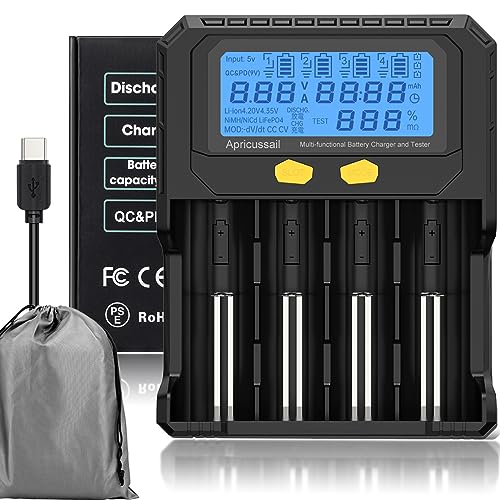
4-Slot Fast Battery Charger & Tester for Li-ion and Ni-MH
Battery Charger for 18650 21700 AA AAA Ni-MH Li-ion 3.7V

18650 Battery Charger with LCD Display and Adjustable Current

EBL Smart 18650 Battery Charger for Rechargeable Batteries

2-Bay 3.7V Li-ion Battery Charger for 18650 21700
A Breakdown Of The Leading Choices
The Thyrm CellVault-21 is built for people who already know how rough a pocket or pack can be on a loose lithium cell. It’s not a charger, and that’s the point: it slots onto a belt, plate carrier, or backpack strap and keeps one 21700 protected from moisture, dirt, and accidental shorting against keys or change.
Inside, a non-conductive silicone foam insert cushions the cell and holds it snug so terminals stay covered. For flashlight carriers, emergency kit builders, and field-use hobbyists, that kind of one-cell vault solves a real problem without adding bulk.
Where It Helps
- Hard-shell design resists crushing in a packed bag or kit
- Waterproof seal keeps rain, sweat, and humidity off the terminals
- Silicone foam cradle absorbs shock during daily carry
- Mounts externally on gear so a spare is always within reach
Things To Consider
- Holds only a single cell, so larger rotations need extras or a different case
- External mounting hardware may not fit every strap width without an adapter
Who It Suits Best
Flashlight carriers and field kit builders who want one rugged 21700 ready at a moment’s notice.
Where Another Pick Suits Better
Anyone who needs to charge multiple cells on the road should look at the IMREN 18650 Battery Charger instead.
Small enough to disappear into a jacket pocket, the IMREN 18650 Battery Charger is the kind of accessory travelers end up relying on without thinking. Two bays handle cells up to 75 mm long, which covers most 21700s along with shorter formats like 18650, 18350, and 14500.
USB-C input means any modern phone charger, power bank, or laptop port becomes a charging source. For commuters and weekend packers, that flexibility matters more than a flashy display.
Good Reasons To Consider
- USB-C power input works with nearly any modern cable and adapter
- Compact shell slips into a coat pocket or organizer pouch
- Broad format support covers most lithium cylindrical cells you already own
- Single 1A output keeps heat manageable on long charges
Trade Offs
- 1A per bay is gentle, so high-capacity 21700 cells take longer to fill
- No built-in display for monitoring voltage or charge stage
Made For
Travelers and casual users who want a grab-and-go charger that runs off any USB-C cable.
Swap It Out When
Shoppers who want fast multi-cell charging should reach for the Nitecore UMS4 instead.
Four bays, Quick Charge compatibility, and a chemistry list that reads like a battery catalog: the Nitecore UMS4 is the workhorse option for anyone managing a small fleet of mixed cells. It’s noticeably larger than pocket chargers, but that’s the trade for parallel 3000mA output per slot.
Compare that to the IMREN 18650 Battery Charger reviewed earlier, and the difference is obvious: IMREN favors portability, while the UMS4 favors speed and flexibility. For a hobby bench or a flashlight collector with a dozen 21700s, the extra size pays off fast.
The Case For It
- Quick Charge 2.0 support unlocks high current when paired with a QC adapter
- Independent slot control means each cell charges at its own optimal rate
- Handles Li-ion, Ni-MH, Ni-Cd, and IMR chemistries in one unit
- Onboard display reports voltage, current, and charge stage per bay
Honest Caveats
- Needs a QC power source to reach advertised top speeds, which is often sold separately
- Bigger footprint than two-bay chargers and harder to pack in tight kits
Key Specs
Right Fit For
Flashlight hobbyists, vape users, and tinkerers who juggle multiple chemistries and want fast turnaround.
Reach For A Different Pick When
Travelers who just need one or two cells topped off will find the VCYWE Battery Charger more pocket-friendly.
The Intelligent 21700 18650 Battery Charger earns its name by being unusually format-tolerant. Beyond the headline 21700 and 18650 support, it reaches into longer cells like 22700 and 26700 alongside standard AA and Ni-MH household sizes.
That makes it a sensible pick for households where one drawer holds everything from vape cells to remote-control rechargeables. The LCD readout gives quick visual confirmation of what’s going on in each bay.
Why It Works Well
- Accepts the longest 21700 variants plus legacy 18650 cells
- Handles Ni-MH and Ni-Cd AAs without swapping chargers
- LCD shows real-time charging status for each slot
- Compact two-bay shell fits on a desk or workbench
Points To Keep In Mind
- Won’t charge non-rechargeable CR123 cells, so double-check before inserting
- Older Ni-MH cells past two or three years of use should be retired rather than recharged
Best Suited To
Mixed-battery households where a single charger needs to cover both cylindrical lithium and standard AAs.
Not Your Match When
Users who need four parallel slots will get more throughput from the Nitecore UMS4.
The Nitecore UMS2 is the smaller sibling to the UMS4 reviewed above. Two bays instead of four, but the same Quick Charge-aware brain, the same chemistry flexibility, and the same polished LCD readout. For most households running one or two flashlights, two bays is plenty.
Where the UMS4 favors a hobby bench, this charger slips into a kitchen drawer or a small gear bag without complaint. In our view, that’s the right trade-off for casual use.
Everyday Wins
- 4000mA total output pushes 3000mA into a single slot when paired with a QC adapter
- LCD reports health, status, and selected charging mode per cell
- Auto-selects voltage and current to match each inserted battery
- Supports Li-ion, IMR, LiFePO4, Ni-MH, and Ni-Cd chemistries
Small Caveats
- Top speeds require a QC 2.0+ adapter, which is usually a separate purchase
- Two bays mean longer waits for four-cell rotations
At A Glance
Who Should Grab It
Daily flashlight or vape users who rotate two cells and want quality charging in a small footprint.
Consider Something Else When
Anyone running four or more cells in parallel will appreciate the extra bays on the Nitecore UMS4.
The 4-Slot Fast Battery Charger & Tester isn’t just a charger: it also discharge-tests cells to report real capacity. For anyone with a stack of 21700s of unknown age, that diagnostic function is genuinely useful rather than a marketing checkbox.
The slot design handles everything from 18650 and 21700 up to the larger 26650 and 32650 cells, plus the usual AA through D household sizes. The LCD readout shows per-cell voltage and progress, which keeps the unit honest.
Benefits That Matter
- Built-in test mode reports actual capacity for aging or mixed cells
- Outer slots support up to 2A fast charging when using the included cable
- Handles LiFePO4 alongside standard Li-ion and Ni-MH chemistries
- Flame-retardant housing reduces risk during long unattended sessions
A Few Limitations
- Faster 2A charging only works in the first and fourth slots, so bay choice matters
- Capacity testing adds time, which may frustrate users who just want a quick top-up
Feature Snapshot
Perfect Match For
Workbench tinkerers and flashlight collectors who want to grade and recharge mixed 21700 inventory.
A Better Fit Elsewhere
Minimalists charging one or two cells at a time will find the VCYWE Battery Charger simpler to live with.
For someone just stepping into rechargeables, the VCYWE two-slot charger is a clean entry point. There’s no display to decode, no modes to choose, and no QC adapter hunt. Slot a cell in, plug in a USB cable, and walk away.
It covers an unusually long list of formats, which means it stays useful even as your collection grows beyond 21700 into 14500, 16340, and the larger 26650 cells. The trade-off is speed, but for occasional charging, that rarely matters.
The Practical Payoff
- Set-and-forget operation with no menu or mode confusion
- Supports common lithium sizes plus household Ni-MH AA and AAA cells
- USB power input works with phone chargers and power banks
- Compact shell fits on a desk or shelf without taking over
Less Ideal Details
- No display, so charge progress is a waiting game
- Output current is modest, so large 21700 cells fill slowly
Built With In Mind
First-time rechargeable users who want a charger they can set up without reading a manual.
Skip It When
Power users with a 21700 rotation of four or more cells will want the four-bay 4-Slot Fast Battery Charger & Tester.
The Swanlake 18650 Battery Charger stands out by letting you dial the current between 0.5A, 1A, and 2A. That flexibility matters for two reasons: smaller cells charge gently without overheating, while larger 21700s can be pushed faster when needed.
The LCD readout makes it easy to confirm which mode you’re in. Unlike the beginner-friendly VCYWE Battery Charger reviewed earlier, this one assumes the user knows what they’re doing and wants control.
Features That Help
- Adjustable 0.5A / 1A / 2A current for matching cell size and chemistry
- LCD display shows voltage and charging progress per bay
- Accepts the full 18650-to-26650 lithium range plus LiFePO4
- Charges Ni-MH cells at a steady 0.5A for safety
Points To Note
- Higher current modes only apply to lithium cells, not Ni-MH
- Manual current selection means a brief learning curve for first-time users
Whose Shelf It Belongs On
Users who charge a mix of small and large lithium cells and want to tune the current to match.
Look Elsewhere When
Anyone needing four parallel bays should consider the Nitecore UMS4 instead.
The EBL Smart 18650 Battery Charger uses iQuick technology to read each cell and push up to 2000mA into a single slot when the chemistry allows. It’s the kind of charger that disappears into a routine: drop cells in after a weekend trip, and they’re ready by morning.
Format coverage runs the full lithium catalog from 10440 up through 26700, and it tops off household Ni-MH AAs and AAAs as well. For most homes, that’s enough to retire older chargers entirely.
The Value In It
- iQuick auto-detection matches current to each cell on insertion
- 2000mA single-slot output shortens wait times on big 21700 cells
- Wide format support covers obscure sizes like 21750 and 22700
- Compact shell fits easily in a drawer alongside other accessories
Worth Bearing In Mind
- Fast charging demands a quality USB adapter, which is sold separately
- Two-bay design means bulk rotations still take multiple cycles
Who Will Love This
Households with a steady two-cell rotation who want smart charging without paying for four-bay hardware.
Another Choice May Suit
Shoppers with heavier rotation needs should consider the 4-Slot Fast Battery Charger & Tester.
The FARSAIL 2-Bay Charger keeps things simple: two bays, micro-USB input, and a no-frills LCD that reports per-cell voltage. There’s no adjustable current, no QC magic, and no chemistries outside the Li-ion range, which is exactly why it costs less than the rest of this lineup.
For light use or as a backup charger tucked into a car glovebox, that simplicity is a feature. Most shoppers looking at this unit already own a primary charger and want a spare.
Reasons It Performs
- Up to 1000mA per bay fills 21700 cells faster than basic trickle chargers
- Per-cell LCD voltage readout confirms charge progress
- Auto shutoff when each cell reaches full capacity
- Micro-USB input works with any common phone cable
Practical Considerations
- Limited to Li-ion cells only, so Ni-MH users need a separate unit
- Plastic shell feels lighter than premium options and warrants careful handling
Best Suited To
Budget-focused shoppers who need a reliable backup charger or a secondary unit for travel.
Reach For A Different Pick When
Anyone charging Ni-MH household cells should look at the VCYWE Battery Charger for broader chemistry support.
What Matters Most Before Choosing 21700 Batteries
Match The Charger To The Cells You Actually Own
Before anything else, list the formats sitting in your drawer. A charger that handles 21700 but ignores 18650 forces you to keep an old unit around, which defeats the purpose of consolidating. Many chargers on this list cover both formats plus legacy Ni-MH sizes, which makes them more useful as time goes on. Chemistry matters too: Li-ion, LiFePO4, and Ni-MH all use different charge profiles, and a smart charger detects which is which.
Charging Speed And Power Source
Higher current ratings shorten wait times on large 21700 cells, but only if the power adapter can deliver enough current. Quick Charge compatibility unlocks 2000mA to 3000mA per slot on premium chargers, while a basic USB port caps you around 1000mA. In most homes, a QC wall adapter is a one-time add-on that pays off across multiple devices.
Slot Count And Rotation Habits
Two bays handle a daily two-cell rotation, which is enough for most flashlight users. Four bays make sense for collectors, photographers running high-drain lights, or anyone rebuilding a fleet from mixed-condition cells. Larger units cost more and take up more space, so match the bay count to your real rotation rather than wishful thinking.
Storage And Protection
A loose 21700 in a bag is a short-circuit waiting to happen, especially against keys or loose change. Hard-shell cases like the Thyrm CellVault-21 keep terminals covered and add water resistance for field use. For home storage, segmented plastic cases hold more cells per dollar, but lack the mounting convenience.
Key Considerations Across These Picks
Common Shopping Slip Ups
The most common mistake is buying a charger that fits the cell physically but doesn’t match the chemistry. CR123 cells look like 16340 rechargeables but are usually non-rechargeable, and pushing current into them causes real problems. Always verify that your cells are explicitly listed as supported before pressing start.
A second slip is ignoring the power adapter. A premium charger capped by a 5V/1A phone plug will charge at a crawl, which leads to frustration that gets blamed on the charger rather than the missing adapter.
What The Higher Tier Buys
Spending more gets you Quick Charge support, faster per-slot current, and capacity testing on diagnostic units. For casual users, those features go unused. For hobbyists managing mixed-condition 21700s, they save real time and identify weak cells before they fail in the field.
Premium chargers also tend to use better internal components, which translates to longer service life and safer unattended charging. The honest read is that mid-tier chargers like the Nitecore UMS2 hit the sweet spot for most households.
Frequently Asked Questions
What Is A 21700 Battery?
A 21700 is a cylindrical lithium-ion cell measuring 21 mm in diameter and 70 mm long. It holds more capacity than the older 18650 format and is now common in high-lumen flashlights, portable power stations, and high-drain electronics.
Can I Charge 21700 And 18650 Cells In The Same Charger?
Most chargers on this list handle both formats because they share the same lithium-ion chemistry. Always confirm your specific model lists both sizes before inserting cells, and never mix chemistries in a single bay.
How Many Times Can A 21700 Be Recharged?
Typical 21700 cells are rated for 500 to 1000 full charge cycles before noticeable capacity loss. Gentle charging at lower current rates, avoiding full discharges, and storing cells at partial charge all extend usable life.
Is A Higher mA Charging Current Bad For Batteries?
Higher current shortens charge time but generates more heat, which accelerates wear over many cycles. Smart chargers detect cell size and condition to pick a safe current, so leaving that decision to the charger is usually fine.
Do I Need A Special Case For 21700 Storage?
A protective case keeps terminals covered so cells can’t short against keys, coins, or other batteries in a bag. For one or two spare cells, a hard-shell vault works well; for larger collections, segmented plastic organizers keep everything sorted.
Bottom Line
A 21700 setup lives or dies by the support gear around it. Pick a charger that matches the formats and chemistries you actually own, give serious thought to slot count and power delivery, and protect spare cells with a real case rather than tossing them loose in a drawer. The picks above cover everything from budget backup units to diagnostic workhorses, so most households will find a clean fit somewhere in the lineup.