A dead cordless tool kills momentum fast. A 20V charger that actually tops off batteries in a reasonable window keeps a weekend project, a job site, or a yard cleanup moving. The picks below lean on published specs, real-world use cases, and the quirks each model brings, so the right charger ends up matched to the right battery.
The Shortlist At A Glance

Leisuda 20V Fast Charger for DeWalt Batteries

YCFSERMYO 2A Fast Charger for Black & Decker 20V

REACELL DCB115 DCB112 Charger for DeWalt 20V/60V MAX
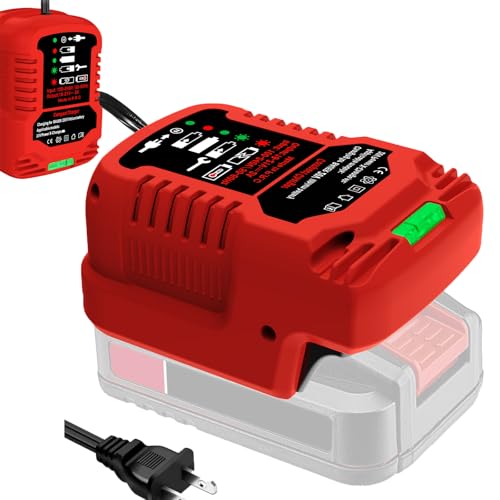
UNIKI Fast Charger for Bauer 20 Volt Battery

JJXNDO Mini Portable Charger for Bauer 20V

JYJZPB LCS1620B Replacement Charger for Black & Decker 20V

LaiPuDuo LCS1620 Charger for Black & Decker Porter-Cable Stanley

VelgoNyx DCB104 4-Port Charging Station for DeWalt

LP 20V DCB112 Replacement Charger for DeWalt

Westinghouse W20V2AMP 20V 2A Fast Charger
Taking A Closer Look At The Options
The Leisuda 20V Fast Charger covers the common DeWalt 20V MAX packs, including the DCB200, DCB206, and the compact DCB203. It pulls AC power from any standard 100-260V outlet, which matters for contractors who bounce between job-site generators and home garages.
Output sits at 20V/2.0A, and the wall-side brick stays cool through venting cut into the housing. For anyone replacing a lost OEM charger without chasing down a serial-matched unit, this fills the role cleanly.
Where It Excels
- Broad DeWalt 20V MAX compatibility across compact and extended-capacity packs
- Universal AC input range suits travel and generator use
- Cooling vents reduce thermal throttling during back-to-back charges
- Steady 2.0A output shortens downtime on larger 5Ah packs
Points To Keep In Mind
- Limited to DeWalt batteries only, so multi-brand shops need a separate unit
- Plastic shell feels lighter than OEM, which can matter on rough sites
Feature Snapshot
Built With In Mind
DeWalt owners who have lost an OEM charger and want a drop-in replacement that handles common 20V packs from compact to 5Ah sizes.
Consider Something Else When
Shoppers running mixed DeWalt voltages should look at the REACELL DCB115 DCB112 Charger for DeWalt 20V/60V MAX, which extends support into 60V packs.
The YCFSERMYO 2A Fast Charger earns its spot for shoppers who want the smallest possible Black & Decker 20V charger that still pushes a 2-amp output. Slide packs from the LBX20, LBXR20, and LB2X40 families all click in, which covers most modern B&D outdoor and DIY tools.
Its footprint slips into a tool bag side pocket without bulging, and the simple LED status takes the guesswork out of long charges on the back porch or in a work van. Compared with the larger Leisuda, this one trades raw charging headroom for portability.
A Favorable Mix
- Compact shell travels well in bags and small drawers
- Compatible with a wide range of B&D 20V slide packs
- 2A output trims charging time versus stock 1A units
- Status indicator keeps charge progress visible at a glance
Minor Gripes
- Output is moderate, so high-capacity 4Ah packs take longer
- Plastic housing runs warm under extended charging sessions
Right Fit For
Black & Decker users who want a compact travel charger for occasional yard tools and weekend projects.
Look Elsewhere When
Anyone running multi-voltage batteries across brands should consider the LaiPuDuo LCS1620 Charger for Black & Decker Porter-Cable Stanley, which stretches compatibility further.
The REACELL DCB115 DCB112 Charger handles both DeWalt 20V MAX and 60V MAX FlexVolt packs, which removes a layer of charger clutter for anyone running yard tools and heavier framing equipment on the same battery platform. The AC input runs at 110V/50-60Hz, standard for North American shop circuits.
Output clocks in at 20V/2.0A, and the unit ships with a smart monitoring routine that reads pack temperature before pushing current. That extra check matters in cold garages or hot truck beds where lithium cells suffer if charged too aggressively. Compared with the single-voltage Leisuda, this one trades nothing in the 20V lane while opening the door to 60V.
Reasons It Performs
- Dual-voltage support covers 20V MAX and 60V MAX packs
- Smart temperature read extends battery life in extreme conditions
- Wide pack compatibility includes DCB200 through DCB612
- Steady 2A current keeps charge times reasonable
Things To Consider
- Bulkier than single-voltage bricks, so it hogs outlet space
- Premium pricing reflects the dual-voltage feature
Best Suited To
Contractors and serious DIYers running a mixed DeWalt 20V and 60V MAX battery fleet who want one charger instead of two.
Skip It When
Shoppers focused only on portability should look at the Leisuda 20V Fast Charger for DeWalt Batteries, which has a slimmer shell.
The UNIKI Fast Charger targets Bauer 20V MAX batteries from the 1702C-B series, which covers a chunk of Bauer’s cordless drill, impact, and saw lineup. A 44-inch cord gives genuine reach across a workshop bench, so the wall outlet no longer dictates where batteries live between sessions.
The built-in cooling fan keeps output steady even when packs arrive warm from a job. Output sits at 18-21V/2A, matching what most Bauer packs expect during a fast charge. Compared with the smaller JJXNDO mini charger, this one trades some portability for a longer cord and active cooling.
Strong Points
- Generous 44-inch cord reaches across large benches
- Active cooling fan supports back-to-back charging
- 2A output shortens downtime on standard Bauer 20V packs
- Wide AC input works with both home and shop circuits
Room For Improvement
- Larger footprint than mini chargers, so it eats shelf space
- Fan noise is audible in a quiet home office
Quick Facts
Whose Shelf It Belongs On
Bauer 20V tool owners running a fixed workshop who want active cooling and a long cord for flexible placement.
Another Choice May Suit
Anyone needing the smallest possible charger for travel should look at the JJXNDO Mini Portable Charger for Bauer 20V instead.
The JJXNDO Mini Portable Charger is the smallest unit in this roundup, built specifically for Bauer 20V lithium packs like the 1701C-B and 1704C-B. It runs from any 100-240V AC outlet and pushes 18-21V/2.0A, which keeps charge times reasonable on smaller Bauer batteries.
The whole thing weighs less than a deck of cards, so it disappears into a glove box or trailer drawer. There is a clear caveat: the listing is strict about brand exclusivity, and other-brand packs will not seat properly. Compared with the UNIKI, this JJXNDO trades the fan and long cord for genuine pocketability.
Points In Its Favor
- Tiny shell fits in a glove box or trailer drawer
- Universal AC input handles both home and travel outlets
- 2A output trims charge time on standard Bauer packs
- Lightweight design suits mobile crews and renters
Honest Caveats
- No active cooling, so warm packs charge more slowly
- Strictly Bauer-only; cross-brand packs will not seat
- Short cord limits placement options
Feature Rundown
Who Should Grab It
Bauer tool owners who need a tiny, throw-in-the-bag charger for travel, job sites, or rental properties where outlet space is tight.
Reach For A Different Pick When
Workshop users wanting active cooling and a longer reach should look at the UNIKI Fast Charger for Bauer 20 Volt Battery instead.
The JYJZPB LCS1620B Charger handles Black & Decker 20V MAX lithium slide packs across the LBXR20, LBX20, LB2X4020, and LB20 families. Input voltage spans AC 100-240V, which is forgiving when outlets vary between the garage and the driveway.
The standout feature is the smart LED indicator, which shifts state as the pack moves from charging to full. That visual cue removes the common guesswork of “is it done yet?” across a busy afternoon. Output runs at 20V/1A, slower than the YCFSERMYO but consistent for overnight top-ups.
The Practical Payoff
- Smart LED indicator shows charging status at a glance
- Wide AC input handles varied outlet situations
- Covers the major B&D 20V slide pack families
- Drop-in replacement for OEM LCS1620 chargers
Trade-Offs
- 1A output is slower than competing 2A chargers
- Indicator light can be hard to read in bright sunlight
Feature Card
Made For
Black & Decker 20V owners who prefer clear visual feedback and don’t mind slower, gentler overnight charging cycles.
A Better Fit Elsewhere
Shoppers wanting faster turnaround on 4Ah packs should consider the YCFSERMYO 2A Fast Charger for Black & Decker 20V instead.
The LaiPuDuo LCS1620 Charger stretches compatibility across Black & Decker, Porter-Cable, and Stanley 20V batteries, which is rare in this category. It covers 12V, 14.4V, 18V, and 20V lithium packs from the same slide family, so a single brick handles older yard tools and current drills.
For anyone who has inherited tools from a parent or accumulated batteries across brand buyouts, this kind of cross-compatibility saves real shelf space. US plug configuration keeps it ready for North American outlets out of the box.
The Good Stuff
- Cross-brand support spans Black & Decker, Porter-Cable, and Stanley
- Handles 12V, 14.4V, 18V, and 20V slide packs in one unit
- Reduces the number of chargers cluttering the workshop
- US plug ready for North American outlets
Things To Weigh
- Cross-brand claims vary in real-world fit, so pack seating should be checked
- Charging speed is modest compared with single-brand fast chargers
Who It Suits Best
Shoppers with mixed Black & Decker, Porter-Cable, and Stanley batteries who want one charger instead of three separate bricks.
Where Another Pick Suits Better
Users wanting the fastest possible B&D-only charge should look at the YCFSERMYO 2A Fast Charger for Black & Decker 20V instead.
The VelgoNyx DCB104 Charging Station handles up to four DeWalt 12V, 20V, or 60V FlexVolt packs at the same time, with each port running its own independent charge cycle. That setup matters on job sites where a crew runs through two or three batteries per tool in a single shift.
Rather than rotating packs through one bay overnight, a station like this fills an entire rack by morning. Compared with the REACELL single-port charger, this one trades portability for raw throughput and centralized battery management.
Useful Touches
- Four independent ports eliminate rotation hassles
- Supports 12V, 20V, and 60V FlexVolt packs
- Centralizes battery management in one spot
- Saves wall outlet space versus running four single chargers
Less Ideal Details
- Larger desktop footprint than single-bay units
- Charging speed per port is moderate to manage heat across four packs
- Higher cost than single-port replacements
The Numbers That Matter
Perfect Match For
Crews and serious hobbyists running multiple DeWalt batteries who want to centralize charging in one organized bay.
Swap It Out When
Solo users with one or two packs will find the REACELL DCB115 DCB112 Charger for DeWalt 20V/60V MAX more practical.
The LP 20V DCB112 Charger covers a long list of older DeWalt battery models, including DCB102, DCB105, DCB107, DCB112, DCB115, DCB118, and DCB119, plus packs like DCB200, DCB204, DCB206, and DCB207. That breadth is the real selling point for anyone running mixed-vintage DeWalt tools.
An LED indicator flashes red during charging and switches to a steady red when the pack is full, which lines up with the simpler JYJZPB style. The wide model coverage means older batteries that won’t seat in newer chargers often fit here without issue. Compared with the Leisuda, this LP unit trades slightly less universal AC input for broader pack compatibility.
Everyday Perks
- Covers an extensive list of legacy DeWalt battery models
- Clear LED indicator with flashing-to-steady status shift
- Useful for reviving older batteries that newer chargers reject
- Standard 2A output for predictable charging times
Practical Considerations
- Charging speed is moderate compared with higher-output units
- Plastic shell feels lighter than OEM chargers
Who Will Love This
DeWalt owners with a mix of old and new batteries who want one charger that handles both without juggling multiple bricks.
Not Your Match When
Users needing 60V MAX support should look at the REACELL DCB115 DCB112 Charger for DeWalt 20V/60V MAX instead.
The Westinghouse W20V2AMP is built for the Westinghouse 20V outdoor tool lineup, charging the W20V2AH, W20V4AH, and W20V5AH packs sold alongside cordless snow shovels, lawn mowers, and trimmers purchased from 2024 onward. It runs from any standard 120V wall outlet and pushes a 2A output.
Thermal, over-voltage, and over-current protection sit on the inside, which matters when batteries come in cold from a winter cleanup or hot from a summer mow. That kind of layered circuit protection tends to extend pack life. Compared with the budget YCFSERMYO, this Westinghouse unit trades brand-flexibility for system-specific safety engineering.
Notable Upsides
- Built-in thermal, over-voltage, and over-current protection
- Charges all three current Westinghouse 20V battery sizes
- 120V input works with any standard household outlet
- Matched to outdoor tools purchased from 2024 forward
Some Limits To Know
- Brand-locked to Westinghouse 20V packs
- 2A output is steady but not the fastest in the category
Feature Overview
Made For
Westinghouse outdoor tool owners who want a charger matched to the brand’s safety and battery ecosystem from 2024 onward.
A Better Fit Elsewhere
Anyone running mixed-brand batteries should consider the LaiPuDuo LCS1620 Charger for Black & Decker Porter-Cable Stanley instead.
Picking The Right Charger For Your Batteries
Three attributes drive most charging decisions in this category. The first is battery compatibility, which means matching the slide-style connector to your specific brand and series. The second is output current, where a 2A charger tops off a 5Ah pack roughly twice as fast as a 1A unit, but a slower charger tends to extend long-term battery health. The third is form factor, ranging from pocketable single-bay bricks to multi-port stations built for job-site racks.
Match The Connector Before Anything Else
A 20V charger only works with batteries that share its slide-style mount and brand-specific signaling. DeWalt 20V MAX packs, Black & Decker slide packs, Bauer 1702C-B series packs, and Westinghouse W20V packs each use their own connector geometry. Cross-brand “universal” claims usually mean compatibility within a corporate family, like Black & Decker, Porter-Cable, and Stanley, rather than across all three major platforms.
Output Current And Real-World Timing
A 2A charger hits a typical 2Ah pack in roughly an hour, while the same pack on a 1A charger takes closer to two. For crews cycling through batteries on a deadline, that gap matters. For weekend gardeners charging overnight, slower output often extends battery lifespan, since lithium cells stay cooler during a gentler charge cycle.
Single Bay Or Multi-Port Station
Solo users with one or two batteries rarely need a charging station, and a compact brick like the JJXNDO Mini Portable Charger for Bauer 20V slips into a drawer without complaint. Crews running three or four packs a day, on the other hand, often save real time with a four-port station like the VelgoNyx DCB104 Charging Station. The honest read is that the upgrade pays off when battery rotation becomes the bottleneck, not before.
Key Considerations Across These Picks
Mistakes Worth Dodging
The most common slip is grabbing a charger based on voltage alone. “20V” prints on dozens of bricks, but the slide mount and brand signaling vary wildly, and a wrong-brand pack simply will not seat. A second trap is assuming higher amps always win: fast charging generates heat, and packs that arrive warm from a job or a hot truck bed often benefit from a gentler 1A cycle until they cool.
Where The Extra Money Goes
Premium chargers in this category typically add dual-voltage support (20V and 60V in one brick), smart temperature monitoring that pauses charging on overheated packs, or active cooling fans that sustain output across consecutive cycles. The upgrade is worth it when batteries cost more than the charger itself, which is often the case with high-capacity 5Ah and 9Ah packs. For shoppers with one or two modest 2Ah batteries, a basic 2A brick usually covers the same charging job at a lower cost.
Frequently Asked Questions
Are aftermarket 20V chargers safe for OEM batteries?
Most aftermarket chargers in this roundup use standard lithium-ion charge profiles compatible with OEM packs. The honest read is that thermal and over-current protection on units like the Westinghouse W20V2AMP adds meaningful safety, while basic bricks may lack those circuit layers.
Can a 20V charger handle 60V FlexVolt batteries?
Only specific chargers designed for both voltages can handle FlexVolt packs. The REACELL DCB115 DCB112 Charger for DeWalt 20V/60V MAX is one example, and the VelgoNyx DCB104 Charging Station supports them as well.
How long does a 2A charger take to fill a 5Ah pack?
A 2A charger typically fills a 5Ah pack in roughly 90 minutes to 2 hours, depending on the cell chemistry and starting charge level. Slower 1A chargers roughly double that window.
Do all 20V chargers work internationally?
Most list 100-240V AC input, which covers North American, European, and Asian outlets. Plug shape still varies, so a simple adapter is often needed for travel, and the JJXNDO Mini Portable Charger is a good travel-oriented example.
Is a multi-port charging station worth it for home use?
Multi-port stations earn their keep when battery rotation becomes a daily bottleneck. For homeowners charging one or two packs a week, a single-bay unit typically covers the same job at lower cost and a smaller footprint.
The Takeaway
The right 20V charger comes down to matching the slide connector to your specific battery family, choosing output current that fits your charging window, and weighing a multi-port station only if rotation actually slows you down. The picks above cover the common platforms, from DeWalt and Black & Decker through Bauer and Westinghouse, so the next dead battery on the bench doesn’t have to kill your afternoon.