A dead battery always picks the worst possible moment. You head out for work on a frosty morning, turn the key, and get that hollow click from a starter that has lost its fight. The right charger turns that moment into a ten-minute pause instead of a tow truck call.
The seven picks below cover the spread most people actually need. Some are simple manual units you dial in by hand, others run a multi-stage program on their own. A few handle lithium, and one is the shop-grade bench unit you keep on a workbench for years.
The Choices Worth Comparing

PZP 0-15Amp 12V 24V Manual Battery Charger Maintainer

PZ.P 15-Amp 12V/24V Smart Battery Charger
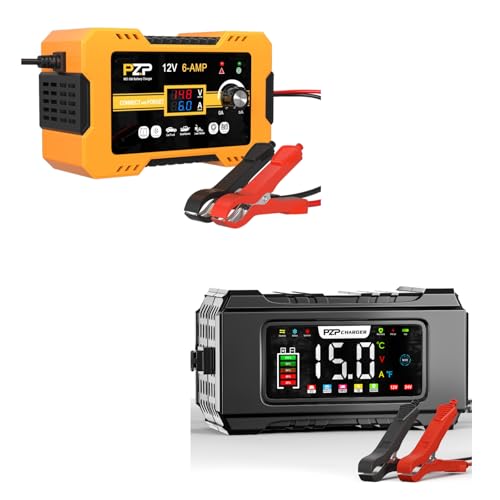
PZP 15-Amp 12V/24V Smart Battery Charger Maintainer

PZP 12V Car Battery Charger 0-6A Smart Manual
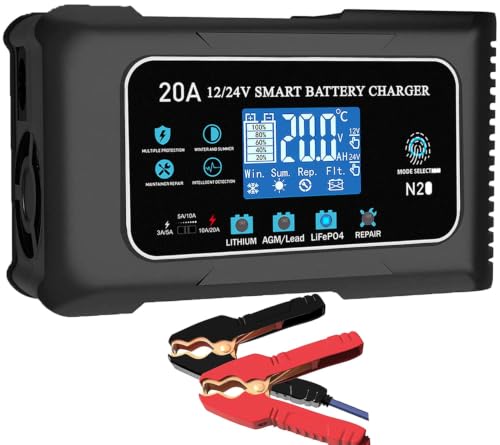
Haisito 12V/24V 20A Car Battery Charger Maintainer

Clore Automotive PL2320 20-Amp Smart Charger

PZP 12V Car Battery Charger 0-10A Smart Manual
More Details On Our Top Picks
This PZP unit leans into the older-school approach. You set the amperage by hand instead of trusting an automatic profile, which makes it a comfortable match for someone restoring a deep cycle, recovering a neglected AGM, or working through batteries that don’t read cleanly to a smart probe.
The 12V and 24V switch covers both passenger vehicles and light trucks, and the adjustment range goes up to about 15A, which is plenty for cars and most lawn equipment. The honest read is that beginners may find the dial-in approach slower than a fully automatic unit, but owners who like being part of the process tend to keep this kind of charger on the shelf for years.
Why It Works Well
- Manual current adjustment lets you match a battery’s condition instead of trusting a fixed program.
- Handles both 12V and 24V systems, which means cars, trucks, and many tractor setups.
- Strong 15A ceiling speeds up recovery on larger batteries that smaller trickle units struggle with.
- Useful as both a charger and a longer-term maintainer when you dial the current down.
Things To Consider
- No automatic multi-stage profile, so you need to remember to step the current down as the battery fills.
- Display and indicator details aren’t published, so reading charge state requires a separate meter.
- Best suited to a garage or workshop outlet rather than frequent in-vehicle use.
Key Specs
Right Fit For
Owners restoring classic cars or working through a stack of neglected batteries who prefer dialing in current by hand.
Swap It Out When
You want a screen-driven, set-and-forget experience instead, in which case the PZ.P 15-Amp Smart Charger covers that brief.
This PZ.P unit is the chemistry-friendly sibling of the manual charger above. It runs a fully automatic 9-stage charging program that handles lead-acid banks and LiFePO4 packs on the same hardware, which makes it a strong fit for a household that runs a mix of motorcycles, lawn tractors, boats, and a daily car.
Temperature compensation is the practical detail worth flagging. Charging voltage changes with ambient temperature, and built-in compensation helps the unit avoid overcharging in a hot garage or undercharging a battery in an unheated shed. Compared to the PZP manual pick, you trade a knob for a smarter profile, which most casual owners prefer.
Benefits That Matter
- 9-stage automatic program adjusts itself, so you can leave it connected through the off-season.
- LiFePO4 support in the same unit means future battery upgrades don’t force a new charger.
- Temperature compensation keeps charging voltage sensible across seasons.
- Wide use-case coverage from motorcycles up through trucks and boats.
Worth Noting
- Higher feature count means slightly more to read before the first session than a single-knob charger.
- Some users may find 15A slower on very large deep cycle banks than a 20A unit like the Haisito.
Quick Facts
Perfect Match For
Households running a mix of vehicles and batteries who want one charger they can leave connected without babysitting.
A Better Fit Elsewhere
Shops that regularly recover deeply discharged truck batteries will appreciate the higher 20A ceiling of the Haisito.
If you want to watch the numbers, this PZP model leans into that. A color screen reports voltage, current, internal temperature, and a charge percentage in both Fahrenheit and Celsius, and the manufacturer states it stays readable in direct sunlight. That kind of feedback matters during a long maintenance session when you want to confirm the float stage actually kicked in.
Underneath the screen, it runs the same 9-stage automatic program pattern and switches to a trickle or float mode once the battery is full. The 6.7-foot cable gives you reach into a truck bed or a rear-mounted motorcycle battery. Where the simpler PZP 0-6A pick focuses on small batteries, this one scales up to roughly 100Ah banks.
Notable Gains
- Color screen shows charge percentage, voltage, and temperature at a glance.
- Covers roughly 4 to 100Ah batteries with a current ladder from 0.7A up to 6A.
- 9-stage automatic program transitions to float mode for winter storage.
- Long cable reach simplifies awkward battery locations.
Trade Offs
- 6A maximum is fine for cars but slow on very large truck or RV banks.
- More data on the screen means slightly more setup time before the first charge.
Built With In Mind
People who like real-time readouts and want to confirm a battery actually reached full charge before storing a vehicle.
Reach For A Different Pick When
Your garage mainly sees deep cycle house banks, where the higher 20A output of the Haisito cuts charge time considerably.
Not every garage needs a heavy-duty bench unit. This PZP trickle charger targets the smaller end of the spectrum: lawn tractor batteries, motorcycle banks, and the occasional 12V passenger car. The 0 to 6A dial lets you pick a low current for a slow, gentle recovery on a battery that has sat too long.
The unit doubles as a maintainer and includes a desulfation mode for lead-acid banks, which matters for seasonal vehicles. Owners commonly report that small trickle chargers like this pay for themselves the first time a lawn tractor refuses to start in spring, and the compact shell makes it easy to leave on a shelf between uses.
The Practical Payoff
- Variable 0 to 6A current supports both gentle recovery and standard charging.
- Includes a desulfation step for lead-acid batteries that have sat unused.
- Compact shell fits in a small shed or garage corner.
- All-in-one design combines charger, maintainer, and trickle roles.
Points To Note
- 12V only, so it won’t serve a 24V truck or tractor system.
- 6A ceiling means longer charge times on larger batteries.
Spec Overview
Made For
Shed owners and suburban households maintaining lawn tractors, ATVs, and small car batteries through the off-season.
Look Elsewhere When
You also need 24V support, in which case the PZ.P 15-Amp Smart Charger covers both voltages on one unit.
The Haisito is the unit to look at when standard 15A chargers feel slow. It pushes up to 20A on the 12V side and around 10A on 24V, which shortens recovery time on large deep cycle banks, RV house batteries, and commercial truck starting packs.
A 7-stage automatic program cycles through the right current for each phase, and the chemistry menu covers flooded, AGM, gel, calcium, EFB, and LiFePO4. A three-level adjustable current knob lets you dial down for smaller batteries. Owners with larger vehicles tend to appreciate the extra headroom once they’ve watched a 15A charger spend an entire afternoon on a deeply discharged truck battery.
Real Benefits
- 20A maximum output shortens charge time on larger batteries.
- Wide chemistry support including LiFePO4 and calcium types.
- Three-level adjustable current scales from small motorcycle banks to big truck banks.
- Wide input voltage range makes it flexible on different outlets.
Some Limits To Know
- Bigger output means more heat under heavy loads, so ventilation around the unit matters.
- Heavier and bulkier than the small PZP trickle pick, which is expected for the higher current class.
Best Suited To
RV owners, truck drivers, and anyone with large deep cycle banks who needs faster turnaround than a 15A charger provides.
Where Another Pick Suits Better
Casual owners with a single small car battery may find the PZP 0-6A more than enough and easier to store.
The Clore PL2320 sits at the pro end of the roundup. It’s a fully automatic smart charger with temperature compensation, designed for technicians who want one unit that handles fast charging, repair, maintenance, and long-term storage without juggling different boxes.
The Pro-Logix platform also doubles as a stable power supply, which helps when you’re updating vehicle modules or running diagnostic routines at the bench. Compared to the Haisito, the trade-off is more conservative output at 20A maximum but a longer track record on professional shop floors.
Useful Touches
- Functions as charger, maintainer, repair tool, and stable bench supply in one chassis.
- Temperature compensation supports accurate charging in climate-sensitive shops.
- Supports both 6V and 12V batteries, including classic cars and motorcycles.
- Long-running professional platform with widespread service familiarity.
Honest Caveats
- Heavier and more expensive-feeling than the consumer-grade picks above.
- Feature density takes longer to learn on first use than a simple trickle charger.
Feature Snapshot
Who Should Grab It
Home mechanics and small shop owners who want a single bench unit that survives daily use and supports diagnostic work.
Skip It When
You’re charging occasional motorcycle and lawn tractor batteries, where the smaller PZP 0-6A pick is more proportionate.
This PZP sits in the gap between the small 0-6A trickle pick and the larger 15A and 20A units. The 0 to 10A manual dial covers a mid-size car battery comfortably while still allowing very low current for reviving a deeply discharged or sulfated bank.
It carries the same all-in-one design as the smaller sibling, combining charger, maintainer, trickle, and desulfator functions into one box. If your household has outgrown the 6A ceiling but doesn’t need a full 20A shop unit, this model offers a sensible middle step.
The Good Stuff
- 0 to 10A range bridges the gap between trickle and mid-power charging.
- Built-in desulfation helps recover lead-acid batteries that have sat unused.
- 12V focus keeps the controls simple for non-technical owners.
- Compact enough to leave on a workbench or shelf.
Minor Gripes
- No 24V support, so it can’t serve trucks or tractors with paired batteries.
- Slower than 15A or 20A units when charging larger banks.
Whose Shelf It Belongs On
Owners with a daily-driver sedan and a couple of smaller batteries who want more headroom than a 6A trickle but don’t need a 20A shop unit.
Not Your Match When
You regularly jump between cars and 24V systems, where the PZ.P 15-Amp Smart Charger is more flexible.
What To Weigh Before Choosing A 20 Amp Lead Acid Battery Charger
The right charger depends less on headline amperage and more on the batteries you actually own. Start by matching voltage: a 12V-only unit covers most passenger cars, motorcycles, and lawn equipment, while a 12V/24V model earns its place once you have a light truck or tractor in the mix. Charging a 24V pack with a 12V-only charger simply won’t work, and using a 24V charger on a 12V battery risks damage.
Amperage drives speed. A 6A trickle is gentle and works on small batteries, but a deeply discharged mid-size car battery will sit overnight. Moving up to 10A, 15A, or 20A shortens recovery time considerably, and a 20A unit like the Haisito or Clore PL2320 is a sensible pick when you routinely deal with larger deep cycle banks.
Battery chemistry matters too. AGM, gel, flooded, calcium, and LiFePO4 batteries each prefer slightly different charging voltages. Multi-stage automatic chargers sense this for you, while a manual unit asks you to set the right profile yourself. Temperature compensation is a quiet feature that adjusts voltage for hot garages or cold sheds, and it earns its keep in any climate that swings between seasons.
Finally, think about how you’ll use it. A seasonal vehicle stored for months benefits from a long-term float mode. A daily driver in a cold climate wants a faster recovery rate. A small shop needs stable power supply behavior for diagnostics. Match the charger to the realistic workload rather than the most impressive spec sheet.
What Separates A Basic Charger From A Premium One
Mistakes Worth Dodging
The most common slip is buying the cheapest 12V-only unit and then wondering why it won’t touch a 24V tractor or commercial truck. Voltage support is the first filter, and skipping it costs time.
The second trap is underestimating amperage needs. A 2A or 6A trickle works on a motorcycle battery, but a deeply discharged 80Ah car battery will take the better part of a day. Owners who regularly deal with full-sized cars benefit from at least 10A, and large banks justify stepping up to 20A.
Finally, don’t overlook chemistry support. A charger designed only for flooded cells can undercharge an AGM or overcharge a gel battery. Multi-chemistry automatic units cost a little more up front but prevent repeat replacements downstream.
The Upgrade Payoff
Higher-tier chargers earn their price through three practical advantages. Automatic multi-stage programming manages bulk, absorption, and float phases without manual intervention, which protects battery life over years.
Temperature compensation adjusts output for the environment, which matters more than people expect in unheated garages or summer workshops. Add in stable power supply modes and diagnostic-friendly features, and the upgrade pays back quickly for anyone who uses the unit beyond occasional weekend top-ups.
Frequently Asked Questions
What does “20 amp” actually mean on a battery charger?
The 20 amp rating refers to the maximum current the charger can deliver into the battery at its peak charging phase. Real output drops automatically as the battery fills, so the figure is a ceiling rather than a constant flow.
Can a 20 amp lead acid battery charger handle lithium batteries?
Only if the manufacturer lists LiFePO4 support in the specifications. Some 20A units are lead-acid only, while others like the PZ.P and Haisito include a dedicated lithium mode that uses a different voltage profile.
How long does it take to charge a dead car battery?
A standard 50Ah car battery at roughly 50 percent charge typically needs several hours on a 10A unit and less time on a 15A or 20A charger. Deeply discharged or larger banks take longer, and temperature affects the result.
Is it safe to leave a smart charger connected for weeks?
Yes, when the charger includes a float or maintenance mode and the manufacturer rates it for long-term connection. Manual units without float protection should be disconnected once the battery reaches full charge.
Do I need a 24V-capable charger for a regular car?
No. Standard cars use a single 12V battery. You only need 24V support if you work on trucks, tractors, or equipment that pairs two 12V batteries in series.## Final VerdictThe smartest pick depends on what sits in your garage. A small fleet of motorcycles and a lawn tractor only needs the compact PZP 0-6A trickle, while a daily driver and a deep cycle RV bank both benefit from the Haisito’s 20A ceiling. For mixed vehicles and a longer-term maintainer, the PZ.P 15-Amp Smart Charger strikes a fair balance, and a working shop reaches naturally for the Clore PL2320. Match the charger to the batteries in front of you, and the rest tends to take care of itself.