Swapping a lead-acid bank for lithium changes how your rig, boat, or off-grid setup actually feels day to day: lighter to haul, faster to refill, and far more useful when you run real loads off a fridge or trolling motor. The catch is that 100Ah lithium batteries come in a sprawl of Group sizes, BMS ratings, and feature mixes, and picking the wrong one leaves you with a battery that fits the tray but buckles under your loads.
This roundup walks through ten strong 100Ah lithium battery options built for RV, marine, golf cart, and solar use, with honest notes on trade-offs and what each one actually does well.
A Side-By-Side Look

Redodo 12V 100Ah LiFePO4 Group 31 Bluetooth

Mosasaur 48V 100Ah LiFePO4 Golf Cart Battery

Redodo 12V 100Ah LiFePO4 Group 31 Battery

Redodo 2 Pack 12V 100Ah Trolling Motor Battery

Redodo 12V 100Ah RV LiFePO4 Group 31 Bluetooth
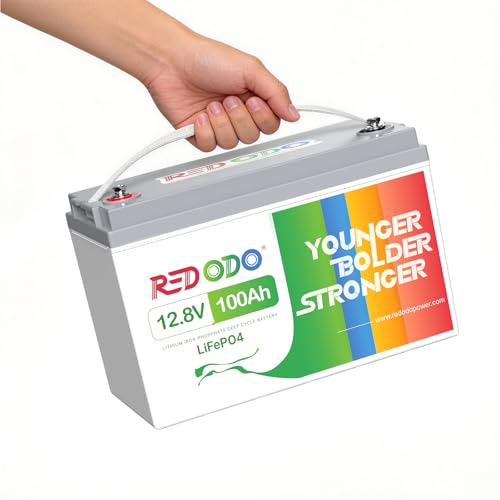
Redodo 12V 100Ah Marine LiFePO4 Group 31

Redodo 2 Pack 12V 100Ah RV Group 31 Battery

Redodo 12V 100Ah LiFePO4 RV Battery Group 31

Redodo 12.8V 100Ah LiFePO4 Battery and Charger

power queen 12V 100Ah LiFePO4 Group 31 Battery
The Strengths Of Each Pick
Redodo’s Bluetooth-equipped 100Ah sits in the Group 31 form factor, which means it drops into most RV battery trays built for that case size without modification. The built-in Bluetooth 5.0 module connects to a mobile app for real-time monitoring of voltage, current, power, and remaining capacity, with a remote power-off function that lets you cut output from your phone. For RV owners who want to glance at battery state from the cab without crawling into the compartment, that connectivity is genuinely useful.
The cold-weather cut-off halts charging when internal temperatures drop below 32°F, protecting the lithium cells from damage during winter camping or shoulder-season trips. Group 31 dimensions also make it a tidy swap for the older Redodo 12V 100Ah Group 31 Battery in standard installations.
Why It Works Well
- Bluetooth 5.0 app shows live voltage, current, and remaining capacity from your phone
- Remote power-off lets you disconnect the battery without physically reaching the terminals
- Low-temperature cut-off protects the cells during charging in freezing conditions
- Group 31 size fits common RV battery compartments without tray modifications
Things To Consider
- Bluetooth adds cost that may not matter for owners who never check the app
- App functionality depends on phone compatibility and Bluetooth pairing
Key Specs
Who It Suits Best
RVers and marine owners who want app-based battery monitoring and plan to camp in cold weather benefit most from the Bluetooth and low-temp cut-off combo.
Look Elsewhere When
The Redodo 12V 100Ah LiFePO4 Group 31 Battery is a better fit when you want the same Group 31 form factor without paying for Bluetooth you won’t use.
The Mosasaur 48V 100Ah breaks from the 12V theme of most of this list: it is purpose-built for golf cart and 48V applications where six 8V lead-acid batteries used to live. The BMS (battery management system, the protection circuitry that prevents overcharge, over-discharge, and short-circuit damage) is rated to 200A, and the battery delivers 10.24kW of peak power for hill climbs and heavy acceleration. It comes housed in a familiar lead-acid case footprint so it drops into existing battery trays.
The kit includes an 18A charger and a built-in LCD touch screen for at-a-glance readouts, with app monitoring as a backup. Weighing roughly 77 pounds, it shaves serious heft off a six-battery lead-acid bank.
Useful Touches
- Built-in 200A BMS handles sustained high loads without dropping out
- 10.24kW peak output tackles hills and rough terrain
- LCD touch screen displays state of charge without pulling out your phone
- Drop-in lead-acid dimensions simplify tray fitting
Trade Offs
- 48V output means it is not a 12V drop-in replacement
- 77 pounds still requires two hands and a sturdy mount
Right Fit For
Golf cart owners and anyone running a 48V system who wants lithium weight savings and strong hill-climbing power.
A Better Fit Elsewhere
The Redodo 12V 100Ah Marine LiFePO4 Group 31 is the smarter pick when your boat or RV runs on standard 12V.
The base Redodo 12V 100Ah LiFePO4 Group 31 Battery strips out Bluetooth and the app module, focusing the build on long cycle life and dependable Group 31 form factor. This is the one to grab when you want lithium performance without paying for connectivity features you will never use. Cycle life ratings reach into the thousands at proper depth of discharge (DOD, the percentage of battery capacity you actually drain before recharging), which matters because lithium lasts far longer than the 200–500 cycles most lead-acid banks deliver.
For budget-focused RV owners running a fridge, lights, and a water pump, this unit covers the essentials at a lower entry cost than the Bluetooth-equipped siblings above it.
Notable Gains
- Long cycle life lowers replacement frequency over years of use
- Group 31 footprint matches common RV battery trays
- Lower price than Bluetooth-equipped siblings for non-connected builds
- LiFePO4 chemistry is inherently more thermally stable than other lithium types
Honest Caveats
- No Bluetooth means checking voltage requires a multimeter or separate monitor
- No built-in low-temperature charging protection on the base model
Made For
RV owners on a budget who want reliable deep-cycle lithium without paying extra for app connectivity.
Swap It Out When
The Redodo 12V 100Ah LiFePO4 Group 31 Bluetooth is the smarter choice when cold-weather charging matters and you want app monitoring.
Most trolling motors run on 24V or 36V systems, which means stacking two or three 12V batteries in series (wiring positive to negative to add voltages). This 2-pack ships two matched 12V 100Ah LiFePO4 units wired for 24V operation, giving bass boats and kayak anglers enough reserve to last through a full day of slow drifts and intermittent bursts without dragging the motor down. Compared with running a single 12V battery at trolling current, the pair shares load and keeps each unit cooler.
Two-pack shipments may arrive in separate boxes due to carrier size limits, so plan installation around staggered delivery.
Everyday Perks
- Matched pair simplifies 24V trolling motor wiring
- Shared load keeps individual cells cooler during sustained draws
- Combined 200Ah at 24V covers long fishing days
Points To Note
- Two-pack shipping may mean staggered delivery dates
- Total pack weight requires careful mounting in smaller boats
Key Specs
Best Suited To
Anglers running 24V trolling motors who want a matched battery pair without buying singles separately.
Reach For A Different Pick When
The Redodo 12V 100Ah Marine LiFePO4 Group 31 is the better single-battery fit for smaller boats running 12V trolling.
Redodo positions this next-generation Group 31 Bluetooth battery as the answer to “dead battery panic” during trips. The mobile app tracks voltage, current, and capacity in real time and lets you shut the battery off remotely if you notice a parasitic drain. For RV owners who dry camp for days and rely on solar to top off, knowing the exact state of charge from the cab or campsite chair is genuinely reassuring.
The low-temperature cut-off stops charging below 0°C (32°F), which protects the cells from lithium plating damage during shoulder-season camping.
The Helpful Details
- Remote power-off through the app cuts output without opening the compartment
- Real-time SOC (state of charge) tracking prevents overnight surprises
- Cold-weather charge protection extends cell life in freezing conditions
- Group 31 size fits standard RV trays
Small Caveats
- Smart features rely on phone compatibility and Bluetooth pairing
- Higher entry cost than non-connected siblings
Key Specs
Perfect Match For
Tech-forward RV owners who want at-a-glance battery data without climbing into the storage bay.
Consider Something Else When
The Redodo 12.8V 100Ah LiFePO4 Battery and Charger bundle makes more sense for first-time upgraders who also need a matched charger.
This Redodo marine-focused 12V 100Ah is built around trolling motor duty cycles. The 100A continuous BMS supports typical 12V trolling loads without tripping protection mid-day, and the Group 31 case slides into existing marine battery trays. EV-grade LiFePO4 cells (cells originally spec’d for electric vehicles, where higher density and consistent performance are critical) deliver higher energy density and more stable output than typical cells.
For anglers running a single 12V trolling motor on a jon boat or kayak, this unit provides the runtime needed for a full day of fishing.
Benefits That Matter
- 100A continuous BMS handles sustained trolling motor draws
- EV-grade cells offer stable voltage under load
- Group 31 form factor fits marine battery trays
Where It May Fall Short
- Single 12V limits runtime for larger trolling motors on bigger craft
- Charging off an outboard alternator may require a DC-DC charger upgrade
Who Should Grab It
Small-boat anglers and kayak fishermen running 12V trolling motors who need reliable sustained draw capacity.
Not Your Match When
The Redodo 2 Pack 12V 100Ah Trolling Motor Battery is the better call for 24V trolling setups that need doubled reserve.
Where the single 100Ah battery delivers 1280Wh of usable storage, this 2-pack doubles that to 2560Wh, which is enough to run a 12V fridge for days or cover a couple of cloudy solar days in a row. The two 12.8V LiFePO4 units can be combined in series or parallel for up to 51.2V at 400Ah configurations, useful for off-grid solar banks and large RV house systems.
Automotive-grade cells and a 10-year lifespan rating make this a long-haul investment for full-time RVers.
Bright Spots
- Doubles usable energy to 2560Wh for extended off-grid stays
- Series/parallel flexibility supports up to 4P4S configurations
- Automotive-grade LiFePO4 cells target a decade of service
Some Limits To Know
- Two batteries raise mounting and weight distribution considerations
- Staggered shipping may mean separate delivery dates
Built With In Mind
Full-time RVers and off-grid solar users who want serious house-bank capacity without stepping up to larger lithium batteries.
Skip It When
The Redodo 12V 100Ah LiFePO4 RV Battery Group 31 single unit is the simpler path for weekend campers who do not need doubled reserve.
This Redodo 12V 100Ah focuses on the basics done well: 1280Wh of usable energy, Group 31 dimensions for direct replacement of older AGM batteries (Absorbent Glass Mat, a sealed lead-acid type), and 4000+ deep cycles at proper depth of discharge. The 100A BMS handles 1280W of continuous output, which covers most RV essentials including a residential-style fridge, lights, and a laptop charger.
Drop-in fit means no tray modifications for the vast majority of RV battery compartments.
A Few Highlights
- Standard Group 31 size replaces AGM without tray changes
- 1280Wh capacity runs fridge and lights for extended periods
- 100A BMS supports 1280W continuous loads
- 4000+ deep cycle rating for years of dependable service
Practical Considerations
- No Bluetooth means external shunt monitoring is needed for accurate SOC
- Group 31 footprint is larger than compact Group 24 alternatives
Key Specs
Whose Shelf It Belongs On
RV owners making a first lithium swap from AGM who want a clean drop-in with solid cycle life.
Where Another Pick Suits Better
The power queen 12V 100Ah LiFePO4 Group 31 Battery is a worthy alternative when you want a similar profile from a different brand.
Lithium batteries need a charger matched to their charging profile, and using a leftover lead-acid charger can damage the cells. This bundle pairs Redodo’s 12.8V 100Ah LiFePO4 battery with a dedicated 14.6V 10A lithium charger, removing the guesswork for first-time upgraders. The matched pair also removes worries about charger compatibility that sometimes shows up with mismatched third-party units.
For shed solar builds, small cabins, or backup power setups, this kit covers the basics in one purchase.
The Value In It
- Bundled charger removes compatibility guesswork for first-time users
- 14.6V 10A output delivers full charge overnight from a wall outlet
- LiFePO4 cycle life spans thousands of deep cycles
Less-Strong Areas
- 10A charging rate means longer refill times for depleted banks
- Bundle price is higher than battery alone even if you already own a charger
The Right Fit
First-time lithium upgraders building small solar or backup systems who want battery and charger in one box.
Where A Sibling Pick Shines
The Redodo 12V 100Ah LiFePO4 Group 31 Battery is the better standalone pick for RV owners who already have a lithium-compatible charger.
power queen rounds out the list with a 12V 100Ah LiFePO4 Group 31 unit rated for up to 15,000 cycles, which is the highest cycle figure on this list. The standard Group 31 footprint installs in many RV and marine battery trays, and the 100A BMS handles typical house loads. Support for up to 4P4S configurations (four batteries in parallel, four strings in series) lets you scale from a single 100Ah to a 400Ah bank or higher-voltage system as your power needs grow.
For off-grid owners who want one battery brand across a multi-year build-out, this unit covers expansion.
Where It Delivers
- Up to 15,000 cycle rating for long-term off-grid use
- 4P4S expansion supports growing house banks
- Group 31 fit suits common RV and marine trays
- LiFePO4 cells provide stable output under load
Potential Sticking Points
- Higher cycle rating may reflect gentler depth-of-discharge assumptions
- No built-in app connectivity at the base tier
Key Specs
Who Will Love This
Off-grid homeowners and full-time travelers who want maximum cycle life and room to grow the bank over time.
Another Choice May Suit
The Redodo 12V 100Ah LiFePO4 Group 31 Bluetooth is a worthy alternative when app monitoring matters more than peak cycle count.
What To Weigh Before Choosing Your 100Ah Lithium Battery
Match the Battery to Your System Voltage
A 12V battery is the right call for typical RV, marine, and small solar setups. Golf carts and some larger off-grid banks use 48V, which is why the Mosasaur 48V 100Ah stands apart from the rest of this list. Confirming your system voltage before buying prevents the frustration of receiving a battery that needs a completely different charger, inverter, and wiring layout.
Mind the BMS Rating and Continuous Load
The BMS rating determines how much current the battery can deliver continuously without shutting down. A 100A BMS handles about 1280W at 12V, which covers most RV essentials. High-draw appliances like induction cooktops or large inverters may need a battery with a higher BMS rating or parallel battery banks. Owners running coffee makers or hair dryers through an inverter should pay attention here.
Check the Group Size and Tray Fit
Group 31 is the most common size in this list because it fits standard RV and marine battery compartments. Group 24 batteries are smaller and suit compact installations. Measure your existing battery tray before ordering, and remember that lithium batteries sometimes ship slightly different than lead-acid even within the same Group size, requiring shimming or minor bracket work.
Decide If Bluetooth Matters
Bluetooth and app monitoring add convenience and a small price premium. Owners who want real-time state of charge from their phone benefit from the feature. Shoppers on a budget who never check the app save money by skipping it. Either approach works, but the choice affects how you interact with the battery day to day.
Key Considerations Across These Picks
Pitfalls Shoppers Hit
A common trap is buying a lithium battery and trying to charge it with a leftover lead-acid charger. Lithium cells need a specific charging profile (higher absorption voltage, no equalization stage), and the wrong charger can damage them or trigger the BMS to shut down prematurely. Another mistake is underestimating continuous load: a battery rated for 100A continuous cannot power a 200A inverter surge for long, even if the peak looks fine on paper. Cold-weather charging without low-temperature protection is the third big one, since charging frozen lithium cells causes permanent damage.
Where The Extra Money Goes
Higher-priced 100Ah lithium batteries typically justify the difference with Bluetooth monitoring, cold-weather charging protection, longer cycle ratings, or higher BMS ratings. For weekend campers in mild climates, a basic Group 31 unit covers everything needed. For full-time RVers in cold regions or off-grid solar users scaling to multi-battery banks, the upgrade pays for itself through longer service life, fewer replacements, and the convenience of remote state-of-charge checks. The honest read is that the premium tier earns its keep when your use case actually exercises those features.