Off-grid power used to mean gas generators humming into the night. Now a slim panel on a van roof or a garage wall can quietly top off a battery while you’re at work, and that’s the whole appeal of 12v solar setups: small, silent, and forgiving when your needs are modest. These kits and standalone panels are built for RVs, boats, cabins, deer feeders, and the workshop battery you keep forgetting to plug in.
The trick is matching wattage to what you actually want to run, plus picking a charge controller smart enough to protect the battery through seasons of slow charging. The ten panels below span that range, from a 1.7-watt feeder trickle to a flexible 100-watt roof panel. Each one has a clear job.
The Main Contenders
SUNER POWER 20W 12V Solar Battery Charger Maintainer Ultra

Renogy 100W 12V Solar Panel Starter Kit

Renogy 50W 22% High-Efficiency Monocrystalline

Renogy 100W N-Type 25% High-Efficiency 16BB

Callsun 50W N-Type 16BB 25% Efficiency
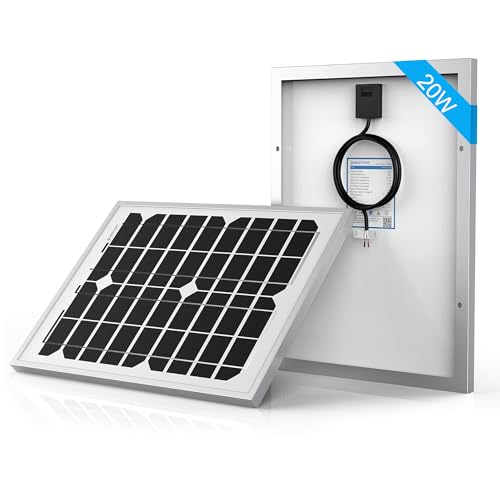
ACOPOWER 20W Mono Solar Panel with Blocking Diode

POWOXI 1.7W Deer Feeder Solar Panel
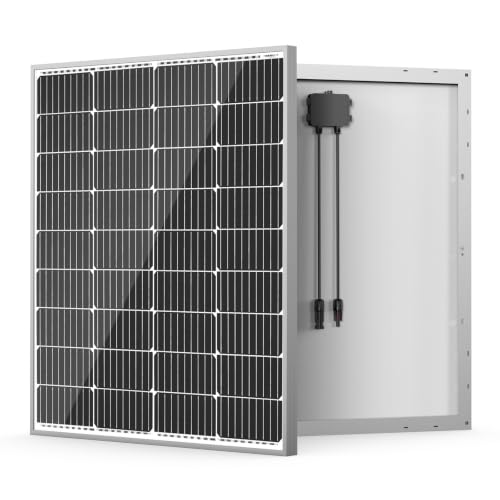
HQST 100W 12V Solar Panel 9BB IP65

Traver Force 100W 10BB Monocrystalline Solar Panel

DOKIO 100W Flexible ETFE Solar Panel
A Breakdown Of The Leading Choices
Stored cars, motorcycles, and boats all share one quiet problem: a battery that dies between weekends. SUNER POWER’s 20-watt trickle panel is built for that exact job, and the difference shows up in the charge controller. MPPT, or Maximum Power Point Tracking, is a smart algorithm that constantly adjusts the panel’s output to harvest the most energy possible from changing sunlight, and the built-in version here runs that logic internally so you don’t need an external box.
The three-stage charging profile (Bulk, Absorption, Float) is a typical sequence that pushes current hard, tops off carefully, then settles into a maintenance hold. Owners commonly rely on this kind of staged cycle because it stops the overcharge problem older panels used to cause. Compared to the larger Renogy kits further down the list, this panel won’t run a fridge or charge a depleted battery from empty, and that’s the point. It exists to keep a healthy battery alive.
What Helps Most
- Built-in MPPT controller means no extra parts to buy or wire.
- Visual 25/50/75/100% indicator strips let you check status at a glance.
- Auto resume on discharge makes it genuinely set-and-forget for seasonal vehicles.
- Wide compatibility across cars, boats, RVs, and trailers.
Points To Keep In Mind
- 20 watts is too small for any meaningful daily load; it maintains, it doesn’t power.
- Mounting hardware is minimal, so you may need to improvise brackets for specific bumpers or rails.
Whose Shelf It Belongs On
Anyone storing a vehicle, boat, or trailer for more than a few weeks between uses.
Where A Sibling Pick Shines
Renogy 100W 12V Solar Panel Starter Kit suits you better if you need real daily wattage for an RV or shed.
If you’re new to off-grid solar and want everything in one box, this kit removes most of the guesswork. The 100-watt monocrystalline panel pairs with a 30A PWM charge controller, where PWM (Pulse Width Modulation) is a simpler, less efficient method of regulating charge than MPPT but cheaper and durable for small systems. The included mounting brackets and wiring shorten the weekend project into a Saturday afternoon.
The 22.5% cell efficiency is solid for the price, and real-world output on a sunny day tends to land around 500Wh, enough to keep a 12V deep-cycle battery topped off while running modest loads. Compared to the SUNER POWER 20W panel above, this one is built for actual energy harvesting, not just maintenance. Where it stumbles is on cloudy days and on the controller’s lack of MPPT, which leaves some harvest on the table.
Strengths Worth Knowing
- Complete kit removes the parts-hunting phase of a first solar build.
- Solid 22.5% cell efficiency for the wattage.
- Renogy’s brand presence means replacement parts and add-ons are easy to find.
- Reliable entry point for cabins, sheds, and small RVs.
Trade-Offs To Consider
- PWM controller gives up efficiency compared to MPPT alternatives.
- Real-world output drops noticeably in overcast weather.
Quick Facts
Built With In Mind
First-time solar builders who want a kit that actually includes everything.
Reach For A Different Pick When
HQST 100W 12V Solar Panel fits tighter spaces better thanks to its square footprint.
Half the wattage of the kit above, but a much easier physical package. The 50-watt Renogy panel slots onto a small shed roof, a sailboat cabin top, or a porch rail without drama. Multi-layered encapsulation, a corrosion-resistant aluminum frame, and bypass diodes (small electrical shortcuts that keep current flowing around shaded cells) all point to a panel built for years outside rather than one season.
This is the panel that makes sense when 100 watts is overkill. It’s a workhorse trickle-plus unit that handles the battery you use a few times a month, and you can pair two or three of them in parallel if your ambitions grow. EL testing is a quality check where each cell is electrically scanned for micro-cracks, and Renogy runs that on every panel before shipping.
The Helpful Details
- Compact size fits sheds, small boats, and cabin porches.
- Corrosion-resistant aluminum frame handles coastal or humid climates.
- Bypass diodes keep output stable when partial shade hits the panel.
- Easy to expand by adding identical panels in parallel.
Room For Improvement
- No included controller or wiring, so factor those in.
- 50W won’t keep up with daily fridge loads on its own.
Who Will Love This
Shed owners, weekend cabin folks, and small-boat sailors who need a reliable seasonal top-off.
Skip It When
Renogy 100W 12V Solar Panel Starter Kit makes more sense if you want a complete ready-to-install package.
This is the modern take on a 100W panel, and the engineering is worth understanding. N-type cells are a newer solar cell structure that loses less energy to impurities and degrades more slowly than older P-type cells, so they hold efficiency longer. The 16-busbar design (16 thin metallic ribbons across each cell) shortens the path electricity has to travel, which trims resistive losses and bumps real output by a measurable margin.
Compared to the older 22.5% Renogy panel earlier, you’re buying roughly 20 extra watts under the same sunlight for the same physical footprint. For roof space that matters, because on a small van or cabin roof, every watt per square inch counts. The trade-off is cost, and you’ll want a proper MPPT controller to actually capture what the cells can produce.
Everyday Advantages
- 25% conversion efficiency is high for the price class.
- N-type cells degrade more slowly, preserving output over years.
- 16-busbar design trims energy loss across each cell.
- Clean power delivery for a 12V battery when paired with MPPT.
Honest Caveats
- No included controller, expect to buy MPPT separately.
- Premium cells mean a higher entry cost than older Renogy models.
Feature Snapshot
Who Should Grab It
Roof-conscious installers who want the most watts from limited space and plan to pair it with MPPT electronics.
Consider Something Else When
DOKIO 100W Flexible Solar Panel works better if your mounting surface is curved and rigid panels won’t sit flat.
Callsun brings the same N-type cell tech that powers the Renogy flagship above into a 50-watt footprint, which makes it a smart middle ground. You’re getting the slower degradation and the 16-busbar architecture without paying for 100 watts of capacity. For two- or three-panel arrays on a shed or small cabin, this is the modern, sensible building block.
Where the older Renogy 50W panel leans on P-type cells at 22% efficiency, this one pushes to 25%. In real terms, that’s meaningful extra energy during shoulder seasons when the sun sits lower. You’ll still need to source your own charge controller and wiring, but the per-watt value here is strong.
Practical Advantages
- 25% efficiency at a price that competes with older 22% panels.
- N-type cells age more slowly, protecting long-term output.
- 50W size makes parallel arrays easy to scale.
- 16BB cell design cuts resistive losses across the panel.
Things To Consider
- Brand recognition lags behind Renogy if you value ecosystem compatibility.
- No included mounting hardware, so plan your own.
Right Fit For
DIYers who want modern cell tech at a modest wattage and aren’t loyal to one brand.
Look Elsewhere When
Renogy 100W 12V Solar Panel Starter Kit suits you better if you want a complete kit from a familiar brand.
Small, sealed, and ready for splash zones, the ACOPOWER 20-watter fills the niche between a proper maintenance panel and a one-cell trickle. The built-in blocking diode, a one-way electrical valve that prevents battery current from flowing back into the panel at night, addresses a real-world annoyance: reverse discharge that slowly drains the very battery you’re trying to protect.
For boat owners and trailer users who just want a set-and-leave-it panel that survives rain and spray, this is a credible choice. Compare it to the SUNER POWER 20W option above, which adds MPPT smarts and a charge-level indicator. ACOPOWER trades those features for a more weatherproof, simpler package that just works.
Practical Pluses
- Built-in blocking diode prevents night-time reverse drain.
- Waterproof construction handles marine environments.
- Compact frame fits where larger panels physically cannot.
- Simple two-wire hookup to any 12V battery.
Points To Note
- No smart charge management, so pairing with a basic controller is wise.
- 20W output limits this to maintenance duty.
Made For
Boat owners and trailer users who need a weatherproof trickle on a small footprint.
Swap It Out When
SUNER POWER 20W 12V Solar Battery Charger Maintainer Ultra suits you better if you want MPPT and a charge indicator.
This isn’t a panel for an off-grid cabin, it’s a panel for a feeder timer that needs a battery that won’t die mid-March. POWOXI’s 1.7W trickle uses a 95% light-transmitting polycarbonate cover, meaning almost all the sunlight reaches the cell underneath, paired with monocrystalline silicon for steady low-light output. The included bracket mounts it on a feeder leg or a T-post.
What makes it interesting is the overcharge protection built in, which matters because feeder batteries sit in the sun all day, every day, for months. For most hunting setups, that’s the single feature that justifies a specialty panel over a generic 20W option. It’s narrow, focused, and just enough for the job.
Useful Highlights
- Overcharge protection built for sustained sun exposure.
- Waterproof design survives full weather exposure outdoors.
- Bracket included for direct feeder-post mounting.
- Low wattage is genuinely sufficient for a 12V feeder battery.
A Few Limitations
- Very narrow use case; not a general-purpose panel.
- Output too small for anything beyond a feeder timer.
Best Suited To
Hunters running 12V deer feeders through spring, summer, and fall seasons.
A Better Fit Elsewhere
ACOPOWER 20W Mono Solar Panel works for you if you need a small panel that does more than just feed a timer.
HQST made a deliberate design choice here: instead of the long rectangle most panels share, this 100W unit uses a near-square footprint roughly 31.8 by 27.5 inches. That matters when your roof is a Sprinter van high-top or a tiny cabin bump-out, and the traditional 60-cell rectangle just won’t lay flat. The IP65 rating (a standard that certifies dust-tight and water-jet resistant sealing) gives real confidence in storms.
The 166mm Grade A+ cells run at 23% efficiency, slightly behind the N-type 25% panels further up the list. For the small-space win, though, that tradeoff is fair. Owners commonly report the square shape also makes Z-bracket mounting easier on irregular surfaces. Compared to Renogy’s classic 100W kit above, this is the better pick when roof geometry matters more than harvest ceiling.
Positive Points
- Square footprint opens up tight or oddly shaped roof areas.
- IP65 junction box survives extended outdoor exposure.
- 23% efficiency is solid for a 9-busbar cell design.
- Mounting-friendly on small van and cabin roofs.
Worth Bearing In Mind
- 23% efficiency trails the N-type 25% Renogy panel above.
- No controller or wiring included in the box.
At A Glance
Perfect Match For
Van and small-cabin installers whose roof space is awkward and roof shape is a real constraint.
Not Your Match When
Renogy 100W N-Type 25% High-Efficiency 16BB suits you better if maximum wattage per square inch is the priority.
Traver Force aims squarely at the user who’s done one or two solar builds and wants better cells. The 182mm Grade A+ monocrystalline cells hit 25% conversion efficiency, and the 10-busbar design threads the needle between older 9BB and the premium 16BB panels. EL testing on every panel means you’re unlikely to get a unit with hidden cell defects.
This is the panel for someone running a real off-grid setup with daily loads, a fridge, and lighting. The physical size is standard 100W, so it drops into existing mounts and wiring layouts without surprises. Compared to HQST above, you’re paying a small premium for better cells; compared to Renogy’s N-type, you’re saving some money in exchange for slightly older cell chemistry.
Key Advantages
- 25% cell efficiency is at the modern top end.
- 182mm cells harvest more energy per panel area.
- 10BB design balances cost and low resistive loss.
- Universal fit for standard 100W mounting hardware.
Smaller Limitations
- No controller or wiring in the box.
- Lower busbar count than the Renogy 16BB panel above.
Made For
Full-time RVers, cabin owners, and serious off-gridders running daily loads.
Where Another Pick Suits Better
HQST 100W 12V Solar Panel fits the bill better for tight square roof footprints where 25% efficiency matters less than shape.
Curved boat cabin tops and arched van roofs reject rigid glass panels, which is exactly where DOKIO’s flexible unit earns its place. The ETFE top layer is a fluorine-based plastic film that resists UV, salt, and abrasion better than standard PET coatings, and the whole panel bends enough to follow a moderate curve without cracking.
Where every other pick on this list is rigid aluminum-framed glass, this one trades some efficiency and lifespan for that flexibility. Mount it with adhesive, leave ventilation space underneath, and you get clean looks without drilling. Owners commonly note that flexible panels run hotter than rigid ones, which is why DOKIO’s installation guidance specifically calls for airflow and avoidance of combustible surfaces.
What It Does Well
- Bendable form factor fits curved RV and boat roofs.
- ETFE surface resists UV and saltwater corrosion.
- Slim, lightweight profile simplifies transport and storage.
- Adhesive mount option avoids drilling holes in the roof.
Practical Considerations
- Flexible panels typically run hotter, which slightly reduces output.
- Requires proper ventilation gap beneath to avoid heat damage.
Feature Rundown
The Right Fit
Boat owners and RV enthusiasts with curved or arched roof surfaces where rigid panels won’t sit flat.
Consider Something Else When
HQST 100W 12V Solar Panel suits you better if your roof is flat and you want a sturdier rigid mount.
What To Weigh Before Picking a 12v Solar Setup
Match Wattage to Real-World Load
The single biggest mistake is buying a panel that looks impressive on the spec sheet but undersizes your daily draw. A panel’s wattage is its peak output under ideal lab sun, so a 100W panel might realistically deliver 70-80W at midday in summer and far less in winter or under cloud cover. For most 12V battery setups used for lighting, phone charging, and small appliances, expect about 4 to 5 hours of effective peak sun per day in good conditions. Calculate your daily watt-hours, divide by that number, and you’ll find the panel size that actually keeps up.
Understand Charge Controller Types
PWM and MPPT aren’t just spec sheet jargon. PWM is cheaper and perfectly adequate for small panels under 200W with thin cable runs. MPPT harvests meaningfully more energy from larger panels and from conditions where voltage and current shift constantly, such as partial shade or cold weather. If you buy a 100W panel and a cheap PWM controller, you’re leaving 20-30% of potential harvest on the table. Match the controller tier to your ambition, not your panel’s price tag.
Factor in Mounting and Durability
Marine environments, high-UV deserts, and snowy roofs punish panels differently. Aluminum frames, tempered glass, and IP65 or higher junction boxes all extend service life. Rigid panels last longer, run cooler, and resist impact better. Flexible panels buy you curved-surface mounting at the cost of slightly reduced lifespan and thermal efficiency. Whichever way you lean, plan mounting hardware before you buy, not after.
Plan for Expansion and Wiring
Most 12V solar setups grow. A single 50W panel becomes two, then three. Buying panels from the same brand with the same voltage profile makes parallel wiring straightforward. Cheap connectors, undersized wire gauge, and mismatched panels are the most common causes of underwhelming systems that look fine on paper but barely move the battery meter.
Key Considerations Across These Picks
Common Shopping Slip Ups
The first trap is treating wattage as the only number that matters. A 100W panel with an old P-type cell at 18% efficiency produces noticeably less than a 100W panel with N-type cells at 25%, even though both say “100W” on the box. The second trap is ignoring the charge controller entirely; a great panel paired with a wrong-sized or absent controller won’t protect the battery or the harvest. Third, watch for vague listings with no efficiency or cell type. If those numbers are missing, the panel is likely older stock.
When Paying More Pays Off
Premium tiers in this category buy you three concrete things: higher cell efficiency, slower long-term degradation, and better construction. N-type cells, 16-busbar designs, and Grade A+ sorting all translate to more watts harvested across the life of the panel. For a cabin or RV you’ll rely on for years, that premium pays back in fewer battery replacements and more consistent daily output. For a temporary seasonal need or a single-purpose trickle, the basic tier does the job without overpaying for gains you won’t notice.
Frequently Asked Questions
How many watts of 12v solar do I need to maintain a battery?
For maintenance only, a 5-20W trickle panel usually keeps a stored vehicle or boat battery topped off across a normal idle period. For active use with daily draw, size the panel to roughly match your daily watt-hour consumption divided by your peak sun hours.
Can I connect multiple 12v solar panels together?
Yes, you can wire panels in parallel to increase current while keeping voltage at 12V, which is the most common setup for battery charging. Series wiring increases voltage but requires a controller rated for the higher input.
Do I need a charge controller with a small panel?
For anything 20W and above, a charge controller is strongly recommended to prevent overcharging and to extend battery life. The SUNER POWER and ACOPOWER picks include basic protection for that reason.
What size panel works for an RV roof?
Most RV roofs fit one or two 100W rigid panels comfortably. Curved roofs benefit from flexible options like the DOKIO panel. Always measure roof area and account for vents, AC units, and walkable sections before committing.
How long do 12v solar panels last?
Quality rigid panels commonly deliver 20-25 years of useful service with gradual efficiency loss. Flexible panels typically run 5-15 years depending on conditions, mounting, and heat exposure. Proper installation matters as much as panel quality.
Closing Remarks
A 12v solar panel setup is one of the few upgrades that quietly saves money every month while asking for almost no attention. Start with honest math about what you want to run, pick a panel that meets that number without wild overshoot, and don’t skip the charge controller. The right choice here is the one that fits your roof, your battery, and your weekend habits, and any of these ten can do that with the right setup behind it.