If your vehicle, boat, RV, or off-grid setup sits idle for weeks at a stretch, a dead battery is the inevitable next chapter. A small solar panel left on the dash or mounted to a fence post quietly tops off a 12-volt battery using nothing more than daylight, so you skip the jump pack and stop worrying about sulfation. This roundup covers ten real-world options across trickle maintainers, mid-range chargers, and higher-output portable panels, so you can match hardware to your exact situation.
The Lineup, Simplified
SUNER POWER 20W 12V Solar Battery Charger Maintainer Ultra

Renogy Solar Panels 50 Watt 22% Monocrystalline

Callsun 50W N-Type 16BB Solar Panel

POWOXI 12V 1.7W Deer Feeder Solar Panel
ACOPOWER 20W Mono Solar Panel

Renogy 100W N-Type 16BB Solar Panel 2-Pack

SUNER POWER 30W 12V Solar Maintainer
Renogy 100W Portable Foldable Solar Kit

SUNER POWER 10W 12V Solar Maintainer

SUNER POWER 50W 12V Solar Maintainer
A Breakdown Of The Leading Choices
Stored vehicles and weekend-only boats tend to die quietly, often the morning you actually need them. The SUNER POWER 20W 12V Solar Battery Charger Maintainer Ultra sits on the dash or in a cockpit and quietly holds a 12-volt battery at full state without overcooking it, so spring startup never involves a jump pack. MPPT (Maximum Power Point Tracking) is a controller feature that constantly adjusts the panel’s input to squeeze out more usable wattage than a basic PWM controller would, and this unit’s “Ultra” branding signals the better of those two flavors.
It includes a three-stage charging profile (Bulk, Absorption, Float) that handles the bulk of the work, tops off safely, then idles at a maintenance voltage until sun disappears. The four-LED charge readout gives a quick visual on state of charge, which is genuinely handy when the panel lives out of sight behind a windshield.
Where It Excels
- Built-in MPPT controller delivers strong conversion efficiency from a small 20W footprint
- Three-stage profile protects battery longevity rather than just hammering volts back in
- Automatic resume when battery drops means zero babysitting across seasons
- Visual charge indicators let you confirm panel output without multimetering
Things To Consider
- 20 watts is a trickle, not a recovery tool, so deeply drained batteries need a wall charger first
- Dashboard mounting means the panel must be cleared of snow or leaves to actually produce
Quick Facts
Whose Shelf It Belongs On
Garage-kept classic car owners, marina tenants, and anyone storing an RV between trips benefit most from this set-and-forget maintainer.
Swap It Out When
Runners logging real off-grid time in a cabin will find the SUNER POWER 30W 12V Solar Maintainer (Pick 7) a better daily-driver match.
Rigid framed panels like the Renogy 50W 22% Monocrystalline feel like a different species from the flexible maintainers on this list. You mount it once on a roof, an outbuilding, or a pole rack and let the aluminum frame and tempered laminate do the heavy lifting for a decade or more. The 22% conversion efficiency figure means roughly a fifth of the sunlight hitting the surface becomes usable electricity, which translates to noticeably more amp-hours per square foot than older tech.
What sets this Renogy apart in our view is the build quality story: a corrosion-resistant aluminum frame, EL-tested cells with no hot-spot heating concerns, and bypass diodes that keep output steady when a branch partially shades a corner. For a permanent off-grid setup running a small fridge or lighting circuit, this panel is the kind of component you install and then largely forget.
A Few Highlights
- 22% high-efficiency monocrystalline cells deliver more wattage from a smaller footprint
- Multi-layered encapsulation extends service life in sun, wind, and rain
- Bypass diodes protect output when partial shade hits the panel
- Aluminum frame supports permanent rooftop or pole mounting
Worth Noting
- No built-in charge controller, so you must pair it with a PWM or MPPT unit separately
- Rigid form factor isn’t ideal for curved RV roofs or quick breakdown setups
Best Suited To
Homeowners installing a fixed solar array for a shed, gate opener, or small cabin electrical system get the most long-term value from this Renogy.
A Better Fit Elsewhere
Overlanders who need to pack their panel between trips should look at the Renogy 100W Portable Foldable Solar Kit (Pick 8) instead.
The Callsun 50W N-Type 16BB pushes efficiency where older rigid panels plateau, claiming a 25% conversion rate from N-type cells with a 16-busbar design. Busbars are the thin metal strips printed across a solar cell that collect current, and more busbars means lower resistance and better partial-shade performance. In practical terms, that adds up to more watt-hours per sunny day compared to traditional P-type cells, especially during morning and late-afternoon low-angle light.
For folks chasing maximum output from a compact 50-watt footprint, this panel makes the math work in tight spaces. The trade-off shows up in price-to-watt versus older mono designs, but the efficiency delta is real for installations where every square inch matters.
Advantages To Know
- 25% conversion efficiency is meaningfully higher than the typical 20 to 22% baseline
- 16BB busbar layout reduces resistive losses and handles partial shade with less power drop
- Compact form factor suits rooftops with limited square footage
Trade Offs
- Premium cell tech comes at a higher cost per watt than the older Renogy 50W
- Still requires a separate charge controller purchase to function safely
Who It Suits Best
Owners with limited roof space on a van or tiny cabin who want top-tier output per square foot get the best return.
Look Elsewhere When
Shoppers prioritizing proven durability records will appreciate the Renogy Solar Panels 50 Watt (Pick 2) for long-term track record instead.
Not every 12-volt job needs 50 watts of glass. The POWOXI 12V 1.7W Solar Panel is purpose-built for wildlife feeders, where a tiny rechargeable battery powers a timer motor that spins a few times a day. One panel, screwed to the feeder post with the included bracket, keeps that small battery topped off indefinitely through hunting season without you hauling spare cells out to the lease.
It comes as a pack of three, which makes sense for landowners running several feeders across a property. The polycarbonate cover handles rain and bird pecks, while the lightweight build keeps shipping and mounting simple. This is a niche pick, but for the right buyer it solves a problem that no bigger panel addresses.
What Stands Out
- Pack of three covers a typical multi-feeder hunting lease in one order
- Monocrystalline construction maximizes output from the small 1.7W footprint
- Included mounting bracket simplifies installation on a wooden post
Some Limits To Know
- 1.7W output is far too small for any vehicle or marine battery maintenance role
- Not designed for direct sun on a vehicle windshield, so positioning must respect feeder orientation
Right Fit For
Landowners running 12V timer-style deer or game feeders in remote locations where swapping batteries is impractical.
Reach For A Different Pick When
Anyone maintaining a car, ATV, or boat battery needs a real trickle maintainer like the SUNER POWER 10W 12V Solar Maintainer (Pick 9) instead.
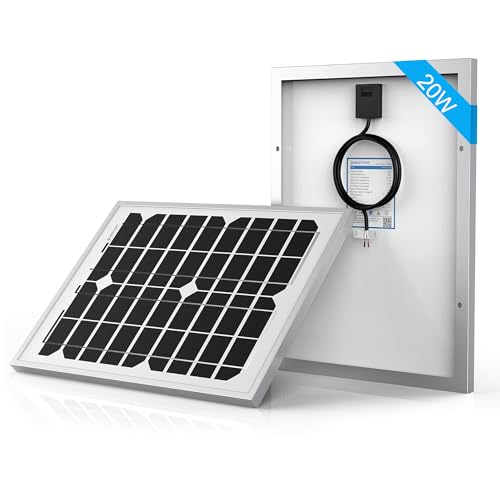
The ACOPOWER 20W Mono Solar Panel leans into simplicity, no built-in controller, no charge profile wizardry, just a waterproof panel with a blocking diode that prevents reverse current drain at night. That diode is the unsung hero: without it, a basic solar panel can actually pull amps backward out of your battery once the sun goes down, undoing whatever it gained during the day.
That makes this a smart pick for owners who already own a quality charge controller, perhaps inside their RV or boat’s existing solar setup, and just need an additional panel to expand the array. It’s compact enough to mount on a kayak crate or a small trailer tongue without dominating the surface.
What Works In Its Favor
- Built-in blocking diode protects batteries from nighttime reverse discharge
- Compact footprint fits kayak crates, trailer tongues, and small cabin walls
- Monocrystalline cells deliver solid output for the size and price
Points To Keep In Mind
- No onboard controller, so pairing hardware must include a PWM or MPPT unit
- 20W output limits use to light maintenance rather than active recharging
Feature Snapshot
Made For
Existing solar system owners wanting a compact add-on panel, plus kayak and trailer users with small 12V setups.
Not Your Match When
First-time solar shoppers will find an all-in-one maintainer like the SUNER POWER 20W 12V Solar Maintainer (Pick 1) easier to set up.
When “trickle” isn’t enough and “keep a fridge running” is the actual goal, you graduate to 100-watt territory. The Renogy 100W N-Type 16BB Solar Panel 2-Pack ships two rigid panels in the box, giving you 200 watts of high-efficiency output for cabin battery banks, larger RV solar arrays, or a small off-grid workshop. The 16-busbar N-type cells claim a 25% conversion efficiency, which is at the top of what rigid panels currently deliver in the consumer market.
For most buyers, two panels wired in series or parallel cover the realistic daily load of an LED lighting setup, a 12V fridge, and a phone or laptop charging station. The aluminum frame and tempered glass surface are designed for permanent installation, so this isn’t the kit you bring camping.
Everyday Advantages
- Two-panel bundle covers meaningful daily loads like lighting and small appliances
- 25% efficiency keeps the array compact relative to its output
- Rugged frame and tempered glass suit permanent outdoor installations
A Few Limitations
- Bundle price is a real commitment versus starting with a single 50W panel
- Requires separate charge controller and mounting hardware to function as a system
Built With In Mind
Cabin owners, off-grid workshop builders, and serious RV solar enthusiasts planning a permanent array benefit most from this output level.
Where A Sibling Pick Shines
Mobility-focused buyers should pivot to the Renogy 100W Portable Foldable Solar Kit (Pick 8), which bundles a controller and folds down for transport.
SUNER POWER’s 30W 12V Solar Battery Charger Maintainer sits in a sweet spot the brand clearly understood: enough wattage to meaningfully offset parasitic drain on larger deep-cycle batteries, but still a self-contained kit that mounts with a basic bracket. Compared to the brand’s 20W Ultra sibling earlier on this list, the 30W version simply harvests more energy per sunny day, which shortens recovery time after the battery sits unused for a long stretch.
The adjustable mount bracket that ships with this kit earns its keep when you need to angle the panel south instead of letting it lie flat. Flat-mounted panels lose significant output in winter when the sun rides low, so tilt adjustment often makes a bigger difference than the watt rating suggests.
Everyday Perks
- 30W output covers medium parasitic loads on boats and RVs without supplement
- Adjustable bracket lets you chase the sun’s seasonal angle for better yield
- Built-in MPPT controller handles the three-stage profile automatically
- Waterproof construction survives weather year-round
Less-Strong Areas
- Larger panel footprint demands real estate you may not have on small boat dashboards
- Still underpowered for active recharging of a deeply discharged battery bank
Technical Reference
Who Should Grab It
RVers and seasonal boaters with moderate battery banks and a spot to mount the panel at a proper angle get the best results.
Skip It When
Owners needing serious recharge current for a deeply depleted bank should step up to the SUNER POWER 50W 12V Solar Maintainer (Pick 10).
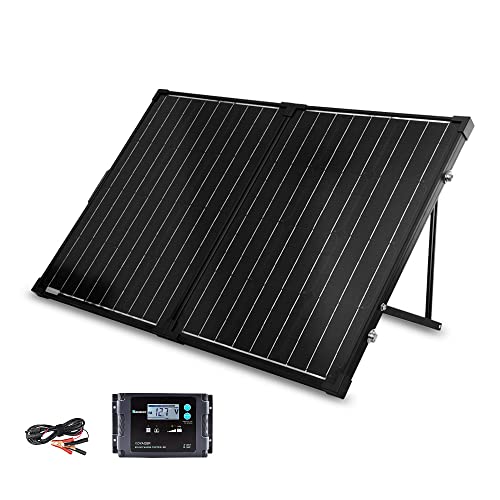
Overlanders and van lifers have been waiting for portable panels that don’t feel like luggage from another decade. The Renogy 100W Portable Solar Panel folds into a briefcase-style carry, kicks out on an integrated aluminum stand, and ships with a 20A charge controller for direct 12V battery or power station hookup. The N-type cells claim 25% conversion efficiency, so the panel is doing real work even when sun angles aren’t ideal.
Tempered glass over the cells protects the surface during repeated setup and breakdown, a notable upgrade from the PET-laminate portables that scratch up after a season. For campers running a portable power station, fridge, and lighting off a single panel, this kit covers the daily load with room to spare.
What Makes Sense
- Foldable briefcase form factor packs into vehicle storage without dedicated roof rack
- Integrated kickstand optimizes panel tilt at every campsite
- Bundled 20A controller saves a separate purchase decision
- Tempered glass surface tolerates the rough life of mobile use
Practical Considerations
- Folded footprint and weight are still meaningful for ultralight backpackers
- Glass construction adds fragility concerns versus laminate alternatives
Who Will Love This
Overlanders, van dwellers, and car campers needing a serious daily charge without mounting a permanent panel benefit most.
Consider Something Else When
Truck cap and rooftop dwellers wanting set-and-forget charging will prefer the Renogy 100W N-Type 16BB 2-Pack (Pick 6) instead.
Small batteries fail fast and without warning, and pulling a lawn tractor or motorcycle out of storage only to find a dead cell is the kind of small annoyance that adds up. The SUNER POWER 10W 12V Solar Battery Charger Maintainer exists for exactly that situation. It’s a compact 10-watt panel with a built-in MPPT controller, small enough to toss in a garage corner and bring out seasonally.
For motorcycle owners, ATV riders, and anyone with a generator or compact tractor sitting through winter, this panel offers genuine peace of mind at the entry-level end of the line. The same three-stage charging logic from the brand’s larger siblings carries down here, so you’re not sacrificing battery health for affordability.
Useful Touches
- Smallest MPPT-equipped maintainer on the list for tight storage spaces
- Three-stage profile matches the brand’s larger, pricier panels
- Adjustable mount bracket suits both garage and outdoor placements
Where It Is Less Suited
- 10W output is too small for automotive or marine battery banks
- Won’t recover a deeply discharged battery, only maintain a healthy one
Perfect Match For
Motorcycle, ATV, lawn tractor, and compact generator owners with limited storage space and small batteries to maintain.
Where Another Pick Suits Better
Car and boat owners should look at the SUNER POWER 20W 12V Solar Maintainer (Pick 1) for the wattage their larger batteries actually need.
Stepping into the 50-watt class changes the math considerably. The SUNER POWER 12V 50W Solar Battery Charger Maintainer brings the brand’s UltraSmart MPPT controller to a larger panel footprint, paired with compatibility for SLA, AGM, deep-cycle, and LiFePO4 batteries. That last point matters: LiFePO4 (lithium iron phosphate) batteries require specific voltage profiles, and not every charger speaks that language fluently.
The adjustable mount bracket and waterproof construction complete a kit that genuinely works as an all-in-one solution. Compared to the smaller SUNER POWER siblings earlier in this list, the 50W version pulls meaningfully ahead on recovery time, especially after a long storage period with a battery that lost a few percentage points per week to parasitic drain.
What It Does Well
- 50W output covers meaningful recovery on deep-cycle marine and RV banks
- Multi-chemistry support includes LiFePO4 alongside SLA and AGM
- UltraSmart MPPT controller with three-stage profile protects long-term battery health
- Adjustable bracket and waterproof build suit permanent outdoor mounting
Potential Compromises
- Larger panel footprint demands a real mounting surface, not just a dashboard
- Higher price than the brand’s smaller 10W, 20W, and 30W siblings
Technical Highlights
The Right Fit
RV and marine owners with deep-cycle banks, plus anyone running lithium LiFePO4 chemistry who wants a matched maintainer.
A Better Fit Elsewhere
Shoppers with simpler lead-acid needs will save money with the SUNER POWER 30W 12V Solar Maintainer (Pick 7) at lower output.
What Matters Most Before Choosing 12v Solar Battery Chargers
Match Wattage To Battery Size
The honest starting point is matching panel wattage to the battery you’re maintaining. A small motorcycle or lawn tractor battery gets by on 10 watts of trickle input, while a marine deep-cycle bank wants at least 20 to 30 watts to offset refrigerator draws and bilge pump cycles. Going below your battery’s needs turns the panel into a placebo, and going far above without a real charge controller can push voltage higher than the chemistry tolerates.
Controller Quality Matters More Than Raw Wattage
A panel without a quality controller is just a voltage source that doesn’t know when to quit. MPPT controllers (Maximum Power Point Tracking) extract more energy from the same panel by constantly adjusting the operating point, and three-stage charging profiles (Bulk, Absorption, Float) handle a battery the way it wants to be handled. PWM controllers (Pulse Width Modulation) are older, cheaper tech that simply chops the voltage down, fine for small panels, less efficient overall.
Real-World Mounting and Sun Exposure
Output ratings assume ideal midday sun on a perfectly angled panel. In practice, you get roughly 70 to 80% of rated wattage once clouds, low sun angles, and partial shade enter the picture. Mounting decisions (dashboard, roof, pole) and tilt orientation drive a surprising amount of the real-world difference, which is why adjustable brackets earn their keep in variable conditions.
Chemistry Compatibility for Newer Batteries
Older chargers sometimes assume lead-acid only, which is a problem if you’ve upgraded to LiFePO4 lithium. Lithium iron phosphate batteries want different absorption voltages and don’t tolerate float charging the same way, so confirm the controller speaks the right profile before you plug in. The SUNER POWER 50W kit on this list is one example that explicitly supports multiple chemistries.
Key Considerations Across These Picks
Pitfalls Shoppers Hit
The most common slip-up is sizing the panel to the budget instead of the battery. A 10W panel feels like a bargain, until it can’t keep up with a 100Ah deep-cycle bank and the battery sulfates anyway. The opposite mistake is over-buying wattage for a system with no controller, which can overcharge smaller batteries without one to govern the flow. Read the actual parasitic draw on your battery and the chemistry label before choosing wattage.
What The Higher Tier Buys
Premium panels justify their cost through cell efficiency, build longevity, and included controller quality. A 25%-efficient N-type cell panel squeezes more energy from the same roof space, while better encapsulation and aluminum framing extend service life past the decade mark. The bundled controllers in higher-tier kits often handle lithium chemistries that budget units ignore entirely, which matters if you’ve invested in LiFePO4 batteries already. The upgrade pays off when your installation is permanent, your battery bank is large, or your downtime tolerance for failure is low.
Frequently Asked Questions
How many watts do I need to maintain a 12V battery?
For most car and boat batteries sitting unused, 10 to 20 watts of panel output is enough to offset normal self-discharge over weeks. Larger marine and RV deep-cycle banks benefit from 30 to 50 watts to cover parasitic loads from stereos, bilge pumps, and fridge circuits.
Can a solar panel overcharge a 12V battery?
Without a charge controller regulating the flow, yes, a panel can push voltage high enough to damage a battery over time. Any maintainer with a built-in MPPT or PWM controller handles this automatically, which is why the kits on this list include one.
Do 12V solar chargers work in cloudy weather?
Output drops significantly under cloud cover, often to 20 to 40% of rated wattage, but the panel still produces something. MPPT controllers help recover more of that reduced output than PWM units do. Maintenance charging on cloudy days is slow but not zero.
Are MPPT solar chargers better than PWM?
MPPT controllers extract more usable energy from the same panel and offer better low-light performance than PWM. The trade-off is cost, though the gap has narrowed considerably, and MPPT is now standard in quality maintainers.
Can I leave a solar maintainer connected all year?
Yes, that’s the entire point of a maintainer with a three-stage charging profile. The Float stage holds a safe voltage once the battery is full, then resumes charging automatically when the battery sags below a threshold, so seasonal connections are fine.
Final Verdict
Your best pick depends almost entirely on the battery you’re protecting and how often you use it. A compact 10W MPPT maintainer handles motorcycles and lawn tractors with zero effort, while 20 to 30 watts covers stored cars and small boats nicely. If you’re running a real off-grid load or a deep-cycle marine bank, the 50W kit or a rigid panel array is where the conversation turns serious. Match the wattage and chemistry support to your actual battery, mount the panel where it sees real sun, and your next season starts with a fully charged system ready to go.