10 Best 12v Rv Battery for 2026: Reliable Lithium Power for the Road
A dead battery ends an RV trip fast. Anyone who has camped through a cold snap or spent a week running a fridge off a tired lead-acid bank knows the quiet panic of watching lights dim by the second night. Lithium iron phosphate, often shortened to LiFePO4, has reshaped this category: lighter packs, deeper usable capacity, and thousands of cycles where older batteries managed a few hundred. The picks below lean into different strengths, from compact Group 24 replacements to high-capacity banks built for full-time off-grid living, so you can match the right cell count to the way you actually travel.
A Snapshot Of The Selections

GOKWH 12V 100Ah Group 24 LiFePO4 Lithium Battery with Bluetooth 5.0

GOKWH 12V 320Ah LiFePO4 Lithium Battery with Bluetooth 5.0

GOKWH 12V 320Ah LiFePO4 Lithium Battery with Smart APP

VATRER POWER 12V 300Ah LiFePO4 Battery with Self-Heating
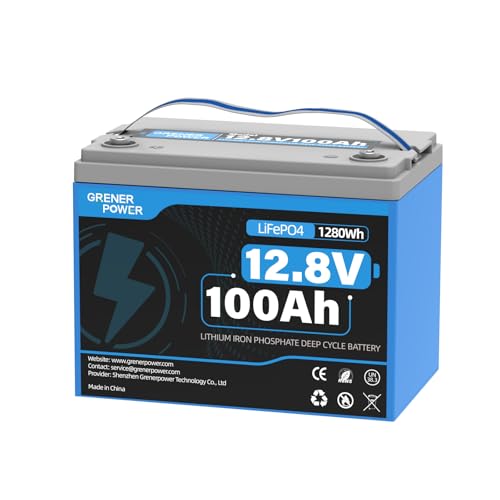
GrenerPower 12V 100Ah Group 24 LiFePO4 Battery (1-Pack)

Power Queen 12V 125Ah Bluetooth Group 27 LiFePO4 Battery

Power Queen 12V 100Ah Group 31 LiFePO4 Battery

Power Queen 12V 200Ah PLUS LiFePO4 Lithium Battery for RV
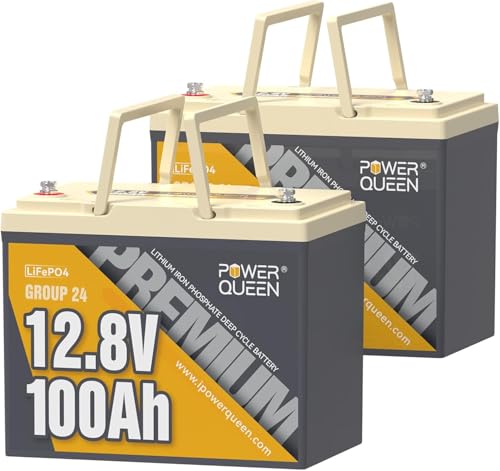
Power Queen 2-Pack 12V 100Ah Group 24 LiFePO4 Battery

GOKWH 12V 100Ah LiFePO4 Battery for Trolling Motor (2 Pack)
More On The Choices That Made The List
The GOKWH 12V 100Ah Group 24 LiFePO4 sits in the sweet spot most casual RVers actually need. It drops into a Group 24 box without rewiring, runs around 1280Wh of usable energy, and pairs with Bluetooth 5.0 so you can check state of charge, voltage, and temperature from a phone rather than crawling into a battery compartment with a multimeter. Compared to the much larger GOKWH 320Ah unit below, this one trades raw capacity for a smaller footprint that fits more vans and older trailers.
For weekend trips with a fridge, lights, a water pump, and the occasional inverter use, 100Ah is usually plenty. The built-in BMS, the battery management system that guards against overcharge, deep discharge, and shorts, keeps the cells honest during heavy inverter draws. Most owners will leave it on a standard lithium-compatible charger or solar controller and forget about it between trips.
Where It Helps
- Group 24 size swaps directly for many stock lead-acid batteries in factory trays.
- Bluetooth 5.0 app shows state of charge, voltage, and temperature in real time.
- 100A BMS handles most 1000W-class inverters without tripping protection.
- Rated for up to around 4000 deep cycles, which translates to years of weekend use.
- Lighter than a comparable AGM, so you notice the weight savings when hauling it in.
Things To Consider
- 100Ah runs short for full-time boondocking with residential-style appliance loads.
- Low-temperature charging protection may pause charging below freezing without a heated setup.
- App monitoring relies on Bluetooth range, so readings fade once you walk outside the rig.
Right Fit For
Weekend RVers running a fridge, lights, and modest inverter loads who want app visibility without a bulky battery build.
A Better Fit Elsewhere
The Power Queen 12V 200Ah PLUS LiFePO4 is a smarter match for full-time RVers who need roughly double the usable capacity from a single pack.
Capacity is the headline here: roughly 4096Wh of stored energy from a single 12V pack, paired with a 200A BMS that can handle larger inverters without breaking a sweat. Compared to the 100Ah GOKWH above, this is a threefold jump in runtime from the same 12V platform, which means an RV fridge, lights, a router, and a coffee maker can all run through a long cloudy stretch. The Bluetooth app carries the same monitoring story, just scaled up.
Build quality feels oriented toward long-haul living. The cells are specced for up to 8000 deep cycles, which, in plain terms, is enough capacity turnover to last well beyond a decade of regular cycling for many owners. The trade-off is weight and physical size, so measure your battery bay before ordering.
Useful Touches
- Single 12V 320Ah pack simplifies wiring compared to paralleled smaller batteries.
- 200A BMS supports larger inverters for microwaves and induction cooking.
- Up to roughly 8000 deep cycles targets multi-year daily-off-grid use.
- App monitoring covers state of charge, voltage, current, and fault alerts.
- Useful as a high-capacity home backup cell during outages, not only as an RV battery.
Worth Noting
- The pack is physically large and heavy, so smaller RV bays may not accept it without modification.
- Cold-weather charging below freezing will need an external heating strategy or a self-heating equivalent.
Built With In Mind
Full-time RVers and off-grid cabin owners who want one large 12V pack rather than a string of paralleled batteries.
Look Elsewhere When
The VATRER POWER 12V 300Ah with self-heating is the better call for travelers who frequently camp below freezing and want built-in cold-weather charging.
This GOKWH 320Ah is the trolling-motor-tuned sibling of the heavy-duty unit above. The internal architecture leans toward marine use, where steady current delivery at low to moderate draw matters more than short peak bursts. Anglers running 80 to 112lb thrust motors on full-day outings will appreciate having roughly 320Ah of usable capacity rather than stringing two mid-sized batteries in parallel.
The Bluetooth app is genuinely useful on a boat, because you can glance at remaining capacity from the console without cracking open a hatch in rough water. That real-time awareness matters more on the water than it does in a stationary RV, where you typically set and forget.
Notable Gains
- 320Ah supports long trolling motor sessions without mid-day recharges.
- App shows voltage, current, and state of charge from a phone at the helm.
- Single-pack design cleans up wiring in a cramped transom or battery tray.
- LiFePO4 chemistry tolerates deeper discharge than typical marine AGM banks.
Trade Offs
- Heavier than two smaller marine batteries you may be replacing, so plan for mounting hardware.
- Lower-temperature charging still requires care in cold climates or shoulder-season fishing trips.
Best Suited To
Serious anglers running a 12V trolling motor for long days who want deep capacity from a single pack and live monitoring at the console.
Not Your Match When
The GOKWH 100Ah 2-Pack makes more sense for kayak or jon-boat setups where a single 320Ah pack is physically awkward to stow.
The headline feature on this VATRER POWER unit is internal self-heating, which kicks in once charging current is applied and the pack temperature drops below roughly 0°C. The heater draws power from the incoming charge to gently warm the cells before normal charging resumes around 5°C. In plain language: you can leave the battery outside in shoulder-season cold and plug in a solar charge without worrying about damaging the pack. That alone separates it from most of the field.
At 300Ah, capacity sits between the 200Ah and 320Ah options in this list, which is plenty for fridge, lights, and inverter use across several cloudy days. The app shows real-time status, including temperature, which matters more in winter camping than in summer. For anyone who travels into freezing nights, the self-heating design is genuinely useful rather than a marketing checkbox.
Noteworthy Benefits
- Self-heating activates below freezing to protect cells from cold-charge damage.
- 300Ah covers multi-day off-grid loads without pairing multiple packs.
- App monitoring surfaces temperature, voltage, and state of charge clearly.
- LiFePO4 chemistry maintains steady voltage under heavy inverter draw.
A Few Limitations
- Self-heating only runs while a charger is feeding current, so parked sub-freezing storage still requires care.
- Larger physical footprint than a 100Ah Group 24, so smaller bays may need adjustment.
Quick Facts
Made For
Winter campers, ski-trip RVers, and shoulder-season travelers who camp in freezing nights and want safe cold-weather charging built in.
Where A Sibling Pick Shines
The Power Queen 12V 125Ah Group 27 Bluetooth battery is the more compact option for travelers who do not need 300Ah but still want low-temp cutoffs.
GrenerPower leans hard into cell quality. The pack uses Grade A+ cylindrical cells, which are typically more consistent in capacity matching and internal resistance than generic prismatic cells, and pairs them with a 100A BMS that covers the usual fault modes. The cycle rating, claimed up to 15000 deep cycles, is at the top of what this category advertises and signals cells built for very long service life under daily cycling.
For DIY solar owners who plan to cycle a battery hard for years, that cell pedigree matters. The Group 24 form factor keeps installation simple in standard boxes. The trade-off is no Bluetooth or app, so you monitor through your charge controller or shunt rather than a phone.
The Good Stuff
- Grade A+ cylindrical cells target high consistency and long cycle life.
- Group 24 size fits common RV, marine, and off-grid battery trays.
- 100A BMS supports typical inverter loads used in small RV setups.
- Up to 15000-cycle rating appeals to daily-cycling solar owners.
Room For Improvement
- No built-in Bluetooth, so you rely on a shunt or charge controller for state-of-charge readings.
- Cold-weather charging will still pause below freezing without an external heating source.
Who It Suits Best
Long-term DIY solar owners and off-grid cabin users who prioritize cell quality and cycle life over app convenience.
Swap It Out When
The GOKWH 100Ah Group 24 Bluetooth battery is the better call if app monitoring from a phone matters more to you than advertised cycle counts.
Power Queen slots a 125Ah cell count into a Group 27 case, which gives you roughly 1600Wh of usable energy in a slightly larger footprint than a Group 24. The Group 27 size is common in motorhomes with side-terminal trays, so this battery tends to land cleanly into those layouts. The 100A BMS covers standard inverter use without complaint.
The low-temperature protection is the practical standout: the BMS blocks charging below freezing and discharge below roughly -20°C. That automatic guard means fewer surprises during an unexpected cold snap. Pair it with Bluetooth monitoring and you can verify that cutoff behavior from inside the cab.
What Pays Off
- Group 27 case fits many factory motorhome trays without modification.
- Low-temp charging cutoff protects cells in unexpected cold snaps.
- Bluetooth monitoring shows state of charge and alerts in the cab.
- 15000-cycle rating supports years of regular use.
Some Limits To Know
- Low-temp protection blocks charging, so winter solar needs a heating strategy or relocation to a warm compartment.
- 125Ah is not enough for heavy inverter households running microwaves or induction daily.
Feature Snapshot
Whose Shelf It Belongs On
Four-season RV travelers who want a Group 27 drop-in with cold-protection cutoffs and app monitoring from inside the cab.
Where Another Pick Suits Better
The VATRER POWER 12V 300Ah with self-heating suits travelers who actually camp in deep cold and want active warming rather than just a charging block.
The Group 31 footprint is the story here. Many larger marine and trailer battery trays are sized for Group 31, and this Power Queen unit slides into that space with 1280Wh of usable energy. It is the same 100Ah capacity as the smaller Group 24 options above, just sized for a bigger case that some OEM trays expect.
There is no Bluetooth on this variant, so monitoring happens through your onboard shunt or charge controller. For marine and trailer owners who already use a dedicated battery monitor, that is rarely a problem, and skipping the radio keeps the BMS focused on cell protection.
Practical Advantages
- Group 31 size matches many marine and trailer trays without rewiring.
- 100A BMS handles common inverter and accessory loads.
- Up to 15000-cycle rating targets long service life under regular use.
- LiFePO4 cells keep voltage steady under heavy draw, which trolling motors and inverters both appreciate.
Soft Spots
- No Bluetooth, so state-of-charge readouts require a separate monitor or shunt.
- Below-freezing charging still requires care or relocation to a warm compartment.
Made For
Boat and trailer owners who already have a battery monitor and want a direct Group 31 replacement with lithium-level cycle life.
Consider Something Else When
The GOKWH 12V 100Ah Group 24 Bluetooth battery suits RV owners who prefer phone-based monitoring over a separate shunt display.
Power Queen’s 200Ah PLUS sits in the mid-capacity tier, with about 2560Wh of usable energy and a 200A BMS rated for higher continuous draw. That BMS headroom matters when you run a 1500W inverter for induction cooking, microwaving, or hair tools, because smaller BMSes can trip during sustained heavy loads. The pack is well matched to RV solar banks of moderate size that want more capacity than a 100Ah but do not need a full 320Ah.
Compared to two paralleled 100Ah batteries, a single 200Ah pack simplifies wiring, reduces balancing headaches between cells of different ages, and keeps the battery compartment tidier. That single-pack simplicity is a real ownership benefit for anyone who has debugged a paralleled bank in the past.
What Helps Most
- 200A BMS supports sustained high draw from larger inverters.
- About 2560Wh usable from a single pack simplifies wiring over paralleled banks.
- Automotive-grade cells with 20+ BMS protections for overcharge, over-discharge, and overheat.
- Up to 95 percent usable capacity versus roughly 50 percent for lead-acid AGM.
Points To Note
- Single physical unit is heavier than two smaller batteries, so plan for proper mounting.
- Cold-weather charging still requires external warming or relocation below freezing.
Key Specs
Who Should Grab It
Mid-size solar RV owners who want a single 200Ah pack with BMS headroom for larger inverters rather than two paralleled 100Ah batteries.
Where Another Pick Suits Better
The Power Queen 12V 100Ah Group 24 2-Pack is the better value option for shoppers who want matched packs and are willing to wire them in series or parallel.
Two matched Group 24 packs in one box give you flexibility in how you build your bank. Wire them in parallel for a 200Ah 12V system, or in series for 24V solar setups common on trailers and off-grid tiny homes. Either way, you skip the headache of sourcing two matching batteries months apart.
Compared to the GOKWH 100Ah Group 24 single pack above, this Power Queen pair trades Bluetooth convenience for a matched two-pack. You monitor through a shunt or charge controller, but you gain the option to scale capacity later by adding another pair rather than replacing an undersized pack.
Real Benefits
- Matched pair avoids mismatched-cell issues common with batteries bought separately.
- Group 24 form factor fits standard RV and trailer boxes.
- About 1280Wh per pack, total 2560Wh in parallel, doubling usable energy.
- Series wiring supports 24V inverter systems without extra conversion gear.
Less Ideal Details
- No Bluetooth, so state-of-charge visibility depends on your existing monitor setup.
- Two batteries means more cabling and balanced-mounting attention during install.
Perfect Match For
RVers and trailer owners who plan to scale capacity over time or run a 24V inverter system from a matched pair out of the box.
Reach For A Different Pick When
The GOKWH 100Ah Group 24 Bluetooth single pack is the cleaner option for one-battery RV owners who want phone-based monitoring from day one.
This GOKWH 2-Pack is positioned for boat owners running a 12V trolling motor over multi-day fishing trips. Two matched 100Ah packs give you roughly 200Ah usable when wired in parallel, which is the typical setup for a 24V trolling motor at 80 to 112lb of thrust. The Bluetooth 5.0 app reports state of charge per pack, so you can spot a weak cell before it strands you on the water.
For kayak anglers and jon-boat owners, two smaller packs are easier to distribute fore and aft for balanced loading than a single 200Ah brick. The trade-off is more wiring, so plan cable lengths and fuse placement before install day.
Where It Delivers
- Two-pack layout balances weight fore and aft on smaller boats.
- Bluetooth 5.0 per pack for individual state-of-charge visibility.
- LiFePO4 cells tolerate deep discharge better than AGM trolling batteries.
- Matched production run reduces cell-mismatch issues over time.
Practical Considerations
- More cabling and fuse points to install than a single battery bank.
- Cold-weather charging protection may pause charge cycles in early-spring fishing.
Who Will Love This
Boat owners running a 12V trolling motor over long days who want split weight and per-pack monitoring rather than a single heavy battery.
Where A Sibling Pick Shines
The single GOKWH 12V 320Ah trolling-motor battery suits anglers with a large center console and room for one big pack instead of a matched pair.
Matching Capacity To The Way You Camp
Choosing a 12v Rv Battery comes down to three honest questions: how much energy you actually use between charges, where the battery will live in the rig, and whether you camp in freezing conditions. Capacity is the easy knob to oversize. A 100Ah pack delivers about 1280Wh, which sounds generous until a fridge cycling at 60W and a few lights pull it down overnight, leaving little reserve for cloudy weather. Doubling capacity to 200Ah usually buys real flexibility more than any feature add-on.
Group size matters as much as capacity. Group 24, 27, and 31 describe case dimensions, not energy, and your battery tray may only accept one size without modification. Measure the bay before you fall in love with a spec sheet. The same applies to terminals: some trays expect them on the long side, others on the short side, and a mismatch means new cables.
Cold-weather charging is the silent failure mode. Most LiFePO4 cells should not be charged below freezing, and the BMS in some packs simply blocks charge current until the cells warm up. If you camp in shoulder seasons, either move the pack into a heated compartment, install a self-heating unit like the VATRER POWER above, or accept that winter solar will not always replenish the bank.
App monitoring and Bluetooth are convenience features, not essentials. A shunt-based battery monitor gives more accurate state-of-charge data, costs less, and works even when your phone is not nearby. Bluetooth shines for quick glances and fault alerts, which is why the larger-capacity packs in this list lean into it.
Finally, cycle rating tells you how many full charge-discharge cycles a cell can deliver before noticeable degradation. A 4000-cycle pack cycled weekly lasts around 75 years on paper; a 1500-cycle pack cycled daily still outlives most rigs. Treat cycle numbers as a longevity signal rather than a countdown.
Smart Considerations Across The Picks
Mistakes Worth Dodging
Overbuying capacity to “be safe” usually means carrying weight you do not use. A 320Ah pack in a rig that draws 30Ah per night is three times heavier than needed and costs more than two well-matched 100Ah banks. Match the pack to your real load, then add a buffer.
Ignoring low-temperature charging is the other common slip. A BMS that blocks charging below freezing protects the cells, but it also means a cold battery connected to solar will not accept charge until it warms. Plan for that with a heated compartment, a self-heating pack, or a willingness to bring the battery indoors overnight.
Why Top Tier Costs More
Higher-tier models earn their premium through cell grade, BMS headroom, and monitoring features. Grade A+ cylindrical cells like those in the GrenerPower option are matched more tightly, which translates to longer real-world life. A 200A BMS like the one in the Power Queen 200Ah PLUS handles sustained high-current loads without tripping, which matters when you run an induction cooktop or microwave.
Bluetooth and app ecosystems also add cost, but they pay back in faster troubleshooting. Spotting a failing cell before it strands you off-grid is worth more than the modest price difference between monitored and unmonitored packs of equal capacity.
Frequently Asked Questions
How long will a 12V 100Ah LiFePO4 battery run an RV fridge?
A typical 12V RV fridge cycling at 50 to 70W draws roughly 45 to 60Ah over a 24-hour period, so a 100Ah LiFePO4 battery with usable depth near 100 percent covers about a day and a half before recharging.
Can I replace my lead-acid battery with lithium without changing other components?
In many cases, yes for the physical swap, but the converter or charger should be lithium-compatible to avoid undercharging. Solar charge controllers usually need a profile change, and any old lead-acid-specific equalization routine should be disabled.
Is a higher Ah rating better than a higher BMS rating?
Not necessarily. A larger BMS rating matters when you run heavy inverter loads, while a higher Ah rating matters for runtime between charges. Match the BMS to your inverter and the Ah to your daily energy use rather than chasing one number.
Do lithium RV batteries work in cold weather?
They discharge in cold conditions fine, but charging below freezing can damage the cells. Some batteries include low-temp charging cutoffs, and a few like the VATRER POWER in this list include self-heating to enable charging in freezing temperatures.
How should I store my RV battery during the off-season?
Store it at roughly 50 to 70 percent state of charge in a cool, dry place above freezing, and check the voltage every couple of months. Lithium self-discharge is low, so most packs sit happily through winter without intervention.
Wrap Up
The right 12v Rv Battery depends less on spec-sheet numbers and more on how you actually travel. Match the form factor to your battery bay, size capacity to your real overnight draw, and decide how much monitoring matters before choosing between Bluetooth-rich and straightforward packs. Once those three answers are clear, the rest of the decision tends to fall into place, and you end up with power that simply works when the nearest outlet is a hundred miles behind you.