Nothing kills a weekend faster than a dead battery at the launch ramp. A quality onboard marine charger keeps your starting battery, trolling motor, and house bank topped off without babysitting. The picks below balance waterproof construction, multi-chemistry support, and smart charging profiles that match how real boaters actually use their vessels.
The Main Contenders
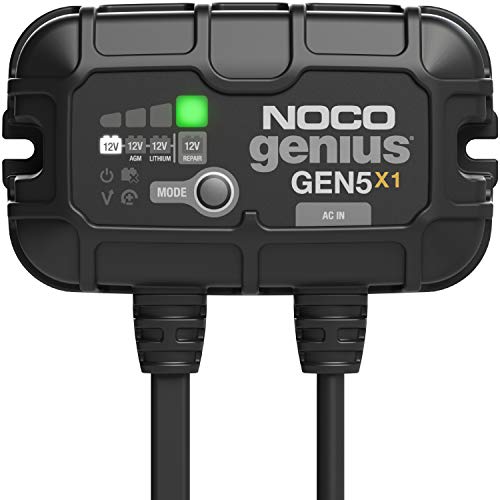
NOCO GEN5X1 12V 5A 1-Bank Marine Charger

Battery Tender Junior 12V 750mA Charger
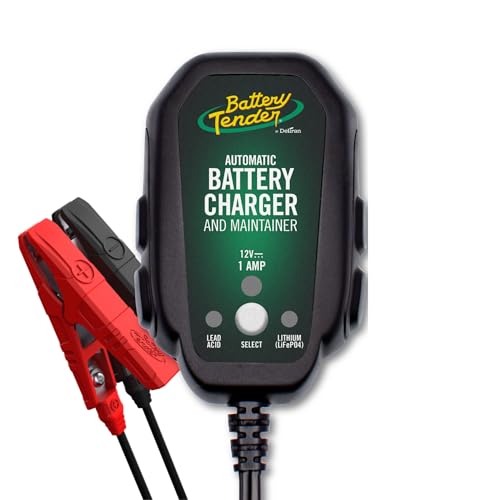
Battery Tender Junior 12V 800mA Charger

Optimate 7 Select 12V 10A Charger
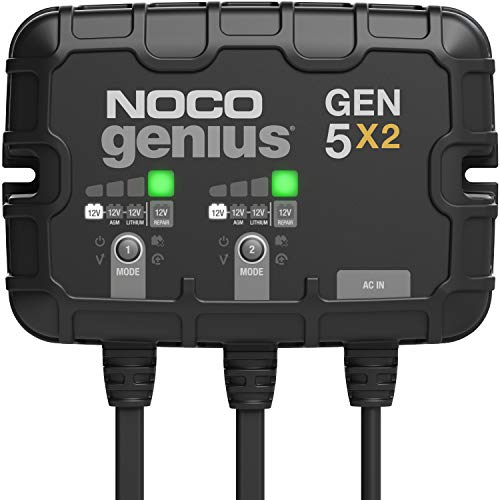
NOCO GEN5X2 12V 10A 2-Bank Marine Charger
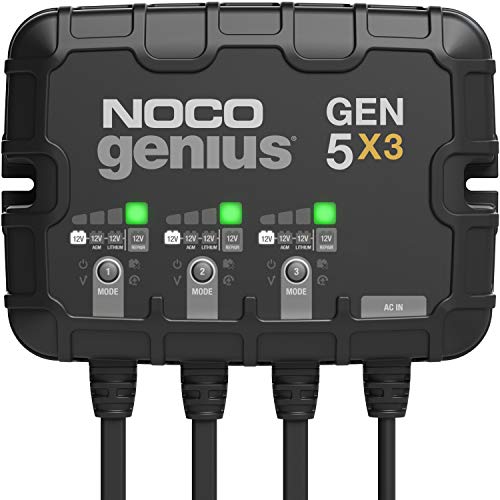
NOCO GEN5X3 12V 15A 3-Bank Marine Charger

Battery Tender Plus 12V 1.25A Charger

Victron Energy Blue Smart IP65 12V 7A

Dyness 12V 20A Lithium Charger

NOCO GENPRO10X1 12V 10A 1-Bank Marine Charger
What Each Pick Brings To The Table
Small boats with a single 12-volt starting battery rarely need anything bigger than this. The NOCO GEN5X1 is a fully sealed, waterproof onboard unit rated at 5 amps, sized to tuck into a bilge corner without crowding fuel lines or pumps. It supports flooded, AGM, gel, and LiFePO₄ chemistries, so a future battery swap won’t outgrow the charger.
For weekend anglers running a 16-foot skiff, the slow-and-steady 5-amp output is plenty for overnight recovery. The trade-off is speed: a deeply discharged Group 27 will take the better part of a day to refill, so owners who dock briefly may want the larger GENPRO10X1 later in this list.
Positive Takeaways
- Substantial IP-rated waterproof housing stands up to splash and spray zones
- Multi-chemistry compatibility covers lead-acid and lithium upgrades without rewiring
- Compact footprint fits cramped bilges where larger onboard units simply won’t go
- Independent bank monitoring protects against overcharging during long storage
Things To Consider
- 5 amps is slow for reviving deeply drained deep-cycle banks overnight
- Single-bank design limits you to one battery at a time
- Mounting hardware may require extra sealing in rough saltwater installs
Right Fit For
Single-battery boat owners who store their craft for weeks at a time and want a low-maintenance onboard charger.
Consider Something Else When
The NOCO GEN5X3 12V 15A 3-Bank Marine Charger suits owners who run two or three battery banks and want faster turnaround between trips.
Not every boat sits in the water year-round. The Battery Tender Junior is the classic garage companion for tenders, dinghies, and PWCs that get hauled out and parked for months. At 750 milliamps it is gentle on small batteries, finishing with a proper float stage so you can leave it connected without worrying about cooking the electrolyte.
The four-step charging program (initialization, bulk, absorption, float) is the same basic sequence that keeps a stored lawn tractor battery alive through winter. It only handles lead-acid, which is the catch for anyone eyeing lithium later, but for the price and simplicity it is hard to argue with.
Bright Spots
- Spark-proof connection makes it approachable for first-timers
- Automatic float mode prevents overcharging across long winter storage
- Lightweight enough to toss in a dock bag or workbench drawer
Worth Noting
- Not waterproof, so it belongs in a dry cabin or garage only
- Lead-acid only, with no lithium compatibility
- Slow recovery means patience is required after long sitting periods
Best Suited To
Trailered boats, PWCs, and seasonal vehicles stored indoors where a small, safe charger suffices.
A Better Fit Elsewhere
The Battery Tender Junior 12V 800mA Charger suits owners who want a switchable lithium profile for newer battery upgrades.
Where the older Battery Tender Junior locked you into lead-acid, this updated version adds a push-button lithium mode. The switch toggles between traditional flooded/AGM/gel profiles and LiFePO₄ charging, which is the kind of future-proofing that pays off when a starter battery eventually dies and you replace it with a lithium drop-in.
At 800 milliamps it is still a maintenance-class unit, not a fast charger. Think of it as a shelf-and-dock companion that keeps batteries topped off between trips, rather than a recovery tool for a dead pack.
What Earns Its Place
- User-selectable chemistry modes cover both lead-acid and lithium packs
- Microprocessor-controlled four-step sequence avoids overcharge damage
- Compact housing slips into a storage compartment or toolbox
Trade Offs
- Not rated for wet locations, so it must stay under cover
- 800 milliamps is slow if you actually need to recharge quickly
Perfect Match For
Mixed-fleet owners who currently run lead-acid but plan to swap to LiFePO₄ in the next season or two.
Swap It Out When
The NOCO GEN5X2 12V 10A 2-Bank Marine Charger is the better pick for boaters who need onboard waterproof charging across two banks simultaneously.
The Optimate 7 Select earns its keep when batteries have been neglected. A nine-step charging program starts with a low-pulse recovery phase, then climbs through bulk and absorption before settling into a maintenance cycle that actually saves batteries other chargers refuse to wake up. Premium AGM cells like Odyssey and Optima benefit from the selectable 14.7-volt profile, which finishes off stubborn packs that a generic charger leaves half-charged.
Temperature compensation adjusts voltage up or down based on ambient conditions, a quiet but real feature for boats that sit in unheated storage through winter. The 10-amp output is genuinely useful for reviving deeply discharged house banks overnight.
The Value In It
- Multi-stage desulfation can recover batteries traditional chargers reject
- Power supply mode holds steady voltage during ECU programming work
- Premium AGM profile optimizes high-density spiral-cell packs
- Temperature compensation adjusts output for hot summers and cold winters
Room For Improvement
- More expensive than simpler maintainer-class units
- Not waterproof; requires a dry install location
- Learning curve for owners new to nine-step charging programs
Who It Suits Best
Owners of premium AGM or lithium house banks who need a high-amp charger that can bring deeply discharged packs back from the brink.
Look Elsewhere When
The NOCO GENPRO10X1 12V 10A 1-Bank Marine Charger suits boaters who need the same amperage in a fully waterproof onboard housing.
Two batteries, one shore-power hookup, no fuss. The NOCO GEN5X2 pushes 5 amps per bank across two independent outputs, so your starting battery and house bank each get their own tailored charging profile. Fully sealed and rated for harsh marine environments, it mounts in the bilge without complaint.
Most bay boats and dual-battery runabouts fit this profile exactly: one starter, one trolling motor, and an overnight charge that tops off both before the next launch. The trade-off is shared amperage, so charging two large banks from flat at once will take longer than a single-bank recovery.
What Stands Out
- Independent bank charging means each battery gets the right voltage
- IP-rated waterproof housing survives direct spray and occasional submersion
- Multi-chemistry support spans lead-acid and lithium in any combination
- Temperature compensation adjusts for engine-room heat and cold garages
Points To Note
- 5 amps per bank is slow if both batteries are deeply discharged at once
- Wiring two banks requires careful fusing and routing planning
Who Should Grab It
Boaters with a starting battery and a house or trolling motor bank who want a single shore-power hookup to manage both.
Another Choice May Suit
The NOCO GEN5X3 12V 15A 3-Bank Marine Charger fits larger setups running a starter plus two auxiliary banks.
Bigger boats run bigger battery banks. The NOCO GEN5X3 stretches to three independent banks at 5 amps each, covering start, house, and an additional trolling or electronics bank without daisy-chaining separate chargers. The fully sealed, IP-rated housing shrugs off bilge moisture and salt spray, so it can live near the battery switch without corrosion drama.
For owners running a single outboard plus twin house banks, or a center console with twin fish-finder batteries and a starting bank, this consolidates three maintenance jobs into one shore-power hookup. The honest read: if you do not actually have three batteries, the smaller GEN5X2 saves space and dollars.
Well-Handled Touches
- Three independent outputs replace the need for multiple chargers
- Submersible-rated sealing handles the worst bilge environments
- Chemistry flexibility covers mixed banks of lead-acid and lithium
- Compact form factor for a three-bank unit simplifies mounting planning
Honest Caveats
- 5 amps per bank is still modest if all three banks are deeply discharged
- Installation requires more cable routing than single-bank alternatives
Built With In Mind
Larger center console and dual-engine boat owners running a starter plus two auxiliary battery banks.
Reach For A Different Pick When
The NOCO GEN5X2 12V 10A 2-Bank Marine Charger is a cleaner fit for simpler setups that genuinely only need two banks.
The Battery Tender Plus has been a shop staple for years, and the reason is straightforward: it just works. A four-step charging program takes a battery through initialization, bulk, absorption, and float without drama. At 1.25 amps it sits between the Junior maintainers and full-sized onboard chargers, useful for slightly larger powersport batteries and outboard auxiliary packs.
AGM and flooded batteries benefit from the adaptive algorithm that holds proper voltage during long storage. Owners commonly leave these units connected across an entire off-season without checking back. Note that the housing is not waterproof, so it belongs in an engine box or cabin rather than open mounting.
What Helps Most
- Adaptive charging algorithm handles both AGM and flooded cells safely
- Long-proven reliability across years of seasonal use
- Float maintenance mode prevents overcharge damage during storage
Small Caveats
- Not waterproof, so it needs a dry mounting spot
- Lead-acid only, no lithium compatibility
Whose Shelf It Belongs On
Garage owners maintaining a fleet of outboard auxiliaries, PWCs, and lawn tractors on a single workbench charger.
Not Your Match When
The Victron Energy Blue Smart IP65 12V 7A suits owners who want Bluetooth monitoring and lithium-ready profiles in a sealed housing.
The Victron Blue Smart earns its place by talking to your phone. Built-in Bluetooth pairs with the Victron Connect app to surface real-time voltage, current, and historic charge cycles, plus lets you flip between lithium and lead-acid profiles without touching the unit. The IP65 sealed housing laughs at spray and dust, which is unusual for a portable charger of this capability.
For the tech-forward owner running a LiFePO₄ house bank, app visibility into state of charge takes the guesswork out of shore-power management. The 7-amp output is a happy middle ground between maintainers and full onboard units, suitable for mid-sized battery banks.
Advantages To Know
- Bluetooth monitoring provides real-time voltage and charge state data
- IP65 sealed housing tolerates outdoor and engine-box installations
- Multi-stage profile adapts to lithium and lead-acid chemistries
- Compact portable form factor fits a dock bag or cabin shelf
A Few Limitations
- 7-amp output is moderate, not fast, for larger banks
- Single bank only, so multi-battery setups need additional units
Feature Snapshot
Right Fit For
Owners who want app-based monitoring and the flexibility to switch battery chemistries without buying a new charger.
Where A Sibling Pick Shines
The NOCO GENPRO10X1 12V 10A 1-Bank Marine Charger delivers higher amperage for owners who prioritize recovery speed over app features.
Lithium batteries reward fast, dedicated charging. The Dyness 12V 20A pushes serious current into LiFePO₄ packs, with a smart three-stage profile covering precharge, fast charge, and constant voltage. A 100-amp-hour lithium bank goes from empty to full in roughly five hours, which is twice the speed of a 10-amp charger.
The 0V activation function is the underrated feature here, since deeply discharged LiFePO₄ packs can drop to a voltage that ordinary chargers refuse to recognize. This unit wakes them back up, which matters for van builds and overland rigs where a parasitic drain can quietly flatten a battery over weeks.
Positive Points
- 20-amp output cuts LiFePO₄ charge times in half versus 10-amp units
- 0V activation rescues deeply discharged lithium packs ordinary chargers reject
- Three-stage profile protects lithium cells from chronic overcharge
Things To Consider
- Lithium-only; not suitable for lead-acid batteries of any chemistry
- Portable form factor is not designed for permanent marine mounting
- 20-amp draw on shore power may trip weaker household circuits
Perfect Match For
Van lifers, overlanders, and boaters with dedicated LiFePO₄ banks who need fast turnaround between trips.
Look Elsewhere When
The NOCO GEN5X2 12V 10A 2-Bank Marine Charger is the better fit for permanent onboard installs that need both waterproof sealing and chemistry flexibility.
Where the GEN5X1 trickles, the NOCO GENPRO10X1 pours. Doubling the amperage to 10 amps on a single bank shortens deep-cycle recovery times substantially, which matters for house banks that run a fridge, lights, and a trolling motor all weekend. The fully sealed, IP-rated housing shares the same waterproof DNA as the rest of the Gen lineup.
Multi-chemistry support spans flooded, AGM, gel, and lithium, and temperature compensation keeps the output honest in summer engine rooms and unheated winter storage. The honest trade-off is single-bank output, so owners with two or three banks should look up the list at the GEN5X2 or GEN5X3.
Practical Pluses
- 10 amps cuts deep-cycle recovery time roughly in half versus 5-amp units
- Submersible-rated sealing handles bilge mounting without corrosion worry
- Chemistry flexibility covers a wide range of battery upgrades
- Temperature compensation adapts to engine-room and outdoor conditions
- Compact footprint for a 10-amp onboard unit
Points To Note
- Single-bank output means dual-battery boats need a different model
Feature Snapshot
Best Suited To
Single-battery boat owners with deep-cycle house banks who want faster turnaround between trips without giving up waterproof reliability.
Consider Something Else When
The NOCO GEN5X2 12V 10A 2-Bank Marine Charger is the better fit for setups running separate starting and house banks.
What To Weigh Before Choosing a Marine Charger
Marine charging is not the same job as automotive charging. Salt spray, constant vibration, and cramped bilge space rule out most car-shop solutions, so a few attributes deserve attention before committing.
Match Amperage To Battery Capacity
A charger rated at roughly 10% of a battery’s amp-hour capacity recovers a deeply discharged pack overnight. A 100-amp-hour house bank pairs well with a 10-amp charger, while a small Group 24 starting battery is fine with 5 amps. Under-sizing leaves you waiting days, while over-sizing risks cooking smaller cells.
Confirm Multi-Chemistry Support
Modern boats mix battery types. A starter bank may stay on flooded lead-acid while the house bank upgrades to LiFePO₄, so a charger with selectable profiles (or independent banks like the NOCO GEN5X2) handles both without swapping equipment. Choosing a single-chemistry unit limits your future flexibility.
Look At Sealing And Mounting Location
Permanent onboard mounting demands waterproof or submersible sealing. Portable garage units can skip that requirement but need a dry storage spot. Plan the cable run from shore power to the mounting location before buying; long, undersized wire runs reduce charging efficiency.
Decide Between Onboard And Portable
Onboard chargers live in the boat and work whenever shore power is connected. Portable units travel between vehicles and boats but require manual hookup each session. Owners with a single boat benefit from onboard convenience, while multi-vehicle owners may prefer one portable maintainer.
Key Considerations Across These Picks
Common Shopping Slip Ups
A frequent misstep is buying a charger by amperage alone, ignoring chemistry matching. A lead-acid charger attached to a lithium battery undercharges it, while a lithium-only charger refuses to recognize a deeply discharged lead-acid bank. Always confirm chemistry compatibility before purchase.
Another mistake is underestimating wire run length. Long DC cable runs from shore-power inlet to battery bank create voltage drop that lengthens charge times and generates heat. Oversizing the cable gauge for the planned run keeps the charger performing as rated.
Why Top Tier Costs More
Higher-tier marine chargers bundle three meaningful upgrades: waterproof sealing, multi-chemistry profiles, and temperature-compensated output. Each adds engineering complexity and component cost, but together they let a charger survive bilge conditions, adapt across battery upgrades, and avoid under- or over-charging across seasons. For owners who keep their boat for years, the upgrade pays back in fewer battery replacements and more reliable launches.